




Dashnor Kaloçi
Part Two
Memorie.al publishes the unknown history of Kaso Hoxha, originally from the village of Markat in Saranda, where he spent his childhood. He was arrested by the State Security in 1974 because several poems with hostile content against the communist regime were found in his home, and he was sentenced to 10 years in prison, all of which he served in the infamous Spaç camp. After his release in 1985, he managed to escape to Greece, where he obtained political asylum to the USA, and currently lives in the state of Chicago. What is mentioned in the correspondence between Kaso Hoxha and Mrs. Melanie Anderson, secretary of Amnesty International’s London branch, in their long exchange in 1985, where that organisation requested information about the prisoners of Spaç and particularly about Dilaver Hasa, originally from the villages of Peshkopi, who had escaped from Albania and, after staying for some time as a political asylee in Stockholm, had agreed to return to Albania, where he was arrested and sentenced to 20 years in prison. How does Kaso Hoxha, in his diary which he managed to take out of the prison in complete secrecy and sent to Amnesty International, describe the painful story of his fellow-sufferer Dilaver Hasa, which Dilaver himself told him when the two of them were serving their sentences in cell no. 4 of Spaç, where they had been put as punishment after being tortured by two police officers…?!
Continued from the previous issue
Letter of the political emigrant Kaso Hoxha in 1985 from Chicago to Melanie Anderson, secretary of Amnesty International for the London branch
Letter addressed to Amnesty International
To the secretary Mrs. Melanie Anderson
On the life of Dilaver Hasa, originally from Dibra
Dilaver Hasa, comrade of Cell no. 4
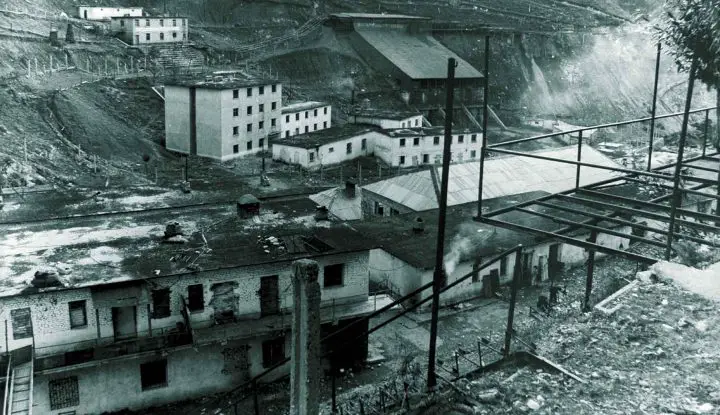
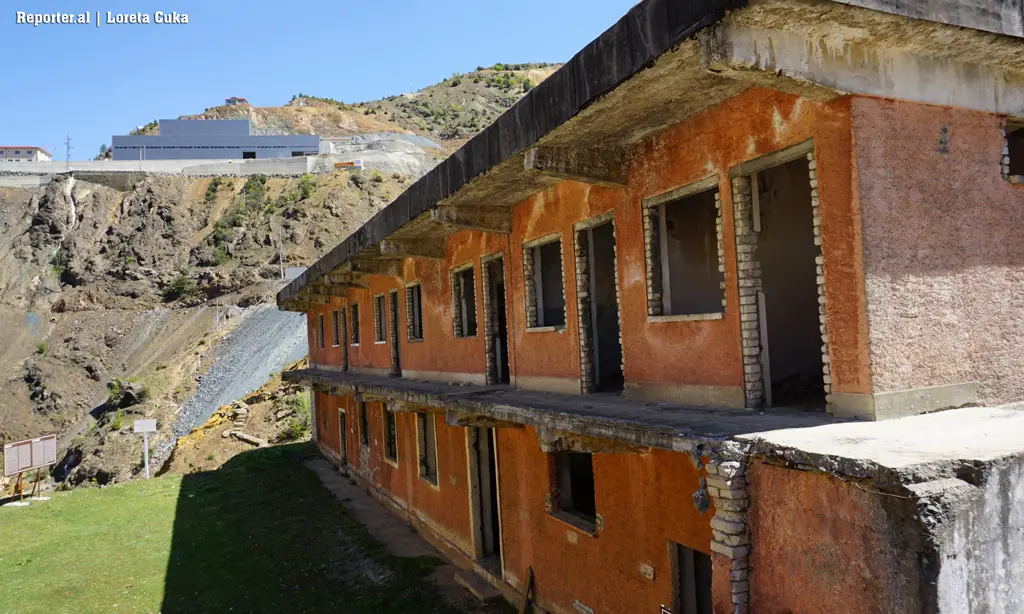
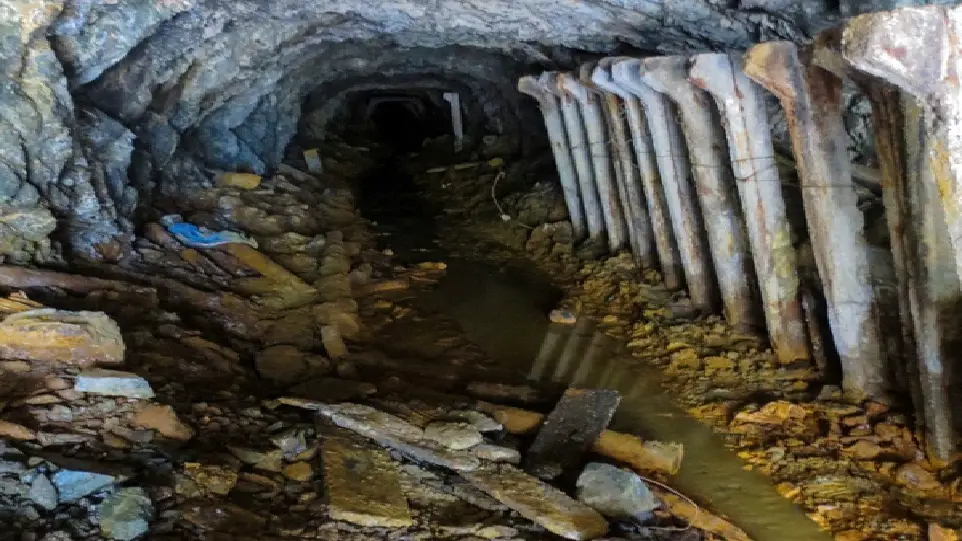
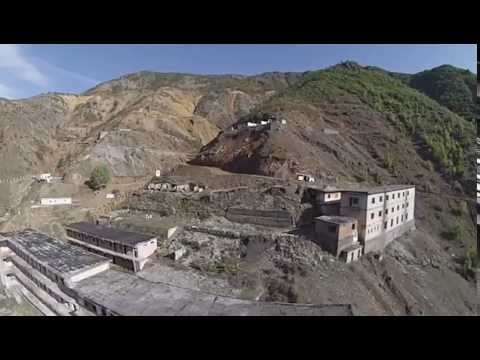
There is something unusual about how I met this man in the eternal darkness of the galleries in the Spaç Copper Mine. He had been in Prison 303 in Spaç for some time; he worked in Zone III, the same zone where I worked, but on a different shift. Because here we worked three shifts non-stop, changing shifts every week: the first shift became the third, the second became the first, and the third became the second. I was on the first shift when I met Dilaver, and Dilaver was on the third shift. He would finish work at 6:30 in the morning, and at that hour I would return to the gallery to start.
It was a May Day in 1979; spring had already arrived above ground, but we were condemned – we could neither see the greenery, nor warm ourselves in the sun’s rays, nor breathe the fresh air of the atmosphere, because we were all condemned to death; torture, hunger and hard labour slowly took our souls.
Those of us on the first shift were entering the gallery, while the third shift, which had just finished work, waited in line for the police to take them into the camp. Judging by the shouting and swearing of the policeman Ndue Deda, one prisoner still hadn’t finished the quota assigned to him.
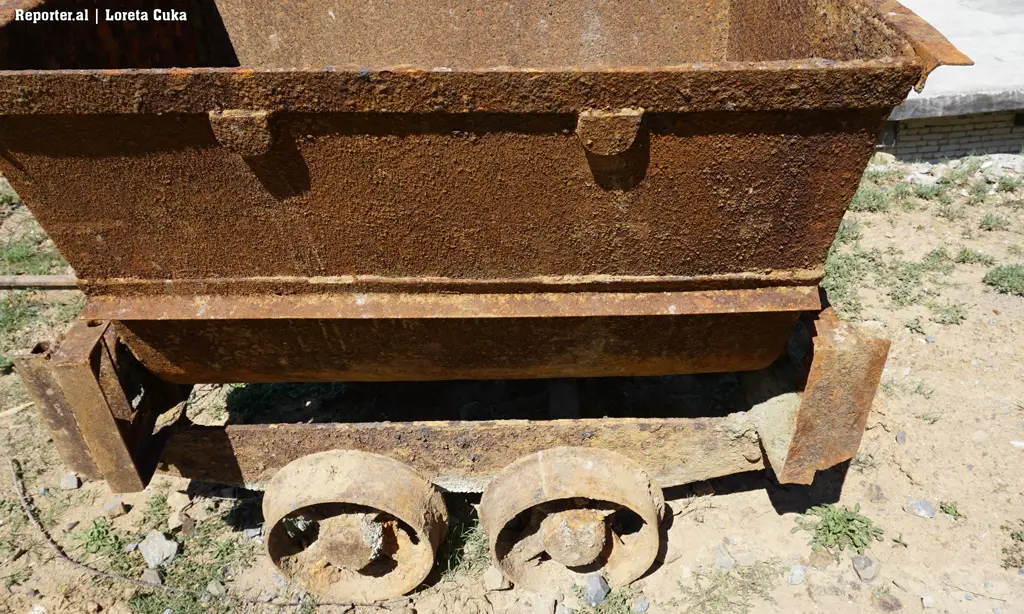
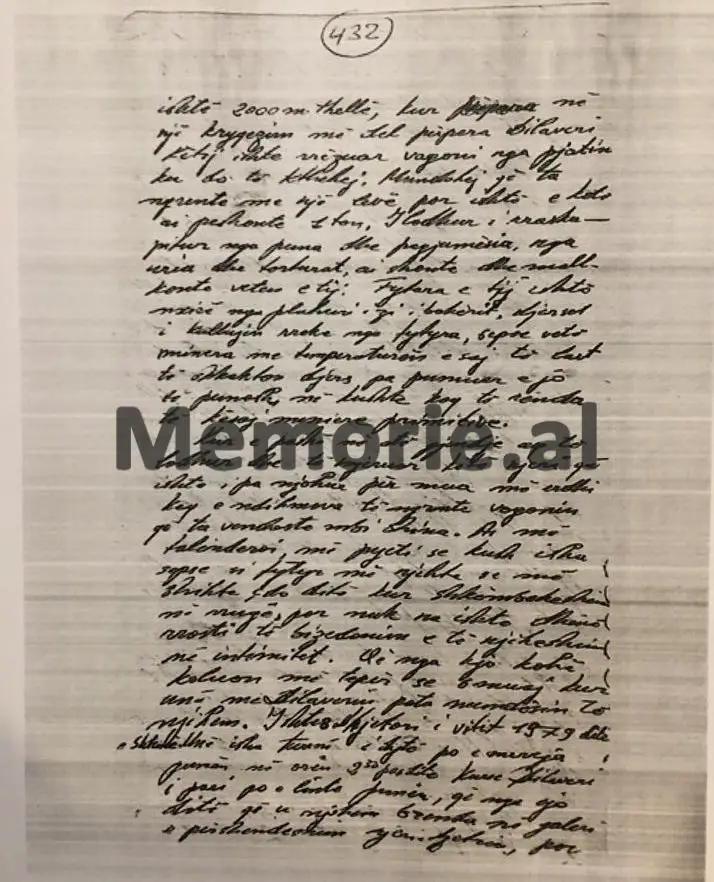
I was walking in the black darkness of the gallery to go to my workplace, which was 2,000 metres deep, when at a crossing Dilaver appeared in front of me. His wagon had fallen off the rails where it was supposed to turn. He was trying to get it back on with a lever, but it was useless because it weighed one ton. Tired, exhausted from work and sleeplessness, from hunger and torture, he was cursing and damning himself. His face was black from the black copper dust, sweat streamed down his face, because the mine itself, with its high temperature, causes sweating even without working, let alone working in such harsh conditions in this primitive mine.
When I saw this man, a stranger to me, in such a tired and miserable state, I felt sorry for him and helped him lift the wagon to place it back on the rails. He thanked me and asked who I was because he recognised my face – he saw me every day when we changed shifts, but we had never had the chance to talk and get to know each other more closely. More than six months passed from that time until I had the opportunity to get to know Dilaver.
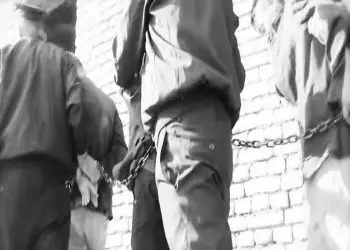
It was December 1979, the seventh. I was on the second shift; I was taking over work at 2:30 in the afternoon, while Dilaver was on the first shift and was finishing work. Since the day we had met inside the gallery, we greeted each other, but today Dilaver could not greet me because the policeman Ndue Doda had tied his hands with wire and twisted it so tightly that the wire had sunk into the flesh; his hands were swollen and black because the blood circulation had been blocked.
A snowfall was coming down and it seemed the weather would worsen. The prisoners who had finished work waited in line for the policeman to order them into the camp. They were tired, hungry, dark circles had formed under their eyes; their clothes, wet and covered in mud, were getting even more soaked from the cold rain that continued to fall.
I saw Dilaver being tortured by the policeman. He could barely endure the pain, clenching his jaws, staring with hatred at the policeman, that heartless brute. The fate of Dilaver Hasa was shared by all those Albanian emigrants who returned to Albania. Enver Hoxha’s government deceived them by promising that they would be set free, but as soon as these people set foot on Albanian soil, they were arrested, their property and money confiscated, and they were sentenced to heavy prison terms of up to 25 years. Such was the fate of Zenel Spahiu and his brother, who returned from France; of Kipe Avdiu, who returned from America; of Sabri Kodra, who returned from Germany, and many others.
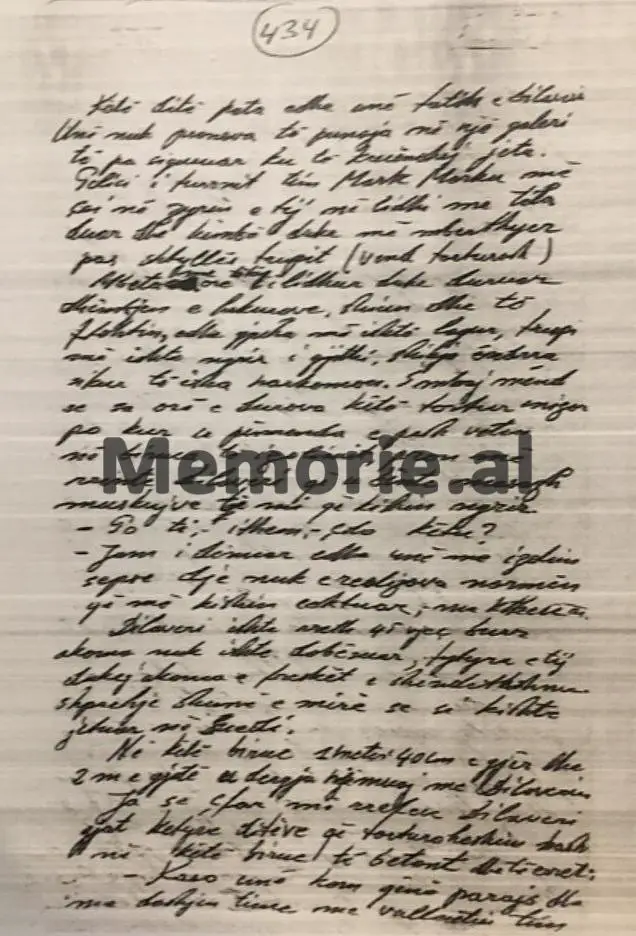
That day I also suffered Dilaver’s fate. I refused to work in an unsafe gallery where life was threatened. The policeman of my shift, Mark Marku, took me to his office, tied my hands and feet with wire, and bound my body to a pillar (a torture place). I remained tied for hours, enduring the pain of the irons, the rain and the cold; my tongue was swollen, my entire body frozen; I saw dreams as if I were a drug addict. I don’t remember how many hours I endured this cruel torture, but when I regained consciousness, I found myself in the isolation dungeon; next to me was Dilaver, who was massaging my muscles that had frozen.
- “You,” I said, “What are you doing here?”
- “I too am sentenced to isolation, because yesterday I didn’t fulfil the quota assigned to me, he reversed it,” he replied.
Dilaver was about 45 years old then, still not weakened; his face still looked fresher and healthier, a very good indication of how he had lived in Sweden.
In this dungeon, 1 metre 40 cm wide and 2 metres long, I lay for a month with Dilaver.
This is what Dilaver confided to me during those days when we were tortured together in this concrete, dark dungeon:
- “Kaso, I was in paradise and out of my own will I left there, opening the gates of hell with my own hands. I was in heaven, and now I have fallen into the depths of darkness.”
Two tears fell from his eyes, rolled down his cheeks, leaving a wet trail on his face.
- “Don’t be sad, Dilaver. Courage, you’re not alone,” I tried to console him.
- “There’s nothing you can do; life is an alternative of suffering or victory; the wheel of fortune turns as it wishes, but don’t be pessimistic,” I continued.
- “Ah, no, Kaso, now everything is over for me,” Dilaver sighed.
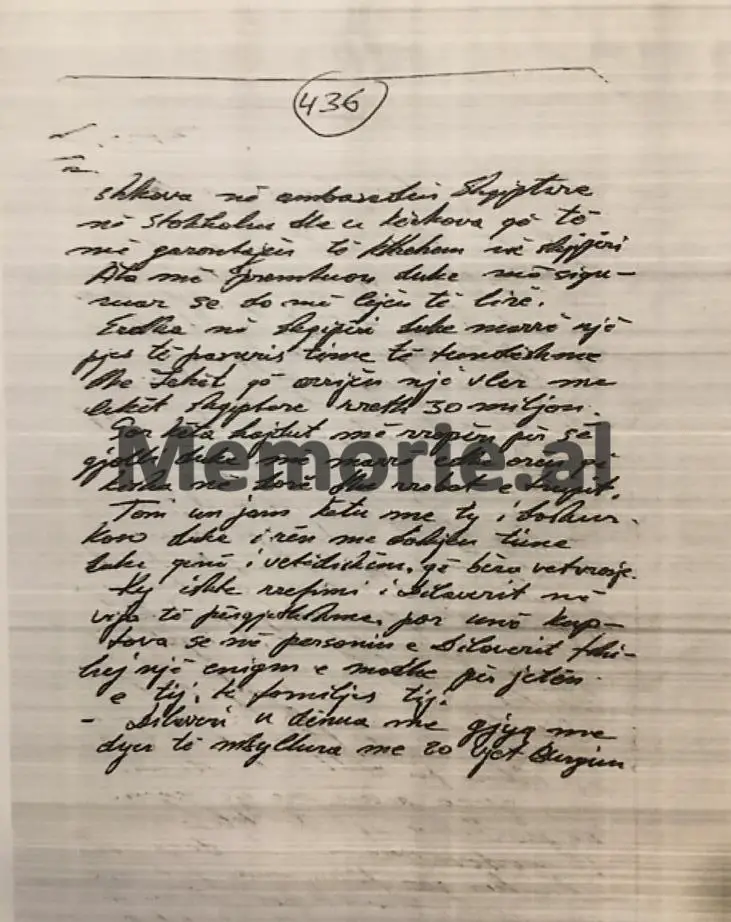
- “I was 22 years old when I escaped from Albania and went to Greece. I was a Physical Education student; I liked sports. When I went to Greece, I was full of health. I sought to immigrate to Sweden, and within three months I went to Sweden (Stockholm). I took a course in Electronics and then I got a job in a factory where telephone equipment was produced. I married a Swedish woman; I was happy, but I had no children with this wife. I lived in a villa on the outskirts of Stockholm. From time to time I went as a tourist to Greece, Portugal, Spain, and elsewhere. But suddenly my wife died, and I became unbearably lonely. I went to the Albanian embassy in Stockholm and asked them to guarantee my return to Albania. They promised me, assuring me that they would let me go free. I came to Albania, bringing with me a portion of my movable property, with money amounting to about 30 million in Albanian currency. But these thieves stripped me alive, taking even the watch from my hand and the clothes off my body. Now I am here with you, dear Kaso, falling by my own will, being aware that I committed suicide.”
This was Dilaver’s account in broad lines, but I understood that in Dilaver’s person was hidden a great enigma about his life and that of his family.
Dilaver was tried in a closed trial and sentenced to 20 years in prison./Memorie.al