



Dashnor Kaloçi
Part Four
Memorie.al publishes some passages from the diary of Kaso Hoxha, originally from the village of Markat in Saranda, who, after suffering ten years in the political prisons of Enver Hoxha, managed in 1985 to escape from Albania to Greece, where he obtained political asylum to the USA, and was settled with housing and work by his relatives and fellow villagers from Markat of Saranda who had escaped years earlier and had formed there the organisation “The Cham League” and the magazine “The Eagle’s Wing”. How does Kaso Hoxha describe in his diary the long-awaited meeting with Bilal Xhaferri, the many conversations they had with each other as brother with brother, about their fellow villagers and relatives, why Bilal did not speak with his brother-in-law, Selfo Hoxha, with whom he had even escaped in 1969, why he suspected that his newspaper’s editorial office had been burned down precisely by his brother-in-law, of whom he said that “he surrendered to Tirana’s agents”, and who was the person who had orchestrated the assassination attempt in 1978 in which he was stabbed and wounded?! What did Bilal tell Kaso on the phone about his illness after being hospitalised, and how did Kaso find him lifeless in the operating room, where the tubes and apparatus that kept him alive had been removed, and what did Kaso Hoxha say in the speech he gave at Bilal’s funeral, which was attended even by those who did not speak to him…?!
Continued from the previous issue
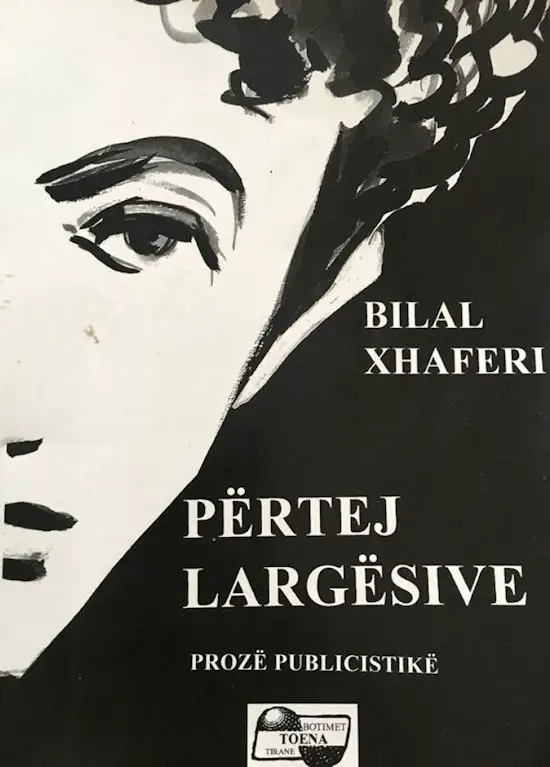
BILAL XHAFERRI
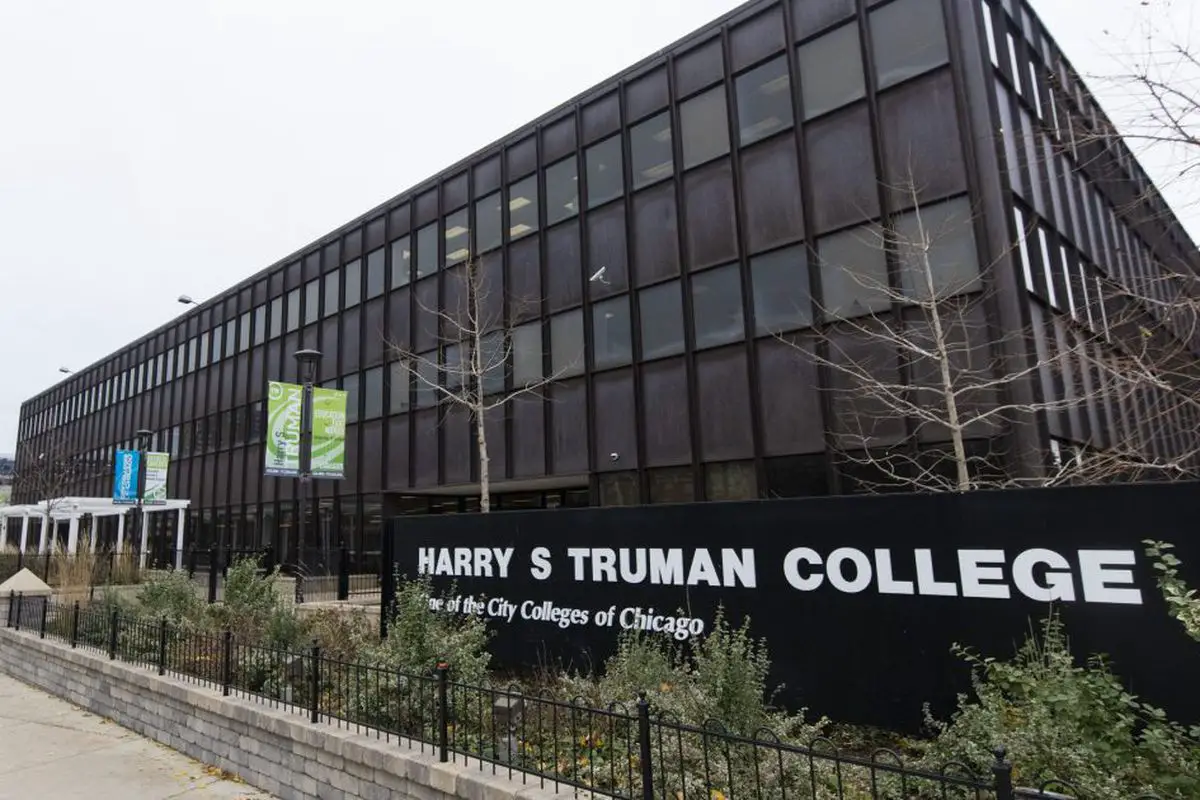
It was 6 November 1985. I had been living in America for a week. I asked my cousin, Rexhep Hoxha, if it was possible to find me a job. My desire was to go to school; he enrolled me at Truman College. Rexhep’s son, Abdullaj, heard our conversation that I was interested in working. He was mostly involved in construction work, which I also liked to do. He asked if I wanted to help him the next day, after I finished school, to dismantle some signs in a 3–4 storey building. I accepted. And so we did; we went and started work around 2:00 in the afternoon. A light, cold rain was falling; nonetheless, I started the work even though my nephew Abdullaj begged me to leave it for another day. “No,” I said, “I will finish it today.” After more than two hours of work, I was almost at the last screws, when I heard someone speaking to me in Albanian from down on the street. I turned my head to see who it was. Although more than 15 years had passed, I recognised him by his voice.
It was Bilal Xhaferri. He was the only one among the villagers I had not yet met. At all the dinners my relatives had hosted for me, he had not appeared. Whenever I asked anyone, “Where is Bilal and how are things with him?”, the answer was cold, simply: “We don’t know anything.”
When I heard that voice, I nearly jumped off the ladder. I hurried down and embraced my hero. He said to me:
– “Don’t think I didn’t bother about your arrival. Believe me; I heard the news of your arrival from Skënder two days ago. Today I went to Rexhep’s house. Difua gave me the address where you were working, and here I am, Kaso, my brother.”
– “Thank you, Bilal. I don’t know how to express my pleasure that you took the trouble to come and meet me. I have so much to tell. I believe that one day we will sit down and have a coffee together,” I replied to Bilal, shaking his hand.
– “Yes, yes, that’s why I came. I want to know what time you are free so we can talk. I have so many questions,” Bilal continued.
– “From Monday to Friday, from 9:00 in the morning until 2:00, I am at school. In the afternoon, if I find any work, I work. Saturdays and Sundays I am free,” I answered.
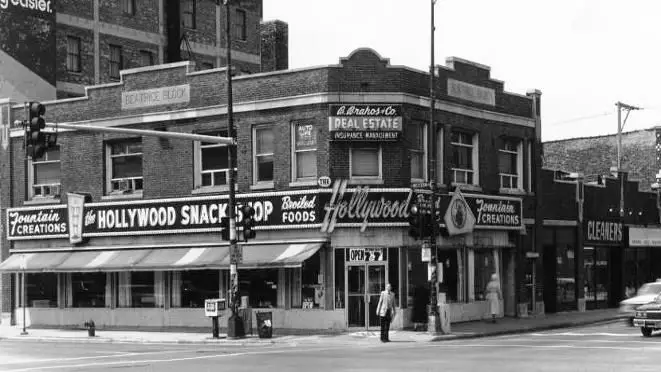
– “Then on Saturday morning at 9:00, can you come to the corner of Western Ave and Lawrence Ave? There is a café called ‘Hollywood’,” Bilal asked me.
– “With pleasure,” I replied.
– “Then I’ll leave you to finish your work. See you on Saturday at 9:00. Good night,” Bilal said and left.
I told Selfo that the coming Saturday I was going to meet Bilal; he had invited me for coffee. Selfo and Rexhep were not pleased – I knew it. Selfo did not speak to Bilal; I had heard all kinds of stories from all my relatives. Selfo’s accounts had shaken me; now I wanted to hear the other side, Bilal’s side. As far as I understood, Selfo himself was the guilty one, who had surrendered to Tirana’s agents.
I waited impatiently for Saturday. When I arrived at the restaurant, it was not yet 9:00 in the morning. I went in and asked the waiter, if possible, to give me a corner table for two people. To my surprise, Bilal was there before me and told me to come to his table. We had breakfast together. I answered all the questions Bilal asked me, giving him extensive information about the situation in Albania. I told him my whole odyssey through the prisons of the communist regime. I told him that I knew what was happening in Chicago, according to the statements of agent “K. A.”
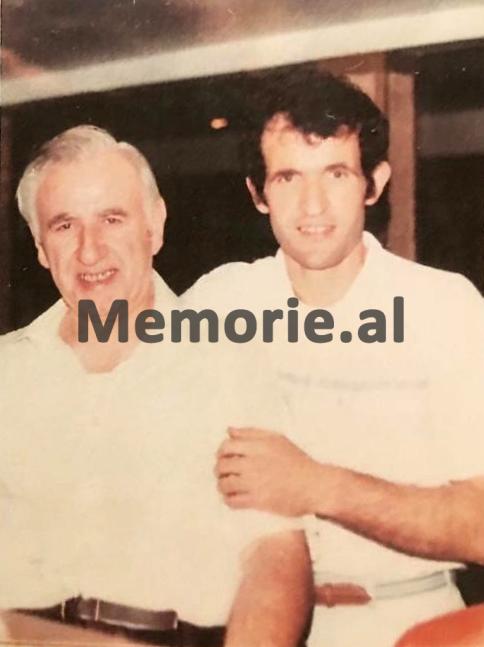
Bilal was stunned by everything I told him; he became convinced that I was not a spy. Bilal confided in me as brother to brother. He told me with his own mouth that the cause of all the enmity among Albanians was the work of agents and spies from Tirana. When he said: “Selfo is your cousin, but he is also my brother-in-law. I’m sorry to tell you that he is my enemy. We haven’t spoken for years, and I don’t even want to see him. I’ll only tell you one thing: be careful. You have suffered a lot in your life; you need to rest.”
We agreed to meet again the next day at the same time. And from that meeting on, we met every Saturday and Sunday. Bilal worked in a warehouse collecting recyclable materials. He told me he had no house; he slept in a shack at the warehouse. The owner was a good Jew, as Bilal said.
After I left Chicago, Bilal came several times to visit me in Aurora, a small town 150 km from Chicago. Bilal promised me that he would publish my memoir collection, in parts, in the magazine “The Eagle’s Wing”.
But tragedy struck. The bitter news came from Bilal’s own mouth. The second week of October 1986. It was morning; I had just started work when the restaurant owner, Stefan Hajazi, told me:
– “Someone wants to speak with you.”
– “Hello, who is it?” I answered.
– “It’s me, Bilal, Kaso!”
– “Good morning, Bilal, how are you?”
– “I’m not well, Kaso. I’m in hospital,” he answered.
– “What did you say?” I asked, shocked.
– “I’m sick, Kaso. The tests show I have a tumour in my head,” he told me in a half‑voice.
– “Which hospital are you in, Bilal? I’ll come as soon as possible!”
– “I’m at Masonic Hospital, 836 W Wellington Ave. Don’t bother coming now, because I’m going into surgery and you won’t be able to see me. Better come tomorrow,” Bilal advised me.
I called all my villagers who were there, asking if they knew anything about Bilal’s health. Bilal had also notified Skënder Shuaipi, the only person he still spoke with.
I went to the hospital the next day with Rexhep Hoxha. In Bilal’s room we found Skënder Shuaipi with his wife and mother. Bilal was still in a coma; he did not understand anything happening around him. The nurses occasionally checked the apparatus. His head was wrapped in bandages; only part of his face was uncovered. We asked the doctor when he might come out of that deep sleep. He said: “I believe he may be able to speak after 24 hours.” We left, planning to come back the next morning.
We found Bilal awake on the morning of 15 October. Bilal recognised us. His eyes filled with tears. Taking his hand, which was so cold, I said:
– “Courage, Bilal. You are strong; you will overcome this too!”
– “No, Kaso. The prognosis is not good. Half of my body is paralysed; I have no feeling at all. As I see it, this is my end!”
– “No, no! Never think that! Courage, Bilal!” I encouraged him.
He needed rest. Rexhep and I left. The surgery had been very difficult; perhaps they had damaged his nervous system. Even if he improved, he would remain in a wheelchair for the rest of his life.
I returned to the village where I worked, hoping to go another day to visit him.
On the morning of 16 October 1985, Skënder Shuaipi called me with the news of Bilal’s death. I told the restaurant owner, Stefan Hajazi: “Forgive me, I’m going to Chicago. Bilal has died.” The owner said nothing. As I understood, he was not pleased, because the work would suffer and he didn’t have enough workers. Nevertheless, I left. I got in touch with Rexhep and Skënder to discuss and examine legally how it was possible for him to die in the hospital; that was responsible for his death? Skënder had signed all of Bilal’s hospital documents, as a family relative. According to the hospital report, Bilal was found dead; all the apparatus that monitored and kept him alive had been removed, and the surgical wound was bleeding. Was Bilal able and strong enough to end his own life? Very mysterious!… Who could have done this?… Questions that demand answers!…
We agreed to hold the funeral the next day. Bilal’s body was placed in the funeral home, where many visitors came. We spoke a lot about his life. Finally, I said a few words: “With sorrow we pay homage to our hero, while Tirana celebrates this day – Bilal’s death. His pen and his voice had instilled fear in them. Many have heard of Bilal and seen him, but few know who Bilal really is. History will tell better how great Bilal was. He has not died; he will remain eternal – a Hero of the Nation and of his people. Farewell, Bilal!”…
All of them – Skënder Shuaipi, Romo Idrizi, Rexhep Hoxha, Sabel Hyso, Veiz Sulo, Selfo Hoxha – even though he did not speak to Bilal, came to the funeral, and other patriots contributed to the burial expenses.
Looking back in time, one sees his desire to break the chains of communism, evident in his multifaceted literary creativity in the Albanian language. Bilal stands as a supreme icon of our time. The benevolent refugee who escaped communism – with grey hair, sparkling eyes, a charismatic man of extraordinary sharpness of mind – makes this man a symbol of resistance against communism and the dictatorship of Hoxha’s communist regime.
Bilal Xhaferri was the brain and the voice of the magazine “The Eagle’s Wing”. Bilal Xhaferri was a blessed spring of God‑given imagination. His inspiration is a testament to the connection between creation and freedom of speech; truly a master of words who made the Albanian language even richer.
Now that Hero Bilal is no more – people who knew him closely and people who did not, critics of all categories – try to bring to light both the aspects that make him a Hero and the negative aspects of his private life, without any flaw in his character. His instinct as a rebel against communism, his curiosity, his passion intertwined with his political views. To know the life of this Hero helps us understand his literary works, and vice versa. Bilal’s life and work reflected the discourse of an insecure society in an absolutely communist atmosphere that was withering, dictating what to write to Enver Hoxha and all his loyal pens.
Bilal, however – it is not true that he was a real dissident of the regime in power. For this reason, his writings speak of the ancient times of his people. To stay alive, he had to write something about socialist life.
Some say, like Adrian Ndreca, that Bilal was a State Security agent who collaborated and sang praises to Enver’s Communist Party, at a time when communists had executed Bilal’s father, and they wonder how this Cham writer could reach so high, to become a member of the League of Writers and Artists, where he became famous for his criticism of Kadare’s novel “The Wedding”. It is true that he reached that high, but do not forget that when his biography was exposed, Enver’s scribes expelled him from the League of Writers and Artists of Albania.
Only a few works and writings saw the light of publication, such as: “Paths and Destinies”, “New People, Ancient Land”. Bilal had the opportunity to escape with the help of his brother‑in‑law Selfo Hoxha, at the end of August 1969. After a year, he immigrated to the USA. From 1970 to 1972, he worked as an editor at the newspaper “Dielli”. In 1972, the novel “Ra Berati” (Berati Fell) was published in Prishtina.
In 1974, he formed the organisation “The Cham League”, with the magazine “The Eagle’s Wing”, where he published various articles by Albanian authors who were in exile. He published his own writings, articles, poetry, fragments from novels and various books; he published his cartoons, sketches, photographs and short films made by Bilal himself.
In despair, Bilal told me about the great loss of 1981, when Tirana’s agents, perhaps in cooperation with people he knew, burned down the editorial office of “The Eagle’s Wing”. He suspected his brother‑in‑law – Bilal himself told me this.
In 1978, Bilal survived an assassination attempt in New York by some completely unknown people who stabbed him. Bilal’s universe was immeasurable in space and time; his goal was to uncover the history of his ancient people to bring it to life in his works. This was my Bilal, this was our Bilal, this was the hero of our nation!…. /Memorie.al