By HAKIK MENA
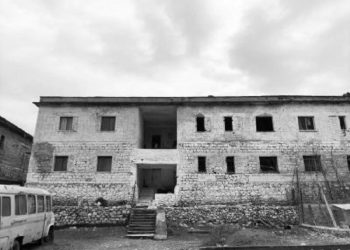
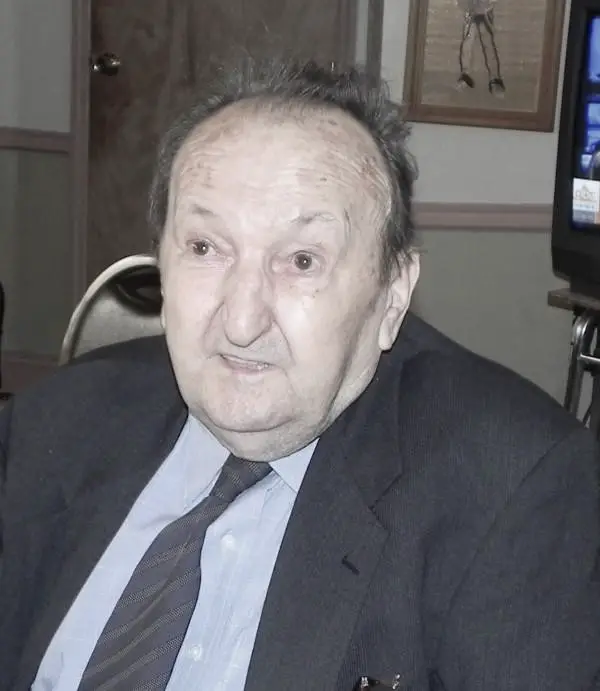
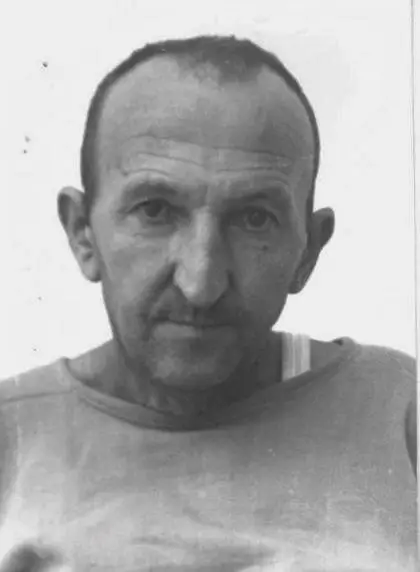
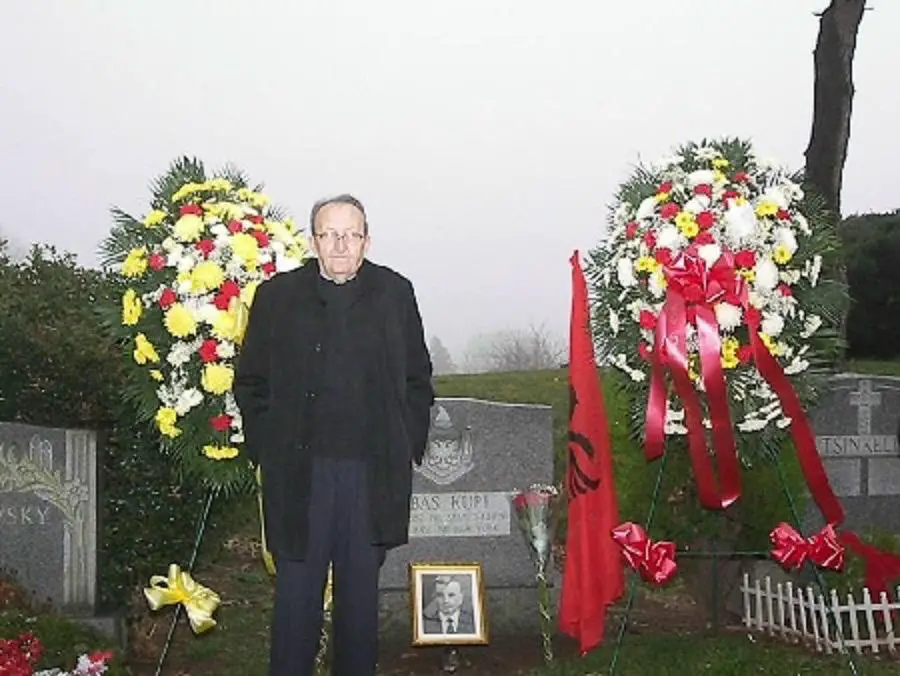
Memorie.al / On February 23, 2016, in the afternoon, from a phone call from my childhood friend, Sokol, with whom we grew up in the Gradishta internment camp, I received the bitter news that his father, Fatbardh Abaz Kupi, or uncle Bardhi, as we used to call him in childhood, had passed away. I don’t know, but for the moment I was stunned, I was gripped by an understandable sadness and I remembered that terrible scene of the second arrest, of uncle Bardhi.
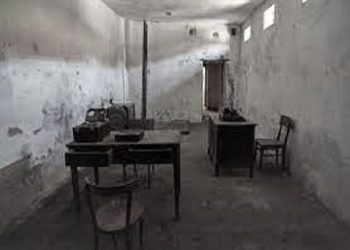
A scene that never leaves my mind; especially the way uncle Bardhi walked handcuffed, on the day of the arrest! Completely calm, very arrogant, with an open figure and all dignity. Did they give him any honor or decoration, meanwhile, before the trial was held; it was known that he would be sent to the lousy prisons of communism!
This gesture of human dignity, to people who do not know much about what communism was, looks like a personal act, but in fact, it was not just a personal attitude of a brave and proud man. Uncle Bardhi had a family, which unfortunately he was turning his back on! He was already abandoning his 4 unborn children, Lisa, Sokol, Jona and Buc, as well as his noble wife, aunt Lirie, who also left this world a while ago!
The fate of children, women and family members was the most terrible trial and torture for those men who had the hard part of facing the violence and injustice of communism! Because communism did not punish individuals, but punished families, tribes, and even entire provinces!
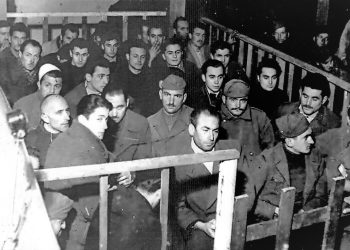
That scene of Uncle Bardhi’s arrest was often shown in the detention centers, at the turn of the 70s and 80s, with the men of our class, who were arrested in series, on the same charge: – for agitation and propaganda.
The scenarios of the arrests were the same and aimed at terrorizing our entire class, as well as instilling psychosis in all the young people of that time, that soon, it would be their turn too. We have endless facts and evidence of this scenario, which aimed to produce innocent culprits, with the aim of punishing the next victim.
And under that psychic torture, such courageous gestures, like Uncle Bardhi’s standing before the Security executioners, were like a guiding light for our eyes, minds and hearts. That attitude was like a clear message that communism, no matter how hard it tried, could not trample on our dignity as people!
The awareness of the origin, the pride in the patriotism of our ancestors and the disregard of fear in the face of communist sadism, were practically a form of opposition to the regime, which they felt and understood very well.
The various communist officials often mentioned that expression: “your time will not come again”, as if they were trying to convince themselves of the fear that day caused them. Indeed, the dignified attitudes of our parents, the challenges like that of uncle Bardhi, which I still have in front of my eyes, were a source of strength and comfort for me and all the young men and boys of my generation.
On the other hand, remembering that day, beyond the sadness and regret for the news of parting forever with our beloved man, I felt somehow liberated and relieved, by the fact that Bardh Kupi has been and will be remembered as an icon of resistance and dignity, in the face of the violence caused by the Slavic-communist system.
Exactly, this moral strength, which he has demonstrated against the blind tools of the system, make us proud today and, as long as life lasts, that despite the suffering, almost half a century, the name of uncle Bardhi will always be written in letters of gold in the book of honor of this nation. His figure was in complete harmony with his name, pure and white as crystal, despite the poison, the scum of unceasing violence through prisons, exiles and relentless persecution.
On this occasion, allow me to describe very briefly, in my view, some highlights from the life of this man, the parent of the invincible anti-communist!
First, Fatbardh Abaz Kupi, is a “manual illustration” of how a system would sterilize for 45 years, constantly and mercilessly persecuting the son, because of his father! Without committing any crime, without any violation of the law, without anything with which anyone could be punished? Simply, some “inheritance” of punishment! The biggest paradox lies in the fact that his father was the architect of the first national, institutional resistance on April 7, 1939, against the Italian fascist occupation.
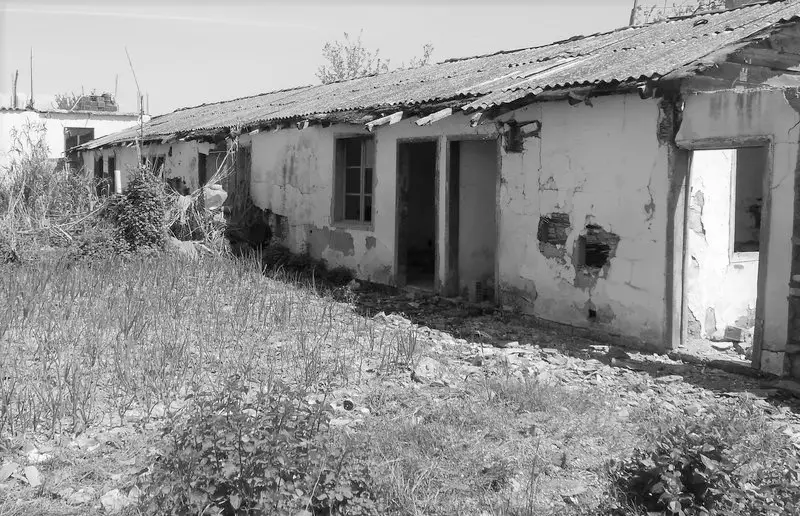
It is here that the odyssey of Bardhi’s sufferings begins, which, unfortunately, would not end until the fall of the Berlin Wall. Bardhi, not only would not give himself up, for his sufferings, which would continue in a chain, starting with the exile from fascism, in Himara and later in Italy and, until the last exile, in Gradishte, but he had no not even the slightest remorse.
Secondly, with the installation of the Slavic-communist dictatorship, the ordeal of his indescribable suffering would begin, trying the first prison, continuing with the exile in Tepelena, Berat, Kuç, Porto Palermo, Çorovodë, Savër, Gjaze, Grabian , Gradishte…! Further, with the second prison, in Ballsh and Qafë Bari, where he would say: “I have done everything knowingly, that it is worth suffering, for a hero father”!
That is, it was an honor that he was suffering for his father, whose name gave him inspiration, strength, hope, courage, self-confidence to face everything, despite the difficulties. In fact, this is one of the most prominent characteristics of Bardhi: – readiness for self-sacrifice, for the sake of his father’s name, which he idolized!
Thirdly, Fatbardhi, in addition to the inflexible personality that radiated and the pride of being the son of Abaz Kup, another reason that would strengthen his character was the oath he had made to his father to take care of his mother and sisters his, and to never leave them alone!
The order that he considered sacred and that he carried out perfectly, like a halal boy! Fate did not smile upon him to meet his father, to tell him verbally: “Father, I have completed the order”! And this was a hostage for the White, as much as it was in this world! The great God wills and unites them in that world with each other…!
Fourthly, I would like to remember that I had the good fortune to meet and talk often with Bardhi, especially after the 90s. I remember that he was disappointed with the course of political events in Albania, and especially with the fate of the real right. He was worried about the fact that our class did not manage to find itself in these 25 years of political whirlwinds.
With his extraordinary wisdom and calmness and with the strength of his argument, he always encouraged us young people to be more active in the direction of strengthening the right. Also, he lived with the problems of Kosovo, and in his eyes, it was no different from the “official” part of the Albanian state.
Finally, Fatbardh Kupi was peerless in terms of simplicity. He hated people who suffered from delusions of grandeur. He was a perfect man with a big heart. You never heard him talk about himself, or complain, despite the fact that he had gone through terrible suffering. He will be remembered as a model man, in terms of endurance, wisdom and generosity, and without fear I say that he is the most complete embodiment of Albanian nobility.
Sincere condolences to the family for the loss of their beloved and dear man! The most sincere condolences to fellow sufferers of prisons and exiles for the loss of an unforgettable brother and friend! Sincere condolences to the Legalists for the loss of a fellow devout idealist! Sincere condolences to lovers and friends for the loss of the model man! May his memory be eternal!