By Ndriçim Kulla
The Masterpiece “Laocoön”
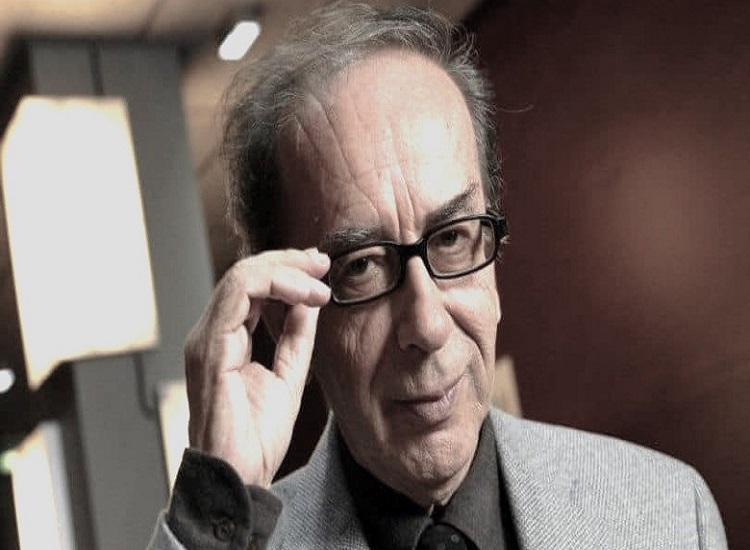
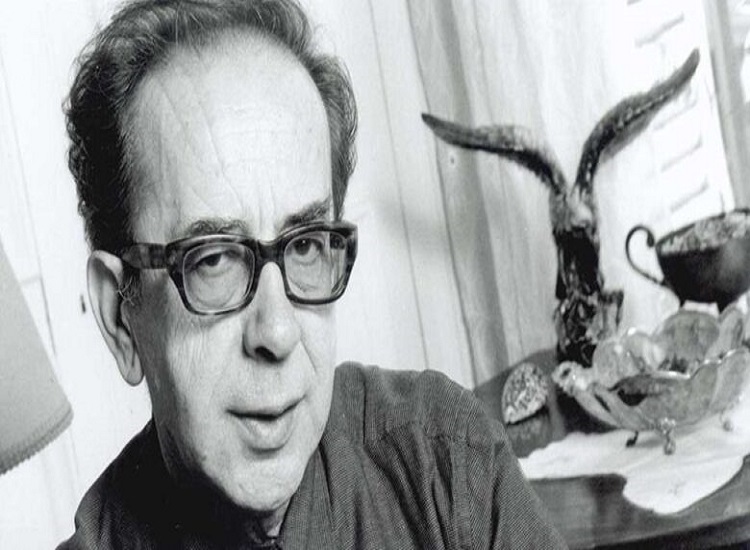
Memorie.al / With this piece I want to share with you a particular pleasure: the creative work I am undertaking in the field of culture, through the writing of a book dedicated to the writer Ismail Kadare. Kadare is no longer physically among us, and the laws of nature cannot be changed. But through his monumental oeuvre, with which he raised Albanian values to the heights of world culture, he remains among the most alive. As such, he will be read and remembered for eternity. The essay I am presenting to you is part of a re-evaluated judgment of mine concerning Kadare’s contentious dissidence, which will be included in this book. I thank and respect anyone who may hold a different opinion from mine, because in the end, it is time that makes the rightful reassessment. With gratitude.
The Silent “Laocoön”: Suffering, Masking, and the Secret Dissidence of Ismail Kadare in the Communist Regime.
There are writers who confront tyranny with a shout, and there are others who confront it with silence. The former immediately enter history as visible opponents; the latter remain for a long time misunderstood, suspected, even accused of compromise. But in a totalitarian regime, where speech is controlled and any open declaration is an act of suicide, silence is not always surrender. Sometimes it is the highest form of resistance. In this sense, the figure of Ismail Kadare remains one of the greatest paradoxes of Albanian culture: a writer who lived within the system, yet constantly challenged it; an author who made no direct political appeals, but who built a literary universe where power appeared as absurdity, as nightmare, and as organized crime against the truth. And perhaps nowhere else is this more evident than in his poem “Laocoön.”
This work, hidden under the modest label of a poem, but in essence a grand poem, is one of the most startling and most undervalued texts in Albanian literature. It is not merely a recreation of the ancient myth – it is an autopsy of lies, an act of accusation against the mechanism of distorting the truth, and, above all, a testimony to the anxiety of a man who knows that history can be falsified. The figure of “Laocoön,” known from Greek myth as the priest who warned the Trojans about the danger of the wooden horse and was condemned to death by the gods, is transformed in Kadare’s hands into a new symbol: not of divine punishment, but of political elimination.
In this poem, “Laocoön” is not killed by serpents. He is killed by the Trojans. This shift is crucial. Because it overturns the entire myth. It strips the event of mystique and places it in a brutal reality. Truth is not destroyed by external forces, but by the very society that refuses to hear it. And here begins the parallel with the fate of Ismail Kadare himself. In a regime like that of Enver Hoxha, where truth was the property of the state and history was written according to the needs of power, any voice that attempted to say something different had either to remain silent or to mask itself. Kadare chose masking. But this masking was not an act of fear. In fact, it was a survival strategy and at the same time a form of communication with the future. Because “Laocoön” was not written for contemporaries. It was written for readers who would come later. For those who would know how to read between the lines. For those who would understand that the “serpents” are propaganda, while the “Trojans” are the internal mechanism of betrayal, slander, and elimination.
In this sense, the poem becomes a testament. An encoded message that says: do not believe the official version of this history. Because the official version is always the lie of the victors. And this is perhaps one of Ismail Kadare’s greatest sufferings: not merely the fear of physical punishment, but the fear of the falsification of truth. The fear that one day history would present him differently from what he was. The fear that he would remain trapped, like “Laocoön,” in a “false testimony.” This is a suffering of existential depths. Because for a writer, truth is not merely a moral issue. It is the very reason for his existence. And when this truth is at risk of being distorted, the entire meaning of his creative work is called into question.
In this light, one must also read the anxiety of repetition in the poem: the desperate effort to tell the truth, with the absurd hope that one day even the “marble” will change. But marble does not change. It is the symbol of the frozen, official version of history. And faced with this marble, the writer remains seemingly powerless. But only seemingly. Because in reality, he has done something far deeper: he has planted a time bomb inside his work. A truth that would explode in the future. This is why Ismail Kadare cannot be judged by the criteria of classical dissidence.
In this sense, “Laocoön” is one of the boldest acts of this resistance. Because he does not simply denounce a regime. He denounces a universal mechanism: the way societies create lies to justify their crimes. And precisely for this reason, this work has largely gone unnoticed. Because it demands a difficult reading. A reading that does not stop at the surface. A reading that acknowledges that literature can be truer than official history. And perhaps here lies another paradox of Ismail Kadare’s fate: he managed to survive in a regime that destroyed many others, but this very survival became a reason to question him. Many sought dissidence in declarations. While he had hidden it in metaphors.
But the history of literature teaches us that often metaphors are stronger than declarations. Because they live longer. And above all, they escape the lie. In the end, Kadare’s “Laocoön” is not merely a mythological figure. He is the writer himself. Strangled not by serpents, but by versions. Killed not by force, but by manipulation. And condemned to await a future where someone will understand what really happened. And perhaps today, precisely today, we are those who must undertake this reading. If we do not, then the serpents will continue to win. And the Trojans will remain invisible.
If “Laocoön” is read carefully and placed in relation to the entire internal architecture of Ismail Kadare’s oeuvre, it becomes clear that we are not dealing with an isolated text, with a random poetic outburst, but with a hidden knot where some of the deepest threads of his literary thought are tied together, a point where mythology, history, and the writer’s personal experience intertwine in such a way that this poem becomes not only an aesthetic act, but an encoded testimony of a continuous existential drama under a regime that controlled not only life, but also its version.
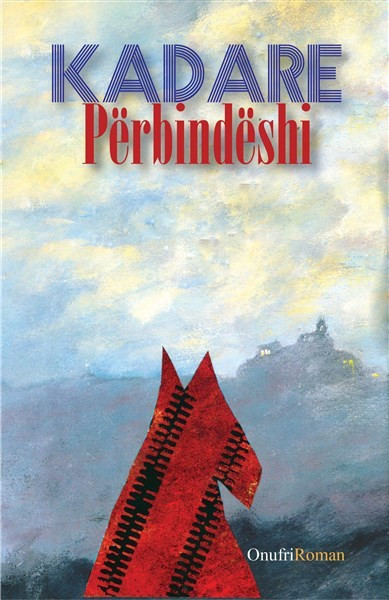
“Laocoön” cannot be fully understood without being placed alongside *The Monster*, because what appears in the poem as a mythical figure killed by a collective lie, in the novel takes the form of a concrete mechanism of manipulation, where the Trojan horse, transposed into a modern and absurd reality, is no longer simply a dangerous object coming from the outside, but a symbol of a threat accepted from within, an act of self-surrender by a society that fails to distinguish between warning and deception, between truth and the imposed version. Precisely here arises a clear line connecting “Laocoön” with the silent hero of The Monster. Both are figures trying to articulate a danger, both are voices that go unheard, both are destined to lose before a collectivity that has chosen not to understand, because understanding would require an act of courage and society is not ready to make it.
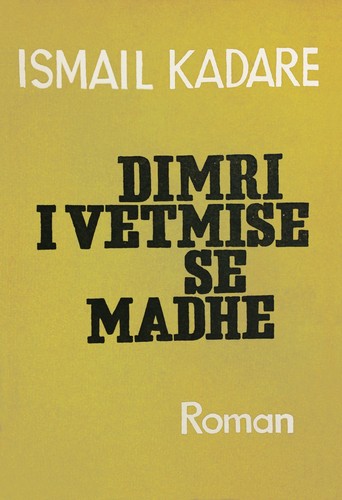
If The Monster is a powerful allegory of deception and its acceptance, then The Winter of Great Loneliness is another step, a shift from myth and allegory toward concrete history, where the clash between Albania and the communist world, between isolation and openness, between ideological loyalty and political reality, creates a terrain where truth becomes even more dangerous, because it is no longer merely a matter of interpretation, but a matter of power. In this novel, which ostensibly treats a specific historical moment – the break with the Soviet Union – there unfolds in essence a much deeper drama: the drama of a system that tries to survive by constantly producing new versions of the truth, rewriting events in real time and turning history into an instrument of legitimation, a process that frighteningly coincides with what happens in “Laocoön,” where the false version of the hero’s death is spread by the rhapsodes and hardens into collective memory. This is perhaps one of the most enduring themes in Ismail Kadare’s work: the clash between truth and version, between reality and lie, between what happens and what is allowed to be said to have happened. And in this clash, the writer does not position himself as a direct political actor, but as a disguised witness, as a new “Laocoön” who knows he cannot speak openly, but who nevertheless does not agree to remain completely silent, choosing a second language, a language filled with symbols, myths, and dual structures, where every sentence can be read on two levels: one for censorship and one for the future.
In this light, even his publication strategy – what in my book The Writer’s Star I rightly call creative “impudence” – takes on a new meaning: calling a novel a short story, a grand poem a poem, is not a mere formal trick, but a conscious act to pass through the filter of censorship, a way to introduce into the system something the system would never accept in its full form, a kind of literary contraband where the truth is transported fragmented, hidden, and camouflaged. And it is precisely this that makes Ismail Kadare’s dissidence so difficult to grasp through a superficial reading, because it does not appear in open refusal, but in constant tension; it is not articulated in slogans, but in narrative structures; it does not explode in declarations, but spreads like a quiet unease throughout his entire oeuvre.
If in “Laocoön” we have the anxiety of a man who knows he will be misinterpreted, in The Monster we have the fear of a society that fails to understand, while in *The Winter of Great Loneliness* we have a system that institutionalizes misunderstanding, that turns it into politics, into doctrine, into official history. And these three levels – the individual, society, and power – constitute in fact the tragic triangle of Kadare’s entire oeuvre. The individual sees. Society does not understand. Power rewrites. In this triangle, the writer is condemned to remain always in an uncertain position: between the need to testify and the obligation to survive. And this is his greatest suffering. Not the fear of punishment, although it is always present, but the impossibility of telling the truth directly, the obligation to tell it indirectly, to fragment it, to mask it, to disperse it across different texts, in the hope that one day someone will gather these fragments and reconstruct the whole. This is why the reading of these works today is not merely an aesthetic act. It is an act of restitution. An effort to liberate the truth from the forms in which it was forced to hide.
Because in the end, just as “Laocoön” tries to speak through the marble, so too does Ismail Kadare speak through his work, beyond his own time, leaving us before a question that remains open: have we finally learned to distinguish the serpents from the Trojans? Or do we still continue to believe the version we are told?
And precisely at this point, when these three works – “Laocoön,” The Monster, and The Winter of Great Loneliness – begin to be read not as separate texts but as part of a single system of signs, it becomes impossible not to notice that we are dealing with a conscious literary project, a long and persistent effort by Ismail Kadare to build a parallel language of truth, a language that does not openly oppose power, but surrounds it, undermines it, and dismantles it from within, forcing it to reveal itself involuntarily. Because what at first glance might seem like a play with myths, history, or allegory is in essence a continuous confrontation with the mechanism of producing lies, a detailed analysis of the way a totalitarian system is not content with controlling reality, but seeks to control its interpretation as well, building a universe where truth is not eliminated but covered by successive layers of versions, each apparently more credible than the last. In this universe, the writer is no longer simply a creator. He becomes a strategist. A man who must think not only about what he wants to say, but also about how he will manage to say it without being stopped, without being censored, without being eliminated. And this requires a double intelligence: one to create the work, and another to hide it within itself. This is why with Ismail Kadare we can never separate aesthetics from strategy. Because aesthetics is strategy. Form is the shield. Metaphor is the path to salvation. And in this sense, the very fact that “Laocoön” passed as a poem, that The Monster was presented as a short story, and that many of his works were published in reduced or masked forms, is not a peripheral detail of literary history, but a key to understanding how resistance functioned in a system where every word was controlled./Memorie.al