
By SAMI REPISHTI
Part Eleven
Sami Repishti: – In Albania, the communist crimes of the past have neither been documented nor punished; there has been no “spiritual cleansing,” no conscious confession, and no denunciation of ordinary communist criminals! –
– ‘In the Shadow of Rozafa’ –
Memorie.al / During the 1930s and 40s of the last century, as the unstoppable fascist and communist storm descended upon Europe, and sooner or later upon the entire world, “fate” seized the Albanian nation by the throat. Like all young people, I found myself at a crossroads where a stand had to be taken, even at the risk of one’s life. At that time, I said “no” to the dictatorship and took the road that had no end – a sailor in a vast, shoreless sea. The rebellious act that almost killed me also liberated me. I am an eyewitness to life in the fascist and communist hell in Albania, not as a “politician” or a “personality” of Albanian macro-politics, but as a student – a young man who became conscious of his role in that time and place, driven by love for country and a desire for freedom; simply, as a young man with profound sensitivity, faithful to himself and to a life of dignity.
Continued from the previous issue
There was no doubt that my country had entered a dead-end of the latest contemporary model. The new society had, with its own hand, murdered its moral ambitions. It was mangled by the ferocity of the spirit and the destructive act that sustained it. The “New Man” was merely a new monster, but more cunning! In him, everything was concentrated into one point: hate! In him, everything was directed by one feeling: revenge! In him, everything was inspired by one goal: an insatiable thirst for absolute power!
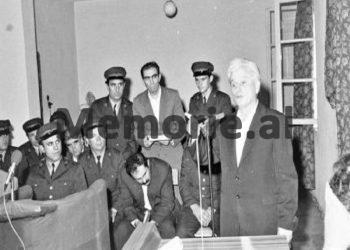
Political trials, administered by military authorities, followed one after another. In the capital, Quislings and erring nationalists were condemned publicly and with great noise. In the towns and villages across the country, groups of citizens were condemned in closed halls and in silence, facing the smallest and often absurd or fabricated charges, sparking terror among a bewildered population. The local authorities covered the tracks of their crimes with deafening public speeches and demonstrations. Every neighborhood created its own “council,” tasked with monitoring the activities of its inhabitants.
Endless political meetings consumed free hours with the listening of political reports read by semi-illiterate “agitators.” Silence and applause, while fear covered everything. During the dark nights, feelings of resentment simmered in an oppressed population, like a volcano ready to erupt at the first opportunity. In this darkness that enveloped us, everyone listened with a frozen heart to the disruption of the peace; and stealthily, slowly, toward morning – when the first glimmers of light in the east heralded the new day – one would raise their head cautiously, as if wishing to see something… beyond!
The crack of a burst of gunfire would cut the long thread of suffocating silence, breaking the stillness with a measured rhythm… and it felt as though it were plucking a falling flower, returning it to eternal rest. These were the nights of group executions, where along with the victims; the heart of an entire people was being murdered. The unbearable situation around us created a sense of an ethic of personal responsibility, especially among us younger ones, which later took collective forms. The “group” felt the need to judge the events and acts of the rulers. From the “group” came the push of dissatisfaction, the call for non-submission and revolt. Every day, it took a more concrete form with an explosive momentum that enabled the courageous act of facing the rapidly marching avalanche.
It was a revolt against injustice – not individual, but fundamental, general – against injustice organized into a system that stripped free citizens of their human dignity! What we lacked was an “ideology,” a systematically elaborated system of thought, particularly regarding our desires and aspirations. The conservatism of the previous society stood before us in all its insufficiency. Nevertheless, our country had a tradition of freedom that made us proud. Perhaps it was this pride that dramatized, in my eyes, the clash between the old world and the new, of which I was the hostage during those days.
This tradition, built with the blood and sweat of entire generations, was in danger of being collapsed by the fists of the new vandal. That tradition had to be nourished so as not to allow its complete and silent extinction. With a past we did not accept and a present we despised, nothing remained but to idealize an unknown future, dressed in the garments of youthful fantasy. Here began our sailing in the vast, shoreless sea!
In those days of searching for a way out, I met a Franciscan friar, Father Gjoni, whose name was mentioned with admiration by the city’s youth and inspired trust. In the twilight of one evening, I crossed the threshold of the Franciscan high school in the company of Ndoc, a trusted colleague, and climbed to the second floor. At a table in a reading room, we found the friar who welcomed us with joy. It was my first meeting with a well-known Catholic cleric. This decisive moment in my political formation was very important. With a characteristic simplicity of the followers of Saint Francis of Assisi, the friar greeted us. I felt “at home.” He asked me about the day’s events, and I spoke without interruption, from the heart more than from the mind.
He listened, smiling sometimes, but I was unable to see clearly on his face the effect of my words. From the window, the electric light of the city’s main street entered faintly. In that lightless room, I had the full sense of conspiratorial work, although our conversation was simply a dialogue – an exchange of thoughts that, in any other place, would be allowed to develop freely. But not in my country! The friar was more conscious of the seriousness of our meeting. It was clear he had accepted the meeting as an “illegal” act and that he desired it. He spoke to me with full conviction that the days we were living were difficult for everyone, but especially “for organizations founded on principles that oppose atheism.”
It was clear to him that the confrontation between the materialistic ideology and political system established by the “atheist Bolsheviks,” as he called them, and the idealistic ideology of religion – especially with the organization of the Catholic Church as an international institution – was inevitable, and this frightened him, “not for himself,” as he said, “but for the future of our Church here in Albania.” I could not see the friar’s face, which at that moment must have been very serious. But his voice came full, slightly heavy, though he spoke in a low voice.
The friar continued to describe the insoluble connection of the Catholic Church with the history of our country and Europe. “However, every time we have had the support of Christian Europe. Today,” he continued, “Europe is being divided, and our country is designated to be part of the East, where the Bolshevik order reigns. Today we are without effective protection from a strong government. Today we are alone!” After a short pause, as if wishing to reassure him before the challenge that threatened him with annihilation, the friar said: “We will not provoke; it is not our role. But at the same time, we cannot give up our faith and the Church of Rome. They are our life and our mother. Without them, our existence as clerics has no meaning.”
I spoke to him about the spiritual predisposition of the young people who, like me, were caught hostage by a situation that exceeded our powers to change, and that we lacked an “ideology” – a system of thought – and especially the preparation of a plan of action under the conditions created by the new dictatorship. He said he understood my dilemma and that of my friends, but he feared that the surge of our youthful enthusiasm would harm us gravely. “The enemy we face,” he emphasized, “is very cunning, with long experience in Bolshevik Russia, and entirely barbaric. You must be clear about one thing: Western civilization has not penetrated Russia; it is foreign to the Bolsheviks. In truth, it is dangerous to them. Today we have the clash of two giants, with two civilizations, not only different but hostile unto death.”
But the friar did not discourage our desire for action. On the contrary, he desired it. He tried to instill in our minds the absolute need for measured actions, as well as to make us conscious of the great danger we faced. He advised us that our every movement should be “common” and, especially, without religious distinctions. “I have heard,” he said, “that in Croatia, the anti-communist movement includes a large percentage of girls. We live in a new world, we face a new enemy determined to destroy us. I think that in Albania, too, the role of the woman must change…!” I asked to use the high school’s technical equipment (printing press), but he replied: “they have confiscated it.”
I told him we intended to prepare and distribute a tract against the “power” [regime], naturally illegally. He approved. He advised us to oppose the electoral elections of December 2, which the new power would hold for the purpose of legitimizing its ascent and stay in power. I promised him I would maintain regular contact with him and that I would respect his request to keep the meeting secret, and we parted. Three months later, a wave of mass arrests of the Albanian Catholic Clergy in Shkodra included my friar. Like the other clerics, he was tortured, accused of “treason,” sentenced to death, and executed…! Meanwhile, we had distributed two illegal tracts and protested by means of a memorandum in the French language the “manipulation” of the voting to the “allied” authorities who visited the country in those days. Our initial success had gladdened the friar isolated in the Convent.
After his arrest, our group was shaken. We all lived with the fear of our contacts being discovered. The distribution of the illegal tracts was attributed to another group of youths, who were unjustly sentenced. But from the friar, not a single word came out. Perhaps, only in the dark prison cell, awaiting execution, he must have thought of our meeting and our group, and must have prayed for us and for our work, which he had begun to value. Perhaps, in those moments of solitude, where only the voice of conscience is heard clearly and where strength comes only from faith in a high, unbreakable ideal, this son of Saint Francis would have been comforted by the thought that, outside the prison walls, a healthy, courageous youth was growing – one that did not accept moral degeneracy and shameful submission to the “Bolshevik” dictatorship, and that this youth remained the only hope for the survival of our nation and, consequently, the continuity of the Catholic Church in Albania.
This thought and this hope must have comforted our friar, this dedicated Albanian Catholic Cleric, sentenced to death despite being innocent…! The “legitimization” gained through the manipulated parliamentary elections was understood as a free hand for actions, legal and illegal. The force of authority bypassed every obstacle; it became all-encompassing, omnipotent, and irresponsible. With this mandate, the mobilization of the population for large-scale actions began. Groups of volunteers, especially youth, were mobilized to subdue the local population. Such treatment sparked old enmities, and this created opportunities for old vendettas “by the hand of the regime.” Traditional Albanian society and its code suffered a heavy and fatal blow.
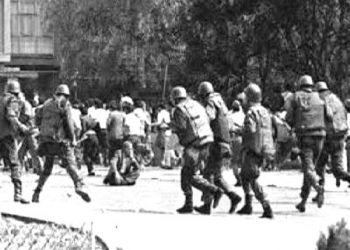
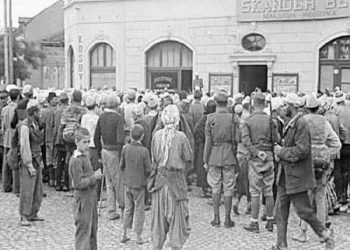
The effects of such a “mobilization” were quickly seen, especially in the country’s villages. With the arrival of the summer season, in the wheat threshing floors or village centers, party members – omnipotent masters of the lives of local residents who had lost the protection of the law – made decisions “in the name of the Party and the people.” Local squads meticulously executed the orders given by the unquestionable patron: there, in those work floors, men were beaten with wood, worse than animals, under the eyes of women and children who screamed and begged for mercy, while the males remained silent out of fear. There, in that village square, old and young were executed as examples for others – guilty because they had not had the courage to die with a weapon in hand. It was a time to choose: face the exterminating storm or suffer its destructive force. Most suffered it without revolting, because they were convinced of their innocence.
They failed to understand that it was not “guilt” that was being punished. Either crush with your foot, or lay yourself flat for the foot as a crossing bridge for the new oppressor… suffer and die crushed! On the pedestal of the gods where the communist rulers stood, relations with the common man were determined by the rising and falling intensity of the tyranny reigning in the country. Before this tyranny, exercised by an oppressive government, the relations of the rebel and the victim with the red gods were regulated by the holder of absolute power. The permanent confrontation of victim-executioner contained the essence of the Albanian tragedy of those years: rebel heroes who were killed, and the lives of subdued victims that were extinguished in a suffocating and imposed silence by the greedy, blind, and mindless Olympus!
The Albanian communists who directed all aspects of the country’s life had not understood even the most basic facts. They did not accept the principle that nothing justified the loss of a human life and that every Albanian – from the independent highlander of Kelmend to the Lab seeking work to provide bread in Vlora – was a human being, free and with dignity. They did not accept that every inhabitant of this land that was being burned with fire, in this place that was watered with innocent blood generation after generation – regularly, as if it were “ordained by God” – everyone was a son and daughter of this common land, for all, and which was called fatherland by all, a common home for all, without any distinction. During the years of fascist terror, amidst the enthusiasm of victory over the foreigner, seized by admiration for so many fighters who threw themselves into the flame of the altar of freedom, I found no peace from joy.
But, did this precious amount of will for a liberating action truly have value today, in the face of the contemptuous attitude toward humanity?! What was the weight of yesterday’s struggle before the moral degradation into which they had fallen today, before the absurd attempt to improve the quality of the Albanian “new man” through violence?! Which arms would again raise the bodies fallen to the ground by the crushing fist?! Which tongue would again pronounce the inspiring words for ears deafened by the crack of murderous weapons?! Which hand would again and with love squeeze the other hand with fingers sever in torture?!
Which building of soulless material would stand on foundations opened like collective graves?! Those who build ugly towers for peaceful housing centers are gravely mistaken: in the middle of the night, when everything rests, from the ground covered beneath heavy stones, the wailing of the innocent – thrown haphazardly by the partisan kick – will rise every night, echoing like the bell of the tidings of death. Which conscience burdened by crime will then is able to rest peacefully?! The worm of the crime committed will not rest until it mercilessly gnaws even the furthest corner of the guilty conscience. Only the animals that do not understand human suffering – only they will survive! The continuous arrests and sentences kept the population in a permanent state of tension and fear. The accused were no longer “collaborators” of the occupier.
In the courtrooms, prominent figures of the “National-Liberation War” and of the resistance against the invader appeared. It was clear that the new regime was headed toward an unconditional, unreserved total political monism. Our group increased the frequency of its meetings, but due to a lack of technical means, it was limited only to discussions that exposed the illegal acts of the new power. Relations with the outside world worsened every day and by design, by a government that, step by step, was entering the sphere of Yugoslav influence.
The presence of a considerable number of Yugoslav instructors, the distortion of bilateral agreements – all to the detriment of our country – and especially the perspective of a “Balkan federation” under Tito’s leadership provided the necessary material for long and passionate discussions. We lived in a fiery atmosphere, threatening yet inspiring for action at the same time. Everything that was seen, every news that was heard, justified our stance and our resistance.
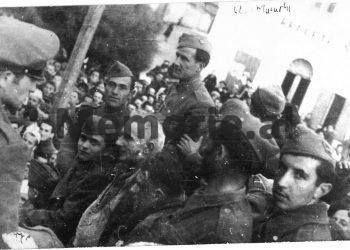
In May of the year 1946, the first anti-communist demonstration took place in the city – quiet, but powerful and entirely spontaneous, under the eyes and observation of the Sigurimi. It was the funeral of the Catholic Archbishop, who died while being held under arrest on his deathbed. A grand display of popular sympathy for a victim of the regime’s persecution electrified the city’s atmosphere. The funeral procession passed through the main streets and around the central Cathedral, where final prayers were said. The countless crowds, Catholics and Muslims, followed the coffin in silence and dignity.
Our spirits were exalted, our minds clear, and our desire to show hostile feelings against the dictatorship that day overcame the fear of persecution by the State Security, which followed us step by step. That day, all participants, without distinction of faith, felt Catholic, democratic, Albanian – united against the common enemy, the communist dictatorship, in an effort to regain the freedom snatched by force.
Over our heads, the warm spring sun of May! Dissatisfaction was general. Everywhere signs of a desire to organize, to act, to face the dictatorship that weighed more every day, to break the iron link that tightened more with every hour, were seen. Like the Israelites of Nazi Europe, we found ourselves before an official psychology based on the denial of our existence as “humans.” Beginning with the slogans “with us, or against us,” the communists told us without any hesitation: “You have no place here!”
Later, when the power was strengthened, they tightened the iron circle: “enemies of the people to the gallows!” until they removed the mask: “Take the axe and strike the head of anyone who dares to speak…!” Simply put, this slogan meant: “Submission or death!” Before this threat, our determination to resist submission grew even more. We were members of a large movement that fulfilled our emotional and logical requirements.
We were convinced that our movement was progressive for that time and for our country. This gave us support; it answered our questions. It was a movement that was being built to cast off the oppressive burden that made the absurdity of our situation more bearable. From the concept of the “working class” enemy in a country without a working class; of the exploiter in a country where all were exploited by the poverty that accompanied them like a torn shirt on the body from the cradle to the grave; of the oppressor in a country that for three thousand years tasted only the oppression and contempt of the foreigner – the dogmatists of communist darkness moved to the more concrete concept of the “enemy of the people.”
Which enemy?! The forgotten peasant of Dibra, or the naive shepherd of Luma and Tropoja?! The skeleton of Mirdita that was never sated with bread because it was hungry for freedom?! The woodcutter of isolated Puka, or of enchanting Dukagjin, who still wears the ram’s skin as his only clothing, winter and summer, because the desire to live free in the crags is stronger than the city’s pay that locks him in the barracks of Kiri! Memorie.al
To be continued in the next issue