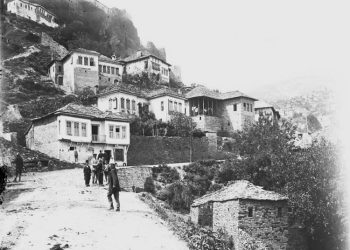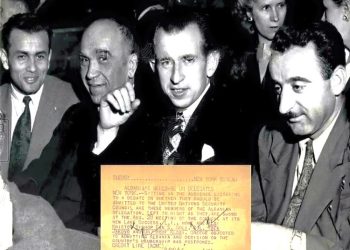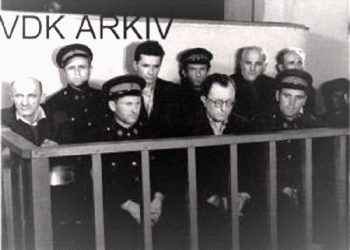
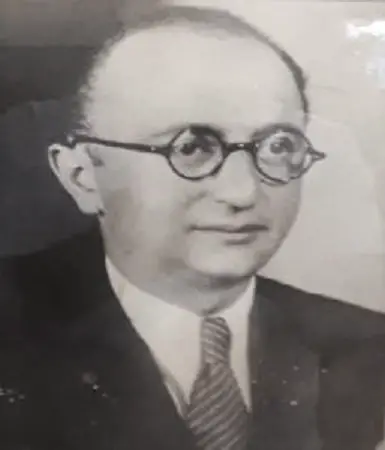
Memorie.al / In January 1910, Fejzi Selfo, a prominent intellectual and patriot, was born in Gjirokastra to a family of patriots. In memory of his life, work, and the communist persecution of him and his family by the communist dictatorship in Albania, we are republishing several fragments from the book titled “Telling the Stories of the Selfos” authored by the scion of the Topulli family, Bajo Topulli. Here is how the author Topulli begins his notes: The Tragedy of the Selfos of Dunavat. “Xhevdet Selfo and his sons who worked for the flourishing of Albania!”
The great clan of the Selfos, and especially the family of Xhevdet Selfo, besides their patriotic merits, is among the first to have contributed to the establishment and development of several urban centers in the cities of Southern Albania, starting from the year 1921. Xhevdet Selfo, unlike many Gjirokastrians who invested in agriculture and livestock, or who kept their money – their “gold” – hidden in chests, did the opposite. He and his sons initially engaged in urban construction investments, starting from Saranda, Gjirokastra, and later in Central Albania, up to Tirana.
The Government of Lushnja was the first Albanian government to receive aid from European powers for the stabilization of the Cham population, which, following massacres by the Greek government, was forced to move to the southern territories. Xhevdet Selfo’s construction firm, organized with engineers, workers, and material resources, took on the responsibility and built over 40–50 single-story buildings in the city of Saranda, where a portion of the Cham population was settled.
Later, he began building two – and three-story villas, some of which still exist today. Xhevdet Selfo and his seven sons also invested in other directions, such as the trade of plumbing materials, fabrics, etc., opening numerous shops in Gjirokastra, Durrës, and Tirana, and establishing links with foreign firms. Thus, in the 1930s, they were investing in several sectors and employing hundreds of people. One direction was the opening and development of roads, partnering with foreign Italian firms; Fejzi Selfo, in particular, dealt with these works.
Xhevdet Selfo, who with his ability gave his sons the respective education both inside and outside Albania, was our neighbor. He had a large three-story house with a garden, trees, and flowers, and certainly workers for maintenance and servants. Of the many Selfo children, I remember only two sons: Agim, the eldest, and Pëllumb, my peer, with whom we played together every day. When Uncle Xhevdet grew old, he stepped back from managing the activities, leaving the burden to his sons, who were also capable administrators and accountants.
He used to descend and ascend to his house on a large “Martino Franca” breed donkey, led by the bridle by a boy from Dunavat, and only he served him. This boy later became an officer in the Ministry of Internal Affairs (I don’t remember his name), but he spoke well of that family. The Gjirokastra Gymnasium, built in a modern style, is a work of the Selfos and exists to this day. I am not certain about the new Municipality (today linked with Tourism), but the beautiful houses in Varosh, the Zigaj building, or that of Themeli Lito, were built by them. Numerous villas built by the Selfos still exist today in Durrës and Tirana.
Xhevdet Selfo’s sons were generous and characterized by simplicity, communicating with everyone. Naturally, regarding the national cause, they could not remain silent or neutral. Some sons worked in Gjirokastra, others in Durrës or Tirana. I remember Qazim Selfo, who was a friend of us Topullis. He held nationalist views, so it is understood that he ended up in the ‘Balli Kombëtar’ organization… indeed, I do not know his ultimate fate.
His eldest son, Agim Selfo, joined the youth of ‘Balli’; he was a boy of about 17–18 years old. I saw him for the last time with a long rifle. When the ‘Balli Kombëtar’ forces attacked the “Perugia” Division of the Italian army in Gjirokastra, he did not stay behind, but crossed the barbed wire and… Remained there with the other Ballists.
I do not know how Qazim Selfo ended up after he went to his brothers in Tirana. Reis Selfo, like Agim, was a nationalist, as were Qazim and Fejzi. On the other hand, Halit Selfo embraced communist ideas from the beginning. He was a partisan and managed to become the commissar of a unit in the south. Masar was Xhevdet’s fourth son, who, despite dealing with economics and trade, suffered along with his other brother; they were removed entirely from Tirana and sent to Shkodra, until they ended up working with bricks and mortar. And who?! Those who gave everything to the National Liberation War.
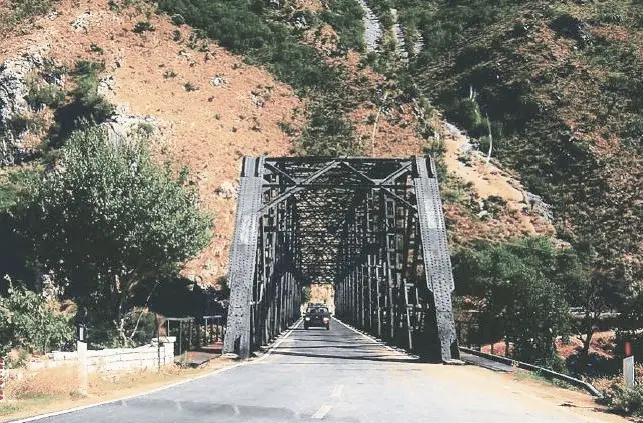
The development of the Selfo firm’s activities made possible the connection of Southern Albania with roads and monumental bridges, such as the Dragot Bridge, the Bënça Bridge, etc. The inauguration of the Dragot Bridge took place on February 29, 1936. The contractor was the renowned Italian company “Ansaldo” of Genoa, and the subcontractors were the gentlemen Selfo – Calculli, while the works were directed by the distinguished engineer, Corrado Confalonieri. This bridge was built with SVEA loan funds and cost 353,952 gold francs. The length of the bridge was 108 meters; the width including the sidewalks was 7.5 meters.
The height from the water surface to the peak of the bridge was 27 meters. It weighs 500 tons of iron. Reis Selfo oversaw this bridge personally, and when the inauguration took place, the elite of Gjirokastra wanted to name it the “Selfo Bridge.” But the brothers modestly refused. That bridge connected Gjirokastra with Përmet, the northeast, and Berat. In terms of construction, method, stable dimensions, beauty, etc., it remains to this day among the most accomplished and beautiful of its kind in Albania. So, these were the Selfos, and this bridge, as well as their other works, are appreciated even today.
By an irony of fate, this family that gave everything suffered terribly; afterward, they “suffered the black of the olive” (endured extreme hardship). And from whom?! From those faithless people who did not acknowledge the good they had done. Like all traders, owners of land and livestock, factories, and even workshops, the Selfos after 1945 were caught by the terrible law of confiscations under the motto “Extraordinary profits during the War.” Thus, even those who had helped the War did not escape the extraordinary taxes. By hook or by crook, the sums each owner (Aga, Bey, or…) had to give were set. These “taxes” and “fines,” both at the center and in the districts, were determined by those in charge – some envious and lazy people, simply because they had fought. All under the slogan “War against the exploiting classes!”
They took and confiscated the Selfos’ shops filled with numerous goods, their houses, and their villas, where people of high position moved in, such as the Pashkos in Tirana, etc. In our neighborhood of Dunavat, Xhevdet Selfo’s house, which I described above, now looks like a wreck that… surely, as in Tirana and elsewhere, was taken to shelter the new class that seized power after 1945. This is what I intend to say in these pages about the Selfo family and the tragedy suffered by those noble sons and talented workers. But I am compelled to mention something about two of Uncle Xhevdet’s sons, as this was prompted by Enver Hoxha’s widow, Nexhmije, in a television broadcast.
Enver Hoxha in Tirana, not only when he went underground but even before, benefited from Syrja and Reis Selfo through aid in money, food, and clothing, and even shelter. Generous help that a noble family typically gives. Not only did they protect him, but they also gave money and gold to the Movement. However, in his book, “Memories of Childhood,” Enver Hoxha writes very poorly about Fejzi Selfo, unfairly denigrating him as if he were a “dunce” who didn’t study, while in fact Fejzi mastered three foreign languages: Italian, French, and Greek. But he forgot who later supported him with money, shelter, and trust. Those peers, who knew him, albeit in a half-whisper, tell the opposite. Furthermore, he says with contempt that Fejzi became a “filthy Ballist”…!
How can the new generation understand Enver Hoxha when, in another of his books, he speaks of Syrja Selfo, who was allegedly killed by Koçi Xoxe, and Enver supposedly asked him: “Did you torture him?” “No,” Koçi Xoxe says, “look, he admitted himself that he was an agent (showing the signature).” The lady mentioned this in the broadcast, but she did not mention Reis Selfo, Syrja’s brother, who was executed in connection with the so-called “bomb at the Soviet embassy” in the early 1950s. If Koçi killed Syrja, why did Enver allow or order Reis to be executed now that Koçi was eliminated?!
And what about Dr. Enver Sazani, who was “allegedly” his close friend, with whom he had friendship everywhere including France – why did he allow him to be killed? I won’t speak of his brother-in-law, Bahri Omari, the great nationalist and anti-Zogist, who was a unique Albanian because he had his own ideals. It is known that Bahri helped him, sheltered him, and raised this man…! Fejzi Selfo was the son of Bahri Omari’s paternal aunt. And what remains of all these tragic truths after what Mrs. Nexhmije said with pride: “Enver was a man who did not interfere with Koçi Xoxe or Bedri Spahiu”…?!
How astonishing and cynical?! As if he would interfere to make them ministers, while they were sentenced to death, undeservedly! Public opinion, both yesterday and today, cannot accept this “reasoning,” which convinces no one; on the contrary, it gives ground to those who say that Enver Hoxha eliminated these “comrades” and “friends of his”… because they knew many things that…!” But as if these were the last ones..!
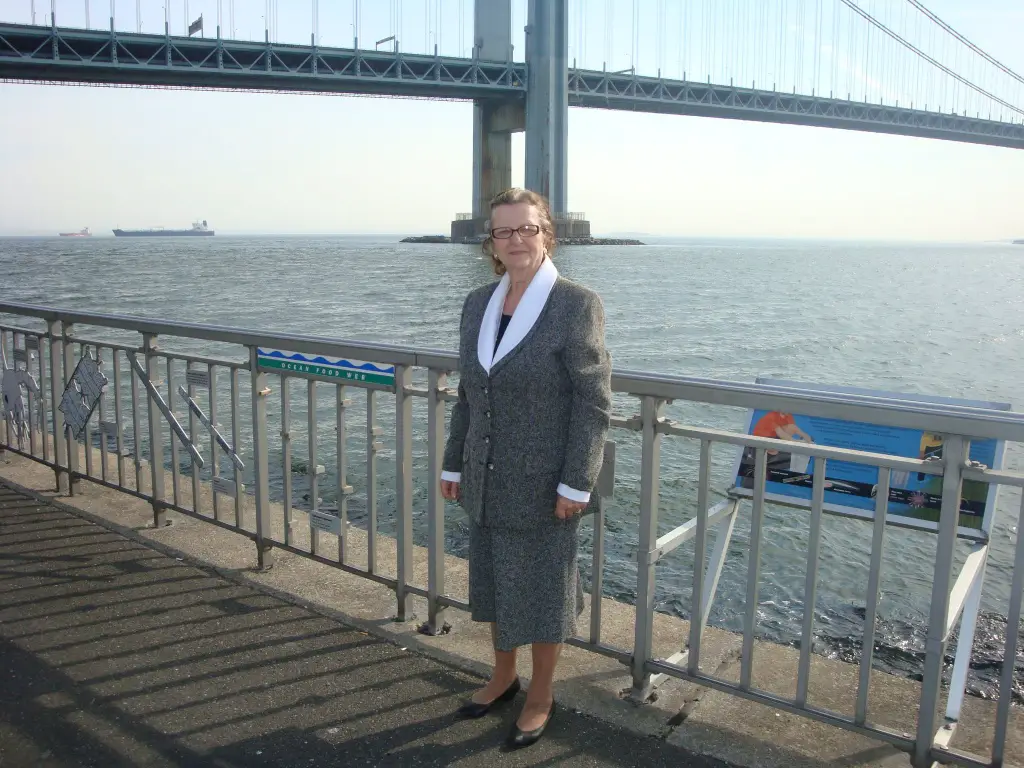
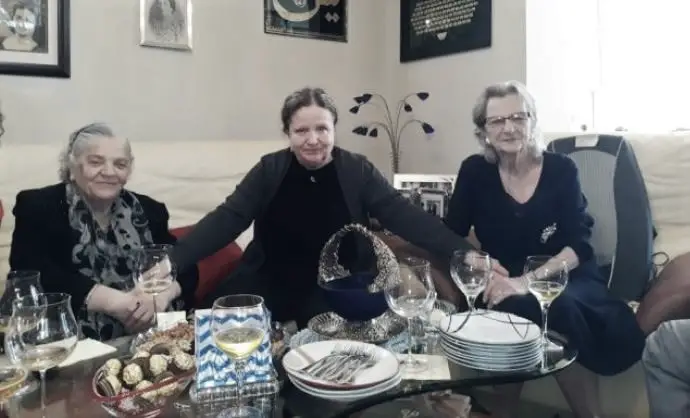
Note: The fragments of the book “The Tragedy of the Selfos of Dunavat” were republished at the request of Fejzi Selfo’s daughter, Ms. Flora Selfo.
Dear readers, here end the notes of the scion Bajo Topulli, where he writes about the nobility and communist persecution of the great and patriotic family of Xhevdet Selfo and his sons. One of them, Fejzi Selfo, who gave so much for his nation and homeland, was rewarded by the dictator Hoxha with imprisonment, and the execution and killing of his brothers and nephews. This included not only Agim and Hajredin (Çoço) – who was executed a year after the murder of his father Reis – but the total expulsion, internment, and exile of the entire family, including his daughters. One of them, Ms. Flora Selfo, lives today in the USA with her son Akil and his wife, Dolora – a former political internee herself – who, besides graduating brilliantly from university in America, defended her master’s and PhD with high results. They are excellent people, kind to everyone, not vengeful, but seeking the implementation of the law for every violation and injustice; they stand for democracy and the peace of the Albanian people, the American people, and all oppressed peoples in the world./Memorie.al