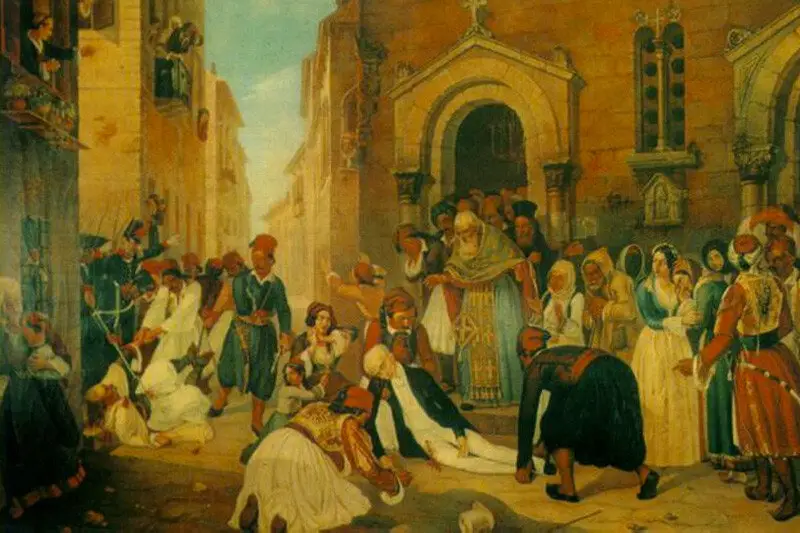
Memorie.al / From the bosom of the people of Chameria, in all times, brave men have emerged who, through their deeds for the freedom of their own people and nation, distinguished themselves even in the wars for the freedom of other peoples. They shine like stars in the glorious history of our nation; they are oaks with deep roots in the soil and in the heart of the people, because their freedom‑loving struggle has immortalized them, and time has sanctified them, like the oaks of Dodona “Thesprotis,” as Aeschylus called “the famous oracle of antiquity” that “… existed for thousands of years before the Greeks and Hebrews came into existence” (Robert Temple) and built their own oracle at Delphi in the 7th century BC.
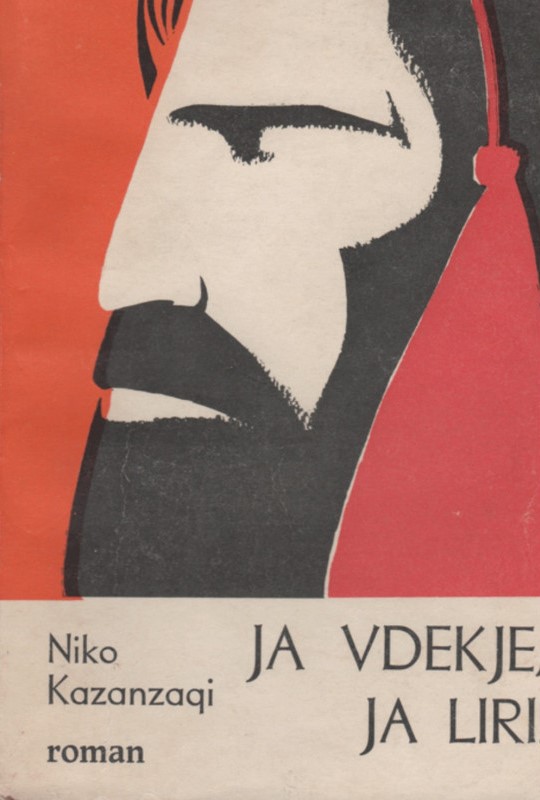
The great Greek writer Nikos Kazantzakis dedicated a voluminous book to this hero, entitled *Freedom or Death*. But the author, being a Greek of Orthodox persuasion, changed the hero’s name after his death from Mehmet to “Mihal” and stripped him of his Albanian nationality, according to the 1931 Greek encyclopedia, and thus the Greeks claim him as their own hero: Haxhi (Mehmet) Mihal Dalani, from Konispoli.
The leader of the Greek revolution, Dimitrios Ypsilantis, addressed the most prominent figures of Chameria: “Most honorable courageous leaders: Dalani, Çapari, and Pronjo, and all Chams. I salute you! I and the homeland thank you. And now, by uniting with us for freedom, you shall be considered our brothers.” (J. Filimennos, Dokimion istoriku peritis Elenikis epanastseos, 1858).
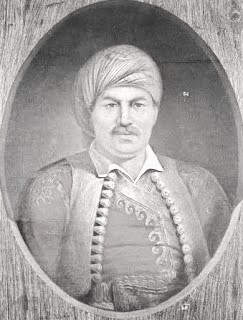
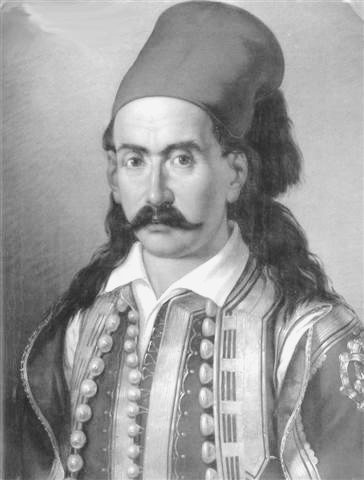
One of the stars that shines in the history of Chameria is Haxhi Mehmet Dalani. This distinguished man and popular leader was born in 1775 in the ancient city of Konispoli. He was an outstanding figure alongside Marko Boçari and Ali Pasha Tepelena. The historian Hotova writes: “His forehead with deep furrows, lively in appearance, strong in memory, sharp‑witted with knowledge, rich in experience, of strong character and profound reasoning.”
Haxhi was killed in battle on May 18, 1828, at the head of 800 Albanian fighters whom he led in a war to aid the Greek people in the liberation of the island of Crete from Ottoman occupiers. Haxhi Mehmet Dalani is regarded as a hero of Crete also in various scientific, historical and encyclopedic publications in Greece, under the manipulated name from Mehmet to “Mihal.” According to archival documents, foreign figures such as the British colonel and scholar William Martin Leake, as well as Pouqueville, the former representative of Napoleon Bonaparte in Ioannina, also mention him.
In the publications of these authors, “Mehmet Dalani of Konispoli” is mentioned as one of the leaders of Chameria who opposed the Pashalik of Ioannina, with the result that Chameria remained independent. In 1803, William Leake writes that Mehmet Dalani of Konispoli and Islam Pronjua of Paramythia, with 1500 men, marched to the mountains of Souli and helped the Souliotes break out of the siege by the Pasha of Ioannina.
They further state: “Dalani of Konispoli, together with the other leaders, formed the League of Chameria and helped the Souliotes return from Corfu to Chameria, giving them 45 bags of gold to buy weapons and ammunition. Thus the war against the Vizier of Ioannina, Ali Pasha, who had undertaken many attacks to subdue Chameria which remained independent and unconquered, was ignited.”
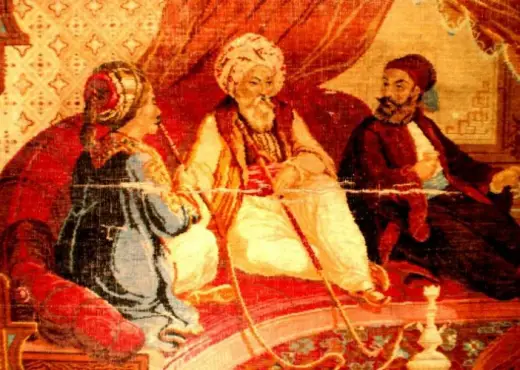
Leake, in his publication Travels in Northern Greece, writes: “The daughter of Mehmet Dalani of Konispoli had been married to Muftar Pasha (son of Ali Pasha Tepelena), then divorced him and finally married Selim Bey Koka of Delvina,” who was one of Ali Pasha’s opponents. The rupture of the family ties came because of the great contradictions created by Ali’s actions against Souli and, as M. Leake emphasizes, to get his hands on Konispoli, which would have been a great step toward his objective of subjugating all of Chameria.
When the “Greek” uprising began in 1821, the participation of Albanians in that insurrection was very great; as Aristidh Kola has determined, out of 10 leaders of the revolution, 9 were Albanians and 1 was Greek. Pouqueville, at that time, writes in volume III, page 212: “Albanians seem destined to cover Hellas with a population superior in strength and vitality, compared to the Greeks who are slowly diminishing.”
Numerous volunteers from all of Chameria left their hearths and joined the insurgents. M. Leake says: “Albanians have fought in various regions and have often been the first to distinguish themselves in battle.” The French poet Lamartine, in his scholarly work *History of Turkey*, published in 1848, writes: “No pen can express the heroic sacrifices of the Albanians in the wars they waged, more than anyone else, for the liberation of Greece.” While Edith Durham writes: “The Greeks won their independence in 1829 with the help of the Albanians.” The scholar J. Irshmen emphasizes: “The Albanian brothers and friends gave their decisive contribution to the victory of the Greek war of independence.”
Haxhi Mehmet Dalani went to aid the “Greek” uprising at the head of 800 horsemen from the city and region of Konispoli, riding strong, swift horses bred in the plain of Vrina. The Romanian historian V. Papakosta writes: “These guerrilla fighters are those who dominated the battlefield with their vigilance, spirit of sacrifice, and their leaders…! The greatness of this people, its bloodshed, has been appropriated by others.”
Haxhi Mehmet Dalani, with his fighters and all the sons of Chameria, participated in this war to create a mixed Albanian‑Greek state, stripped of any kind of interests and religious influence. In 1826, the governor of Lebanon, Hamir Bekir, rose against the Sultan, and the uprising against the Ottoman occupiers began in Lebanon. Hamir Bekir called for help from all those fighting against the Ottoman Empire. Among the first to reach Beirut was Haxhi Mehmet Dalani with his 800 horsemen and three ships; they fought bravely together with the forces of Hamir Bekir. The heroism of Haxhi Mehmet Dalani has been immortalized in books written about it and in the folklore of Lebanon.
From Lebanon he returned to Greece with his horsemen, where he stood in defense of the revolution, for whose victory he had fought heroically. The war had to continue because the occupying forces of the Sultan still held several islands under their rule. In the spring of 1828, when the island of Crete rose entirely for freedom, the first prime minister of the independent Greek state, Kapodistrias, among others, called for help from the renowned chieftain from Konispoli, Haxhi Mehmet Dalani. (Kapodistrias came from the “Çfaka” neighborhood of Gjirokastër and was the son of Maria from Golemi i Kurveleshit).
Av. Hajri Zejno writes: “The chieftain responded, gathered 800 Cham sons from the Konispoli region, the flower of bravery, horsemen, and went to help without hesitation and without fear of war. Together with the island’s forces, they numbered about 2000, while the Ottomans numbered 8000 troops. Before the battle against the Turks at the fortress of Frangokastello, a multitude of people from Crete – sick, hungry, old men, women, and innocent children – had found shelter and protection. The situation was critical. Faced with this situation, in the presence of his military circle, Haxhi Mehmet declared: ‘We need bread, we need weapons. The only wealth we have is centuries‑old hatred of slavery.’”
He rose to his feet. In this fortress built from the time of the Venetians, the battle was very fierce. The Ottoman occupiers paid with over 3000 dead and many wounded. He stood heroically until the last moment, almost alone. He was offered surrender with his life spared, but he refused. In the final moment, when the unequal battle had been shattered and broken, Chieftain Mehmet of Konispoli found himself surrounded face‑to‑face by 400 enraged Ottomans. They closed in on him; the legendary chieftain fought until he was killed. “They cut off his head (as, a few years earlier, they had done to his great countryman, the ‘Lion of Ioannina’ – Ali Tepelena). In Ottoman custom, they gave the head as a trophy to the Pasha. But glory remained with the master, held hostage by history. Amid the smoke and blood that covered the walls of the fortress, the Albanians, learning that they had lost their great commander, rejected the offer of surrender and pardon. They fought as if dancing the last Konispol dance of Osman Take (a relative of Haxhi Dalani) and were all killed, with the light of freedom in their eyes.” (Agim Shehu).
Let us recall two events from history without comment: In the Battle of Plataea in 479 BC, between the “Greek” army of the Peloponnese (Arvanite) commanded by Pausanias and the Persian forces commanded by Mardonius, the latter was killed and the Persian army fled. In 1355, at the Battle of Aspropotamos (Acheloos) between the Albanian forces commanded by Gjin Bua Shpata and the Byzantine forces commanded by Nikephoros II, the latter found his death, and according to the French proverb: “A leader killed, the battle is over.”
Greek writer Kleopatra Prifti, from the island of Crete, in her drama dedicated to Haxhi Mehmet (“Mihal”) Dalani, says that the Albanians left without their commander rejected the peace overture of Mustafa Pasha and continued the battle heroically to the end, being killed like their legendary commander. In her book titled *In the Land of the Eagles*, the Cretan writer says: “I always intended to go one day to Skanderbeg’s land. How, why, and from where did this desire spring?”
She asks and answers: “In Hania, Crete, in the city center, there is a street bearing the name of Haxhi Mihal Dalani. The name Dalani always made me curious. One day while reading the history book of our island, I saw Dalani’s name appear in the lines and grow large before me, mounted on his white horse. This brave hero whom we have as a friend in Frangokastello, Crete, the Albanian who gave his life for our freedom.”
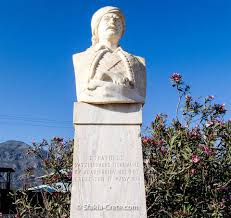
In the center of Crete in Greece, a special bust of a distinguished fighter has long been erected, on which it is written in Greek: “Strategos Haxhi Dalani from Konispoli (Epirus), fallen in May 1828.” “It is a monumental image, as was his war that led him to the supreme sacrifice, together with 800 other Albanians in characteristic Albanian dress, a variant of which you can see today even in front of the Greek parliament.” (N. Selmani). The Albanian fustanella, we Greeks have Hellenized it, say the Greeks without hesitation.
The historian Eleni Kocaqi writes: “The uprising of 1821 was an uprising of Christian and Muslim Albanians to liberate the lands from Turkey. This uprising was instigated from abroad and by Ali Tepelena, who planned to unite the Albanian lands into one state and also incorporate into it Greece of that time, which was inhabited by a majority (over 70%) of Albanians. Once the uprising, aided from abroad, began to win (‘… thanks to the sending by Russia of 17,000 political priests to strengthen Orthodoxy, especially in Greece, against Ali Tepelena, and they introduced discord between Muslims and Christians.’ A. Kotini, Çamëria Denoncon, p. 94).
“The Church called the Orthodox population by the Greek name. They promoted the creation of an artificial Greek state that was predominantly Albanian, and those Albanians, with or without mercy, led by the Orthodox clergy, began to eliminate all the Albanian leaders of the Albanian revolution for the creation of the Greek state. (On October 9, 1831, at the time Prime Minister Gjon Kapodistrias was leaving church, he was assassinated). Thus they killed or eliminated Kolokotronis, Androutsos, Karaiskakis, Bouboulina, etc.” (Roli PELLAZGO – ILIR, pp. 97‑98).
Agim Shehu says: “In Greek publications, documents, and official evaluations, the chieftain’s Albanian origin is not made explicit (like many of our other figures). Nevertheless, the unforgettable legendary Haxhi Mehmet Dalani of Konispoli remains an Albanian pride…! Greek officials come to Albania and lay wreaths even on their own people who, in uniform and without uniform, have invaded and denationalized us, and our state allows it. How is it possible that our lost‑seal politicians do not think to lay a wreath for the sons of their own nation, so great and renowned, who have been sacrificed repeatedly and without anyone forcing them for the sake of a neighbor?!” / Memorie.al