By Mr. Sc. Nikollë Loka
Part one
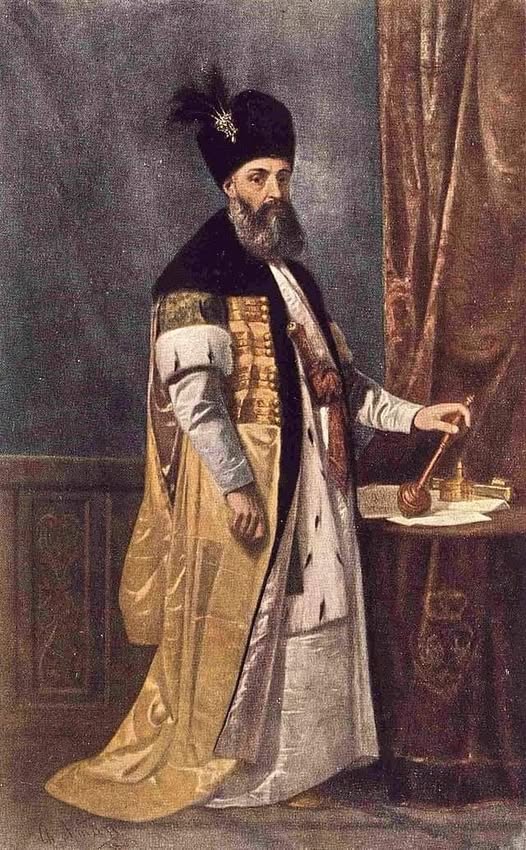
Memorie.al / The ancestors of the Gjika family departed from Zërec of Përmet and settled in Constantinople in search of a better life. They engaged in trade and managed to enter the “Phanar” quarter, where the wealthy Christians of the Empire resided. They continued their profession as merchants; indeed, Gjergj Gjika, the founder of the dynasty, was practicing this trade when he met the Grand Vizier of Albanian origin, Mehmet Pashë Qypriliu, who helped him ascend the social ranks and opened the doors of power.
The Gjika family, likely during Gjergj’s time, moved from Constantinople to the Romanian territories, which benefited from the status of “Dar al-sulh” – the land of conciliation. This status allowed these territories to maintain their own political, administrative, and military structures, effectively possessing full internal self-governance, while their foreign policy was obliged to align with the Ottoman state, according to the principle that the Danubian principalities would be “the friend of the friend and the enemy of the enemy” of the Ottoman Empire.
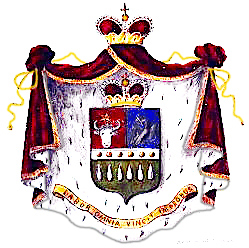
With the assistance of the Albanian Grand Vizier Mehmet Pashë Qypriliu and the Albanian Prince Basil Lupu – and naturally with the Sultan’s approval – the founder of the Gjika dynasty was selected to rule Moldavia and later Wallachia. Their responsibility in performing their duties, the great respect this family earned, and the contributions they made to the consolidation of both principalities ensured that other family members, one after another for two hundred and fifty consecutive years, would lead first the principalities of Wallachia and Moldavia and later a united Romania. Members of the Gjika family married into many prominent European aristocratic families and produced numerous notable personalities.
For political reasons, following the establishment of the communist regime in Romania, many of them left the country and immigrated to major world centers: New York, Washington, Berlin, Dresden, Vienna, etc., leaving their mark on these cities. Nevertheless, the traces of the Gjika family in Romania are present everywhere, and members of this dynasty, proud of their origins; continue to contribute to the development of the Romanian state and society.
Gjergj Gjika: Founder of the Dynasty
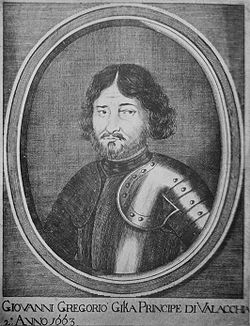
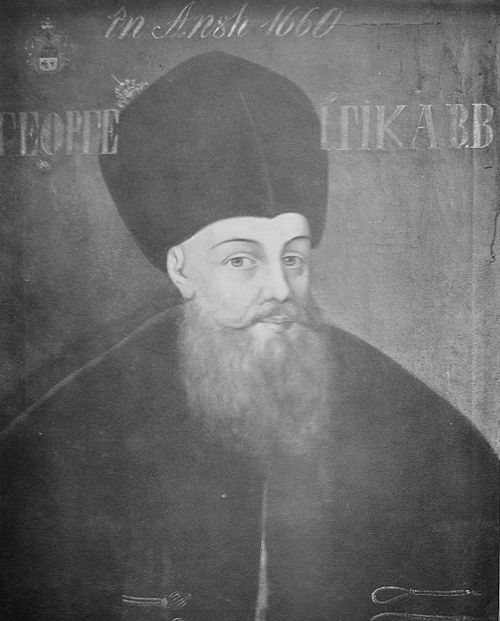
Gjergj Gjika was born around the year 1600. In his early years, he was involved in trade and held an enviable position in Constantinople. He connected with the Albanian Grand Vizier, Mehmet Pashë Qypriliu, who helped him rise socially. Records indicate that during this time, he traveled to the Romanian principalities, where he met the prince of Albanian origin, Basil Lupu, who inducted him into the ranks of the nobility. Through the intervention of Grand Vizier Qypriliu, the Moldavian Prince Stefan Georgiu appointed Gjergj Gjika as “Kapu Kehaia” (the representative of the Prince of Moldavia to the Sublime Porte).
Subsequently, Gjergj became Prince of Moldavia (1658–1659) and then of Wallachia (1659–1660 and 1673–1678). Gjergj Gjika left an indelible mark on Romanian history, as he transferred the capital from Târgoviște to Bucharest, where it remains today. He also founded a princely dynasty that flourished for about two and a half centuries, producing excellent rulers, governors, politicians, diplomats, and figures of art, culture, and religion who contributed greatly to the development of Romanian society.
Grigore I Gjika
Grigore I Gjika was the son of Gjergj Gjika. He ruled Wallachia (1660–1664 and 1672–1673) as well as Moldavia (1672–1673). He was initially allied with the Cantacuzino family but later became their enemy, ordering the execution of Senechal Constantin Cantacuzino and the persecution of the entire family.
Grigore II Gjika
Grigore II Gjika served as Prince of Moldavia four times (1726–1733, 1735–1739, 1739–1741, and 1747–1748). He was also Prince of Wallachia twice (1733–1735 and 1748–1752).
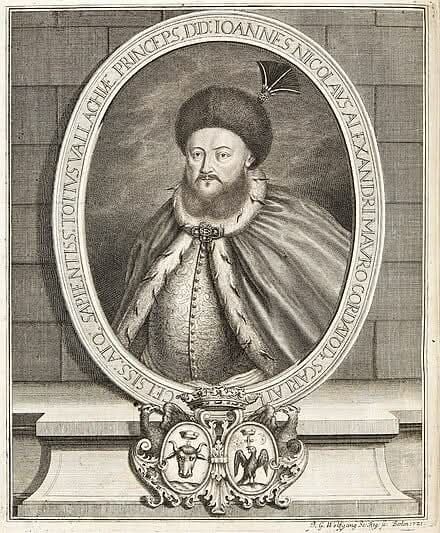
Grigore II ascended the Moldavian throne with the help of the previous prince, Nicolae Mavrocordatos. He lowered taxes but chose to continue the policy of granting state functions to Greeks and Levantines rather than supporting local nobles. He introduced the use of the Greek language in administration. Due to these stances, he faced opposition from Dimitrie Racoviță, who attempted to remove Grigore from the throne with the help of the Tatars. During the Russo-Turkish War and the Russian occupation, Grigore II was forced to vacate the throne briefly in 1739. Despite knowing of Constantin Mavrocordatos’s intrigues at the Sublime Porte, Gjika only left office in 1741 to go into exile, returning to the throne in 1747. During his reign, he focused on developing the national education system, leaving behind the Frumoasa Monastery in Iași and a hospital for the sick served by Orthodox monks.
Matei Grigore Gjika
The son of Grigore II, Matei served as ruler of Wallachia (1752–1753) and Moldavia (1753–1756). He is noted for the heavy taxes he imposed on the people. He built a monastery on Frumoasa hill upon the foundations of a former church and a royal palace. Matei also supported the publication of the Ghiculești chronicles.
Scarlat Grigore Gjika
Scarlat served as Prince of Moldavia (1757–1758) and twice as Prince of Wallachia (1758–1761 and 1765–1766). He was the son of Grigore II and brother to Matei. He died in office on December 2, 1766, and was buried in the Basilica of Saint Spyridon in Bucharest. His son, Alexandru Scarlat Gjika, ruled Wallachia from 1766 to 1768.
Grigore III Gjika (Grigore Alexandru Gjika)
The nephew of Grigore II, Grigore III was Prince of Moldavia twice (1764–1767 and 1774–1777) and also held the Wallachian throne (1768–1769). Captured by the Russians in 1769 and imprisoned until 1774, he later returned to power. Although the Treaty of Küçük Kaynarca granted the princes of Wallachia and Moldavia the right to their own ambassadors in Istanbul, the Sublime Porte – under Russian pressure and without Gjika’s approval – ceded the region of Bukovina to Austria. This met with armed resistance led by the Prince, who incurred the Sultan’s wrath and was sentenced to death. He left behind a legacy of fiscal reform aimed at reducing administrative abuse.
Grigore IV Gjika (Grigore Dhimitër Gjika)
Born on June 30, 1755, and died on April 29, 1834, he was the son of Dhimitër (brother to Grigore III). He ruled Wallachia (1822–1828) and is considered the first in the line of non-Phanariot rulers. His reign signaled a period of modernization and the development of authentic national Romanian literature.
Alexandru II Gjika
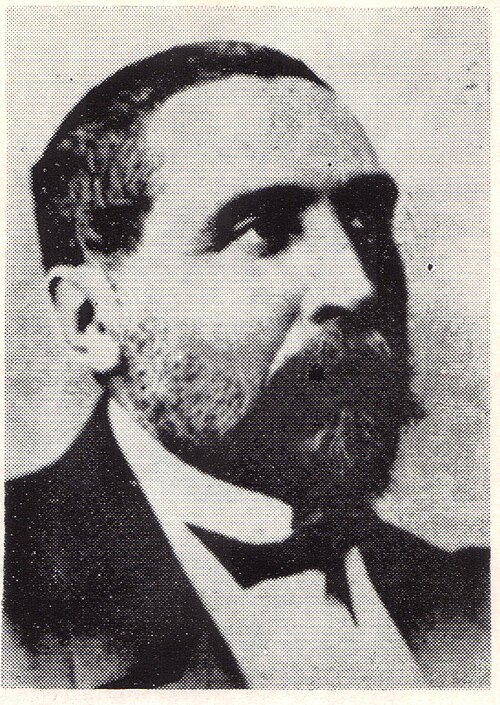
Born in 1796, he served as Prince of Wallachia (1834–1842 and 1856–1858). Under his rule, Wallachia underwent significant changes: approximately one thousand schools were opened, and the Principality’s postal system was established. He promoted the growth of Danubian cities, the modernization of Bucharest, and higher education at Saint Sava College.
Distinct from his predecessors, he was the first to adopt a modern military uniform, discarding Oriental attire. He declared the port of Brăila a free port (port franc), allowing for duty-free trade (except for tobacco and alcohol). His 1836 decree allowing foreigners to purchase property in the city encouraged a large-scale migration of Albanians, who settled there in significant numbers. Despite his successes, his rule was hindered by the presence of the Russian consul and opposition from Russophile clans. He died in 1862./Memorie.al