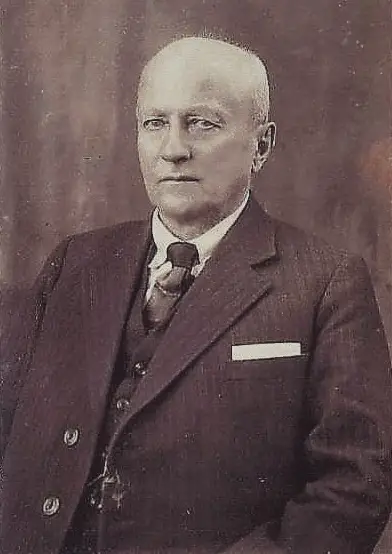
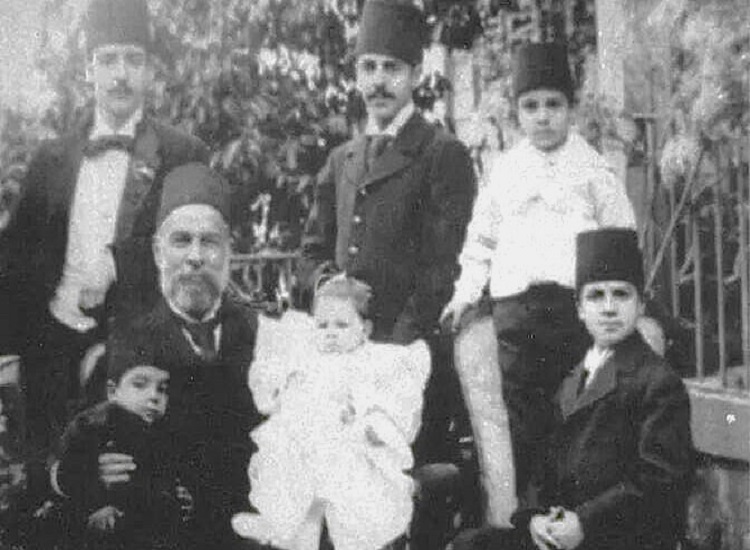
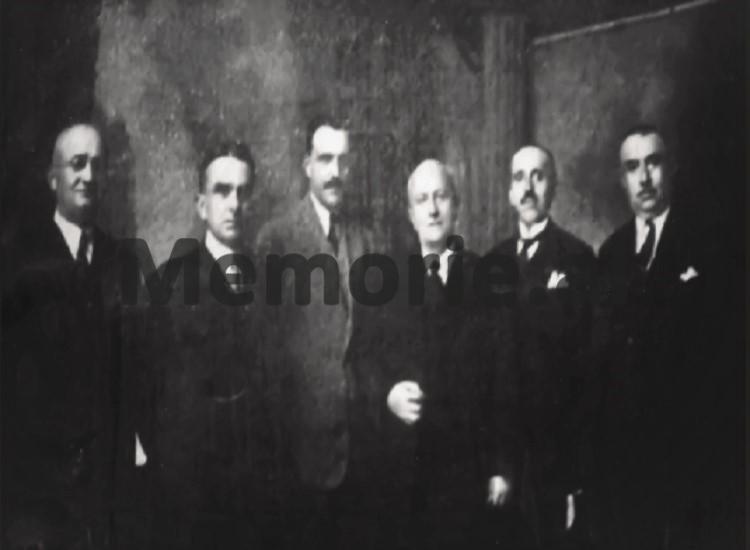
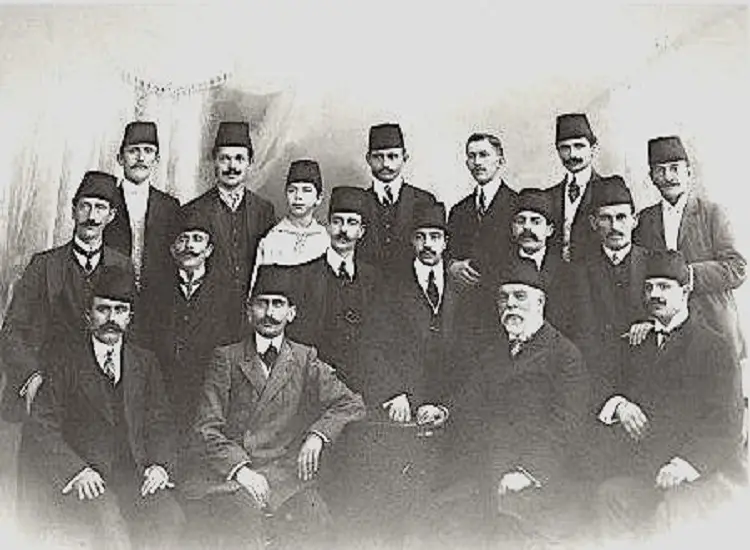
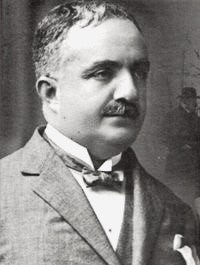
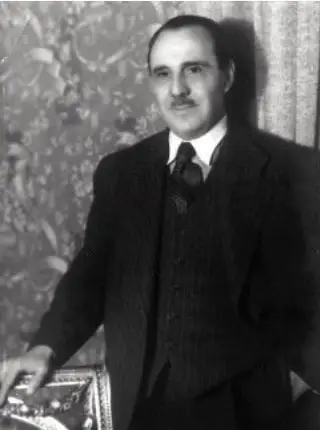
Memorie.al / Petro Poga were born in 1850, in Erind of Gjirokastra, where he also attended his first lessons. Later, he was educated at the “Zosimea” gymnasium in Ioannina and then in the Law branch of the University of Istanbul, where he gained a broad culture. He knew several foreign languages well, such as French, German, Greek, and Turkish. In Istanbul, he collaborated with the Frashëri brothers – Sami, Naim, Abdyl – as well as with Jani Vreto, Koto Hoxhi, Shahin Kolonja, Hasan Tahsini, and Ismail Qemali, becoming involved in the Central Committee for the protection of the rights of Albanians there. Petro was one of the figures of the apostles of Albanianism in the generation of the Albanian National Renaissance.
In 1883, he was one of the founders and publishers of the newspaper “Drita” of Istanbul, which after its third issue, was continued by the Renaissance patriot Pandeli Sotiri, together with the poet Naim Frashëri. In his memoirs, Petro wrote: “The name ‘Drita’ and the day of the independence of our nation remind me of much joy, but also not a little terror and indignation. The title ‘Drita’ reminds me of the day 14 kallnuër (January-H.L.) 1883, when for the first time in Istanbul, I published the first journal with the name ‘Drita’, a thing I desired for the awakening of the national ideal, at a time when the Albanian had almost forgotten his nationality, leaning on religions as he considers himself more a foreigner than an Albanian. The journal ‘Drita’ awakened the sacred National ideal and to some extent uprooted from the hearts of Albanians the thought that religions do not change the nation, being unable to change the language and customs that form the Nation.”
In the years 1906-1908, Petro Poga was found in Gjirokastra where he contributed to the spread of the Albanian language and National feelings. His most visible role appeared in the founding of the Patriotic Club “Drita” of Gjirokastra, which was later led by the patriots Hasan Xhiku, Hysen Hoxha, Idriz Guri, and Elmaz Boçe. This group of patriots distinguished themselves in the distribution of Albanian books, mainly primers, newspapers, and other books in the Albanian language.
In 1912, Petro Poga strongly supported the anti-Ottoman uprising of Southern Albania. In November 1912, the leadership of Gjirokastra elected him as a delegate to the National Assembly of Vlora. In the telegram sent to Ismail Qemali, the leadership of Gjirokastra wrote: “We inform you that, to participate in the talks being held there for the salvation of the country, delegates have been elected from the Christian population of Gjirokastra, his highness: Myfid Bey, Mr. Petro Poga, and Mr. Jani Papadhopulli.”
On December 29, 1912, in Gjirokastra, he received, together with Mufid Libohova, Hysen Efendi Hoxha, and Fehim Efendi Arshiu (Mezhdigorani – Mezhgorani -H.L.), the delegates of Chameria: Aziz Tahir Ajdonati (Tahir Mete Murati), representative of Paramythia; Jakup Veisel Rusi, representative of Margariti; Rexhep Hamit Demi, representative of Filiates; and Veli Gerra, representative of Igoumenitsa, from where they traveled toward Vlora and arrived on December 3rd in the evening. Petro Poga thus became one of the signatories of the Declaration of Independence of Albania.
In the assembly’s voting for ministers, he did not win in the first round, as he received only 20 votes, ranking tenth, while in the second voting, he ranked first, winning 40 votes, alongside Pandeli Cale who received 39, Lef Nosi 37, K. Meksi 19, Dud Karbunara 16, Eqrem Bey 2, Mufti Vehbi Efendi and Z. Zografi 1 each. The first three, who won more than half of the voices, were considered elected.
The first Ministry of Justice of the independent Albanian state was created with the approval by the government of Vlora of the act “Suitable Code of the Albanian Civil Administration.” At the head of this ministry was placed the jurist, Petro Poga, the first Minister of Justice of the independent Albanian state. The government of Vlora assigned him as an advisor Haziz Gjirokastra, a delegate in the assembly of the declaration of independence, who assisted him in drafting the rules and founding the Society “Drita” of Albanian lawyers in 1913.
The first Constitution of Albania, the “Organic Statute of Albania,” was drafted by the International Commission of Control in Vlora on April 10, 1914, in support of the act of July 29, 1913, of the Great Powers. Alongside this duty, Ismail Qemali and the Government of Vlora also entrusted him with the duty of the chairman of the High Court, a duty he held in the period 1913-1915. In that period, the Popular Court with a jury was formed, which would judge cases, but this organization resulted in failure because the uneducated and uncultured Albanian people were unable to adapt to such a system.
Together with the prominent lawyers Kristaq Tutulani and Fehim Mezhgorani, he drafted the Statute that severed the Albanian Court from the jurisdiction of the Ottoman Empire. Likewise, together they drafted the legal acts “Canon of Damages” and “Canon of the Jury,” which Poga presented for discussion and defended himself during their approval. The “Canon of the Jury,” just like the “Canon of Damages,” was published in several issues of the newspaper “Përlindja e Shqipëniës,” it bears the date of completion as a document on May 13, 1913, signed “Poga” at the end of the material, noted: “it was read in the Council of Ministers on May 23, 1913, it was accepted, verified and signed by Poga himself, Mufid (Libohova – H.L.), Aziz Vrioni, Gurakuqi, Nosi, P. Tsali (Cale – H.L.), and Mehmet Ruzhdi (Dëralla – H.L.).
His role as a capable jurist and Minister of Justice also extended to sending orders and instructions to prefectures and sub-prefectures for the implementation of legality toward persons who commit crimes, even insisting that they “be apprehended immediately,” putting the gendarmerie into action. When he was Minister of Justice in the Provisional Government, Petro Poga headed the Albanian government delegation for the borders, which also included Rauf Fico, Thoma Papapjani, Mufid Libohova, and Eqrem Bey Vlora, who went to Europe for negotiations.
After his activity in Vlora, Petro Poga went to Durrës but initially was not elected to the first cabinet of Prime Minister Turhan Pasha Përmeti, during the time of Prince Wied. When forced changes occurred in the government cabinet due to the uprising in Central Albania, Petro Poga was appointed Minister of Education, after the resignation of Dr. Turtulli.
On December 25, 1918, he was the representative of Gjirokastra in the Congress of Durrës, where he was elected vice-chairman of the congress (Mehmet Konica was elected chairman), then, by the congress, he was appointed a member of Turhan Pasha’s cabinet, being elected Minister of Justice in the government of Durrës. Together with Luigj Gurakuqi, in his discussions at this Congress, they demanded that religious freedoms be respected according to European principles.
On September 25, 1919, while harsh negotiations were taking place in Paris regarding the problem of Albania’s borders, Petro Poga, together with Mustafa Kruja (the latter recently returned from Paris with Mufid Libohova) and Sami Bey Vrioni, as members of the government of Durrës, ordered Ismail Haki Tatzati at the head of an armed force to go to Korça, asking the French commander, upon leaving from there, to leave the city in their hands and its union and that of the surroundings with the government of Durrës, a thing which met opposition from the political circles of the country. In the period 1922-1923, with his initiative, the newspaper “Drita” was republished for the third time in Gjirokastra, where Petro wrote many articles with the pseudonyms “Viroi” and “An Albanian.”
Petro Poga, in the parliamentary elections of 1923, being in the free profession of “lawyer,” was placed at the head of the democratic group of Gjirokastra, which in its electoral program demanded: a collegial Republic, the performance of agrarian reform, the progress of education, the independence of the courts, and the improvement of the administration. Thanks to an impressive campaign, he received broad support and was elected a deputy in the Albanian parliament of 1923. According to the memoirs of Sejfi Vllamasi, he is identified among 102 other deputies in the list of deputies registered on January 21, 1924.
When the proceedings of the Constitutional Assembly opened, Poga, as the oldest deputy in the hall, together with Nush Bushati of Shkodra, as the youngest deputy present, opened the meeting and led the first session. Petro Poga, deputy of Gjirokastra, was later also appointed chairman of the Constitutional Assembly on April 17, 1924, a post he held until June 2 of that year. From the Constitutional Assembly, Poga was elected to the commission for drafting the state statute.
On January 17, 1925, in the presence of 61 deputies (out of 102 that were there), Petro Poga declared the opening of the Assembly’s proceedings. After four days, on January 21, he argued the legal reasons why the assembly was discussing and approving the proclamation of the republic of Ahmet Zogu. The reasons were expressed in nine points; internal causes (tradition was lacking); social (the Albanian in soul is a democrat); religious (religious reasons were excluded); political (intrigues by Albanian politicians had been observed and appeared earlier); financial (the republic has no expenses regarding the head of state), etc.
On February 1, 1925, Petro Poga was appointed Minister of Justice. On February 9, 1925, he presented the program of the Albanian government with five fundamental problems, where tranquility, economic regulation, justice, relations with other states, and the progress of education and agriculture were listed. Petro Poga was Minister of Justice when Zogu issued some of the strictest legal acts for the punishment of his political opponents. Likewise, he was Minister of Justice when his subordinates, frightened by the government crisis of 1921 and especially after the proclamation of the republic and the appointment as “chairman” of Ahmet Zogu, who realistically was endangered, took drastic measures against any suspicious person.
The “Official Gazette” (Fletorja Zyrtare) published on October 13, 14, and 31, 1926, all the decisions that the Special Political Court of Tirana had taken earlier against the “organizers of a general uprising against the life of His Excellency, the President of the Republic and the disruption of tranquility in the country” and for all these, although there were many oppositions and contests, Minister Poga remained silent, without making any objection.
In September 1925, Milto Tutulani was elected Minister of Justice, who would often also perform the duties of the head of the executive, a duty which previously had been performed by Poga, since the beginning of 1925 when the republic headed by Ahmet Zogu was proclaimed. According to a source, after the signing of the second pact with Italy, the government cabinet resigned due to conflicts in the cabinet, a case when Petro Poga was called again to the post of Minister of Justice, as well as the chairmanship of the government’s affairs. There are other data showing that Petro Poga was Minister of Justice also in 1926, and this was affirmed by Mehdi Frashëri.
According to the latter, it seems that in that year, in 1926, because a commission had been formed in the Ministry of Justice to draft a new criminal code for the Albanian state, the minister must have had engagements in this field and “left in oblivion” the implementation of legality by his subordinates, placed under the thumb of the president of the republic, Ahmet Bey Matja.
Mehdi Bey Frashëri wrote in his memoirs: “At that time the Minister of Justice was Pjetër Poga and the advisor of the Ministry was Faik Shatku.” According to this, it results that Petro Poga was at the head of the Ministry of Justice even when Ahmet Zogu and his colleague in the government cabinet, Interior Minister Musa Juka, suppressed with fire and iron the uprising of Dukagjin and the punishments against the rebels were drastic by the “Political Court” which was transferred from Tirana to Shkodra.
The newspaper “Liria Kombëtare,” regarding these political and vengeful Zogist punishments, informed the public: “Hangings, burnings, and looting…! The countless barbarisms that Zogu’s mercenaries have done and continue to do in the Highlands of Shkodra are unspeakable. In Dukagjin, Nikaj Mërtur, and in many regions of Puka, nothing is seen but thousands of burned houses, innocent people being killed on the road, and lootings that have no precedent in our national life.”
A year later, in 1927, Poga formed and enabled the decree by King Zog of the law-preparation commission, composed of Thoma Orollogai, Agjah Libohova, Faik Shatku, and Mehdi Frashëri, for the preparation of several other laws, specifically: the Civil Code, Commercial Code, Civil Procedure, and Criminal Procedure. His mind was also manifested in the drafting of the Albanian Legislation and the construction of the Kingdom’s Constitution in 1928.
In 1928, Poga was included in the commission of “preparing the responses to the speech of Ahmet Zogu, who was proclaimed King.”
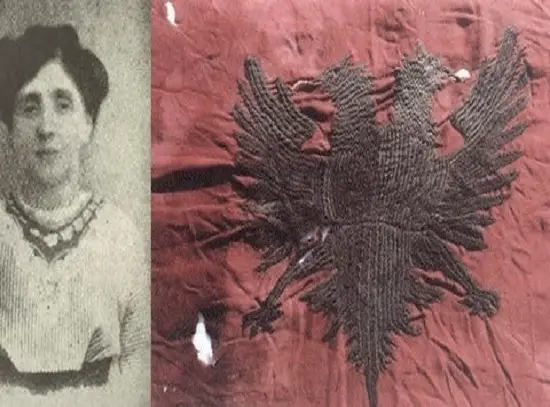
In 1936, while greeting the publication for the fourth time of the newspaper “Drita,” he clarified, according to his knowledge, the much-discussed problem of where the flag that Ismail Qemali raised in Vlora came from: “…the first flag that was raised in Vlora was a red cloth three meters long and two meters wide, upon which the two-headed eagle was printed in black color. With that eagle, 4-5 others smaller ones were also prepared. The red cloth was bought from a merchant named Diamant and they were sewn at a tailor named Thoma, because time did not wait to raise a luxury flag. The manner of rising was fearful because the sea was blocked. Llogara occupied by volunteers, beyond the Vjosa river the Turkish army, in Tepelena the Greek army, i.e., only Vlora was surrounded on all four sides.”
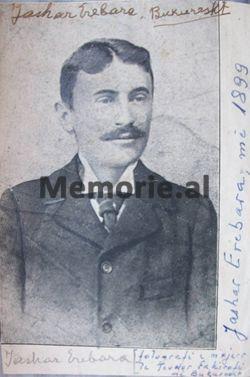
In 1938, he was the envoy of the government in Vlora on the occasion of the celebration of the day of November 28. Regarding this, the newspaper “Jeta e Re” of those days wrote: “Last night deputies Mr. Petro Poga, Jashar Erëbara, Ismet Kryeziu arrived from Tirana to assist and to place a wreath on the grave of Ismail Qemali.” Petro Poga devoted a large part of his life to Albanian Justice. He did not stop writing in the press of the time, being a close collaborator of the newspapers: “Minerva”, “Drita”, “Dajti”, “Korça”, “Shqipëria e re”, “Gazeta e Re”.
In 1939, after the occupation of the country by fascist Italy, he left politics at the age of 89, and returned to his birthplace, in Erind of Gjirokastra. During all the time he served in the field of justice, he was distinguished for his high professional level. He was among Zogu’s most trusted jurists; therefore he kept him in the halls of parliament even though he was at an age near a century. Petro Poga spent the last years of his life in his birthplace, Erind, where he also died in 1945. / Memorie.al