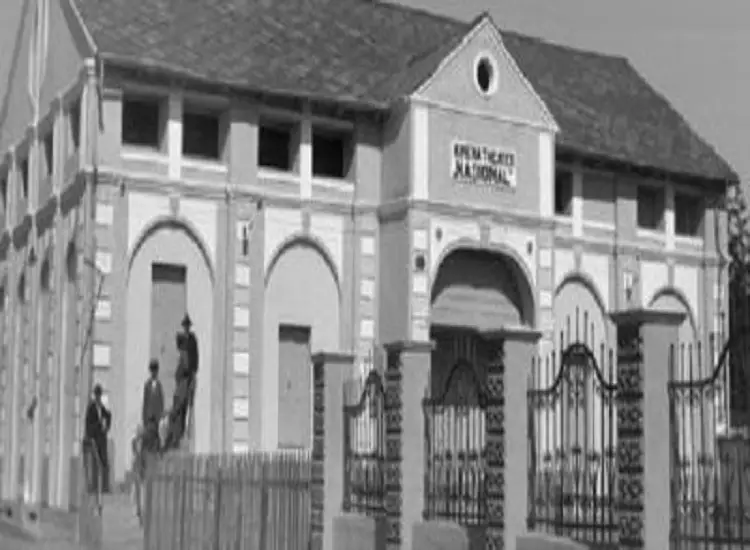
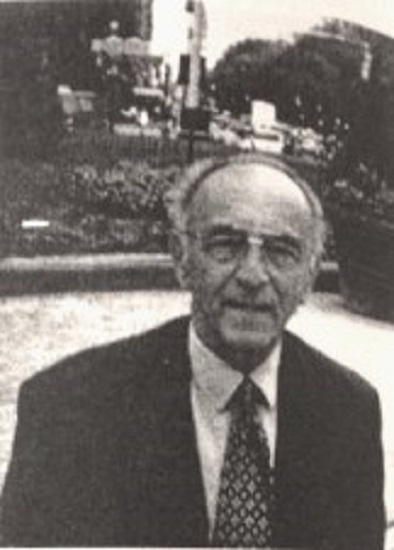
Memorie.al / In Albania, the first sparks of that powerful artistic phenomenon, later to be called “The Seventh Art,” were lit late, even though cinema was conquering the world with its magic. In our country, cinematography would fill a great cultural void, especially since theatrical performances and concerts were rare and not yet widely favored by the masses. On June 22, 1926, although exclusive rights had not been granted, the “Nacional” Cinema-Theater was established in Tirana, owned by the Beshiri brothers. It would become a promoter of Hollywood culture, but more importantly, through it, it would expand the cultural knowledge of the impoverished Albanian people.
In 1927, as public demand grew, Jusuf Beshiri was forced to open the adjacent hall, which was named the “Vogël” (Small) Cinema. In 1929, during the screening of the second act of the film “The Arab” (Passions of the Orient), starring Ramon Novarro, the film stock caught fire. On August 8, 1930, the “Nacional” Summer Cinema was inaugurated in the reconstructed and decorated garden. It was located next to the winter cinema. In September 1939, the “Nacional” Cinema-Theater burned down, and the building was almost leveled to the ground. That night, the film “A Trip to the Moon” was being screened.
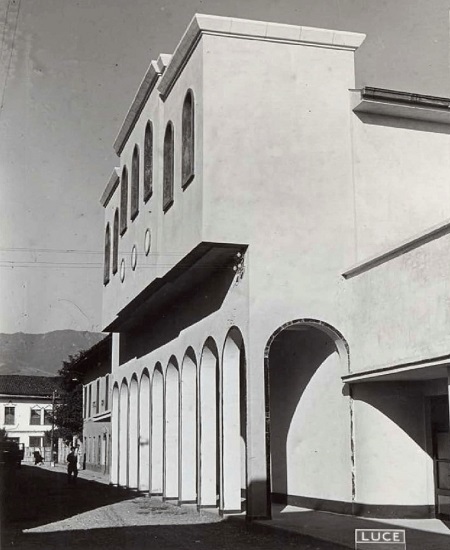
Before the construction of the new cinema began, architect Skënder Luarasi and constructor Spiro Koleka were sent to Italy to observe and subsequently design a modern cinema. It took several months for it to rise with extraordinary brilliance. The cinema was now named: “Rex” Cinema-Theater. Here is what the newspaper “Bota e Re” wrote on July 30, 1940: “The first evening at ‘REX’ opened with the Argentine orchestra ‘Eduardo Bianco’. Isuf Beshiri excelled with the new and elegant hall. With 6,000 gold napoleons from Mr. Isuf Beshiri, the Albanian engineer Luarasi made a European cinema hall flourish, in every sense of the word.
In the hall were the King’s Lieutenant, Jacomoni, Countess Maja, and Prime Minister Shefqet Vërlaci.” According to Jusuf’s son, Nuri Beshiri, to rebuild the cinema building from scratch, Jusuf and Hysen Beshiri went into debt, taking money from various banks and commercial firms in Italy, which took time to repay. The Beshiri brothers opened branches in Durrës, Elbasan, Shkodër, Vlorë, Berat, Gjirokastër, Pogradec, Kavajë, etc., becoming the most powerful company in the selection, importation, and screening of films in the country.
Toward the end of 1943, the “Rex” Cinema changed its name again and was called as before, “Nacional” Cinema-Theater, a name it kept until it was nationalized in 1947. During the occupation (1939–1944), the cinema served as a nursery for the National Liberation War. Tracts were distributed there, while in the basement of the building, where ice was also produced, weapons were hidden. Besides films, the “Nacional” cinema also hosted theatrical performances. According to Spiro Mëhilli, the first theatrical performance played at the “Nacional” Cinema-Theater dates to July 24, 1927, and was the drama: “Qëndrim në dashuri” (Staying in Love). On August 7, 1927, the drama “The Adventure of an Official” and the comedy “The Banker’s Daughter” were performed. For years, the “17 Nëntori” Cinema was the pride of Tirana.
In 1992, it was turned into “Bingo Tirana,” only to be demolished in 2006. Despite performing all this work, which certainly served the country for the better, Jusuf Beshiri died in his mother’s house after all his property – houses, shops, cinemas, etc. – was seized, all of which, except for one, remain “state” property. The descendants of this family live with memories and photographs, because that is all that remains. Semiramis Krajka, Jusuf’s granddaughter, remembers little of her grandfather. This is how she expresses it: “I remember him telling me that when he opened the cinema for the first time, people said: ‘Jusuf Beshiri has opened dreams on canvas’.”
Memories
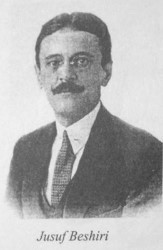
Many years after Jusuf Beshiri passed away, his memories are coming to light. How he remembered Albania in his youth, his participation in the “Xhoka” political party, the works of the Beshiris – an old Tirana family – how he refused the post of deputy during the Nazi occupation, etc. “Before I say something about my biography and my patriotic activity, unfortunately briefly, as my advanced age and health condition did not allow me to summarize all my memories, I wish to say a few words about my family, which educated me and rooted in me patriotic and progressive feelings. Based on what I have heard from my parents and other persons older than me, my ancestors were always for the independence of the country; they hated Ottoman rule, and none of them served the latter.”
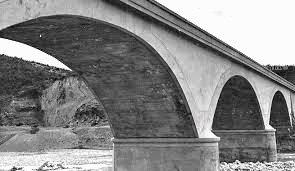
With these words, he begins his memories. The Beshiris of Tirana, according to Jusuf, performed several acts of charity, among which he mentions a bridge built by his great-grandfathers, and others. “Here, in the vicinity of Tirana, which is still known today by the name ‘Beshiri’s Bridge,’ as well as a guest house for travelers in Peshkopi? Always according to the sayings of the elders, my ancestors helped poor families, provided dowries at their own expense for brides whose parents were in poor economic condition, and built other schools.
Below, I am noting textually parts from the book ‘Albanische Studien’ (Studies on Albania) by the well-known Albanologist Dr. Jurist Johann Georg von Hahn, Austrian consul in Albania about a hundred years ago: ‘Beshiri’s Bridge’ – Over the Erzen river, about an hour away from Tirana, lies Beshiri’s Bridge. This bridge was built three times by the Beshiri family from Tirana. The first two times it was carried away by the water. In the third construction, in 1859, the Beshiri family brought an architect from Trieste, who built it,” he writes.
The Patriot
His patriotic feelings developed further through his acquaintance with Bajo Topulli, starting in 1907 when he was a student at the Lyceum of Thessaloniki, where Topulli was a history professor. As is known, during Ottoman rule, teaching the mother tongue in schools was prohibited and severely punished. “Regardless of this, I illegally learned to write and read the Albanian language with Prof. Filip Ashiku. After the overthrow of the dictator Sultan Hamid in Turkey, the ‘Hyrjet’ (Constitution) was proclaimed in 1908,” he writes. The latter promised much regarding granting independence to countries oppressed by the Ottoman Empire.
However, these promises were not kept. Regarding this part of history, Jusuf Beshiri writes: “A powerful patriotic movement was created, which organized demonstrations from time to time against the Turkish government and its feudal tools, in which I also participated. Albanian patriots, including a minority of intellectuals, formed a nationalist party named ‘Partija Shqiptare’ (The Albanian Party), whose objective was the liberation of the country from Turkish rule. Due to the intrigues of some sell-outs and the great ignorance that existed at that time, unfortunately, there were those who supported and helped the Ottoman regime (Baba Dovlet).
Such elements, whom we called ‘Halldupë,’ were part of the ‘Ittihat ve Terakki’ Party of Istanbul, which sought to suppress every movement and feeling for national liberation.” According to his memories, relayed by his son Nuri Beshiri, “Partija Shqiptare,” through its illegal activity and agitation, was able to increase its ranks, which alarmed the Turkish government of the time, which urgently dispatched Durgut Pasha. He, in cooperation with the leadership of the other anti-Albanian party, made arrests and internments among patriots and intellectuals. Among those arrested was Jusuf himself, but for lack of evidence – because during the house search, family members hid the primers – they held him in prison for only a few days.
A special moment for him was the Declaration of Independence in 1912, about which he says: “I, like the entire family and the Albanian people, welcomed it with great joy and participated in the manifestation organized on this occasion. But for the Albanian people, November 28 remained more of a historical date, because they did not realistically win their independence. The country turned into a battlefield of fratricidal war and intrigues of the great powers, which aimed to establish their influence and bring their tools to power. Thus, during the rule of Esat Toptani, I, together with my father and other patriotic friends, was imprisoned for 14 months. The internees were forced by Esat’s tools, the rebels, to scream: ‘The eagle has died,’ ‘The eagle has died,’ ‘We want the Father (the Sultan), we want the Father’.”
As an intellectual of the time, Jusuf Beshiri was inevitably inspired by progressive and patriotic ideas. This is how he expresses it: “I was inspired by progressive and patriotic ideas against the obscurantism in which previous regimes had plunged our people. Before Zogu came to power, two parties were formed here in Tirana. With the ‘Setra’ (The Suit Jacket) were the feudals, and with the ‘Xhoka’ (The Woolen Cloak) were the true patriots, the intellectuals, those who supported the interests of the peasantry and the common people in general. I personally belonged to the ‘Xhoka’ party. With this same idea, I have tried to educate my children as well.”
Among other things, he emphasizes that during the Italian occupation; he did not belong to any treacherous organization, but on the contrary, helped the National Liberation Movement morally and materially. “I sheltered people, today martyrs, such as Prokop Myzeqari, a friend of my sons, as well as comrade Leman Çoçoli, a friend of my daughter, and Mediha Frashëri. During the Nazi occupation, they proposed me, without my knowledge, for the post of deputy, a position which I categorically refused and did not participate in any meeting.”
The Merchants
Rapidly skipping through five generations of this family, one notices that they were among the first to create and operate the first private manufacturing enterprises in Albania equipped with modern technology. We can say that Jusuf Beshiri and his brothers were scions of a family with distinguished traditions, sons of the patriot Xhemal Beshiri. For the commercial activity carried out in different periods – excluding that of the communist regime (1945-1990) – the “Durrësi” Association has accorded the family the title “Gratitude of the City.” From the ancestors to the present day, the Beshiris have been distinguished as people of work, charity, and generosity.
Jusuf
Jusuf Beshiri, as a scion of this family of patriots, born in 1887 in Tirana, after finishing his studies in the capital of Turkey, Istanbul, for economic sciences, returned to the motherland in 1907, engaging in commercial activities and providing a very large contribution to the spread of education. He was one of the founders of cinematographic activity throughout Albania. In 1926, for the first time, the first cinema was opened in Tirana under the name “Nacional” Cinema-Theater, an activity that expanded over time.
Later, with the passage of time, and also by Jusuf Beshiri’s initiative, cinematographic activities were opened in various cities. As expressed by his son, Nuri, through these cinematographic activities, his initiative was to spread a comprehensive culture through which the Albanian people would develop further. He also owned “STAMLES,” a joint-stock company established in the city of Durrës in 1924. Its president was Jusuf Beshiri himself, from its inception until 1946, the year it was nationalized by the communist regime. It produced “Diamant ratllisert” cigarettes. / Memorie.al