

By Prof. Dr. Fedhon Meksi
Memorie.al / The people of Labovë are known as patriots and lovers of education. Historical documents attest that, particularly during the last two centuries, they have made titanic efforts for education in their mother tongue. The exact date of the opening of the first school in Labovë is unknown, as teachers were priests and lessons were held in the village churches. Panajot Arvantino, in his book on Albanian intellectuals during Ottoman rule, writes that Dr. Vangjel Meksi (1770–1823), a medical graduate from the University of Naples (Italy), had completed high school in Janina but attended primary school in his home village around 1780. Thus, at the very least, Labovë had a primary school by the end of the 18th century.
A BIT OF HISTORY
The Ottoman Empire did not recognize nationalities, only religious communities. Consequently, Albanians were dispersed across three religious communities and were not recognized as a separate national entity. Only religious communities were allowed to exercise educational and cultural functions in Ottoman-Turkish, Greek, and Latin-Italian. Orthodox community schools, operating in Albania since the 17th century, were under the protection of the Patriarchate of Istanbul and the Turkish government. After 1821, the Government of Athens – exploiting the sympathy the Greek Revolution had gained in Albania – attempted to cultivate a Greek national consciousness, especially among Orthodox Albanian youth, through the Greek language, religion, and history.
By presenting itself as a spreader of education and culture and speculating on the educational and religious sentiments of Albanians, Greek propaganda initially won over a segment of Albanian Orthodox Christians. Furthermore, various anti-Albanian theories began to be fabricated and spread in Greece. The dominant theory in the mid-19th century was that of a common origin between Albanians and Greeks. At that time, Albanian patriots could not rely on specialized institutions or schools to oppose chauvinistic neighbors. Our Renaissance thinkers, in their struggle against these currents, developed the necessary platform that became the basis for the subsequent patriotic-cultural action of the national movement. Based on the objective fact that despite religious divisions, the Albanian people constituted a separate nation with a distinct historical formation, the ideologues of the national movement, led by Naum Veqilharxhi, directed their propaganda against the assimilation efforts of “Pan-Islamists” and “Pan-Hellenists.”
VANGJEL ZHAPA AND ANASTAS BYKU: TWO VARIANTS OF AN IDEOLOGY
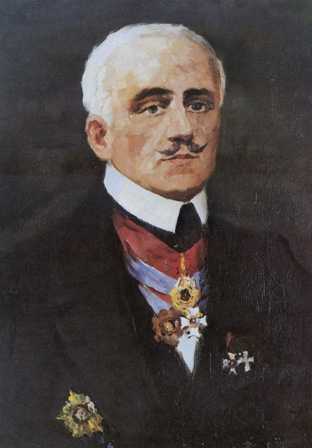
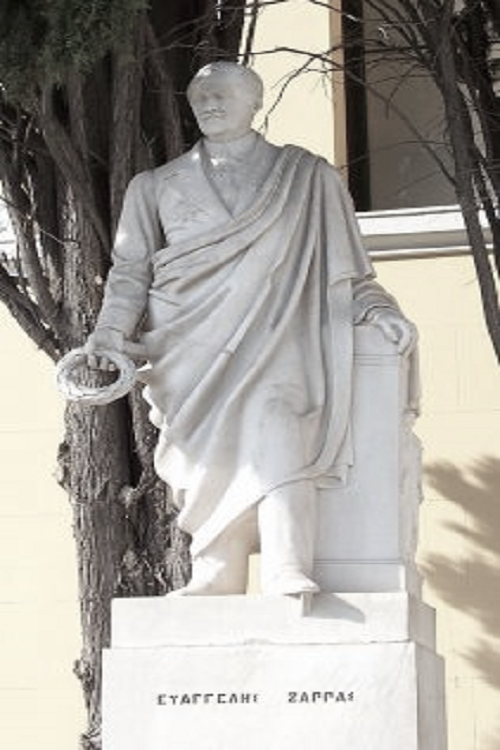
By the mid-19th century, the anti-Albanian positions of “Pan-Hellenistic” currents had become clear. The millionaire benefactor Vangjel Zhapa, originally from Labovë, planned to establish primary schools and high schools in the Greek language in Labovë, Tepelenë, Gjirokastër, Përmet, etc. In this way, he openly opposed the independent orientation of Albanian educational activity and, moreover, did not support Naum Veqilharxhi’s request to sponsor the printing of Albanian schoolbooks and the opening of Albanian schools.
On the other hand, the intellectual Anastas Byku from Lekli, publisher of the Greek-Albanian newspaper Pellazgos dedicated to the Albanian cause (1860–1861), was convinced that without cultural progress and the cultivation of the mother tongue, the Albanian people would not take their rightful place among other nations. However, although Byku was aware of the unique origin and character of the Albanian people, he advocated for their inclusion within “Hellenism” rather than independent development.
Determined in his belief that “it is impossible to educate the Albanian people without teaching them their language,” he drafted and published the “Pellazgos” project on December 24, 1860. This included the large-scale publication of Albanian textbooks, the opening of Albanian-language schools for boys and girls in every village, and the construction of high schools in Gjirokastër, Përmet, and Berat, as well as two middle schools for girls in Labovë and the surrounding villages of Rrëza.
Meanwhile, Anastas Byku had developed an alphabet and a primer titled Gramë për shqiptarët (Writing for Albanians). He pinned great hopes on Vangjel Zhapa, with whom his family had an old friendship. However, V. Zhapa dismissed Byku’s proposal to establish an independent Albanian educational system as being “very far from the right path.” This hostile stance from Greek circles and Vangjel Zhapa caused Byku’s plans to collapse; his newspaper ceased publication in 1861, and only Greek was taught in his schools – with the exception of the school in Labovë.
LABOVË 1860: THE FIRST ALBANIAN SCHOOL
The decision to allow the teaching of Albanian in the Labovë School became known through a letter written by V. Zhapa himself, published in the final issue of Pellazgos (March 1, 1861). Vangjel Zhapa announced that: “in the Labovë School, not only is Greek taught, but also Albanian, as an auxiliary tool for learning the Greek language.” The publication of this letter seemed intended to reassure the Greeks that Labovë would be a unique exception, while simultaneously warning other Albanians – who would surely demand similar treatment – that this case was isolated.
In reality, using Albanian to assist in learning Greek was a poorly studied and hastily chosen pretext. If Albanian helped in Labovë, it would have helped in the other schools Zhapa had excluded. According to Vangjel Meksi (1903–1983), it was the people of Labovë who forced V. Zhapa to make this concession. After failing in initial negotiations with their millionaire fellow villager, they instructed their children to act as if they did not understand lessons in Greek. The children refused to answer the teachers in the foreign language, effectively blocking the normal course of education.
Vangjel Zhapa understood perfectly well that the parents were behind the children’s actions. He was forced to accept Albanian in the Labovë School to resolve the “ridiculous” situation created in the village. It must be noted that Zhapa had the courage to accept defeat and obey the majority of Labovë’s residents; making it publicly known that Albanian was being taught. In Vangjel Meksi’s book Labova në shekuj (Labovë through the Centuries, Tirana, 1971), the school is described as follows: “The Labovë school consisted of: kindergarten, primary, a three-grade civic school, and two years of high school. The number of students increased steadily, reaching 143 total students by the 1875–1876 school years.”
In 1878, a girls’ school was opened in Labovë with two teachers. Initially, there were 80 girls, but the number grew as students came from surrounding villages and even Gjirokastra and Tepelena. The buildings were among the best of the time, equipped with furniture and a library. Elderly residents still remember the ground floor room where looms were placed to teach female students the practice of weaving. The school year ended with a special ceremony exhibiting handicrafts. In 1892, after 32 years of operation, the school was closed under the pretext that the Romanian government stopped the transfer of funds from the Zhapa estate.
DOCUMENTS FILLING THE “GAPS”
In the mid-19th century, propaganda for the Greek language – driven by the Patriarchate and wealthy “Pan-Hellenists” – led to the opening of 163 Greek schools in Southern Albania. Based on this, Albanian historiography often considered the years 1845–1865 a “gap” in Albanian patriotic activity.
However, sufficient historical sources have now been found to show the efforts of young Albanian intellectuals who became folklorists: Apostol Meksi and Konstandin Kristoforidhi. They first taught Albanian to the great Albanologist Johann Georg von Hahn and later provided him with the folklore materials that proved the unique historical identity of our people (Albanesische Studien, 1854). During this same period, the people of Labovë made it possible for their school to be the only one among those 163 where Albanian was taught. These sources allow us to fill that 20-year “gap.” The Albanian people never ceased their struggle for their language and identity.
THE ALBANIAN SCHOOL AND GREEK CONSULATE INTRIGUES
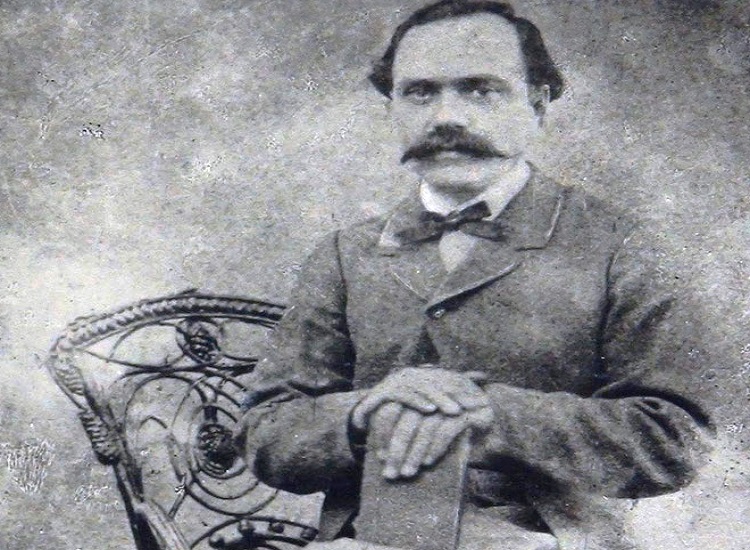
After the school where Albanian was taught was closed, a Greek primary school opened. However, its teachers, Labovitës Nane Panajot Meksi and Vasil Konomi, following the instructions of Renaissance activists, began giving private Albanian lessons to both children and adults using primers sent by the Istanbul Society. Besides the language, they taught Albanian history and religion using texts they translated themselves.
By the early 20th century, a breeze of freedom and patriotic enthusiasm prevailed in Labovë. Records found by Thoma S. Meksi show that on September 1, 1908, a meeting led by Nane Panajot Meksi decided to open an Albanian school regardless of potential persecution. As predicted, the Metropolis of Gjirokastra and the Greek Consulate incited pro-Greek elements in the village to provoke the patriots, leading to violent clashes. Young men like Kiço Ciko and Gaqe Mali distinguished themselves in defending the school.
An April 1910 article in the newspaper Liria titled “The Albanian School in Labovë and the Intrigues of the Greek Consulate” revealed that Labovitës intercepted a letter from the Greek consul to local Graecomans, mentioning 60 liras paid to them to block the school. Despite this, the Albanian school opened on April 10, 1910, in the famous Labovë school building. That morning, the villagers escorted the two Greek teachers sent by the consulate back to Gjirokastra with their hands tied.
Soon after, the Gjirokastra Bishop (Despot) performed a medieval-style “black ceremony” with candles and black ribbons, excommunicating those who sent their children to the Albanian school. The Vali of Janina eventually closed the school and arrested activists like Illi Noçka and Qirjako Rexhi. However, the villagers moved the school to a private house and denounced the Bishop to the Ecumenical Patriarch, arguing that learning one’s own language was not a sin. The opening of the school and the use of Albanian in church services gained massive support and congratulatory messages from leaders like Luigj Gurakuqi, Avni Rustemi, and Çajupi.
LABOVË 1921: THE COURSE OF EXCELLENCE
In the summer of 1921, the Albanian government opened the “Course of Excellence” in Labovë. This three-month professional training course for 150 teachers from the Gjirokastra district was a gesture of respect for Labovë’s centuries-long struggle for education. It also honored Nane Panajot Meksi, who had opened schools in Labovë and Tepelenë and advocated for Albanian in churches, famously writing: “…and the Gospel in its own tongue shall be read page by page.”
The fundamental argument for the autochthony of Albanians was derived from the comparative study of the customs of Rrëza (villages on the right bank of the Drino River), chosen for their ethnographic purity. Labovitës like Vangjel Meksi (the first translator of the Gospel into Albanian in 1821) and Apostol Meksi (who wrote the chapter on “Family Customs in Rrëza” for Hahn’s book) were pioneers in this field.
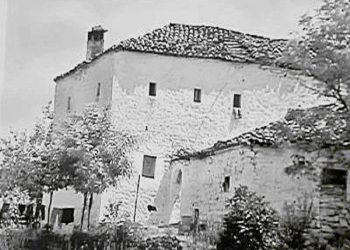
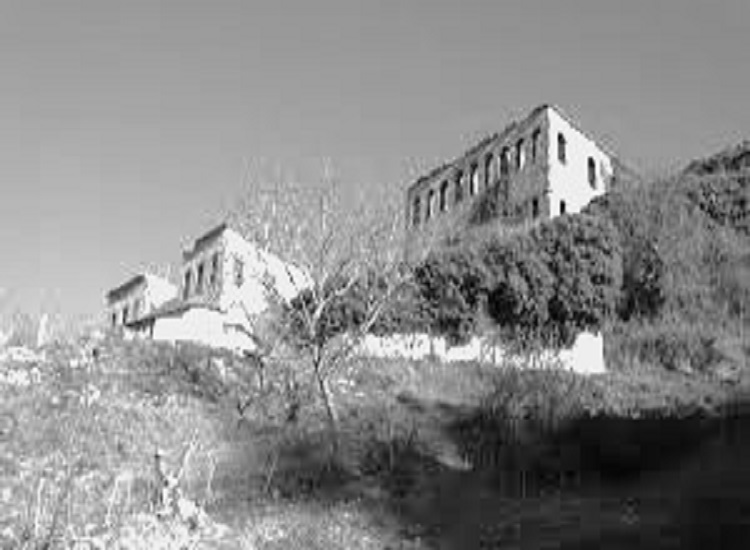
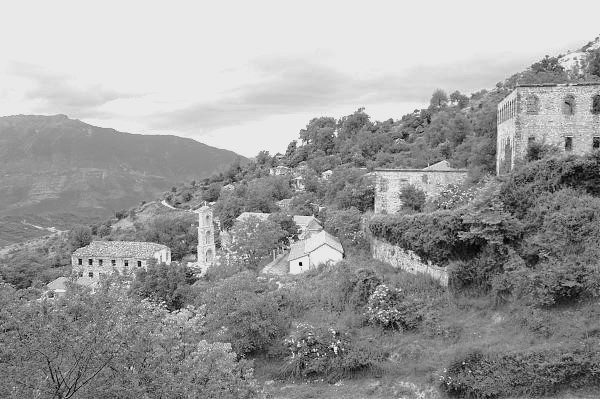
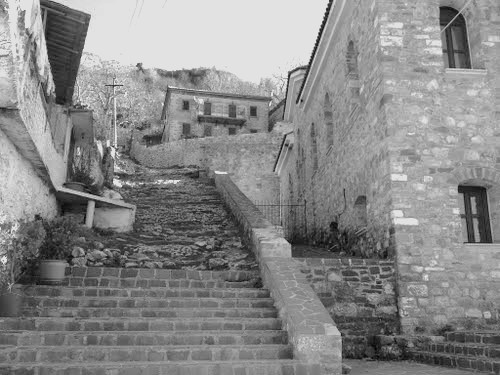
The Labovë School building – a large three-story structure with a library and high school classrooms – is a symbol of this history. However, this symbolic building was sold 15 years ago! The current owner has locked it up and vanished. While some may wait for it to collapse, the school stands firm despite the neglect. It must be added to the list of protected historical monuments. We call upon the state to take the Labovë School under its care, ensuring it remains a message for future generations to honor the sacrifices of their ancestors and love the Albanian language. / Memorie.al