Memorie.al / Today, no one know where the first and greatest millionaire of the Albanian nation and a rare patriot has his grave. Nor does anyone remember to pay him, even a simple tribute, to the man who laid heavy stones in the foundations of Albanian book publishing. Even a school built with his money has been named “Sevasti Qiriazi”… He was at the head of the two most famous societies in the history of the Albanian movement in Bucharest, “Drita” (Light) and “Dituria” (Knowledge). He invested in the establishment of a printing press that produced and distributed books for all Albanians, wherever they were. He financed the publication of one of the most prominent works of Albanian Renaissance literature, Naim Frashëri’s “Bagëti e bujqësi” (Cattle and Agriculture). He contributed to the opening of the first Albanian school in Korçë, in March 1887.
The Greeks block the testament
In Anastas Lakçe’s testament, large sums were left for the construction of a pharmacy in Korçë, where poor people could receive medicines for free. It also stated that every year, 7 Christian girls and 7 Muslim girls from Korçë should be provided with a dowry. Unfortunately, Anastas Lakçe deposited all his inheritance in the Bank of Athens, and a few years after his death, the Greeks blocked the transfer of the inheritance to Korçë, justifying it by the claim that a “Greek Orthodox community” should be created in this city – something not written in the deceased’s testament…!
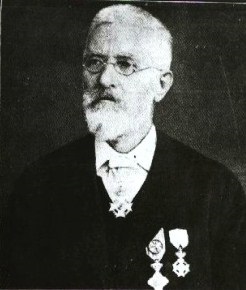
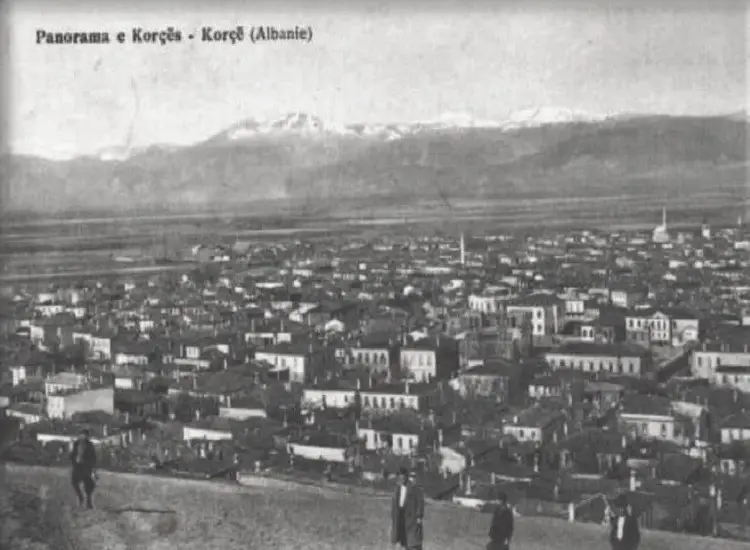
One of the first patrons of the Albanian forefathers, and also of literature, has remained without a grave. Anastas Avramidhi Lakçe (Korçë) lived and worked almost his entire life in the Romanian capital, Bucharest, during the 19th century. He was born in Korçë in the first decade of the 19th century, but at a very young age he immigrated to Bucharest, where he began to engage in trade. Lakçe reached the peak of his wealth during the Russo-Turkish wars, which began in 1854 and ended in 1877 with the signing of the Treaty of San Stefano, and were nicknamed the “Crimean Wars”.
During the war years, Anastas Lakçe, with the innate intuition of a Korçë merchant, managed to capture the vodka market, highly sought after by Russian soldiers, who rarely went into battle without consuming their national drink. This trade made Lakçe one of the biggest millionaires of the time, not only in Romania but throughout the Balkan Peninsula. So much so that when he died, he left a fortune that, according to the press of the time, exceeded 2 million gold francs.
But he did not remain only in the field of trade. During the second part of his life, he engaged in extensive patriotic activity. Anastas Lakçe was at the head of two of the most famous societies in the history of the Albanian movement in Bucharest, namely the society “Drita” (Light), founded in 1884, and “Dituria” (Knowledge), founded in 1886. With his initiative and investment, a printing press was built in the Romanian capital which produced and distributed Albanian books, not only in Albania but wherever Albanians had established their settlements.
In Lasgush Poradeci’s writing “On Albanian Societies” we read: “Every week, small and large packages, full of Albanian books printed in Bucharest, were sent to all parts of Albania and to the four corners of the world, as far as Russia and America and even to China, distributed everywhere for free…” (L. Poradeci, works, 1990 edition). And here we should mention that our distinguished poet from Pogradec, in the aforementioned work, calls Anastas Lakçe: “the old millionaire with a big heart”.
The peak of Lakçe’s benevolence towards culture is his sponsorship of the publication of one of the most prominent works of Albanian Renaissance literature, Naim Frashëri’s “Bagëti e bujqësia” (Cattle and Agriculture). In honor of this act, in the first edition we read this dedication: “In the name of the honored and dear Mr. Anastas Avramidhi, benefactor of the nation and President of the ‘Drita’ Society in Bucharest, who strives to enlighten our motherland with letters and knowledge. The doer, Naim H. Frashëri, May 25, 1886.”
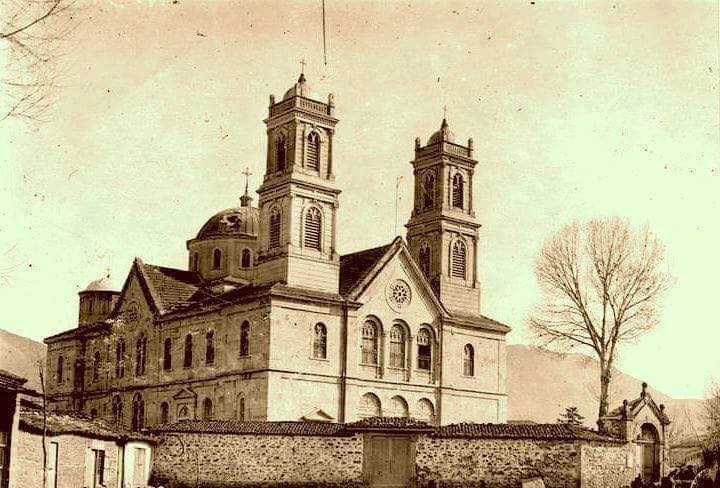
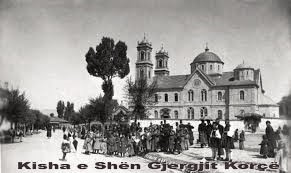
Also, with his contribution, the church of “Shën Gjergji” (St. George) was built in Korçë, the largest and most beautiful, according to contemporaries, in the Balkan Peninsula. This building was highly valued even by Italian builders during World War II, but unfortunately it was barbarically destroyed by the communist regime at the height of the anti-religious war in 1967. Likewise, Lakçe contributed to the opening of the first Albanian school in Korçë, in March 1887.
Anastas Avramidhi was the founder of the “Llaso Fund”, which was an institution of the Autocephalous Orthodox Church of Korçë, where contributions from all Korçë believers, wherever they were, were collected. Like all millionaires, before he died in 1898, Lakçe drew up his will, where the largest part consisted of charitable bequests (we emphasize that Anastas Lakçe left no direct descendants).
Thus, in his testament, large sums were left for the construction of a pharmacy in Korçë, where poor people could receive medicines for free; it also stated there that every year, 7 Christian girls and 7 Muslim girls from Korçë should be provided with a dowry.
Unfortunately, Anastas Lakçe deposited all his inheritance in the Bank of Athens, and a few years after his death, the Greeks blocked the transfer of the inheritance to Korçë, justifying it by the claim that a “Greek Orthodox community” should be created in this city – something not written in the deceased’s testament. This was denounced in the newspaper “Zëri i Korçës” (The Voice of Korçë) dated January 25, 1930, but was later forgotten, and to this day Lakçe’s inheritance has been “lost” in the deposits of Greek banks.
For his incalculable contribution, after death, his body was embalmed in Romania and placed in one of the premises of the “Shën Gjergji” church, where it remained for 69 years, until it was burned in a grave in the days when the macabre destruction of the aforementioned church began. The communist regime declared the sponsor of Naim’s work a reactionary and consigned him to oblivion, where Lakçe remains to this day.
Today, no one knows where the grave is of one of the first and greatest millionaires of the Albanian nation. Nor does anyone remember to pay him, even a simple tribute, to the man who laid heavy stones in the foundations of Albanian book publishing.
But what irritates one the most about the blow that has been dealt and continues to be dealt to Anastas Lakçe is the fact that the school which was built with his money has been given another name that has nothing to do with this school. This refers to a 9-year school located in the city center.
On one of its doors there is a plaque clearly stating that “… this school was built by Anastas Lakçe…”, but a few years ago, on the initiative of the local government, the school was named “Sevasti Qiriazi”. It is true that the aforementioned lady is not without contribution to the history of Albanian education, but she can in no way replace the true “owner” of the school in question.
In the Korçë and Kolonjë districts, the birthplace of the Qiriazi family, there are many institutions where she can be honored. Naming this school after Lakçe would be the first step in bringing him out of oblivion, giving him the place he deserves in the history of the city of Korçë and his deserved place in the history of the Albanian patriotic movement. / Memorie.al