From Ndue Dedaj
Memorie.al / “When Enver Hoxha comes to visit Mirdita, in 1968, they put Musine in a car and send him to Shënpal, twenty kilometers from Rreshen, for four or five days, where there had been an old barracks, which it had served as a gendarmerie post, a prison and later a school. Of course, together with some other internees, who were considered dangerous, under the pretext that they would not come forward to put any letter in the Leader’s pocket, disturbing him…”!
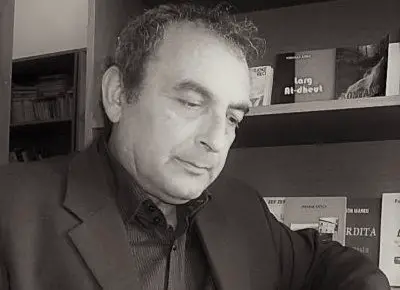
This is a statement made for the first time by Agim Haruni, the man who has been close to the dissident, her neighbor for 15 years, who was also her gravedigger. He remembers everything in detail and has only one goal, to let people know the truth about Musine, whom he valued very much, but who did not know that she was also a writer.
There is only one as a hostage within herself, after all that had happened to the “heavy lady” that she had saved, until she saw the arrival of democracy in Albania. Musineja had three times in her life, the last of which she would spend in Rrëshen. The first time was in freedom, in Gjirokastër, Italy and Tirana, as a student, writer and politician.
The second time would be in prison in Burrel, under conditions of deprivation of liberty. And the third time in Mirdita, in exile, in limited freedom. Precisely for the latter, we spoke with Agim, 70 years old, a former loading-unloading worker in the city’s Trade Company, a frank and open man. He himself is a victim of the system, with the difference that his father had been in the military during the communist regime, until his downfall.
In one of the cafes of Rrëshen, he tells us for more than an hour: “We as a family are from Kuçi i Vlora. They brought us from Shkodra to Rrëshen, in 1958, to hit us little by little. My father, Sulë Haruni, was an officer of Zogu’s time; he had served as a platoon commander of the coast guard in Durrës and Shengjin in ’39, with Mujo Ulqinak, and was decorated several times, with the “Medal of Bravery” for April 7, with the “Red Star” of July 10, etc.
In 1963, on September 20, my father, a former partisan, an officer in Mirdita, was arrested and sentenced to 6 years in prison, for political reasons, but he served 4 years and 3 months. How had it happened? Four days before the arrest, a “Pravda” newspaper was brought into our home, which, as you know, was the main press organ of the Soviet Union. Three days later, on September 19, they come from the Internal Branch and check the house, where they find the cursed newspaper, which, not by chance, they had made us, fish, and so the next day they put, handcuffs on the father…”!
And the enemies of power would have the same shelter. They were gathered from side to side and killed in the “swamp”, to delay life.
“We met Musine in 1968, when she came to live in our one-story apartment, in a swamp, on the outskirts of the city, on the side of SMT, since where she had lived before, the military ward had been built. The following families lived there: Musineja in one room, our family, father, mother and us children, in two rooms, Mark Ndoja, a shoemaker from Shkodran, who sewed soldiers’ shoes, with his wife Zina, in one room, Yldyshane Kalo, with her son, in a room, after her Greek husband was repatriated to Greece.
She was a sister to Myzejen and lived together with her mother until she died. They were from Konispoli, but the deportation had sent them to Rrëshen. Our one-story apartment was called the “Palace of the Declassified”. It flooded every time it rained, half a meter of water entered inside, as the road to Kurbnesh, like a “fence”, prevented the waters from falling into the stream of Zmë. In such cases, we came to the small two-story hotel of the city, to take shelter until the weather came out, but no one would let us in…!
…The most valuable thing Musineja had in the room was a bookshelf. On the wall was a photograph of his father and mother. He took the books out only when he painted the house. When I once asked her about Stalin’s books, she told me: “You should read these too…”! He would go out into the yard and lie down on an old chaise longue, with a book or magazine in his hand, or write. He knew how to do this. He always kept notes, a diary. There was an open script. I still recognize her writing today. While he didn’t know how to cook.
The dead woman was also found with a book on her chest. I tried to ask any villager about the customs and traditions of Mirdita, but few were allowed to talk to him, as people were afraid of the Security. He had a good habit, he put the money he earned at work in the bank, and he kept only enough to break even, 80 ALL at that time, per day, for food and for the cinema ticket. With the interest of the bank, he bought books. In the end, it turned out that he had saved 400 thousand ALL, which for the time, was not a small amount.
…She was a quiet type, loving but reserved, a wonderful woman. Politics was doing its job; there was nothing you could do about it. Even to the neighbors, he didn’t talk to us on the street. We rarely spoke to him, because he rarely came to our place to watch TV. For the first time Drita Kosturi, I heard from her. I was in Rome, he told us once, where I lived with two Italian sisters, when one night I met Drita on the street.
“How beautiful you are”, she told me, and I waited for her:
“And where do you see me, in the dark?” We both laughed…”!
Musineja worked in the construction company in Rrëshen, among bricks, mortar and concrete, together with a declassified neighbor, Prena Gjeçin, who was the wife of Ndue Llesh Gëziqi, an intellectual of the time, with several foreign languages, politically convicted, because he had served in the Zogu Royal regime”.
Agimi continues to show episodes from the shocked life of Musine. “When Beqir Balluku was killed, she said: “These are fighting for power, I am not the same as these who are being punished now”! While one day he comes from work bored.
“What do you have, Musine”? – asked my mother, Kizi.
“I saw in the city, what tortured me in the investigator in Tirana!”. But he did not tell her the name. She herself said that she was “Ermira Vela” from the novel “Before Dawn” by Shefqet Musaraj.
The isolation of Musine when Hoxha visited Mirdita in 1968
“…People had nothing to do with him and mostly avoided him. I don’t know that there was any clash with anyone, from the people of power in Mirdita. No one came to check on me at home. Simply, he passed every day in front of the Interior Branch, enough to be seen by the guard officer, but he did not stop. Only when Mirdita was visited by Enver Hoxha, they sent her to Shënpal for a few days, so that he would stay there for a visit.
She told that when they were small, they played with Enver in the neighborhood in Gjirokastër, putting their palms on their husband’s and he had a bigger palm than the other children…”!
Now she had to run away from him, the former boy of the stone neighborhood, in Shënpal, in a double exile, since she was exiled, so that he wouldn’t get the least bit of sunshine from the regime’s heretics, who they could suddenly appear in front of him on the streets of the small town. “Behind the sun”, the heretics were always born…”!
Agimi continues: “I was once called to the Branch Club and told; “Agim, be a witness to Musina Kokalari that we will give you a house”. But I refused. When she finished her internment in 1979, she was told to go to Gjirokastër, but she wanted to go to Tirana, which was not allowed. Then she decided to continue staying in Rrëshen.
Whenever he was sick, we brought him a cup of hot tea. He could barely open the door. He has served Yldyshane Kalo, who has special merit for this. In Tirana, in the Oncology Hospital, there were also her people, the Kokalars, who took care…”
Agimi describes in more detail the day of Musine’s death and burial.
“The day she died, I found three addresses written by her with her own hand, I sent three telegrams, but no one from Tirana came to the funeral, etc. Musineja died on August 13, 1983, and we buried him the next day, in the cemetery of Rrëshen, four people: me, Yldyshane Kalo, Myzejen Kalo and Shaban Doçi (the last two, husband and wife). As far as I remember, there were two other internees at the funeral, Gjergji Gjergo, former University professor, son-in-law of Beqir Balluku and Ymer Llugaliu, Kosovar literature teacher…”!
In 1991, Musine was exhumed by her family members, to whom Zina Ndoja, a former neighbor, took care of her grave and now her grave is in Shish-Tufina, Tirana”. Agimi insists on a fact as an eyewitness: “It is false what is sometimes said, that when Musineja is exhumed, his hands are tied behind his back with barbed wire (!)
I say to anyone; don’t lie, someone came out and told me the truth and the truth of Musine, is that she doesn’t have her hands tied behind her back, with anything, since we are the ones who buried her, it wasn’t the State Security, who bury…! If only he were alive today to see how things turned out”, ends the conversation Agim Haruni, a native of Vlonia who speaks a mixed dialect. Memorie.al