• Rreth Nesh
  • Kontakt
  • Albanian
  • English
Wednesday, February 11, 2026
Memorie.al
No Result
View All Result
  • Home
  • Dossier
  • Interview
  • Personage
  • Documentary
  • Photo Gallery
  • Art & Culture
  • Sport
  • Historical calendar
  • Others
  • Home
  • Dossier
  • Interview
  • Personage
  • Documentary
  • Photo Gallery
  • Art & Culture
  • Sport
  • Historical calendar
  • Others
No Result
View All Result
Memorie.al
No Result
View All Result
Home Art & Culture

“The Dance of Osman Taka is also performed by the Greeks, Serbs, Macedonians, Romanians, and Bulgarians; even the choreographic school of Janina…” / Testimony of the artist from Konispol, who immortalized the famous Chame dance.

“Vallen e Osman Takës, e luajnë edhe grekët, serbët, maqedonasit, rumunët, bullgarët, madje shkolla koreografike e Janinës…”/ Dëshmia e artistit nga Konispoli, që përjetësoi vallen e famshme çame

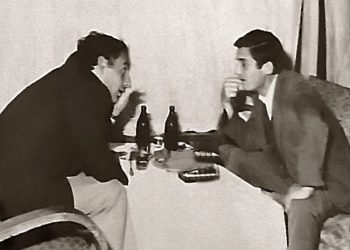
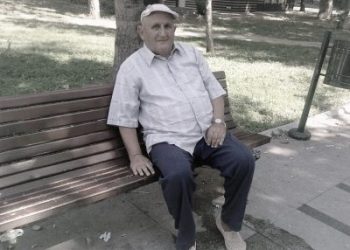
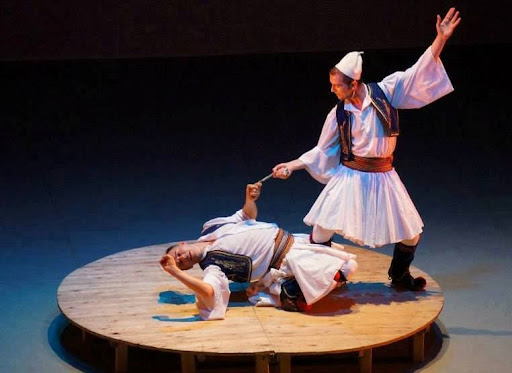
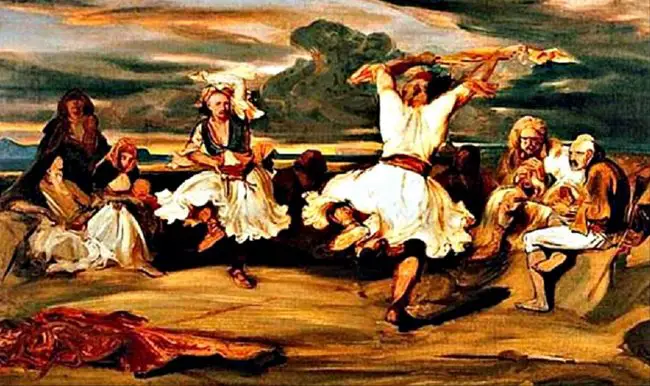
Memorie.al / The start is calm, following the orchestra and harmonizing perfectly with it. The dance begins with a simple step, and you truly sense that something is about to happen. At the end of the first musical stanza, the dancer, with a slight forward movement of the head and hand, signals the onset of the action. Surprisingly, the tighter the space, the more beautiful this dance becomes – it can even be performed on a table.

Taip Madani recounts that he fell madly in love with this dance when its complete meaning was explained to him. What the hand, the foot, the chest, and the head represented; the placement of the hand behind the head, linked to tradition; and the cap pressed slightly at the corner.

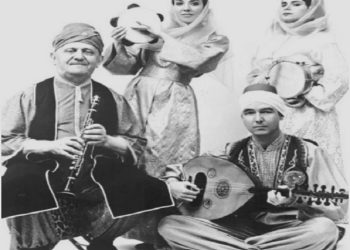
At the Folklore Festival in Gjirokastër in 1973, he was awarded the “Festival Laureate” title and received a special personal commendation from the central commission. The Dance of Osman Taka is one of the most beautiful and masculine dances of Chameria. It is a dance that brings to mind Osman Taka, the young man immortalized by his final wish to dance one last time before being sent to the gallows. That moment was enough for him to become eternal, for the dance to take his name, and for art to save him from death.

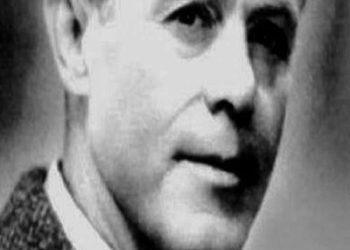
Years passed, and though the musicians of Konispol played the music, no one had been able to dance it truly until Taip Madani appeared. With his brilliant performance at the Gjirokastër Folklore Festival in October 1978, he made the Dance of Osman Taka one of the most celebrated dances of those years. In an exclusive interview, Taip Madani, a teacher at the Agricultural High School of Konispol, speaks with pride about the moments he learned this dance.

Gjithashtu mund të lexoni

“Count Durazzo and Mozart discussed this piece, as a few years prior he had attempted to stage it in the Theaters of Vienna; he even [discussed it] with Rousseau…” / The unknown history of the famous Durazzo family.

“The Durazzo family was art collectors, and in the salons of their palaces, such as those on ‘Via Balbi’ and the ‘Palazzo Durazzo-Reale’, they kept the paintings…” / The history of the famous family of Albanian origin.

Mr. Madani, can you tell us about your first encounter with Chame dances and specifically the Dance of Osman Taka?

My first spark for Chame folk dance came in my village, Shalës, when I was only 8 or 9 years old, around 1957. I first heard the music of Osman Taka being whistled by a shepherd. I was a child herding kids (young goats), and when I heard that melody, I loved it so much it became fixed in my mind.

How many times has Taip Madani performed this dance on stage?

Many times over many years. After 1973, I was in high demand and a favorite for ensembles in many cities, including Vlorë, Ballsh, Gjirokastër, and Durrës. In 1978, I went on a tour to Greece with the National Ensemble.

What is the style of the dance, and what makes it unique?

First, we must say that the Dance of Osman Taka is a traditional Chame dance, containing all the Chame elements. It is performed with great elegance. It is an epic dance, but within that heroism, there is a lyricism and fluidity where the entire body dances in organic harmony with the soul of the dancer and the musicians. Greeks, Macedonians, Bulgarians, Serbs, and Romanians also perform this dance, but they all call it the Dance of Osman Taka. Even the choreographic school of Janina used to provide the lyrics in Albanian.

When does this dance reach its climax?

The dance has several points of climax. The ultimate peak is the moment when, in an acrobatic fashion, you bend backward into a “bridge” position, and two or three other dancers perform on top of your stomach. Being able to support two or three dancers with your abdominal muscles as they dance one after another for about a minute and a half is the highlight. This is where the historical side of the dance comes in. It is not just a physical bridge; it is what we call the bridge of generations, of history, of struggles, sacrifices, blood, and folk wisdom.

Have you managed to train any groups in this dance?

Yes, I have prepared several groups in Konispol. A group of boys even competed in Berat and were honored with an award.

Has the National Ensemble of Songs and Dances managed to adopt this dance?

The National Ensemble has mastered it and included it in its programs. I introduced it to the choreographic school so they could learn the authentic Chame way of dancing.

THE HISTORY OF THE DANCE

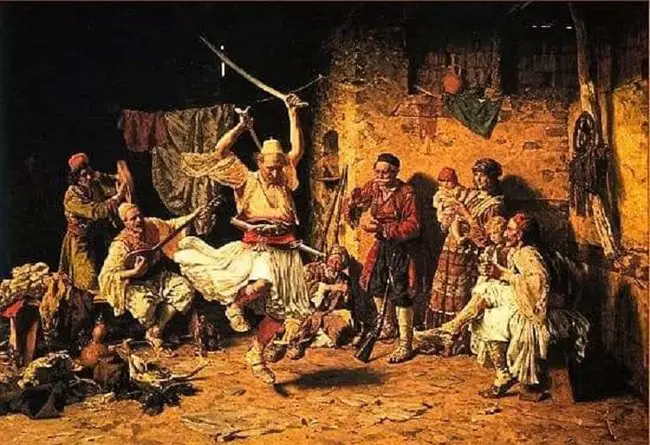
The dance was originally from Epirus, but it became known as the Dance of Osman Taka when the patriot dancer from Konispol, a prominent figure of his time, was captured and imprisoned in Janina, where he was sentenced to hanging. Before the execution, he expressed a final wish: for an orchestra to play the Chame dance.

Osman Taka began to dance before the Vali (Governor) of Janina and his wife. He danced with such grace, physical beauty, and agility that the Vali’s daughter nearly fell from the window in admiration. Archival documents from Janina state that after this performance, the Vali’s wife pleaded for his life to be spared. He was indeed pardoned, and from that day forward, the dance was named the Dance of Osman Taka.

WHO WAS OSMAN TAKA?

Osman Taka was born into one of the wealthiest families in Konispol (c. 1848 – 1887), where he was educated with the ideas of the National Renaissance. He was an organizer of armed uprisings in the region against Ottoman occupiers and became a key activist for liberation. He played a significant role in the Preveza branch of the League of Prizren and became one of the most important leaders for the defense of Albania’s territorial integrity.

He was also a renowned folk dancer. Legend says that when he was sentenced to hang at the plane tree of Konispol, he asked to dance one last time before the rope. His masterful performance amazed everyone present. Since that time, the dance performed by Osman Taka before the gallows has remained one of the most beautiful dances of Chameria, reaching our days as the “Dance of Osman Taka.”

THE DANCE OF OSMAN TAKA (POEM)

Eh, mor Osman Taka,

Son, Osman, man of many sorrows!

You flash like a sword,

You spark like a dance!

You rise like an eagle,

You dive like a falcon,

Then you step upon the ground,

Like a gazelle on its hoof,

As if you want to say:

“This land contains gunpowder;

If you tread too heavily,

You gamble with your head!”

“What is this upstart doing?”

The Vali snorts in rage—

“Does he think the noose is a joke?

A mere child’s plaything?”

Swiftly you twist and turn,

Like a whirlwind of air!

Reminding the ‘Halldup’ (Ottoman)

Of the ambushes and the hideouts,

The traps and the soldiers,

Cut and ground upon the flint…

The shadow of the martyr

You hurled against his brow!

Eh, mor Osman Taka,

Son, Osman, man of many sorrows,

With a single dance,

You struck down a Pasha of the Empire!/ Memorie.al
ShareTweetPinSendShareSend
Previous Post

"The Romanian scholar T. Capidan believed that the crime might have been committed through an agreement between the Phanar and the Yildiz, as the murder of Naum Veqilharxhi occurred in..." / The unknown side of the famous patriot's death.

Next Post

“Mehmet is on bad terms with Enver; it has reached the point where Mehmet has been isolated at home. The quarrel stems from his insistence that we stand with Stalin, whereas Enver...” / Sigurimi document revealed, July 1950.

Artikuj të ngjashëm

“Count Durazzo and Mozart discussed this piece, as a few years prior he had attempted to stage it in the Theaters of Vienna; he even [discussed it] with Rousseau…” / The unknown history of the famous Durazzo family.
Art & Culture

“Count Durazzo and Mozart discussed this piece, as a few years prior he had attempted to stage it in the Theaters of Vienna; he even [discussed it] with Rousseau…” / The unknown history of the famous Durazzo family.

February 9, 2026
“The Durazzo family was art collectors, and in the salons of their palaces, such as those on ‘Via Balbi’ and the ‘Palazzo Durazzo-Reale’, they kept the paintings…” / The history of the famous family of Albanian origin.
Art & Culture

“The Durazzo family was art collectors, and in the salons of their palaces, such as those on ‘Via Balbi’ and the ‘Palazzo Durazzo-Reale’, they kept the paintings…” / The history of the famous family of Albanian origin.

February 10, 2026
“In ’73, Kadare came to Milan with some friends to meet me, and when he told me; ‘Kodra, you should send some catalogs to Tirana, because they don’t know you’, I…”! / The rare testimony of Ibrahim Kodra.
Art & Culture

“In ’73, Kadare came to Milan with some friends to meet me, and when he told me; ‘Kodra, you should send some catalogs to Tirana, because they don’t know you’, I…”! / The rare testimony of Ibrahim Kodra.

February 9, 2026
“When Zajmi sent him a postcard featuring a reproduction of his work titled ‘The Drin Dam,’ depicting several hydroelectric power station workers, Ibrahim Kodra replied…” / The untold story of the famous Albanian painter.
Art & Culture

“When Zajmi sent him a postcard featuring a reproduction of his work titled ‘The Drin Dam,’ depicting several hydroelectric power station workers, Ibrahim Kodra replied…” / The untold story of the famous Albanian painter.

February 7, 2026
“Marije Logoreci created a gallery of characters that remain a reference for every actor, as she interpreted roles…”/ The unknown history of the legend of the Albanian stage and cinematography.
Art & Culture

“Marije Logoreci created a gallery of characters that remain a reference for every actor, as she interpreted roles…”/ The unknown history of the legend of the Albanian stage and cinematography.

February 4, 2026
“In 1941, marking the one-year anniversary of the poet’s passing, Koliqi published an overview titled ‘Fishta, Interpreter of the Albanian Soul’ under the editorship of ‘Shkëndija’ magazine, in which he writes…” / Reflections by the distinguished researcher.
Art & Culture

“In 1941, marking the one-year anniversary of the poet’s passing, Koliqi published an overview titled ‘Fishta, Interpreter of the Albanian Soul’ under the editorship of ‘Shkëndija’ magazine, in which he writes…” / Reflections by the distinguished researcher.

February 5, 2026
Next Post
“Mehmet is on bad terms with Enver; it has reached the point where Mehmet has been isolated at home. The quarrel stems from his insistence that we stand with Stalin, whereas Enver…” / Sigurimi document revealed, July 1950.

“Mehmet is on bad terms with Enver; it has reached the point where Mehmet has been isolated at home. The quarrel stems from his insistence that we stand with Stalin, whereas Enver...” / Sigurimi document revealed, July 1950.

“Historia është versioni i ngjarjeve të kaluara për të cilat njerëzit kanë vendosur të bien dakord”
Napoleon Bonaparti

Publikimi ose shpërndarja e përmbajtjes së artikujve nga burime të tjera është e ndaluar reptësisht pa pëlqimin paraprak me shkrim nga Portali MEMORIE. Për të marrë dhe publikuar materialet e Portalit MEMORIE, dërgoni kërkesën tuaj tek [email protected]
NIPT: L92013011M

Na ndiqni

  • Rreth Nesh
  • Privacy

© Memorie.al 2024 • Ndalohet riprodhimi i paautorizuar i përmbajtjes së kësaj faqeje.

No Result
View All Result
  • Albanian
  • English
  • Home
  • Dossier
  • Interview
  • Personage
  • Documentary
  • Photo Gallery
  • Art & Culture
  • Sport
  • Historical calendar
  • Others