From Ali Buzra
Part Thirty‑eight
LIFE UNDER PRESSURE AND SUFFERING
(APPRAISALS, COMMENTS, NARRATIONS)
Memorie.al / At the request and wish of the author, Ali Buzra, as his first editor and reader, I will briefly share with you what I experienced in this encounter with this book, which is his second (after the book Gizaveshi në vite) and which naturally outlines his writing style. The sincerity and frankness of the narration, the simple and unembellished language, the accuracy and precision of the episodes – or the absence of a deliberate, processed fantasy or its non‑exploitation – I believe have served the author positively, who comes to the reader in his original form, inviting us at least to get to know unknown human fates and sufferings, whether by chance or not, leaving us to reflect as a beginning of awareness toward a catharsis so necessary for the Albanian conscience.
Bedri Kaza
Continued from the previous issue
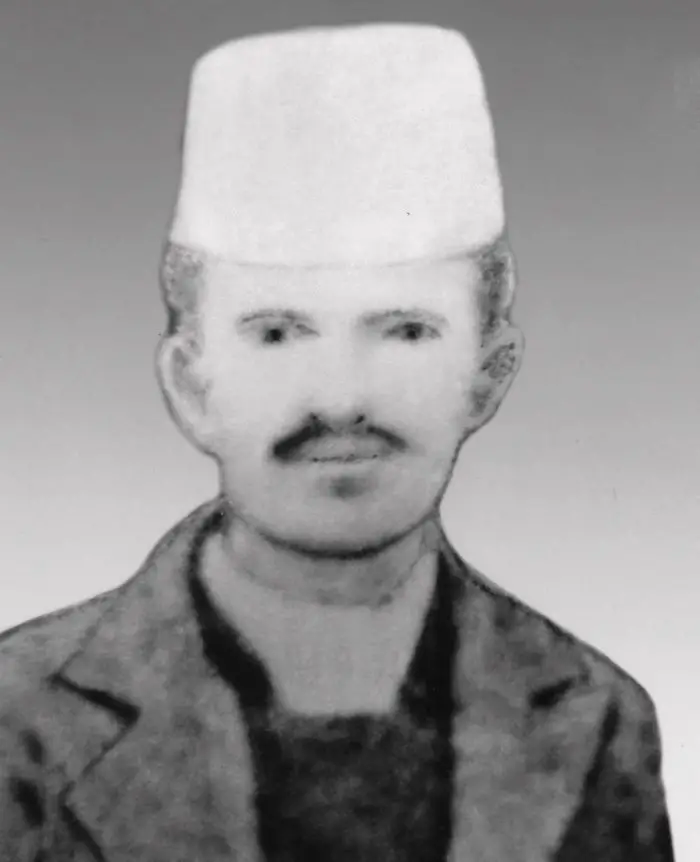
The next day, Xhevat’s wife, together with their young son, went to meet the Party leader in the district, but he did not receive them. Their older son, Bajrami, was in the army. There he learned of his father’s arrest. He lived with a frozen heart, fearing that his father might be sent to a labor unit, but that did not happen. During the investigation, Xhevat was held for over six months, subjected to pressure, threats and violence. It was a true nightmare for him. Even under these conditions, he did not admit to any of the charges brought against him.
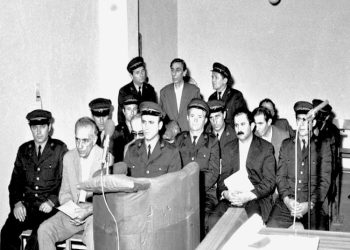
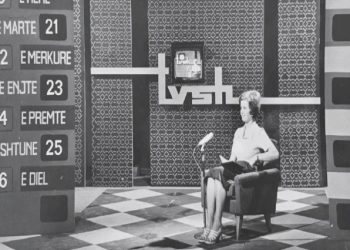
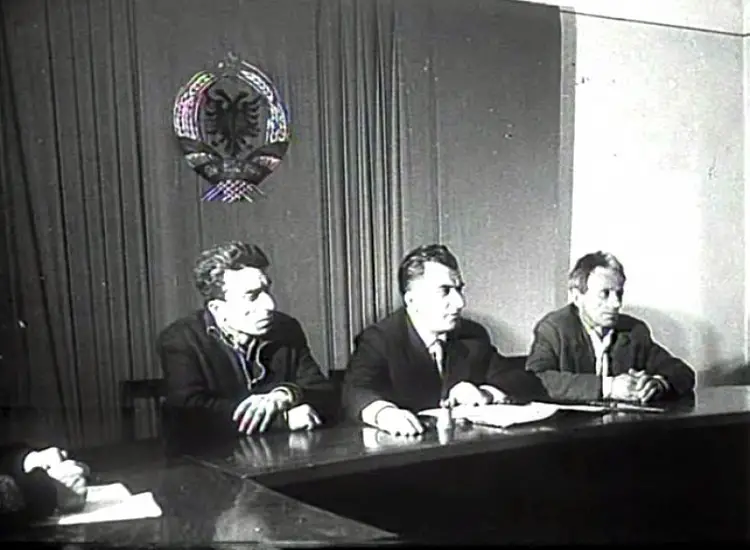
The trial was held behind closed doors in Librazhd. Family members went, but were not allowed to enter. They waited outside for the verdict. That day, Bajrami also came, having been given leave from his unit. In the decision of the judicial body of the time, among other things, it was stated: “In March 1978, when the chief leader of the Party was making visits in the district of Gjirokastra, the accused Xhevat Dosku, while watching the evening television news broadcast showing these visits, expressed himself hostilely about him. He spewed venom against the chief leader of the Party, expressing himself with unbounded class hatred … etc. On the other hand, he shows sympathy for Tito that renegade of socialism.” The indictment further stated: “Thanks to the Party and its leader, the life of the Albanian people has become happier every day, more prosperous, and will become even happier in the future. This is an undeniable fact. However, the accused Xhevat is not satisfied with this wonderful reality and in a conversation in June 1978 … expressed himself hostilely, saying:
‘Things cannot go on like this; my children are starving; now I am finished and have nothing to live on; I have a low salary … now my work is over … etc.’ Likewise, in June 1979, he expressed himself saying: ‘The wages we receive are not enough even for bread, let alone for food.’ He also expressed regret for the traitorous group in the army that was struck by the Party. These charges were also confirmed by the witnesses presented at the trial.” In the final decision taken from the investigative file against him, it is stated: “The judicial body, based on Articles 278‑79 of the Criminal Procedure Code, Decided: To declare the accused Xhevat Dosku guilty of the crime of agitation and propaganda against the state and, based on Article 55/1 of the Criminal Code, sentences him to 9 years of imprisonment. Applying Article 25 of the Criminal Code, he is deprived of the right to vote for 5 years. Court costs are charged to the accused.”
Today’s reader can understand very clearly, from the wording of the indictment, how politicized the judicial system of the dictatorship era was, as well as that the legal code was drafted specifically to serve the violent protection of the totalitarian communist system in Albania. The family appealed to the Supreme Court in Tirana, but it upheld the decision of the district court. Xhevat Dosku began serving his sentence, leaving behind a wife and six children in dire straits. He would serve his imprisonment in Ballsh, Zejmen in Lezhë, Unit 313 in Tirana, and Spaç. There he fell ill and was taken to the hospital, where he underwent surgery. From there he was sent to Shënvasil in Sarandë. Despite his poor health, Xhevat worked hard in order to have his sentence reduced somewhat.
His wife was ill. A few weeks after the trial, she gave birth to a child, who died two years later. At the funeral, again only 5‑6 people attended, among them Gani Dosku, Ramazan Hidri, Ruzhdi Qosja, Shaziman Dosku, and one other. Her health continued to deteriorate. Under these conditions, she spent two years undergoing treatment at a sanatorium for a severe lung infection. One year after his father’s sentencing, the eldest son, Bajrami, was discharged from the army; the whole weight of the family fell on him. Marriage was a problem for him. On 6‑7 occasions when he was about to get engaged, the engagement broke off because his father was a political prisoner. He started working in a brigade, but he could not secure anything. There were 7 family members to support, while also having to help his father. He went to him once a month to bring some food and tobacco.
After his mother was discharged from the hospital, Bajrami would go with her to Xhevat, enduring countless difficulties and hardships during the journey. Part of the road they had to travel on foot, sleeping by the roadside or under bridges to shelter from the rain. Bajrami sought to work as a tractor and transport worker, but whenever he started a job where he could earn a bit more, he would be removed again. When he worked for a while as a transport worker with the cooperative’s truck, they would leave him at Qafë Shapkë and would not allow him to go to Qarrishtë because it was a border zone. The contempt and disdain toward Xhevat’s children and his family were felt everywhere. On one occasion, he received an invitation to go with his mother to a wedding at a relative’s house in Dorëz, but the next day the same messenger came again, telling them they should not come because a communist, a relative of that family, had objected.
Bread from the bakery was always obtained by ration list, and even that was rationed. They have not forgotten one instance of help given by Gani Xhani from Gizavesh, who worked at the electric‑powered mill in Krastë. Bajrami asked him to help with a little flour, because they had no money to buy bread from the shop. Gani told him to come get it in the evening. Even though it was late, it was not easy to take it. Spies prowled around even at night. If he were caught, Bajrami would be imprisoned immediately, so he sent his younger brother, Luan, who, even if caught, was still a minor. He went to the mill and told Gani he had come for the flour.
– “But you’re small, boy,” said Gani, “how will you carry it?”
– “I can carry it, I can carry it,” he replied.
He took the sack and climbed up the slope of Krastë, fear in his soul, stumbling and getting up until he reached the stream. There Bajrami was waiting for him. He lifted the sack and brought it home. At home, he saw his brother drenched in sweat. His mother and the other children were waiting anxiously. They rejoiced when they saw the sack of flour that would allow them to get by for a few days, eating without ration. They went to school barefoot and poorly dressed as can be.
Luan had a pair of thin sandals; while playing, he stepped on a nail. His foot became badly infected. He missed school for several days. To check on his condition, the class teacher, Shpresa Gaçe, came. She saw that his condition was serious, and meanwhile told him to come back to school when he felt a little better, otherwise he would fall behind in his lessons. His mother said he would come, but he had nothing to put on his feet. The teacher gave a pair of shoes from neighborhood children to give to Luan, but they did not fit either. Ah … trouble upon trouble?! After finishing eighth grade, Luan also went to work, helping the family a little. A youth meeting was held at the cooperative center. Luan went with his brigade friends, both boys and girls, but they threw him out. He left, sorrowful, for home.
For Xhevat Dosku’s family, communist persecution and repression had now begun. The operative of the Sigurimi (secret police) summoned Bajrami several times to recruit him as a collaborator, promising him favors. When it became clear that he refused, he began to pressure him in various ways, letting him understand that he too would end up in his father’s place.
Xhevat was released in 1986. Out of nine years, he served seven. Part of his sentence was reduced because he earned it through work, and he also benefited from an amnesty. He was released on probation, without the right to vote, according to the court’s decision. After a few days, he started working on a farm as a manual laborer. The children grew up, and with his return, the economic situation began to improve a little. Dorëz, as a village, had been transformed into a farm, and there the situation was somewhat better than in the cooperative.
The student demonstrations of December 1990 brought hope to their family as well. The democratic movements in the cities and the toppling of the dictator’s bust brought immense joy not only to Xhevat, but to his entire suffering family, just like thousands of Albanian families across the country who had experienced communist persecution and repression. But, would the representatives of the dictatorship of the proletariat abandon the work they had started? Never. It seemed as if the “kulak” family of Nebi and Gani Dosku in Dorëz was challenging them. This was the period after the so‑called “discovery of hostile groups” in the Army, Economy, Education and Culture, and in the dome of the communist state. Former Defense Minister Beqir Balluku, Chief of the General Staff of the Army Petrit Dume, and Head of the Political Directorate in the Army Hito Çako were sentenced to death by firing squad. In the Economy, Abdyll Këllezi, Koço Theodhosi, Kiço Ngjela, etc., and in Education and Culture, Fadil Paçrami, Todi Lubonja, etc., were sentenced to many years in prison.
In Librazhd, the poets Vilson Blloshmi and Genc Leka were sentenced to death. “Sacrifices” were also needed at the grassroots level; to show that hostile activity was being uncovered and hostile elements would be punished. So this campaign of arrests to create enemies had been planned, and the State Security selected only the elements that would become victims. For this, it set in motion its tools: spies, sycophants, or people zealous toward the party‑state, who spied on and gathered evidence against the victims. On May 24, 1980, they summoned Nebi Dosku to Krastë, at the cooperative center, and told him: “In the name of the people, you are under arrest,” and put handcuffs on him right there in public. He was 51 years old. During nearly three months of investigation, even under pressure and various machinations, he did not admit to the charges.
Some of the testimony against him compiled and elaborated by the investigative “masters,” included: He left workers without work by giving them cigarettes. He opened the newspaper Zëri i Popullit first to page four, where news from abroad appeared. When working at the fire centers, he said: “These fire centers being built are pointless; they do nothing but wear us out building them, because in case of war they will be blocked and we won’t be able to get into them.” “Through this conversation,” the indictment said, “the accused Nebi intended to instill mistrust in the witness … who was a technician for the construction of fire centers. To the same witness, in 1977, he said: ‘We work day and night and still cannot fill our bellies with bread!’ When he was working at the threshing floor near the mosque of Dorëz, he called on his comrades to stop working because they were excessively tired, saying: ‘I keep my soul for myself; I won’t give it to you.’ By this, he meant that the socialist system exploits workers to the point of trying to take their very souls.”
These were some of the testimonies included in the indictment drawn up by the investigative body against him. There are hundreds and thousands of court decisions against Albanian citizens of various social backgrounds – peasants, workers, intellectuals, Party members and non‑members – who were tried and suffered punishment in the macabre prisons of the dictatorship. According to today’s information, the state of the Dictatorship of the Proletariat had established 39 prisons and 70 concentration camps, where thousands of people, most of them innocent, and hundreds of families from the Albanian elite and nobility, served sentences. Most prisons were hard‑labor camps in the galleries of the mines of Spaç, Bulqizë, Qafë Bar, Tërnovë, etc., where technical conditions were among the most scandalous. Dozens of prisoners were injured and died there, and today they have no grave.
We note some details from the indictment against Nebi Dosku, taking it as an example that clearly demonstrates the class‑based nature of the case examination, as well as the sentencing decision. Among other things, in Court Decision No. 65 of the Librazhd District Court, dated August 22, 1980, it is stated:
“Decision in the name of the people. The People’s Court of the Librazhd District, composed of … examined in a judicial session the criminal case concerning the accused Nebi Dosku. The accused Nebi Dosku comes from a wealthy family, of kulak composition and status, in the village of Dorëz, Librazhd district. Since the accused Nebi originates from and belongs to the remnants of the former exploiting classes, despite the assistance and the just call that the authorities and the party have made to him in the village, to follow the right path … he has disregarded their help and advice. The accused, as an enemy of the people’s power, at various times and places, has agitated and propagandized among different individuals against the defensive power of the country, against the socialist system of agricultural economy.
“The accused Nebi, intentionally and with specific aims, as an enemy of the dictatorship of the proletariat, has opposed it and has dreamed of restoring his lost paradise, as all enemies of the people’s power dream – something that will never be realized. We tell this accused that the history of all human society has shown that every state has held its power through force, through violence. Even the dictatorship of the proletariat in our country is violence against the exploiting minorities and democracy for the majority of the people; therefore, socialism in our country is the work of the working masses themselves, where the cooperative peasantry, under the leadership of the Party, has given and gives its maximum for the construction, strengthening, and preservation of the economic foundation of socialism. This blinds the accused Nebi, and he does not like to submit to socialist discipline at work, but seeks anarchy and disorder in the brigade where he worked, and through these he seeks to achieve his devilish goals in the non‑fulfillment of the state’s economic plan.
“In determining the penalty, the court takes into account the social danger of the offense committed by the accused, the affected social relationship, which is the defensive power of the dictatorship of the proletariat. We take into account the origin and social composition of the accused himself; we take into account the family and economic composition of the accused himself. Likewise, in determining the penalty, the court also takes into account the fact that, although the accused was faced with incontestable evidence of his guilt, he does not adopt a critical attitude toward the acts committed, which makes him more dangerous.
“FOR THESE REASONS:
“The judicial body, based on Articles 149 and 150 of the Criminal Procedure Code, DECIDES:
“To declare the accused Nebi Dosku guilty of the crime of agitation and propaganda against the state and, based on Article 55 /me of the Criminal Code, sentence him to 10 years of imprisonment.”
The above example, which is typical for those convicted under the dictatorship, is worth analyzing in general, in order to reach clear conclusions about political and socio‑economic life in communist Albania. At the same time, the question may arise: Was Nebi Dosku really an opponent of the regime? Did he hate the forms of work in the cooperative system? Did he hope for the overthrow of the system, and did he desire it? The answer is: yes and yes. A nostalgic of the communist period might say: “He deserved what he got!” For this category, we need to clarify that: not only the person in question and hundreds and thousands of other prisoners, but the majority of the Albanian people and anyone with a sound mind in the 1980s viewed the established regime with suspicion and hatred. Hatred of the cooperative system in agriculture was expressed everywhere in various forms. Without even considering the prisoners, who endured the most inhuman sufferings known in the history of the Albanian people, the entire mass of the population, especially the peasantry, was experiencing a life of enslavement.
Despite massive propaganda and indoctrination, signs of discontent appeared everywhere. The cooperative system was not established voluntarily, as propaganda claimed, but by force. The herding together of small livestock, which began “as an initiative” in the Librazhd district in 1976, was in fact carried out through coercive measures. It ended with the mass slaughter of livestock and led to the emptying of the market of livestock products. The peasant, who kept only one cow, had to hand over the calf when it reached six months to the cooperative at prices set by the cooperative leadership. The supply of meat for the peasant was done two or three times a year, on holidays, by ration, 200 to 300 grams per person.
The cooperative provided only bread, and even that was rationed. As far as I remember, about 500 grams per person per day. Under today’s conditions, this may seem normal, but the peasant had no other food. He ate bread with onions, salt, and a little liquid curd. Dairy products and other items such as beans, potatoes, or vegetables were out of the question. The cooperative was obliged to meet its obligations to the state. The Albanian peasant was exploited twice: first, by the cooperative itself and its leaders, who in various ways supplied their own families; second, by the state, to which the cooperative delivered its obligations using the unpaid labor of the peasants.
This was the time when most peasant families had been divided and each had less than 500 square meters of land from the division of the “dymym” (measure of land) that the family stem had possessed. Thus, with 200‑300 square meters of land, which they were forced to plant with corn and alfalfa for the cow, they could not meet their food needs. Food in state shops was rationed on a monthly basis, given out by list, such as: 1 kg sugar, 1 liter oil, 1 kg flour, 1 packet of coffee, etc. The latter, peasants only used in case of a death, giving their ration to each other for funerals. / Memorie.al
To be continued in the next issue