

By Dom Zef Simoni
Part five
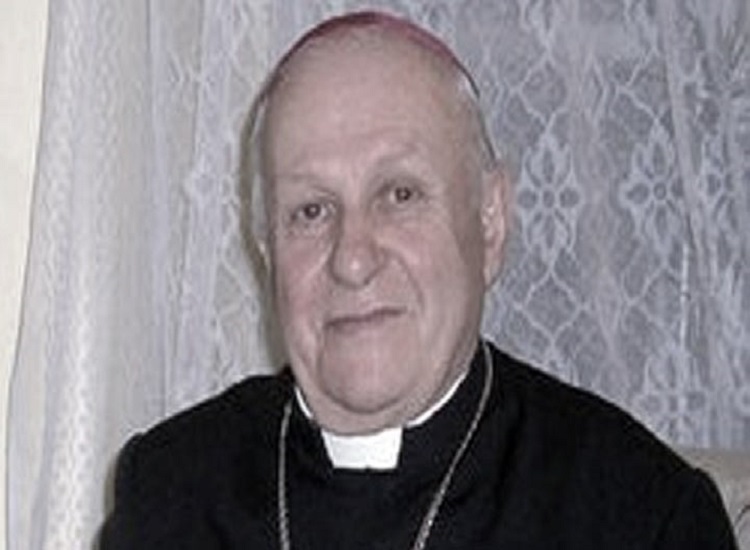
Memorie.al/ publishes an unknown study by Dom Zef Simoni, entitled “The Persecution of the Catholic Church in Albania from 1944 to 1990”, where the Catholic cleric, originally from the city of Shkodër, who suffered for years in the prisons of Enver Hoxha’s communist regime and was consecrated as Bishop by the head of the Holy See, Pope John Paul II, on April 25, 1993, after describing a brief history of the Catholic Clergy in Albania, dwells extensively on the persecution suffered by the Catholic Church under the communist regime, from 1944 to 1990. Dom Zef Simoni’s full study, starting from the attempts by the communist government in Tirana immediately after the end of the War to separate the Catholic Church from the Vatican, initially by preventing the return to Albania of the Apostolic Delegate, Archbishop Leone G.B. Nigris, after his visit to the Pope in the Vatican in 1945, and subsequently with pressures and threats against Monsignor Frano Gjini, Gaspër Thaçi, and Vinçens Prenushi, who firmly opposed Enver Hoxha’s “offer” and were consequently executed by him, as well as the tragic fate of many other clerics who were arrested, tortured, and sentenced to imprisonment, such as: Dom Ndoc Nikaj, Dom Mikel Koliqi, Father Mark Harapi, Father Agustin Ashiku, Father Marjan Prela, Father1 Rrok Gurashi, Dom Jak Zekaj, Dom Nikollë Lasku, Dom Rrok Frisku, Dom Ndue Soku, Dom Vlash Muçaj, Dom Pal Gjini, Fra Zef Pllumi, Dom Zef Shtufi, Dom Prenkë Qefalija, Dom Nikoll Shelqeti, Dom Ndré Lufi, Dom Mark Bicaj, Dom Ndoc Sahatçija, Dom Ejëll Deda, Father Karlo Serreqi, Dom Tomë Laca, Dom Loro Nodaj, Dom Pashko Muzhani, etc.
Continued from the previous issue
The Secret Mass
The spiritual life entered even more into a mystical reality with new forms of grace, and this particular, rare kind of rest in the world, accumulated proofs and memories that made you think that the priesthood is the office of Christ. Every moment, every circumstance, can be given its value, and one can draw benefit. And for everything, we must say: “God’s will be done.” But this, being a priest without being able to enjoy parish life, without speaking the word of God on the balustrades or pulpits, without being present at the heads of those who are sick and dying, and this in the best time of your energies, zeal, and enthusiasm, this will of God, has the special form of internal suffering and redeemable merits.
I celebrated Mass every day at the Archbishopric, with the doors closed, not in its chapel, but in the office. I started saying it at home too. Sometimes even at the house of Father Meshkalla, in the late hours of the evening, after we had several discussions to ensure the many works of the church were going well as much as possible. I had lived a religious life, since childhood in the family, in the crusade near the Jesuits, in the Franciscan Lyceum, always in contact with priests, but always as a believer. I had an educated demeanor and a non-formal wisdom, which in outward appearance had more civilian forms.
I used to criticize the world and people’s attitudes, and I did this with a profane temperament. I did these in my heart and in conversations with the Monsignor and some close person, because by nature, I did not speak about people. The Monsignor, when he listened to me, mostly remained silent. I had not grasped the essence that one must fight the evil, not the evil person. Because in the place of that faulty person, perhaps even worse, I might have found myself, and anyone who would act as I did.
Dom Injac Gjoka
An unconscious pride continued in me. I was telling Dom Injac Gjoka, an exemplary and model priest in the church, that a certain person was not good. Dom Injaci maintained a wise patience towards me, and at the same time an attitude of sympathy on his face, as he raised his eyes towards Heaven, and was ready to offer a prayer, for him and for me. I was surrounded by good priest brothers, with whom the holy bonds were constantly increasing. They were truly priests, the honor of the Holy Church. I did not have college formation. I had never been to the seminary.
I used to say the prayers without raising my eyes towards the sky and without putting my hands together. I put them together when I was a child, and later when Providence would slowly fulfill my formation. I had to be refined. I did not quite know what silence was. I was far, far from the brothers, but I was a good observer and with a fervent desire to introduce into the priestly life the goods required for this duty. I had examples. And good examples. I lived for almost seven years in the Archbishopric, near Bishop Ernest M. Çoba, who never scolded me for anything.
Not that I had no shortcomings, but he had a way of giving light thoughts and with a delicacy to orient. He opened up some horizons for me that belonged to the ecclesiastical sphere and the time we lived in. I was completely close to him. The Monsignor was a kind of aristocrat, a kind of nobleman, with a kind of patience where a cordiality and generosity appeared that truly approached a great man, especially in those very difficult circumstances of the time. The clergy called Dom Ernesto a providential Bishop.
Bishop Ernest Çoba and the Italian Legation
It was difficult, very difficult to face the times. One day the Monsignor gave me six points of silence to read. When I showed them to Father Pjetër Meshkalla, he told me to also learn the six points of speaking. Both of these men were Great to me, and in moral theology and in the Church code, both were strong. In the first days, after Dom Koleci and I became priests, the Monsignor began to tell us secrets in a soft voice.
Through the Italian Legation, via his sister Gjyliana Andracchio, he told us that he had connections with the Holy See. And he had this connection for Church problems. Matters of conscience. He sent reports on clerics, giving aid to the Holy See about who might be worthy to become a Bishop. And this was done so that mistakes would not occur. The Church had to be saved somehow from the clutches of the dictatorship state. The Monsignor was courageous for great works. He decided to inform some priests about our ordination.
“Priests have been ordained,” he told them in our presence. They were ordained on the 9th of February, and on the Day of Our Lady of Lourdes, they said their first Mass. And he told them he carried out this action secretly, also thinking that he was sick and his health was uncertain. He spoke first with Dom Injac Gjoka, who had the appearance and life of a saint. He congratulated us like a brother to a brother. We enjoyed staying with him. We often went to his parish in Bërdicë, and in Juban, and we were closely connected throughout our lives, seeing only virtues in him.
Imzot Gjon Kovaçi and Dom Ndoc Ndoja
Even though he was not a Bishop, Imzot Gjon Kovaçi, this Ordinary of the Diocese of Sapë, had the face of a shepherd and an elder in the church. A good jurist. He maintained the qualities of a distinguished priest of the Holy See. As soon as he found out, he thanked God for the good that had been done. And we became strongly connected with the Monsignor, regarding many problems of our Church under persecution.
Dom Ndoc Ndoja, the simple and devout priest, expressed his joy with these words: “Our flock is multiplying.”
Father Mëhill Troshani and Anton Luli
Father Mëhill Troshani, an agile Jesuit priest and a true missionary of the Society, connected everything to the mission; “For the salvation of your soul and others,” were his words. The cordial Father, Anton Luli, said these words as well. Everyone took into consideration this ordination of ours, done in the darkness of bondage, amidst the pains that severely burst our hearts.
Father Justin Rrota
Father Justin Rrota, our professor of morality, was moved by joy when he learned of our ordination. And on an April afternoon, we celebrated the Holy Mass in his room. Father Justini had completed 74 years of his life and fulfilled – as he himself said – the 38 years of the paralytic in the Gospel, passing this difficult ordeal with the patience of Job, with the perpetual expression “God’s will be done.” One evening Father Justini was gravely ill and had received the last sacraments. For a few days, he improved.
But he could not move from bed. He was confined to his deathbed. Many people went to see him. I have never seen a holier preparation than his on the threshold of death, during the last three weeks. He had holy conversations with everyone who came. He spoke to them like the orator he was, with those words that came from his heart, with conversations about the love of Christ. He urged them to get along well with each other, to forget grudges, hatreds, and steer clear of gossip.
In the last week, he was tired, he had declined, and on December 21, 1964, his heart rested and he closed his eyes. I stayed several hours of the night to watch over him. My eyes never left that face and I gazed at the dead body of this religious of St. Francis, this scholar and true intellectual of linguistic science, Latinist, and moralist who lived thinking and loving Jesus Christ with words and deeds, through the heavy and long ordeal of his illness.
Father Justini went to the land of the Franciscan Fathers, to the Rmaji cemetery in Shkodra, at 10 AM on December 22, the Day of St. Thomas the Apostle, the beginning of winter with rain, suitable for burial and sorrow. The funeral was simple: wreaths from the Convent, from the Archbishopric, from family members, from some laypeople. Nuns, priests, the priest for absolution, Monsignor Ernest Çoba, and behind them, his sister, men and women, preceded the coffin. He died and was buried very close to the memory of Christ’s birth, to meet Him in eternity. He died without seeing worse. Without seeing other disasters for the Church and the Nation.
The Theologian Father Mark Harapi
Those years I spent at the Archbishopric, I continued with ecclesiastical history in particular. Although I had studied philosophy and dogmatics before becoming a priest, I had many shortcomings, and this would have continued, had Providence not brought me a good day for studies, for which I was eager. Father Mark Harapi was released from internment. By his own wish, he addressed the Monsignor, offering to teach us philosophy, according to the author Farges, and dogmatics, according to Pesci, lessons which we would continue regularly, day by day, for almost five years.
Father Mark Harapi, after completing studies for a diocesan priest in Vienna, and serving as a priest in the Pult area for some years, sought to follow the path of the Society of Jesus, to become a Jesuit Father, and then by pursuing more detailed studies, he earned a doctorate in philosophy and theology at the Gregorian University in Rome. Having taught these subjects for several years at the Pontifical Seminary in Shkodra, with a special ability, he was recognized as the second greatest Albanian theologian after Monsignor Pjetër Bogdani.
Father Mark did not remember me, when I had gone to him as a student to stay an hour in his parish cell, regarding my youthful problems. Now, I, his regular student, listened to hours of teaching with scholarly clarity, intellectual erudition, simplicity, and accuracy, which characterized this precise professor, who spoke not a word more, nor less. Even through the subject matter, new forms of formation were added within me. I observed, during his explanation, almost every sound that came out of his mouth. I was very eager to gain from his abilities. In teaching, he was neither ascetic nor mystical. I would develop ascetic and mystical theology later.
He seemed like a living Aristotle, and a true Aquinas. “I never thought,” this strong old Father would say now, thanking God, “that it would happen to me to teach again in my life,” and he confessed that he taught with even more passion and maturity than before. During the time he taught us, he would shut himself in the Archbishopric’s library to prepare the theses at a high level. These became very beautiful years of life for me, and the Great God was giving me preparation and spiritual progress even through this man, this Jesuit who was truly a cathedra of our land.
Difficult Days
The Archbishopric looked like a mysterious headquarters. For many people who could not enter there, it was seen as if it were a foreign embassy. Sometimes a frightening sight fell upon the Archbishopric. Religious functions were held in the city’s churches. In all the Masses that were celebrated, there were people. But baptisms and weddings began to be performed in some homes as well, because for some, public services were impossible and highly secret.
Control had begun. Especially for officials and teachers. The priest would usually go in the evening hours, taking the ritual book and stole with him. He also carried the Eucharist. Monsignor Ernest Maria Çoba was gradually being put in difficult positions. The situation of the Church was worsening. The state, after forcibly taking the Church’s legitimate assets, provided a subsidy that decreased every year. Whispers of a breakup with the Soviet Union began to be heard.
Chinese Politics
How was it possible for the great and eternal friendship with the Soviet Union to be broken?! How would things develop? Other strong ties of great and eternal friendship began, with Great China of Mao Zedong. And now, with the China of Asia. One, two, three quiet years passed for the Church. The time became strange. Chinese delegations came. Zhou Enlai came. Albania was filled with Chinese people, with slogans.
One was: “What the people say, the Party does; what the Party says, the people do.” A slogan with a profound outlook. What does this mean? What will this bring? The clerics of the dioceses began to come to the Monsignor, one after the other. They complained that the People’s Councils were creating obstacles in preparing children for Confirmation. A bad sign. Is this the new Chinese policy?!
Xhemal Dini Closes Two Churches
At 9 o’clock one morning, around December of 1965, they summoned the Bishop to the presidency of the Democratic Front of the district. I accompanied the Monsignor to that office. Around ten people awaited him, with feigned respect and hypocritical smiles. There is no more hypocritical smile than theirs. “Monsignor,” said the Chairman of the Front, Xhemal Dini, who was with all the members of the Presidency. “Next to the Jesuit Church and the Nuns’ Church, as you know, we have two of our dormitories. Our youth are there.
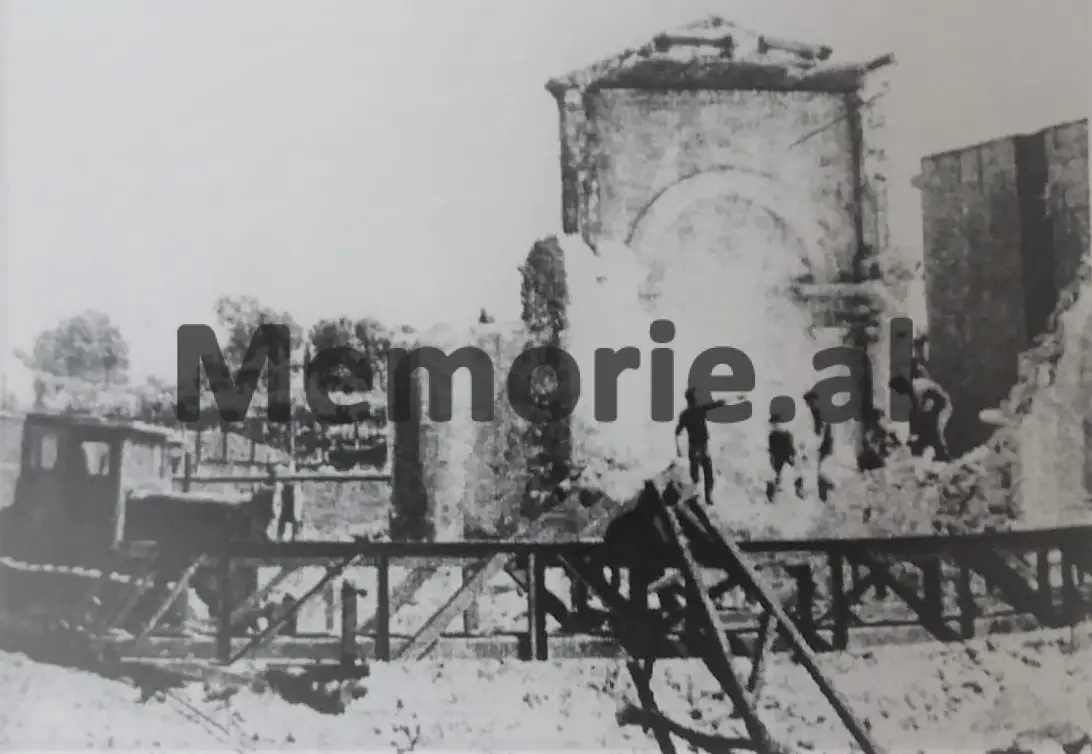
These two churches don’t go together,” the chairman repeated. “Our youth should not be near the church.” First, they took our buildings for dormitories, when the youth followed us. Now they took the churches too. They turned the Jesuit Church into a hall for children’s puppet shows. They called the church of the Stigmatine Nuns the “Youth Club.” Later, courts were also held there, where priests would be judged to death or clerics would be condemned to heavy prison sentences. The people wept bitter tears for those churches that were taken.
The premises of two historical churches of the city’s life were taken, where all the Catholic youth of boys and girls had grown up, learned, and prayed. The Monsignor went to the Prime Ministry several times. Sometimes he went himself, sometimes they summoned him. When they summoned him, the Monsignor worried about what would happen. A conversation arose with the clerk, a colonel, Mr. Reshat Germenji, about the taking of the churches. He stood straight as a candle. He pretended he knew nothing about these two churches. But in the end, he told him: “I cannot interfere with the districts.” These are the forms of deceit. Oh, with how much cunning Communism works!
The Removal of the Bells
After a few days, they summoned the Monsignor to the Prime Ministry. The clerk told him: “The bells of the city of Shkodra are too many; they ring many times a day. They wake the people up too early in the morning. It is an order: You will ring the bells, from now on, only on Sundays, and even then, not too loudly!” The Monsignor returned gloomy, saddened; “What are these movements?!” On another occasion, they invited the Monsignor to participate in an evening event held at the “Palace of the Brigades” in Tirana.
Zhou Enlai had arrived. Days with events. A time of war against bureaucracy. They were distributing important cadres from Tirana to the districts, sending them to the field, sending them to the grassroots. Fear entered their own ranks. Interests were touched. Enver is a tiger. It is said that he has won over the people for himself. Everywhere, he takes conferences, at rallies, he is applauded. Whether empty or full, they applaud, and cheer: “Party Enver, we are ready always.” The people lose judgment. They have no strength. It is a period of great weakness.
Mines near the Church: Bilal Parruca
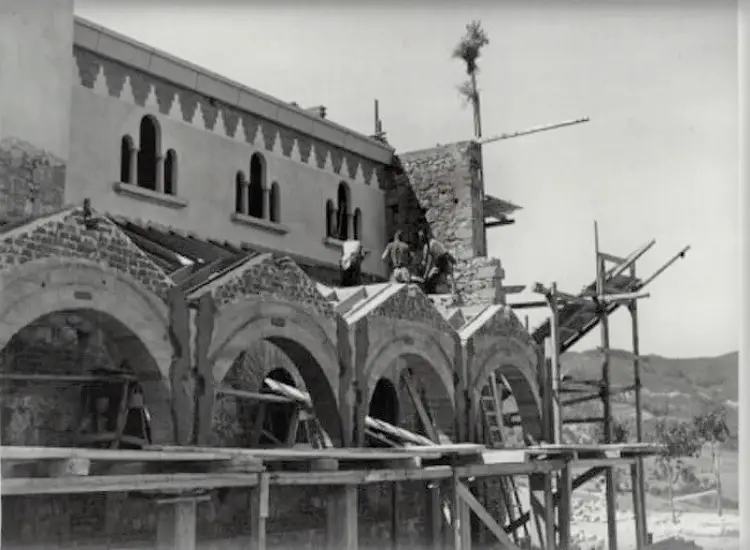
Hundreds, thousands, on April 26, went on the Day of Our Lady of Good Counsel to see Mass at the Castle. The great Pontifical Mass on that beautiful Day of Our Lady and April was at 10:00 AM. But the Mass was not allowed to be said. A military unit, unexpectedly and without warning, had an order from above to carry out an action, because they were going to detonate mines to widen the mountain and open a tunnel next to the church. This action was by strict order. Everyone thought it was done on purpose. Where do Communists act without purpose?
But, on the night of Pentecost, 1966, when they summoned the Monsignor to the Executive Committee, at 12:00 PM, to the chairman Bilal Parruca, what event was there? I, who was accompanying the Monsignor, he told me along the way that; “They do not want to let us administer Confirmation.” The Monsignor was walking with trembling legs. “No, Monsignor, do not think ill of them.” When he entered the office, I was waiting outside.
The Chairman of the Committee received the Monsignor well. “Monsignor,” he said, “we have learned that you want to perform confirmations and secret services in the Archbishopric. Why secretly? Services must be done in the church. Religion is free. No secret services.” Communist deceit with a deep oriental form. The bad Muslims have tormented and humiliated us everywhere. The bad Muslims have tormented even the good Muslims, but us Catholics, badly. Some Catholics have also collaborated with these.
The Confirmation
On the day of the Confirmations this year, they had specifically sent and organized teams of children, both Christian and Muslim, to watch and stop the children, pure in spirit and attire, who were going with their godparents to be confirmed. But the children were by no means deterred. Their Confirmations, around five hundred, were very magnificent. The Monsignor confirmed in the late hours of the afternoon and evening, even at the Archbishopric.
But everything was getting heavier. It was anticipated what would happen. A church was closed in Shala. Father Shtjefën Pistulli, a humble friar who zealously served in those deep areas of Dukagjin, was expelled by the communists. From the church of St. Nicholas of Bregu i Matës, they evicted the exemplary priest, the Jesuit who was precise in his duty, Father Anton Luli, on the day of the saint, December 6. “The people do not want him!” “Which people?”! Some elements gave the order to take his clothes and leave. “We don’t want a church,” they told the Father. “We want to have a house of culture.”
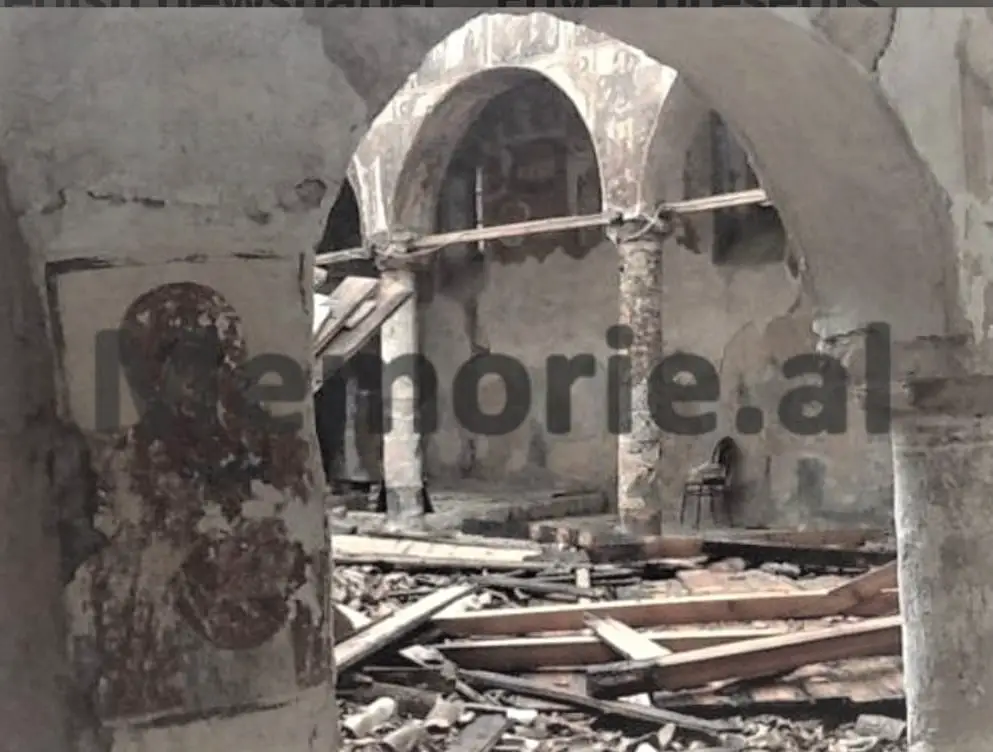
This was a bad and imminent sign of the Cultural Revolution that was approaching. For the church that was taken, the people mourned, filling large cups – those large water cups – with water blessed in the church. This was to be new holy water, unseen in the world, because it came from pain, from suffering. The ritual contains this kind of blessing, because it is full of the strong prayers of hearts. On Christmas Eve in Shkodra, the Grand Church would be filled with people, as every year, even though an order was issued in the city and villages to do concentrated voluntary work at night.
A winter night, gloomy and a holiday, and a night of work. Weep, O God, for the evil! War and peace mixed together, like opposing winds. The days and nights heralded a storm and severe and long polar winters, events of treachery and violence, in a small country. Mystery and disaster at the end of this year 1966, followed by that other year, 1967, with disaster and collapse.
February 6, 1967
The mountains with little snow. A beautiful winter. January was passing with sunshine and wind. Strangely, so was February. Some days with pre-spring rain. Until now, a figurative winter. Then a very joyful spring was expected. A very miserable one. Did the weather betray us? The weather did not betray us, but Enver betrayed us! We never trusted Enver. In this spring that exploded, the blackest thing happened, black filth, like his coat.
The pyramid of 28 thousand km² was marching, at the head of which was he; the armored Albania was marching, inside which he was found. He only thought about when the day would come to do everything. He had never dreamed more than this day. This monster of the dictatorship, this being who weighed down himself and others, had endured much. “He had heavy thoughts in a light head.” Thoughts outside his head. Great people perhaps have one idea. He too had only one. But this idea was bad. The worst one.
He had seen some points of history, stemming from his brains, from his rages. He had imposed his personal spirit on everyone else, in order to supposedly gain the collective spirit from others. This was needed to terrify people, because he had always told himself: “I will do the work I want, I will manage to be only me.” He had thought of summarizing the history of this country, only in his word, in his work and deed, in his 60 volumes, and more so by sitting in his armchair, and when the work required it, even cross-legged, in some square with peasants and highlanders, to discuss with them the troubles of this people, only to make them worthless.
He opened up all the passions that exist and do not exist. The ability to confuse troubled him day and night. Being at the head of the situation, he thought that his projects must be realized, taking them to the end. These are years with invasions and there are deafening noises that do not allow people to say whether this continues and until when. The great epoch with zigzags, with obstacles, with difficulties. Every person who thinks against him is greatly afraid and he will be that person. Everyone likes him, but he must dominate them. Even a small change is a lot for him, because what he does to keep those he doesn’t need for the moment, this is one of his secrets. He saw the term unity of the nation in the breakdown of hearts./Memorie.al
![“They have given her [the permission], but if possible, they should revoke it, as I believe it shouldn’t have been granted. I don’t know what she’s up to now…” / Enver Hoxha’s letter uncovered regarding a martyr’s mother seeking to visit Turkey.](https://memorie.al/wp-content/uploads/2026/01/Dok-1-350x250.jpg)