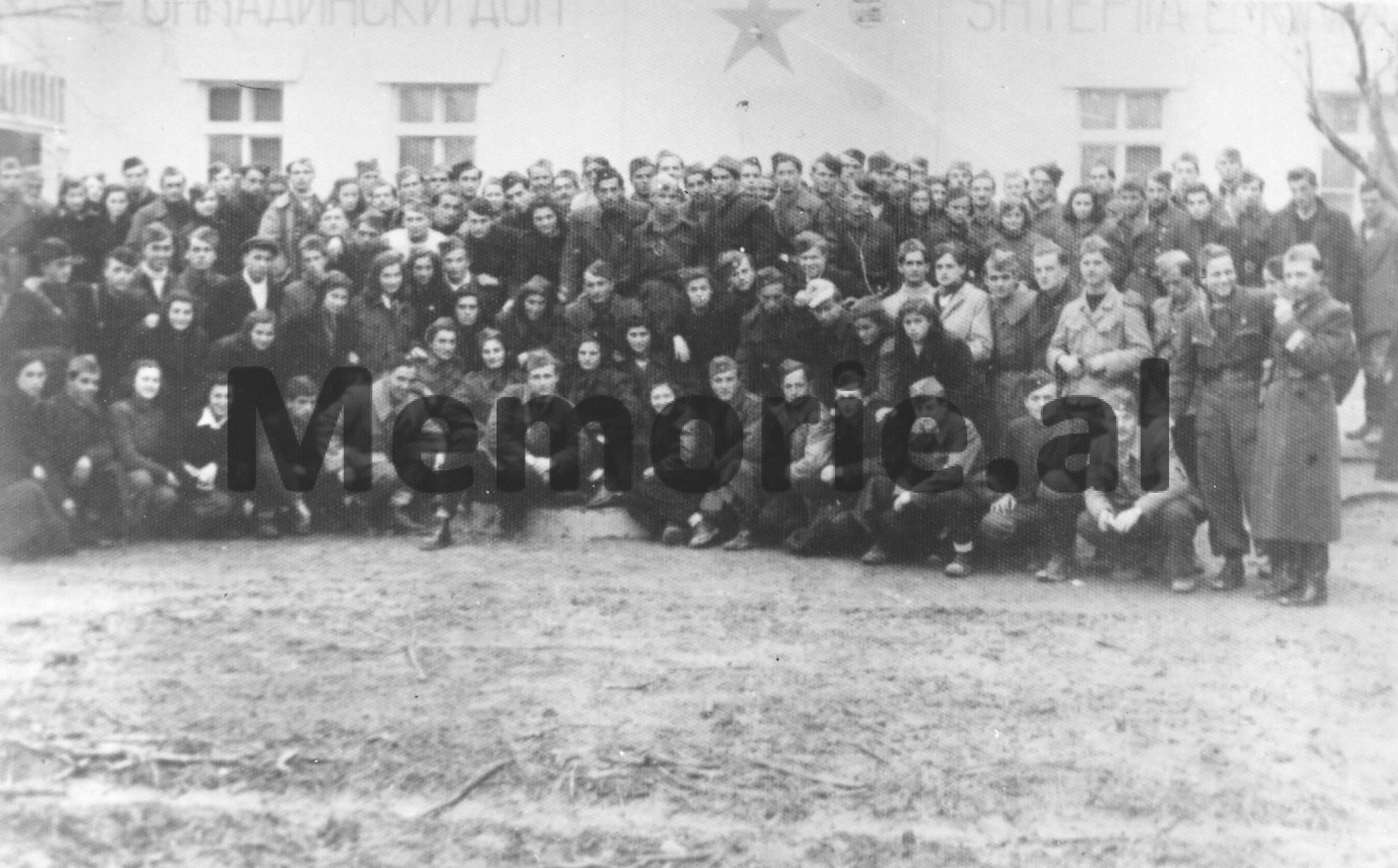
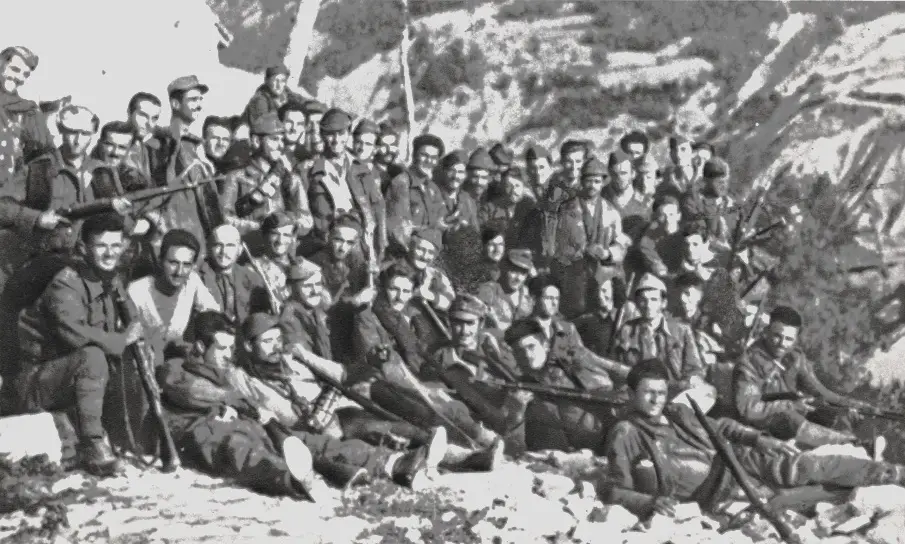
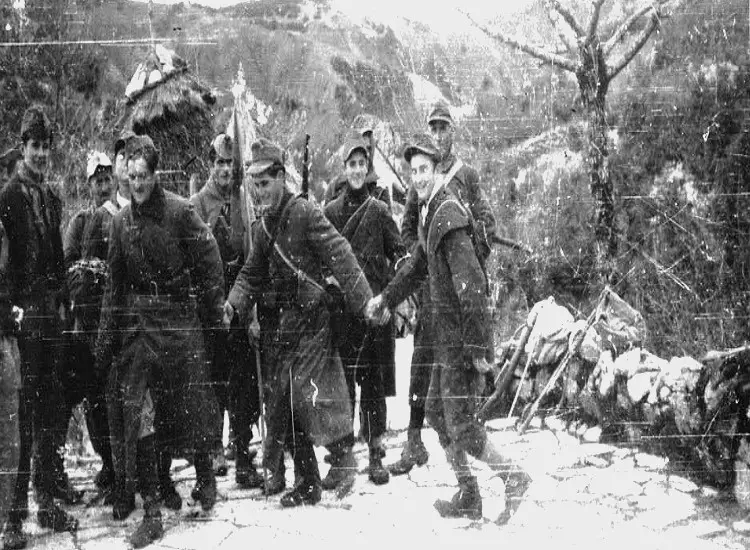

Memorie.al / The support of the Yugoslav Communist Party (YCP) for the Albanian Communist Party (APC) was aimed more at controlling the Albanian regions of Kosovo and Macedonia than at controlling Albania itself. Developments between 1941 and 1944 in Kosovo and the Albanian territories in Macedonia showed that the YCP had no influence over the Albanian areas and population, whereas it was powerful among the Serbian-Montenegrin-Macedonian populations.
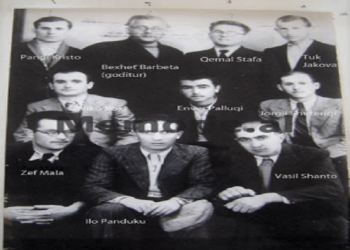
Following the crackdown on the “Youth Group,” Dushan Mugosha went to the Central Committee of the Yugoslav Communist Party, where he delivered documentation to Josip Broz Tito. On September 22, 1942, Tito sent a letter to Miladin Popoviç with instructions for organizing the Albanian Communist Party.
He wrote that based on materials sent by the APC, he had sent several telegrams to the Comintern where, in the name of the Yugoslav envoys to the APC, he had requested permission to hold the Conference of the Albanian Communist Party and elect a general delegate of the Central Committee.
Based on Tito’s instructions, the First Country Conference of the Albanian Communist Party was held. To lead its proceedings, Josip Broz Tito authorized the member of the Central Committee of the YCP, Blazo Jovanovic. Tito had added only one point to be discussed at the conference: the organizational issue of the APC, which required a radical processing, particularly regarding unity and the purging of the party.
He also demanded the political elimination of Llazar Fundo, whom he called a Trotskyist. Furthermore, the characteristics and names of the new Central Committee members to be elected at the First Country Conference were to be sent. Once Tito’s envoys successfully carried out the First Country Conference of the APC (March 1943), Miladin Popoviç and Dushan Mugosha organized the regional committees of the APC, thereby placing the party under complete control.
After the collapse of the Mukje Agreement, following instructions from YCP representatives, the meeting of the National Liberation Council, known as the Second Labinot Conference, was held. It decided that the only power in Albania would be that of the national liberation councils. Following this, the APC began an armed struggle against its opposing political forces, which took on the character of a civil war.
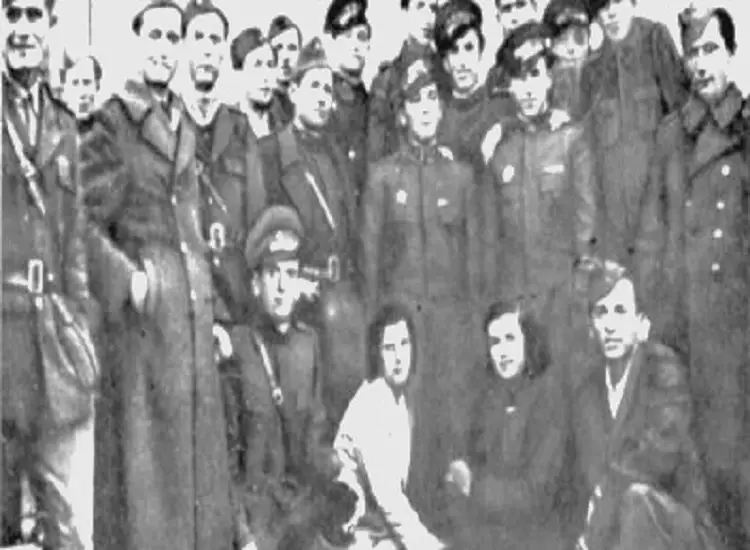
Prior to the Labinot Conference, the First Assault Brigade had been formed – the harshest formation in the civil war – along with the Fifth and Sixth Brigades, which would be formed later.
A letter from the staff of the First Brigade dated September 18, 1943, sent to Bulgarian partisans operating in Albanian zones in Macedonia, reveals the true objective of the partisan struggle. The letter noted that on the horizon of the anti-fascist national liberation struggle of the Balkan peoples, the brotherhood of Balkan peoples was shining. “The foundation of this brotherhood of our peoples,” the letter emphasized, “is being laid with the formation of the joint Staff, the Inter-Balkan Partisan Staff, which is to lead us surely toward our common victories.”
Under the instruction of Vukmanovic-Tempo, the First Operational Zone of Vlorë-Gjirokastër was created in southern Albania, which would become the hearth of the civil war in Albania until the summer of 1944, when communist power was established in those areas. In the spring of 1944, the massive withdrawal of the German army from Greece was creating great tension in the YCP.
Despite the intensive work of its emissaries in Albania, the APC lacked support among the masses, and its military forces were isolated in southern Albania. In that state, power in Albania, after the departure of the Germans, would have remained with non-communist forces.
In Kosovo and the Albanian territories in Macedonia, the forces working for national unification were numerous, while communist forces were negligible. For this reason, in April 1944, the leadership of the YCP organized a congress and sent relevant instructions for the decisions to be made. The congress was to be held in the liberated zone of Përmet, which had been liberated since September 13, 1943, when the Italian army departed.
To change the situation in Kosovo, at the end of April, the YCP withdrew Dushan Mugosha from Albania. He had gained great experience in organizing the communist party and partisan formations and had inspired them with hatred for their non-communist compatriots. On the eve of his departure for Kosovo, Mugosha instructed the communists on several decisions they should make and individuals they should strike. They fulfilled Mugosha’s wishes.
At the Congress of Përmet, a decision was made to unite the partisan forces actively operating in southern Albania into a single division. The division was ordered to cross into Central and Northern Albania to suppress what the communists called “the reaction.” The actions of communist forces in northern Albania were coordinated with Serbian-Montenegrin and Bulgarian partisan forces operating in the Albanian territories of Kosovo and Macedonia.
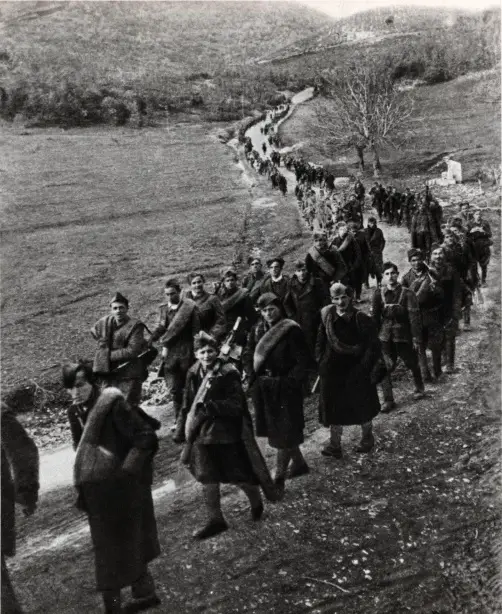
The APC implemented the plan of Tito’s staff and sent large partisan formations to Kosovo and the Albanian regions in Macedonia to fight the Albanian patriots whom the YCP called “chauvinists.” The largest forces were the Fifth and Sixth Brigades, both with partisans from the First Operational Zone, who had proven ruthless in the fight against non-communist forces in southern Albania.
Their tasks were:
- To suppress the Albanian “reaction,”
- To disarm the population and arm their supporters,
- To establish the power of the national liberation councils, and
- To recruit youth from the zones where the partisan formations marched.
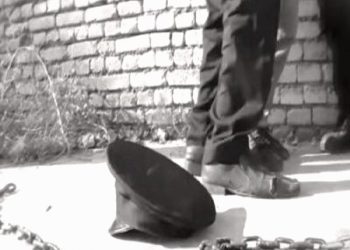
The behavior of the partisans from Albania in Kosovo was brutal. In a document dated December 5, 1944, sent to the party bureaus of the partisan battalions, we read: “Forced mobilization has been carried out… old men have been taken hostage, being coerced: either they bring their sons or they will not be released… horses and carts have been taken from the people, leaving the carts in the middle of the roads or taking them entirely, leaving poor families in misery and economic suffering… the councils are not respected as power emerging from below… food is demanded through imposition, especially meats… arrests have been made without criteria…”!
It is also worth highlighting the operation carried out against Albanian patriots gathered in the Drenica zone. In the partisan command’s operational order dated December 4, the operation for the “purging” of Drenica was detailed, to take place from December 5 to 10, 1944, annihilating the “reactionaries” and disarming all those who did not join the partisan army.
The patriotic forces, which the communists called “traitors,” were commanded by Mehmet Gradica, Jakup Rama, Demali Pozhari, Mehmet Ag Berisha, Mehmet Ag Rashkoci, Bajram Gashi, etc. “All reactionary forces you encounter,” the order emphasized, “must be surrounded and destroyed at all costs. All prisoners captured are to be sent to the brigade staff on the 8th in Koshinca. Disarm suspicious people and those who do not want to mobilize voluntarily…”!
In an operational order dated December 8, 1944, partisan battalions were ordered to continue the purging of mountains, forests, and villages. The entire zone had to be purged by December 10, 1944, with the condition that no village remained unpurged and without established power and voluntary mobilization. However, the youth of Kosovo responded to the brutal violence with desertions.
The desertions of youth from the partisan formations from Albania were massive, while the measures against them were harsh. The staff of the Fifth Brigade sent a letter to its Fifth Battalion, instructing them on how to deal with deserters: “They are to be caught, tried, and shot before the battalion, with a broad conference held. For example, if four people flee together and are caught, two are to be shot, whereas if there were two, only the instigator is to be shot… Mass desertion as has happened to you shows your lack of work with the masses, a point that has been emphasized to you; in case of repetition, you will be held responsible.”
On December 9, 1944, the deputy commander of the Fifth Brigade informed the People’s Protection organization for Kosovo and Metohija, based in Vushtrri that the Drenica zone had been “liberated from the reaction” and the purging was continuing. The purging operation continued until the Albanian patriots were exterminated and Tito’s communists established their rule in Kosovo and other Albanian regions in Macedonia. Their elimination would have long-term consequences that are observed even today. / Memorie.al