
By Msc. Xhorxhina Seferi
Part two
The Policy of the ALP against Religious Beliefs: Legal Measures and the Propaganda Campaign of 1967
Memorie.al / Immediately after the liberation from fascist occupiers, a communist regime was established in Albania, based on the dictatorship of the proletariat and the class struggle. The government led by Enver Hoxha, in the first post-liberation years, presented itself as a visionary government that had drafted projects for the country’s educational, cultural, economic, and social development. In its beginnings, the communist state did not affirm itself in public as an atheist state, but rather as a secular one. However, this would not stop the state from starting the war to eradicate religions as opposing ideologies. Developed in a closed society with a low cultural level, communist propaganda managed to denigrate the clergy and violate the integrity of religious services.
Continued from the previous issue…
Through this decree-law, the state placed the election of religious community leaders under control, thus giving the government the absolute right to decide on the leaders of these communities. In Article 13, it was stated that: “the heads of religious communities and religious sects, after being elected or appointed, must be approved by the Presidium of the Council of Ministers. Also, the state, upon the proposal of the Presidium of the Council of Ministers, could suspend from service or dismiss heads of religious communities and all other functionaries in their service if they did not respect the criteria established in the decree-law.”
In addition to these, the decree-law stipulated for heads of religious communities, as well as for all other religious officials who began their duties without their election being approved by the state, that they be punished with deprivation of liberty for up to 3 years.
Religious communities were required to educate believers with love for the party and the power. This was clearly shown in this article: “Religious communities, through their activity, must develop among the believers a sense of loyalty toward the people’s power and the People’s Republic of Albania, as well as strengthen national unity.” In Article 4, it was emphasized that every religious provocation and hatred was forbidden, while in Article 3, the use of the church and religion for political purposes and the formation of political organizations on religious bases was prohibited.
The decree-law isolated religious activity within the country because, according to it, ties with counterpart communities abroad violated state sovereignty. This is shown in Article 25, where it was stated that religious communities could have ties with religious communities, institutes, organizations, and official persons who had their center or residence abroad only with the prior authorization of the Council of Ministers and through the Ministry of Foreign Affairs.
Religious communities or their branches (orders, associations, religious missions, etc.) that had their center abroad could not open their branches (orders, missions, charity institutes, etc.) in the People’s Republic of Albania, and those that existed had to be closed within one month from the entry into force of this Decree-law.
All religious communities had to inform the Presidium of the Council of Ministers about pastoral letters, circulars of a general nature, and every public edition published by them. The Council of Ministers could prohibit the announcement, printing, and distribution of the aforementioned letters, circulars, and publications if they were in contradiction with state laws. Since the budgets of religious communities were approved by the Council of Ministers, the state directly controlled their financial activity as well. Religious communities could not exchange material aid and gifts with foreign countries, except with the authorization of the Council of Ministers.
The decree-law forbade religious communities from opening hospitals, orphanages, and other analogous institutes. Moreover, the aforementioned institutions that might exist until the day of entry into force of this Decree-law were nationalized together with their movable and immovable assets, without compensation, and passed under the administration of the Ministry of Health or the Directorate for Social Care. Assets of disappeared religious communities or assets whose recognition was removed passed to the state. Every religious community had to revise its own statute, adapting it to the articles of the decree-law and, within three months, had to present it to the Council of Ministers for approval.
After analyzing this decree-law, we conclude that it opened the way for the development of anti-religious propaganda, created suitable ground to increase the dependence of religion on the state, and created conditions for the instrumentalization of religious institutions.
The First Measures of the Communist Regime Against Religion
Since initially the communist state did not present itself as an atheist state but as a secular one, the forms of the war against religion were not direct. In the war against religion, the most diverse methods were used, and measures were taken according to the conditions in which the country found itself. “In this war, political means held the central place, and primarily, accusations of cooperation with the enemy.”
To curb religious influence, the clergy were not only limited within mosques and churches, but the state intervened frequently even in those environments. In an effort to suppress the criticisms that might come from the clerics, the communist state first placed censorship on the religious press, then banned it altogether with the claim that; “there is no paper.” Even to publish the simple calendar that the Muslim Community published every year, which showed the time when the 5 daily prayers should begin and end, when the month of Ramadan began, when religious holidays fell, etc., permission had to be obtained from the government.
On March 2, 1946, in the Press and Propaganda Directorate at the Ministry of Press, Propaganda, and People’s Culture, a commission was created, which was charged with giving circulation permits to books published up to that time in Albania, as well as those imported from abroad. After two years, on March 2, 1948, the Tirana District Court prohibited the circulation of over 155 titles, which, according to the Court, had ideological content harmful to the people and were against the new Democratic spirit. According to them, the circulation of those publications brought no benefit to the people, but on the contrary, incited hatred and division.
The propaganda developed by the communist state not only managed to denigrate the clergy but also affected the development of religious services. It also made possible the start of the process of raising Enver Hoxha into a symbol. He was a leader who came from the National Liberation Anti-fascist War, and the concentration in his hands of the post of general secretary of the Party, prime minister, commander-in-chief of the Army, chairman of the Democratic Front, and foreign minister, made the cult of his person, in practice, incontestable.
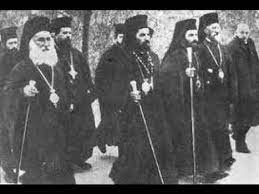
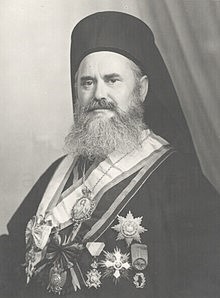
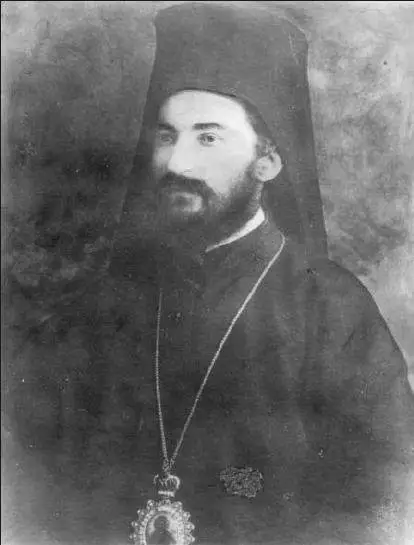
The process of the submission of religious organisms to the state has an exact date: June 26, 1951, when the Catholic Church accepted its new statute; other religious communities submitted even sooner. Thus, the loyalty of the Autocephalous Orthodox Church of Albania was secured as early as August 25, 1949, when the Holy Synod deposed Monsignor Kristofor Kisi and, in his place, elected the “red Archbishop,” Paisi Vodica. The 3rd Congress of the KOASH, which approved the new statute (February 1950), was only a formal act and a platform for trumpeting this unconditional submission. Two months later, the statutes of the Muslim and Bektashi Communities were also approved. The submission of the religious communities was not an easy process, for the reason that it was accompanied by a persecution of senior members of the clergy.
The War Against Religion, Prejudices, and Religious Customs
Since the war against religion, prejudices, and religious customs had intensified in many districts of the country, the first secretary of the ALP, Enver Hoxha, saw it necessary to give some orientations so that this war would be conducted without errors and be successful. Initially, he emphasized that religion was the opium of the people; for this reason, intensive work was needed so that this would be understood by everyone.
Of course, religion has to do with worldviews, with consciousness; it operates with concepts which for centuries clerics have not only turned into philosophical dogmas, but to root these dogmas in people’s consciousness, they have accompanied them with concrete disciplines, with special organizations, and have linked them with the events of a person’s life. Religion has tried to link everything with the events of a person’s life and has made him (the person) link his every thought and action with religion, with idealistic, mystic belief, etc.
Our war against religion must be directed both against the religious dogmas themselves – their idealistic and mystic philosophical views – and against the religious disciplines that have entered even into the daily customs of those who believe, even of those who do not believe but sometimes implement them without knowing, without showing care, often out of the force of habit.
Churches and mosques were the places where clerics gathered believers to keep the faith alive. The destruction of churches, mosques, tekes, and monasteries was difficult because, in this way, the state came into direct conflict with that part of the people who believed. Although some of them had been destroyed by the initiative of the masses without inciting any reaction, others had been turned into warehouses or had remained without a hoxha or priest and practically did not function. He also called for religious institutions to be stripped of all land, any olive trees, or other income they might still have. The lack of resistance, especially in the village, to these actions was seen as a result of the atheist work done by the party, but also of the lack of hoxhas, priests, and religious books.
The war against religion must be done with persistence, especially against customs, traditions, lifestyle, and the interpretation of phenomena, because through this path, clerics had been able, for centuries, to inject the poison of religion and mix this poison with the daily events of human life. Into human life, from birth to death, religious rites have penetrated – baptism, the wedding crown, circumcision (synetllëku), etc. – like a worm inside a red apple.
By analyzing and knowing these well, the war against religion will be studied and systematic, ideological, political, and organizational, endlessly and without pause. To fight religious concepts, we must prepare theoretical lectures based on Marxism-Leninism – simple, real, adapting them to the country, the people, the customs, and our intellectual level. We must not copy things that do not suit our reality. We must not enter into things and thoughts that are not necessary for our situation.
During the history of the Albanian people, there have been patriotic clerics who, even without denying their faith, were linked with the people and with the idea of national liberation, but at no time has religion as religion been a progressive factor; it did not even give the slightest help in national liberation. Thus, according to the leader of the ALP, this was another argument based on history that the war against religion should be developed intensively.
Propaganda Campaign
The CC of the ALP saw the war that must be developed with patriotic and revolutionary spirit as the way to eradicate religious practices. For example, the issues of Muslim religious practices, according to the ALP, preserved for 14 centuries the character of Arab unity, of Arab dominance through religion. “The discipline of the Muslim religion requires that every Muslim, of whatever nationality he may be, must pray in the Arabic language, learn and chant the Quran only in Arabic. Muslims pray the same way everywhere, the number of daily prayers is the same, taking ablution (avdes) is the same. They are also the same up to the determination of their dates for fasting, the holidays of Bajram, Mathem, etc.”
According to the regime, these practices had to be broken in order to show all those who believed how absurd it was to preserve and implement such customs that had no connection with life. The party aimed to explain their origin and purpose, to prove how under the cloak of God, the law of the Ottomans, of the Turkish occupiers, and their servants was hidden.
According to Enver Hoxha, nothing linked Albanians with religion and its practices, for the reason that he saw the laws of religion as laws of foreigners and occupiers, but which were dressed in the cloak of religion and Sharia. Obedience to these laws and customs meant being spiritually linked with foreigners, and it was not possible to think and act correctly politically while, on the other hand, thinking crookedly ideologically.
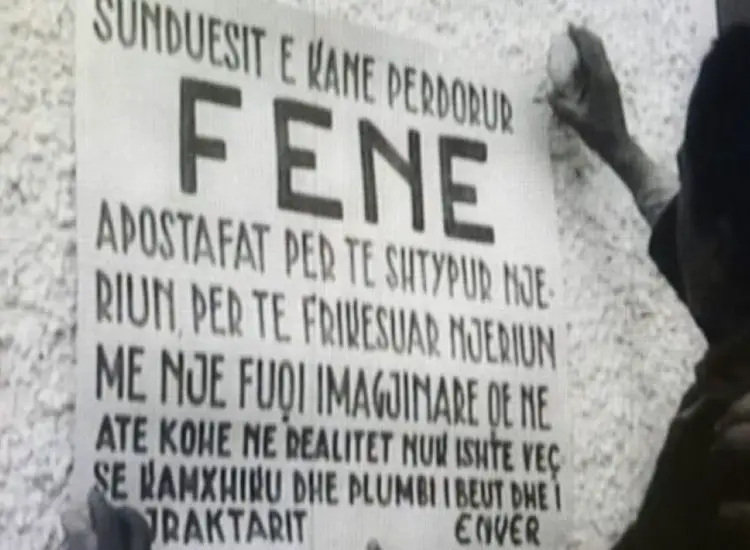
According to the atheist propaganda of the communist regime, religion was a brake on the development of the country and had to be eradicated once and for all because it deformed reality and put man into darkness. Clerics, with the exception of Catholics, were labeled as ignorant because they were not rich in religious books, and the religions they preached they supported more in the preservation of religious disciplines. The state had not only prohibited the possibility of publishing books but had also closed all religious schools, destroying the possibility of preparing new clerical cadres. Muslims had only some surahs of the Quran that they transmitted orally, the Orthodox had the advantage that they had the gospel in Albanian, while Catholics, especially their clerics, were richer in books, and where they found opportunity, they continued to develop the Catholic religion as a philosophy.
According to the communist regime, vain religious beliefs were found not only among the clerics who propagated them and kept them alive, but religious beliefs also existed among the people. “Therefore, without slowing down the propaganda against religion for a single moment, let us always keep in mind that we are dealing with the people. Rash, exalted actions must be avoided; the political ground must be carefully prepared for every action.”
Religion in the atheist propaganda of the communist regime was seen as reactionary, oppressive, and idealistic, whether in the development of dogmas and their content, or in the heavy liturgy, or in religious practices and disciplines. A historical weapon against religion and clerics was also the fact that the Muslim religion was seen as the ideology of the Turkish occupiers, the Orthodox religion as the ideology of the Greek chauvinists, and the Catholic religion, with its center in the Vatican, as the ideology of the Italian occupiers.
The leaders of the communist regime knew very well that seizing mosques and churches with an order was easy work, but more difficult was preparing the believers spiritually and ideologically to understand the futility of the existence of these institutions, the eradication of religion from the customs of life, and the convinced renunciation of its practices. If one acted in this form, for them the mosque or church, priest or hoxha, would not matter. Many churches and mosques were being abandoned and ruined, and their repair was unnecessary because, according to the government, there were more useful buildings to be made.
The Party was determined not to allow the use of administrative measures for the eradication of religious institutions, customs, and beliefs. For the solution of these problems, they saw only one way: political work, ideology, and conviction. They constantly repeated that backward customs and religious beliefs did not disappear immediately, but through wide and continuous work, using appropriate forms for every family and individual separately. Enver Hoxha stated: “Do not allow, comrades, exalted people to touch the feelings of the people. In no way should we get aggravated with the people over the tip of a minaret, which, in case it does not fall today, will fall tomorrow, when the people are convinced of the futility of religious beliefs.”
Main Tools of Propaganda
The attitude toward religion for communists was a matter of principle. Every communist had to be an atheist because the religious worldview was incompatible with the Marxist-Leninist worldview, which also constituted the ideological basis of the ALP. The communist regime used several tools for the realization of anti-religious propaganda, among which can be mentioned: the press, the radio, cultural institutions, the school, etc. These tools helped in the development of propaganda and fueled the movement of the masses./Memorie.al