Memorie.al / Shkodra have been and is proud as the city where several sports were first played in our country. If we are proud of this, what we should know is that one of the most unique people in this history is undoubtedly Palokë Nika. Many historical events and episodes starting in the first decade of the last century are linked to his name. A polyhedral sports figure. Athlete, coach, organizer, referee, and journalist. One of the first athletes of the period of the formation of the Albanian state, a coach, organizer, referee, and journalist, dedicated to the dissemination of sports.
Palokë Nika did all of this. He was born in Shkodra in 1892, and sport would accompany his entire life.
The First International Match in Albania, Palokë Nika’s Initiative
The team “Independenca” was formed in Shkodra in 1912. Football was played at that time, and Palok Nika was precisely the head of this team. The occupying armies in Shkodra also had their own team. Paloka had set a task for himself and had committed before the city teams that he would represent Shkodra with a team against that of the occupying armies.
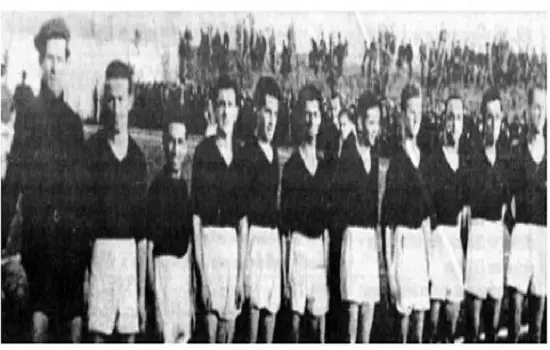
This team was called “Independenca,” and Palok Nika was its captain. In the spring of 1913, Shkodra experienced an unusual event. It was the first time that an international match was played in Albania. The two teams would play based on international rules with a time of 90 minutes, two halves of 45 minutes. Paloka himself wrote these lines about this meeting: “Shkodra spared no effort to help its athletes. I can say that no one was left without seeing that match, women and girls, some with binisha (traditional coats), some with çarçaf (veils), and some with ferexhe (hooded cloaks), had filled the field, two or three hours earlier.”
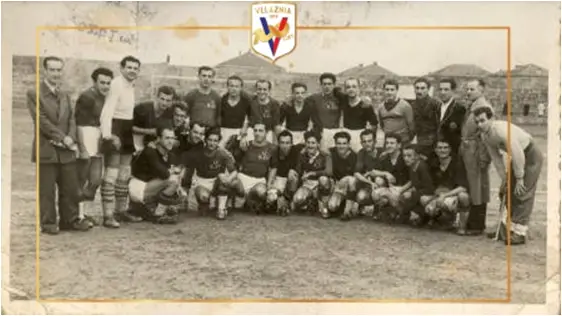
The team included well-known footballers from Shkodra’s urban families such as: Hila, Prekolari, Gjoni, Kini, Halepjani, Fishta, Pashkja, Ashta, etc. The Austro-Hungarian armies’ team won 3-1. This match went beyond the dimensions of a football meeting, and through the European military correspondents who were present at the meeting; it gained international value, where the technical comments of this match were described in various European newspapers. The experience Paloka gained as a footballer and organizer pushed him into other ventures, quickly giving a name to the newly created society “Vllaznia” in 1919.
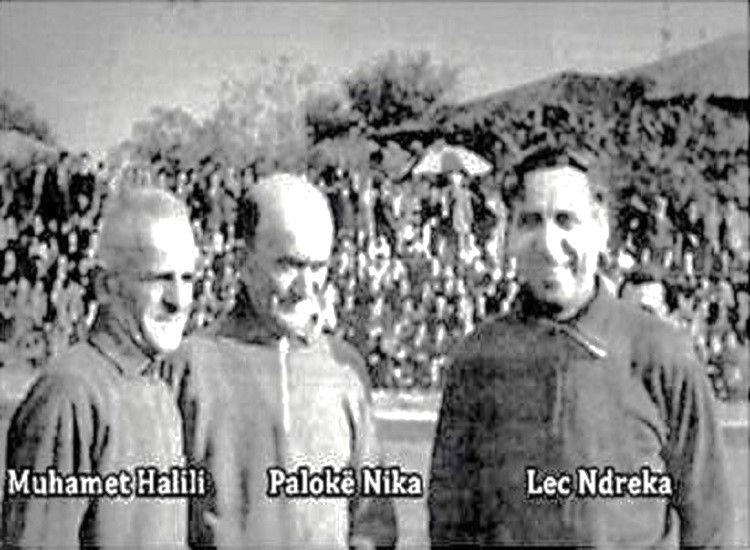
In the spring of 1920, specifically on May 23, he also organized the second international match. This time, with the help of his close friend Muhamet Halili, they played against the Italian regiment team, a team that won 1-0 against “Vllaznia.” As team captain, Paloka was not satisfied with this, and a year later, on Flag Day, November 28, 1920, he organized the third international match, again with an Italian team, which Vllaznia lost 1-5.
Palokë Nika’s activity would continue outside Shkodra as well. Through many trials and difficulties, in the autumn of 1921, he demonstrated a football match, based on international regulations, to the youth of Tirana. Paloka also organized matches outside Albania, specifically in Cetinje, Montenegro. On August 31, 1922, “Vllaznia,” captained by Palok Nika, played against Cetinje and lost 0-4. The trip there was made possible thanks to the aid secured from the people of Shkodra.
Palokë Nika, Captain of Running
With the formation of the “Vllaznia” society, Palokë Nika also organized the first running race in Shkodra, precisely on June 13, 1920. 25 people participated to win the crown of the 4200-meter race. Paloka won this race. The very dignified presentation he made in this race, making it even more attractive, earned him the respect and admiration of Shkodra sports fans, which after this race began to call him “Captain of Running”.
It was Luigj Gurakuqi himself who led a special organizing committee for an athletic race, 8 km long. This race took place on July 4, 1920, on the city’s main streets. Palokë Nika was again declared the winner. The newspaper “Ora e Maleve” echoed the athletics races, where the name and talent of this sports figure stood out in a special place. The moment for the classic athletics race, the marathon in Tirana in 1923, would also come, where Paloka managed to engage 35 people, with Beqir Gjylbegu also on the marathon organizing committee.
The marathon was 16 km long. Paloka organized athletics activities among the city’s societies such as “Juventus,” “Djelmënia,” and “Lekë Dukagjini,” or “Gjergj Kastrioti,” “Tarabosh,” “Drita,” etc., where refereeing with chronometers, marked lanes, jumping pits, and regular jumping ditches were not missing. He contributed to the participation of the “Studentë Shkodra” society in the first international Olympiad in Zeta of Cetinje, where the Shkodra team won first place and took 5 gold medals.
Palokë Nika Gave Albania the First Cycling Tour in Europe
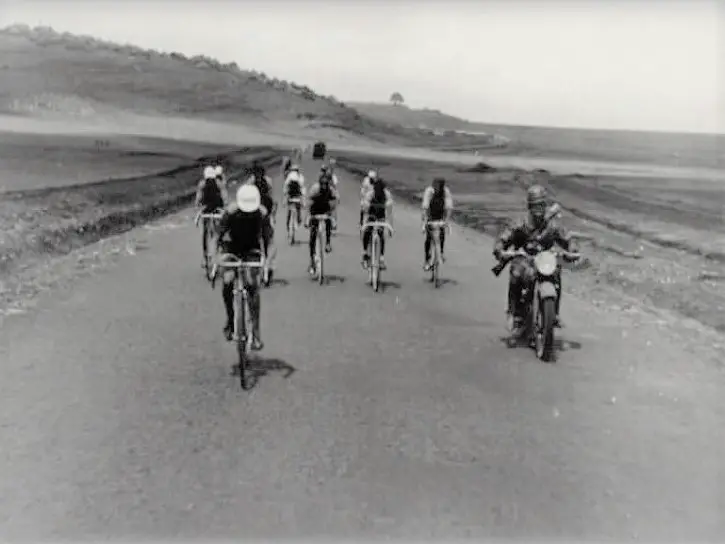
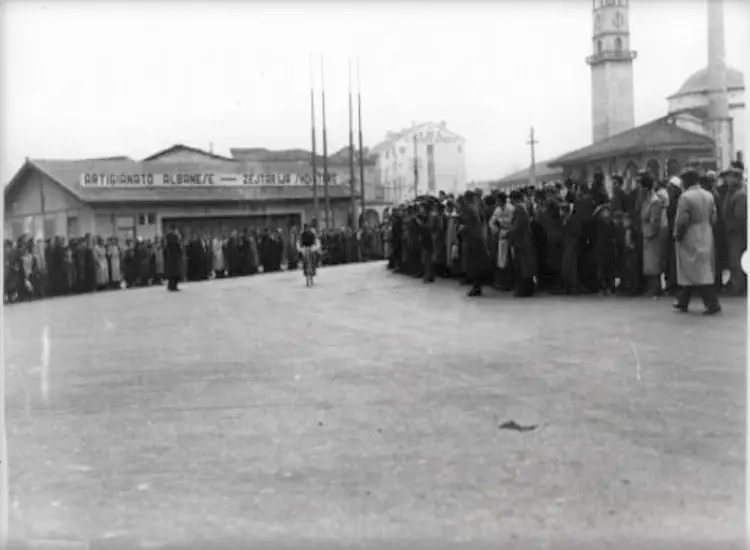
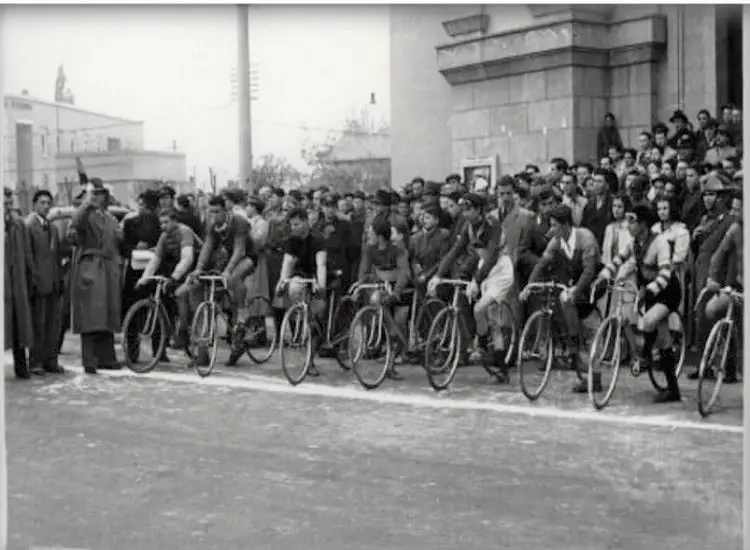
Dedicated to the dissemination of sports, Palokë Nika sought to expand their range. The initiative and culture he possessed offered him important duties at the national level as the organizer of Albanian sport in the government of Sulejman Delvina in 1920. In the years of Zog’s rule and later the Monarchy, he would find ground to develop large-scale sports races and matches. Thus, in September 1925, after successfully organizing the first cycling races in Albania, those on the Shkodra-Koplik itinerary and back in May 1920, and the first national race Tirana-Shkodra in August 1920, he also organized the First Cycling Tour in Albania.
In April 1925, in his capacity as Director of the sports group, he addressed a letter to the Ministry of Education, also defining the 1000 km itinerary that the Tour covered from Shkodra to Gjirokastra and Korça and arriving in Tirana. Thus, stepping into 14 cities of Albania. There are 25 young people from 7 Shkodra societies who undertook this adventure, while Palokë Nika, with what he did, remains a great figure in the history of Albanian sport. The echo of this Tour crossed the borders of Albania.
The Italian “Gazetta dello Sport” compared this event to the “Tour d’Italia,” and the Paris newspaper “Temps” to the “Tour de France,” where the French consul in Shkodra himself wrote the news of the first cycling tour. The Bucharest newspaper “Sporti” and the Belgrade “Vremie” also echoed this sports event. Paloka, as the chief referee, bore the entire weight of this activity. In addition to the refereeing (Hysen Lohja – Sezai Borshi), he also had the well-known photojournalist Shan Pici, as well as a nurse and a driver.
This Tour gave a name and glory to Albanian sport when Besnik Dizdari, in his capacity as president of the Albanian Cycling Federation, managed to receive the approval of the highest forum of cycling at the World Congress in Stuttgart in 1991, that the Tour of Albania in 1925 was the first in Europe for amateurs. The Shkodra newspaper “Sporti” of 1925, which commented extensively on this event, called the day the cyclists led by Palokë Nika arrived in Shkodra a “national holiday,” while the Western press called it a rare event. The second Tour would take place 11 years later (1936), and Palokë Nika was there again as the organizer.
Palokë Nika, the Journalist
In addition to being a very good athlete and an equally capable leader and organizer, Palokë Nika also stood out as a publicist. In 1925-’26, for two consecutive years, he published the newspaper “Gazeta e Sportit” (The Sport Newspaper) at his own expense, alongside his fellow citizen Musa Kopliku, who published the newspaper “Shkëndia.” He later published some short memoirs summarized under the title “Koreografi sportive 1895-1925” (Sports Choreography 1895-1925), where among other things he wrote:
“Equestrianism in Shkodra has existed since 1925. The city had skilled riders and selected horses. In the races held at the popular park, the Cathedral band, under the direction of Prof. Frano Ndoja, played selected pieces of Turkish music. The races were attended by the Vali (Governor) of Shkodra, the Austro-Hungarian, French, English, Norwegian, and Italian consuls, who attended with their horses.
In 1908, I was a player in the ‘Sakuzzo’ team in Piedmont, Italy, where I was studying in a college. In Shkodra, there were two international forces composed of Austria-Hungary with 1000 people, Italians 1000 people, English 1000 people, Germans 500 sailors, and French 500 people. The ‘Independenca’ team was a great success for me because it played very well, as it was the first time its players appeared in a public match and against an experienced team. In 1918, we arrived from Italy in Vlora, and the Italian command sent us to Gjirokastra after we had completed an officers’ course.
Paloka, who is the soul of the sport, forms two football teams in Gjirokastra with militia elements and starts training. I also did the same in Delvina, Saranda, and Përmet. Now the ‘Vllaznia’ society has a strong team. Independenca incorporates with ‘Vllaznia.’ Paloka is still its captain and coach. In 1920, I organized the football team in Tirana and trained it myself, while Erebara is the captain. I conceived the first match with ‘Vllaznia.’ Great preparations were made to receive the Shkodra team. The game took place on the ‘Shallvare’ field. Foreign ambassadors also attended. Many fans set off from Shkodra by carriages for three days. The ‘American Red Cross’ provided a truck to transport the public. By Sunday lunchtime, 250 Shkodra people were transported, plus 65 people by carriage. It is the first time a football match is seen in Tirana. The reception of ‘Vllaznia’ was magnificent. In Shkodra, football has become daily bread. The cycling in the form of a national championship in 1925 represented a new epic in the history of cycling of the Balkan Peninsula.”
Lack of Appreciation
Devoting his life to sport, he left his life behind. It is not for nothing that Palokë Nika spent the last years of his old age in an Elderly Asylum in his hometown. Although he was known as one of the first athletes of the period of the formation of the Albanian state, although his name had crossed the borders of Albania, after 1944, his name was very rarely mentioned.
Moreover, at the moment he died, precisely in 1961, in the death obituary published in the newspaper “Sporti,” what Paloka had done for the first national and international races was not even highlighted. Nevertheless, he is still appreciated today for what he has done. It is not for nothing that the Vllaznia club and the Shkodra Municipality have awarded the high sports prize “Palokë Nika” because he deserves this, and much more than that./ Memorie.al