
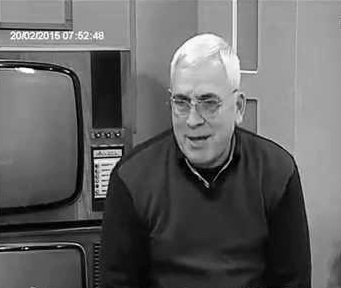
By AGRON ARANITASI
Part Nine
– THE TRUTHS I BELIEVE: THE FRENCH AGENT –
Introduction
Memorie.al / When I began writing the book “The Truths I Believe” (PAPIRUS Publishing House), I had not intended to write about myself. The initial spark came when I encountered the State Security (Sigurimi) files regarding the surveillance of Citizen Agron Hajdar Aranitasi. Those files are one more piece of evidence of how someone could be persecuted if, at a given moment, they were placed in the ranks of the “enemies of the people’s power.” Nothing was taken into account – not how they had worked, how they had conducted themselves, or how they had lived. Not even the stance of parents, brothers, and numerous cousins was considered; they were automatically subjected to a brutal blow and suffered the consequences without any guilt.
Continued from the previous issue
The Years 1974–’75: The Sentencings and Internments of My Friends
The first to be struck were the “putschists,” the high-ranking leaders of the Army. Three of them (Beqir Balluku, Petrit Dume, and Hito Çako) were executed by firing squad. Several others ended up in prison (1975). Some of the latter were arrested in 1982. The families of the military officers – whether executed, arrested, or interned – were sent into internal exile (internim), from which they were released in 1990–’91, after suffering for 16–17 years. My close friend was Çlirim. He was interned in 1975. I have written about him in the chapters dedicated to Beqir Balluku. He was the first “stork” (harbinger)…! The first (of my close friends), but not the last. Many others shared his fate.
The Ngjela Family
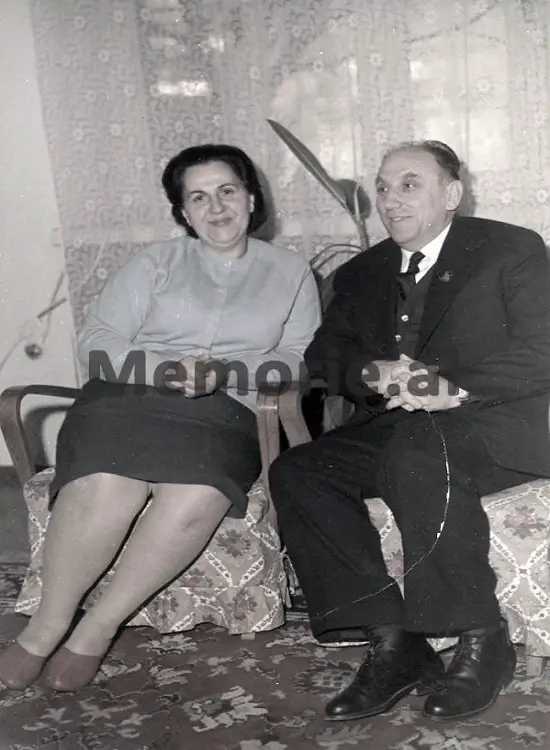
The family of Kiço Ngjela was struck in 1975. Enver accused him of being a “saboteur” in the economy. Of the “main saboteurs,” two were sentenced to death (Abdyl Këllezi and Koço Theodhosi), while two others (Kiço Ngjela and Vasil Kati) were sentenced to 20 and 15 years, respectively. There were also many others arrested under the same charge. Some were sentenced to death, others to decades of imprisonment. Kiço Ngjela was dismissed from his post as minister and sent to manage an enterprise in Vlora. He was arrested shortly thereafter.
His family was sent into internment, except for the eldest son, who had been arrested before Kiço himself. During the internment, the younger son, Sokol (Linzi), was also arrested. He was arrested alongside Vladimir Balluku. The reason? They had failed to denounce a proposal for escape made to them by another internee. This was Valer Dorzi, who had a Soviet mother. Ladi Balluku had told Dorzi: “Pretend you said nothing, and I have heard nothing!” Linzi maintained the same stance. The Sigurimi was informed, and both ended up in a cell. They were sentenced so that, in the future, they would “hear” better…!
From the Ngjela family, three people were locked in the regime’s prisons. Taku [Spartak Ngjela], in his trilogy “The Bending and Fall of the Albanian Tyranny,” calls his mother, Vera, “Spartan,” but the true “Spartan” of the Ngjela family was his sister, Shpresa (“Cukja”). I do not know if there is another case in Albania like Cukja’s. She traveled from Ballsh prison to Burrel prison, and later to “Qafë-Bari” prison. When she went to “Qafë-Bari,” she passed through Fushë Arrëz.
There, she reported to the same police station where I reported. She took her young son with her. God protected her from “travels” to another prison, which could have been the Kosovo prison, a prison for women (Lushnja). In the State Security files, I have seen documents discussing the arrest of Vera Ngjela. She was accused of agitation and propaganda (Article 55/1) because she spoke against the regime and stated that “the State Security was worse than Hitler’s Gestapo.”
Officers from the Internal Affairs Branch of Vlora wanted to arrest her. This is evidenced in the August 1983 trial by the former head of the branch, Llambi Peçini. She was not arrested because Kadri Hazbiu intervened. The imprisonment of four people from one family – a family that, moreover, had taken an active part in the National Liberation War – would have caused a negative stir among the people. Vera Ngjela had joined the Party early. She had become a partisan at the very start of the war. The collaborators of the occupiers, the Ballists, had executed her father and brother.
Her whole life, she had worked as a high-ranking official of the Albanian state. She was strict and noted for her independence in action. Kiço Ngjela had been the Organizational Secretary of the Communist Party Regional Committee for Tirana (!). With the creation of the Second Brigade (November 1943), he was appointed its commissar (!). After the liberation, he worked for a time in the Prime Minister’s office as Director of Personnel (!), then, for nearly a quarter of a century, he served as a minister in all Albanian governments after the 1950s. Since the War, he had been part of the plenum of the Central Committee. After liberation, he was co-opted into the Politbuo as a candidate member (alongside Mehmet Shehu and Fadil Paçrami).
He was arrested in 1975 and accused of actions that had been taken collectively, not only by the government but also by the Politburo. He was among the last to be released in 1991. After his release, he maintained an admirable public stance. He never expressed tendencies for revenge. He endured the death of his younger son and… Departed in peace, followed later by his wife. Nothing bad had ever been heard about Kiço and Vera. While Kiço was under interrogation, investigators tried to implicate him in espionage activities and the assassination of Enver Hoxha.
This is what high-ranking Sigurimi officer Kopi Niko testified: “In 1962, the Internal Affairs Branch of Durrës was investigating a group involving Jani Gumili, accused of being Greek agents and part of Teme Sejko’s group. In this process, the name of a certain Sofokli Mëhilli emerged, who had been arrested and sentenced as a Greek agent. This person was questioned by us. During his processing in the isolation rooms, or during his interrogation – I don’t remember which (!) – he implicated Kiço Ngjela in hostile activity.
I requested an urgent meeting with Kadri Hazbiu and informed him. Kadriu, after learning that this deposition had not been taken in writing (!), told me it was not true and that Sofokli Mëhilli had lied. We had to be very careful with him because he was doing it intentionally. Then, to convince me, he began telling me that Kiço Ngjela, during the war, had been the organizational secretary of the regional committee for Tirana and had even held Enver Hoxha in his hands, etc. After this, he told me that I, along with the Sigurimi officer who had become aware of this information, should be careful and avoid any conversation with the defendant and the collaborator regarding this matter. I agreed. Now that the hostile activity of Kadri Hazbiu has been uncovered, I believe his intention was to avoid being discovered himself along with his collaborators in hostile activities.”
In Kadri Hazbiu’s form files, there is another denunciation against Kiço. The denunciation was made by a Sigurimi collaborator with the initials V.P. (the name was redacted by AIDSSH employees – Author’s Note). This collaborator had been paralyzed for many years. He was completely unreliable in what he said. Here is the denunciation: “Regarding Kiço Ngjela, I know he was an Italian spy. I learned this from Spiro Rrusha (!) and Vasil Kati (!) around the years 1958-1959 (and had remained silent for nearly 15 years?! -Author’s Note). I know Kiço gave Italian intelligence information on economic problems, but I don’t know how he maintained contact with them (!).
Spiro Rusha told me nothing. I met Kiço at his house, which was near the leadership ‘Block.’ I was with Spiro Rrusha (!). Kiço instructed me not to be conspicuous, not to open my mouth (about them – Auth. Note), otherwise, a dark fate awaited me. I met Vasil Kati in 1945, through the mediation of Spiro Rrusha (!) and Namik Xhafa (former director of the State Bank in Vlora – Author’s Note); they told him I was an Italian spy. Vasili told me that from then on, I would work with him. I met him two or three times through Namik Xhafa.
I met him once more in Tirana when he worked in Foreign Trade. He told me he maintained ties with the Italians when he went on service abroad. He maintained connections with key cadres. I had the meeting in 1959 or 1960…! Vasili rewarded me with ten thousand lek. I also informed him about problems of a military nature, which I learned through Hito Çako.” No such charges were ever brought against Kiço or Vasili; they were that absurd. Even Spiro Rrusha, “member of the agent group,” suffered nothing from V.P.’s denunciations.
He was interned many years later, when his daughter, Jolanda Rrusha, her husband, Robert Papavrami, and their son, the violinist Tedi Papavrami, sought political asylum in France. Kiço was sentenced. They sentenced him as a saboteur in the Economy. Among other things, they raised the issue of purchasing bananas for the Albanian market, presenting it as hostile activity (!). They accused him of violating the country’s constitution because he had approved purchases from the USA, such as the case of buying American “Ampex” technology. The accusers “forgot” that its purchase had been approved by the Politburo and the Albanian government. They sentenced him and locked him in Burrel.
Spartak Ngjela
Spartak was my childhood friend. Always nimble, with a sense of humor, but… with a “long tongue.” Even in the 1960s, he spoke against Enver Hoxha. He spoke without fear. He said terrifying things that made one’s hair stand on end. Let me tell you an instance. It was the first days of January 1974. A week earlier, I had learned about the revolt in Spaç prison. It had occurred in May 1973, but I hadn’t heard of it. One evening, I heard Kadri Hazbiu speaking on the phone. He was talking to the commander of Spaç prison. He was wishing him a Happy New Year.
For a moment, he went silent. He seemed to be listening to the commander. Then Kadriu spoke again: “You do your job; the Party knows the rest. It knows you and trusts you.” It seemed the commander was justifying himself for something…! That was more or less the conversation. I didn’t understand what it was about, but I learned the next day. I asked his escort, Shkëlqim (Lazaj), who spoke to me in detail about the revolt of the political prisoners – I emphasize, political – in Spaç prison. There were about 700 prisoners in the prison. Of these, 60-70 were political.
I met Taku by the columns, in front of the Qemal Stafa stadium (today Air Albania Stadium). I told him about the Spaç revolt. He went silent for a bit and then exploded: “But he is filthy, Agron. But he is a criminal, Agron!” I didn’t understand who he was talking about. “Who?” I asked. It seemed to me he was insulting Kadriu. “Enver, man! He is bloodthirsty. He has killed all those people!” “What are you saying?” I interrupted him. “Who are you saying these things to?!” I felt the skin on my head go numb. (Kadri Hazbiu’s Form Files, Volume 22, pp. 60-64).
Just looking gloomily at a photograph of Enver Hoxha could have consequences, whereas for such words, you were thrown into prison immediately. “To you, man, I say them. And why are you afraid? You are the king’s son-in-law; no one touches you!” “Oh, yes, no one touches me, but they will arrest you, you dog, and you will sell me out!”
They arrested him a year and a half later, in the summer of 1975. They sentenced him and locked him in the Mallakastra prison camp. Then they re-sentenced him. They sent him to Burrel prison, where his father was also held. During the investigation and at trial, he maintained a strong stance. In prison as well. The guards were provoked by him, perhaps even by order. They beat him. They struck him so badly they could have killed him. He was not in the same cell as Kiço. One day, while the guards were beating him severely, he shouted to his father: “Kiço, if they tell you I killed myself, don’t believe it!” The prison commander was ordered to put him in the same cell as Kiço and Rrahman Parllaku.
I met Spartak at the Palace of Culture. He had just been released. He was with Bashkim Shehu. He was telling him: “You made a mistake saying on ‘Voice of America’ that Mehmet [Shehu] killed himself. You should have said Kadri Hazbiu killed him.” – “And why should he have said that?” – I intervened. “I want them, even in death, to devour each other,” he replied to me.
When the subject of Kadriu came up, he told me he had written to him from prison. He had told him: I am an enemy of this regime and my place is here (in prison). I demand that the law be applied. That I be given my books. I have one more request: not to participate in the political education hour. His requests were all granted. The beatings also stopped.
He had never spoken ill of Kadriu to me, but he has written differently in his trilogy “The Bending and fall of the Albanian Tyranny.” I won’t linger on this; I have spoken at length about it in the chapters dedicated to Mehmet Shehu. Spartak writes extensively about Kiço’s relationship with Mehmet Shehu. He says they were good. They must have been, as long as his father was part of many governments led by Mehmet. Kiço was a calm, hardworking, and capable man. But… On the day Mehmet Shehu summoned Kiço to the Prime Minister’s office to communicate his dismissal as minister, he had beforehand ordered Aliu (Çeno) to bring him his pistol (the pistol with which he later killed himself). He put a bullet in the chamber and placed it in the desk drawer. Why? I believe Mehmet had believed the rumors, spread in 1947, that Kiço had been the killer of Nako Spiru. These rumors are still whispered today. And television programs and documentaries are devised!
It hadn’t been so. Nako lived for several hours after the attempt to kill himself. This is a fact. It should not be forgotten that alongside Nako and Kiço, in the same office, was also Muhamer Spahiu. Both Kiço and Muhameri were later arrested and sentenced. No such charge was ever made against them. Regarding Nako’s suicide, there is also the testimony of Nesti Kerenxhi, given during the trial of Kadri Hazbiu. In his deposition, Kerenxhi, who was surveilling Nako Spiru by order of Koçi Xoxe, recounts how Nako had killed himself.
I said that I had been friends with Taku since we were teenagers. Today we do not maintain a friendship. He pushed me away himself, because I did not break with Berisha. Seeing my stance, he told me: “All your life, you have served dictators!” “Who, man?” I turned to him. – “Back then, Enver Hoxha; now, Sali Berisha!” – he continued. – “As far as Enver is concerned, there is room for discussion. As for Sali, it was you who told me that these (the socialists) want to destroy our symbol. I completely agreed with you. I am in that same position today. You know I do not abandon friends.”
Spartak knew that I did not abandon friends. On May 1, 1976, when he was in prison and Kiço Ngjela and Lipe Nashi (Taku’s aunt’s husband) had been arrested, I was walking on “Dëshmorët e Kombit” Boulevard with his first cousin, the nephew of Kiço and Lipe, Agim Nashi. Even when I saw Cuke and Linzi in Tirana, I greeted them.
I even greeted his uncle, Themo, in front of Kadri Hazbiu (he continued, along with his wife, to serve in the army). I won’t go further, but in closing, I want to say that Spartak’s imprisonment and the internment of his family saddened me greatly. I suffered for their fate. Together with Agim Myftiu and Vladimir Shehu, we often remembered Taku. We missed him a lot…! / Memorie.al
To be continued in the next issue