By Prof. Dr. Uran Asllani
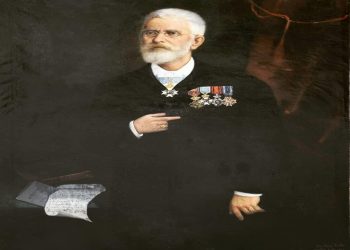
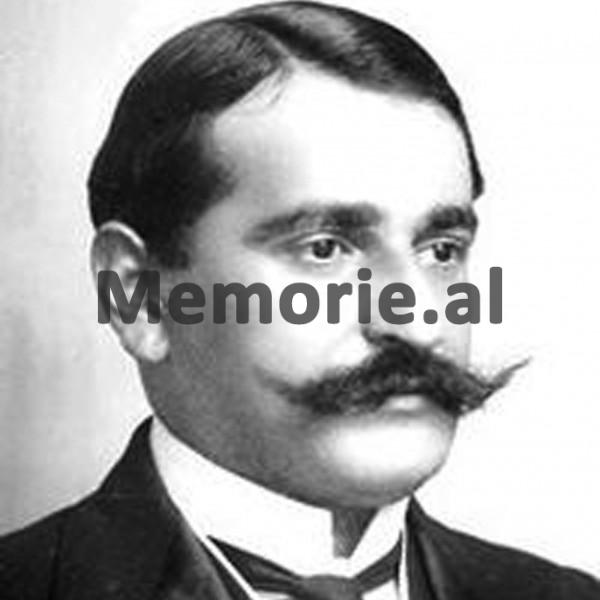
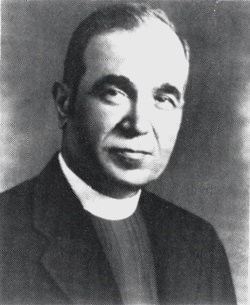
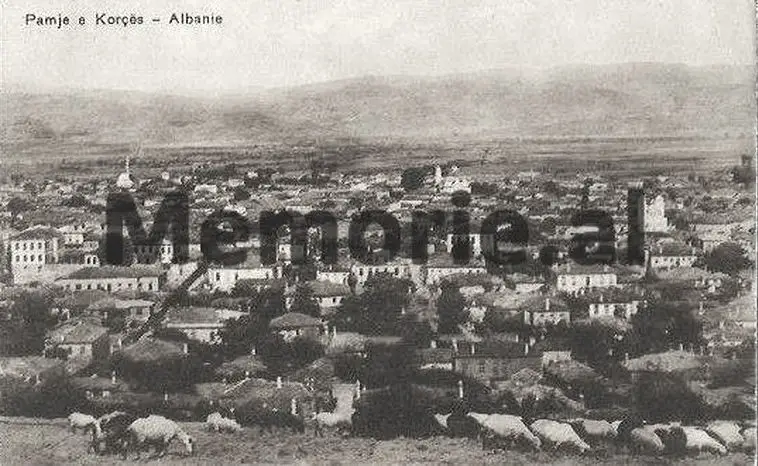
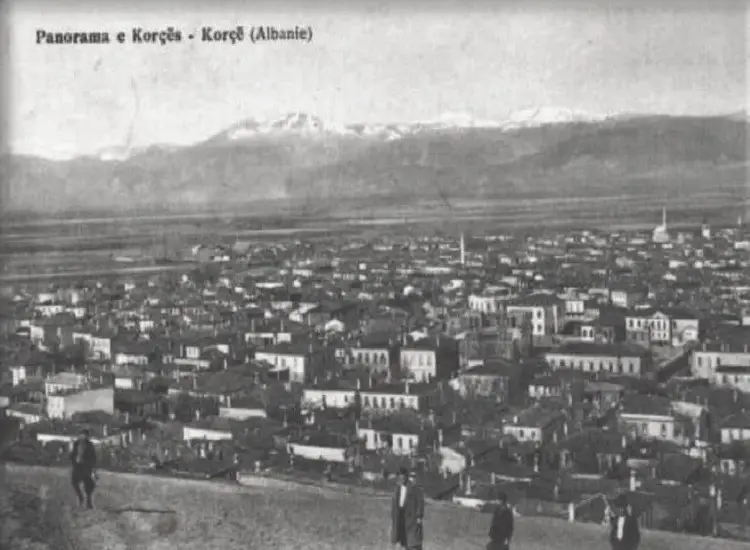
Memorie.al / Sotir Peci, distinguished Renaissance figure (rilindas) – this great figure of Albanian education and culture was born in Dardhë, on July 13, 1873, into the family of the wealthy timber merchant Jovan Peci. He was orphaned at a very young age but was raised under the great care of his relatives. He completed his primary and secondary education in Greek schools in Korçë. When he turned 17, Sotiri was sent to Athens to study natural sciences at the university – or as the Greeks call it, the *Penepistimion*. During the 15 years he stayed in Athens, he was intensively involved with the problems of Albanian migration, as well as with the spread of the Albanian language among them and also among the Arvanites (barbaçë). Moreover, Sotiri, in the early 20th century, in the years 1902-1903, attempted to create a secret committee for the liberation of Albania, with Albanians and Arvanites.
The greatest achievement in Sotir Peci’s patriotic activity was the printing of Konstantin Kristoforidhi’s Dictionary. He mediated with the Greek foreign minister and, on the other hand, also undertook the publication expenses. His patriotic activity drew attention, and to escape Ottoman-Greek persecution, in early September 1905, he immigrated to the USA. It was a time when Albanians in America began to organize into associations to help as much and as well as possible the war for national liberation.
The association “Vëllazëria Mirëbërëse Dardharare” (Dardhë Beneficial Brotherhood) decided to publish a national newspaper and chose Sotir Peci, the most educated and cultured Albanian, as its director. The biweekly newspaper, named “Kombi” (The Nation), was published for the first time on June 15, 1906, in Boston, and continued until 1909, with 110 issues published. Initially, Peci did all the newspaper work himself: director, editor, proofreader, typographer, and folder. Later, those tasks were divided among three people: Sotir Peci, Fan S. Noli, and Efthim Naçi. Starting from issue no. 41, a supplement titled “Fleta letrare” (Literary Sheet) was also published, with contributions from Fan S. Noli under the pseudonym “Ali Baba Qyteza”, Kristo Dako, Petro Nini, Mihal Grameno, and Nuçi Naçi.
Very quickly, the newspaper became an important patriotic organ. From the very first issue, Sotir Peci gave the newspaper an anti-Ottoman and anti-Great Greek-chauvinist direction. He believed that the Albanian people had internal forces to expel the Ottoman occupation. Meanwhile, knowing the great harm caused to the Albanian cause by its internal enemies, he advised the whip and violence against them. In his writings, Sotir Peci appears as an idealist of armed warfare, supporting the first patriotic *çetas* (armed bands). Over two years of activity, the newspaper spread, encouraged, and educated the emigrants in America with patriotism, championed the rights of Albanians to self-government, fighting the claims of Greek chauvinists, encouraged and supported the armed movement, fought for an independent Albanian Orthodox church, and endeavored to establish patriotic societies and unite them into a single, powerful federation.
In the USA, together with Fan S. Noli and Petro Luarasi, in 1907 in Boston, they founded the society “Besa-Besë” (Faith-Faith), and in St. Louis, the society “Lidhja Orthodokse” (Orthodox League). In that small, primitive printing press where the newspaper “Kombi” was printed, Sotir Peci also published a “Method for Learning English” and Fan S. Noli’s drama “Israelites and Philistines”. In 1908, the printing press and the newspaper “Kombi” faced great financial difficulties, so Sotir Peci decided to end his collaboration with “Kombi” and return to his homeland.
At that time, the “Hyrjet” (Constitution) and the reforms of the Young Turks had been proclaimed in the Ottoman Empire. Taking advantage of that situation, Albanian patriots prepared the Alphabet Congress in Manastir (Bitola). That congress would be attended by patriots from Gegëria, Toskëria, from the diaspora in Italy (Arbëreshë) and in Greece (Arvanites), from representatives of the Albanian colonies in the USA, Istanbul, Romania, and Egypt. The Albanian colonies of America, gathered on September 13, 1908, in Phoenix Hall in Boston, unanimously decided to send Sotir Peci as their representative to that congress. Sotiri’s departure from the USA took place on September 30 and turned into a spontaneous manifestation of patriotism.
In early October, Sotiri was in Bucharest, where he also participated in the meetings of the Albanian Colony of Bucharest. The Albanians of Romania, like those of the USA, decided to be represented by the former director of the newspaper “Kombi”, the well-known patriot Sotir Peci. This congress began on November 14 and ended on November 22, 1908. The congress was attended by 32 delegates from 22 cities and associations.
What did Peci represent and what did he bring to that congress?
Sotir Peci had already expressed his ideas some time earlier on the pages of the newspaper “Kombi”. He was convinced and determined about a completely Latin-script alphabet for the Albanian language. Considering the heterogeneous composition of the societies and clubs represented there, it immediately becomes clear that Sotir Peci represented the most progressive current of the time. Unquestionably, the purely Latin alphabet with digraphs was chosen, exactly like that of the “Bashkimi” (Unity) society of Shkodra. The decision for a Latin alphabet, placing its authors on an enlightened national pedestal, was a decision with long historical resonance, which supports current theses for an Albania always oriented toward the West; it marks one of the culminating moments of national history, culture, and education.
The Congress of Manastir could not set aside other political problems of the time related to the paths and demands for achieving long-awaited independence. Those were: official recognition of the Albanian nation and the Albanian language, expansion of the rights of local bodies in tax matters, limitation of military service obligations, etc. The “Bashkimi” club of Manastir made plans to move to the practical implementation of the congress’s decisions. It tried to buy a modern printing press for publishing books, especially school textbooks, and would put out a newspaper.
For many months it was rumored in patriotic journalistic circles that the director of the new newspaper would be Sotir Peci, but when that newspaper under the name “Bashkimi Kombit” (Unity of the Nation) came into circulation, its director was Feim Zavalani, an old and highly respected patriot in the vilayet of Manastir and the sanjak of Korçë and Kolonjë. Sotir Peci returned to Korçë, deciding to become a teacher at the city school. Precisely at this time, on September 2-9, 1909, the “Education Congress” (Kongresi Arsimor) was held in Elbasan, attended by representatives from 35 patriotic clubs of the time.
There, the decision was made to open a normal school (teacher training school), which would prepare primary school teachers needed for opening schools throughout Albanian lands. For the running of that school, a commission was set up in Elbasan headed by Dervish Bey Biçaku and with special care from the “Përparimi” (Progress) Society of Korçë. This society would take care of publishing school textbooks. After the school’s opening was decided, the pedagogical-teaching staff was also appointed which would be led by Luigj Gurakuqi and would include: Aleksandër Xhuvani, Sotir Peci, Hajdar Blloshmi, Hafiz Ibrahim Dalliu, Dhimitër Pararisto, Simon Shuteriqi, Petër Dodbiba, and Hasan Meza. Sotir Peci would teach the subjects: mathematics and natural sciences.
Although they lacked neither professional preparation nor patriotic courage, the teachers did not feel secure or supported. It was not only the lack of textbooks and teaching aids, nor the missing terminology of the natural and social sciences; they feared the interventions of the Ottoman administration, they feared the hostile looks and attitudes of religious authorities who viewed secular teachers with suspicion. About the difficulties of this school’s work – which left a name in the history of Albanian education – Luigj Gurakuqi, Lef Nosi, and later Mahir Domi have written. Let us quote what Lef Nosi’s newspaper “Tomorri” wrote in 1909:
“…For the good and progress of this school, they have sacrificed their daytime rest and repose, their nighttime calm and sleep, and due to the lack of books they are forced to gather them from here and there… translate the necessary lessons and, finally, create a beautiful and sweet language, an almost common language that can be understood by both Tosks and Ghegs.”
Certainly, the hard work of the teachers was not only that. Students were given lessons that were typewritten, in the form of handouts. They were produced in 50-80 copies to be distributed to the ‘Normal’ school students. For a newly opened school, poor in everything, the only way to meet urgent needs remained to ask for help from the patriotic people.
Dervish Biçaku and Sotir Peci began a campaign among the people, asking them for books, texts, and newspapers, to equip a modest library. Sotir Peci, as the science teacher, formulated and created, for the first time in Albania, the terminology of chemistry, physics, and natural sciences. He felt the need for teaching aids more than other teachers, so he turned to his friends and comrades in the USA. He asked for simple things: acids, bases, simple salts, test tubes, tweezers, alcohol lamps, some mineral samples, and insect collections.
But his friends were poor, “tight-fisted,” or could not quite understand this request. It must be noted with regret that the school was also attacked by some Elbasan residents who were fanatical clerics, who could not accept that Muslim students be taught by five “infidel teachers” (mualime kaurr). Even the school’s teacher, Hafiz Ibrahim Dalliu, although he taught religion in the Albanian language, demanded that there be a prayer space inside the school premises and that the students perform ablution five times.
However, these forces of a certain naivety with a religious sense would not have been able to defeat the will of the people of Elbasan for education, culture, and social progress, had it not been for the arrival with the Ottoman armies of the infamous Young Turk general, Shefqet Turgut Pasha, to suppress and crush any national movement. This hated general also closed the “Normal” school and beat several Albanian language teachers in the middle of the bazaar. Desperate, Sotir Peci left the school and Elbasan and returned to Korçë.
Upon his return, Sotir Peci begins to work vigorously with other Korçë patriots in establishing the “Orthodox League” (Lidhja Orthodokse) as well as the creation of the “Band of Liberty” (Banda e lirisë). In the years 1911-1912, he was the director of the first Albanian school in Korçë, where he had dedicated fellow teachers such as Thoma Avrami, Nisi Themelis, Stefan Kondillari, Zef Kakariqi, who were pure patriotic figures. During the Balkan Wars and the Greek occupation, Sotir Peci remained in Korçë, and was even imprisoned for a short time together with Petro Zografi, Rifat Shtylla, and Nesti Kerenxhi.
Around mid-August 1913, Sotiri managed to go by clandestine routes to deal with education problems with the Government of Vlorë, as an advisor to the then minister, Luigj Gurakuqi. The latter himself, years later, in his memoirs, wrote: “Peci would also deal with a project on the establishment of a National Academy for the invention and selection of technical signs needed for our written language, as well as with the compilation of curricula and school textbooks.” He takes an active part in opening new schools in the Albanian language in the prefectures under the jurisdiction of the Government of Vlorë, such as in Elbasan, Berat, Lushnje, Kavajë, Durrës, and elsewhere.
From this period also came the preparation and publication of the “First Year of Grammar” for the third and fourth grades, in the preface of which he wrote: “The idea that reigns today among patriots to create a common national language does not rest on any foundation, if we consider the development of other languages. All languages have dialects and sub-dialects, but no nation has favored any one of them. They have united them to make a national language… for us it is enough that we unite, Tosks on one side and Ghegs on the other, and by gathering all the sub-dialects, each with a school language, and let time do its work…!”
Sotir Peci is part of that group of personalities of that time who drafted a memorandum addressed to the government, pointing out the errors and shortcomings of its activities. This group included: Faik Konica, Mit’hat Frashëri, Mehdi Frashëri, Naxhi Libohova, Sabri Qyteza, Haki Glina, and others.
During the period of King Wilhelm Wied, Sotiri continued to be one of the organizers of Albanian education. He suggested to the King the necessity of a body – Kosturi, Sali Nivica, Muço Qulli (Leskoviku), and others – to fight any anti-national stance or action. Especially against the Montenegrin occupier. Therefore, on July 15, 1915, Sotir Peci, Aqif Pasha Biçaku, Luigj Gurakuqi, Eshref Frashëri, Fejzi Alizoti were arrested by the Montenegrin authorities and held by the international army to support the new state, just as had been done with the Greek King George. After the departure of the King, Albania remained under complete anarchy and under the harsh rule of Esad Pasha Toptani. So a large group of patriots left Durrës for Shkodra, which at that time was under the supervision of an International Control Commission. In 1915 in Shkodra, Sotir Peci became a member of the Secret Patriotic Committee, together with Salih Vuçiterni, Halim Gostivari, Filip Kraja, Sejfi Vllamasi, and Idhomene Kosturi, who were imprisoned in Podgorica.
They were released in January 1916 by the Austro-Hungarian army and came and settled in Northern Albania up to the Vjosa and Berat. The Albanian Administration of Shkodra, with Luigj Gurakuqi as director of education, in the years 1916-1918 had appointed Sotir Peci as a member of the Literary Commission of Shkodra, a salaried sub-employee, which included: Gjergj Pekmezi, Father Gjergj Fishta, Mati Logoreci, Hilë Mosi, Father Ambroz Marlaskaj, Dom Ndre Mjeda, Luigj Naraçi, and they had as linguistic consultants the Austro-German linguists Maximilian Lambertz and R. Nachtingal. In those favorable conditions, several textbooks prepared by Sotir Peci and by Shkodra teachers educated in Austria were put into use in Shkodra: the “Primer” (*Abetare*) by Ndue Paluca, the second and third reading books by Sotir Peci, and the Grammars by Aleksandër Xhuvani, printed in Vienna.
At the end of World War I, the government of Turhan Pasha was created in Durrës, which in February 1919 appointed Sotir Peci as director of education in Tirana, and after two months he was appointed temporary advisor to the Delegation (Ministry) of Education, with a special remuneration, along with the title of director of education for the education prefecture. He immediately became deeply involved in the education problems of that time, even making concrete proposals for a better organization of the school system. Sotir Peci, although he was a sub-employee of the Durrës government, was against its pro-Italian policy, so when he hosted the British major M. Eden in Tirana, he supported him and his suggestions for organizing a national congress that would consider the current government unacceptable to the Albanian people.
Therefore, Sotir Peci was one of the organizers of the Congress of Lushnja; indeed, he was elected delegate and also vice-president of the congress, after Aqif Pasha Biçaku. In the government of Sulejman Delvina, which emerged from the Congress of Lushnja, Sotir Peci was its Minister of Education. In this role, Sotir Peci was more than ever in his field of most productive activity. He organized the first educational congress in 1920 in Tirana, as well as the beginnings of the modern Albanian education system.
But Sotir Peci was also entrusted by the government with diplomatic duties, sending him to Rome with “matters related to the action of our government and generally to the Albanian question, which unfortunately has not yet been resolved.” He also participated in the Education Congresses of 1922 and 1924. In 1921, he was elected deputy of Korçë in the first Albanian Parliament, and from December 24, 1922, he was elected member of the High Council (Këshilli i Naltë), one of the four regents.
Sotir Peci, after the killing of Avni Rustemi, joined the anti-Zogist opposition and as such remained a regent during the period of Fan Noli’s government, but always disagreeing with the illegal and violent actions of that government. He was a liberal democrat, against violence and the use of force. There were many such oppositionists, such as Stavro Vinjahu, Agjah Libohova, Fuad Asllani, and others. On December 24, 1924, he immigrated to Italy and settled in Bari. He refused to join the ranks of “Konare” (the Revolutionary Committee) led by Fan Noli, Kostë Boshnjaku, Zai Fundo, and others, because he knew that organization was subsidized by the Communist International (Comintern) in Moscow.
Sotir Peci, even though he lived in Italy, refused to receive a salary from the Italians or from Belgrade, as many anti-Zogists had done. In Bari he created a group of politically unengaged personalities, called “Bashkimi Kombëtar” (National Union). In that group, chaired by Sotir Peci, were: Stavro Vinjahu, Kostë Paftali, Rexhep Mitrovica, Spiro Koleka, Ali Këlcyra, Leonidha Frashëri, Xhemal Bushati, Riza Dani, officers: Dhimitër Bala, Hysni Peja, Lekë Margjini, Koço Muka, Xhelal Preveza, and others. In emigration, Sotir Peci maintained an unyielding stance towards Ahmet Zogu. Indeed, in the autumn of 1925, Sotir Peci’s “Bashkimi Kombëtar” group published a strong anti-Zogist, anti-feudal “Proclamation”.
He maintained his dissenting stance even when Faik Konica, Hilë Mosi, Leonidha Naçi, and Faslli Frashëri became engaged for a national reconciliation. In 1929, after four years of suffering and economic and social privations in Italy, Sotir Peci accepted Zog’s second amnesty and obtained an Albanian passport, but he did not return to his homeland alive. He went and lived in Athens, where he had great wealth, but which he did not enjoy. The last years of his life he spent in poverty and often ill.
Sotir Peci died after a serious illness in Florina (Follorinë), on April 9, 1932, and was buried in Korçë with great honors on April 10. He made a very important contribution to education problems, as a publicist and as an author of school textbooks. He was the first to introduce experiments in natural sciences into schools. Sotir Peci has been awarded the title “Teacher of the People” (Mësues i Popullit). / Memorie.al