
By Caf Jonuzi
Part Two
Memorie.al/In one of his works, the Greek philosopher of antiquity, Socrates, writes: “The falsifiers of history are as harmful as the traitors of the homeland, if not more.” And below he underlines: “Woe to the people who do not know and do not respect their heroes”.
For forty-seven years of the communist regime, with certain intentions the Albanian reality was distorted, the history of events and of many personalities was falsified. Criminals and traitors who sold their homeland and their honor were put at the service of foreigners, called heroes, dressed in honorary titles and decorations, or erected memorial symbols, and true patriots who sacrificed everything for the people of homeland, even life, were insulted and despised alive, imprisoned or shot, some do not even know the grave.
This is what happened to Prek Cal, the hero of Malësia. Who was Prenkë Cali?
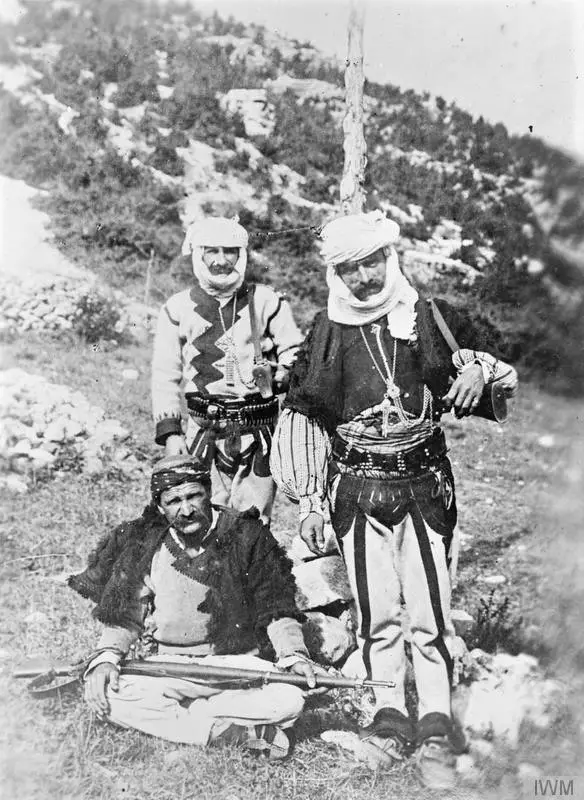
He was born in Vermosh of Kelmendi in 1882, in a family with traditions of trimnie and burnie. He grew up and was educated in the “Mountain Chambers” that gave him their “school”. There he received his first lessons in patriotism. The elders told about the good customs of the tribe, about the wars of the ancestors in defense of the country. Get to know dragons and cul-de-sacs (where dragons were popular heroes and cul-de-sacs were enemies).
Nature gave him many good qualities. On the physical plane he was burly, he was div and consequently brave as few, wise and eloquent, wise and faithful. Prenka was not a bayraktar, he had no official function. Participated in men’s assemblies – the word was heard, participated in elders’ commissions, in reconciliation of bloodshed and extinction of quarrels, in inter-provincial conflicts. He was rumored to be a wise and honest man.
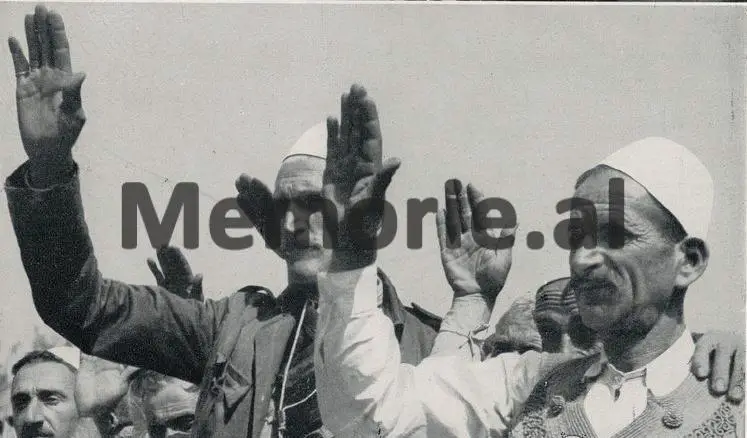
He was known by prominent mountain figures such as Dedë Gjo Luli, Mul Delia, etc. But he was also recognized and appreciated by other patriots such as: Luigj Gurakuqi, Hasan Prishtina, Xhemal Bushati, Islam Zeneli and many others. Together with many Kelmendis he took part in the anti-Ottoman uprising of 1911. In 1912 he welcomed the raising of the national flag in Vlona. After the recognition of Albania as an independent state and after the establishment of borders, it is at the forefront of popular demonstrations for the protection of Albanian rights outside the homeland. He and 130 others, bayraktars and popular leaders, would declare that if the will of the people was not respected, blood would continue to be shed in the highlands.
World War I ended in 1918, but still the borders marked on the maps in 1913 European chancelleries, did not saturate the neighbors. They demanded more, they wanted to push the borders down Shkodra. They attack with weapons and find popular resistance. It was the summer of 1920, the Koplik War had begun. Prenkë Cali fights with his friends like the weather heroes. The Yugoslavs were forced to withdraw, but still sought to dismantle the border in their interest in the Vermosh area.
In August 1924, the Border Commission arrived in Shkodra to determine the place. The Albanian side and the Yugoslav side had only a vote of deliberation. The newspaper “Ora e Maleve” at the time would write that the Yugoslav government would not leave a stone unturned to take Vermosh, on the pretext that it belonged to the Kuçi tribe, which was included in the Yugoslav territory, at a time known from all, that he was owned by the Kelmendi tribe generation after generation. In the final act, Prenkë Cali, defending with arguments the property of his people, strongly opposed the Yugoslav delegation and imposed it on all those present, placed the pyramid with his hands in the designated place. Yugoslavia had taken a lot from me from the Albanian lands, we were helped by the great powers.
At the beginning of 1925, the Conference of Ambassadors, which was the competent body for the establishment of borders, decided that Vermoshi should remain in Albania.
The salvation of Vermosh that work of mountain bravery and patriotism. At their head was Prenkë Cali.
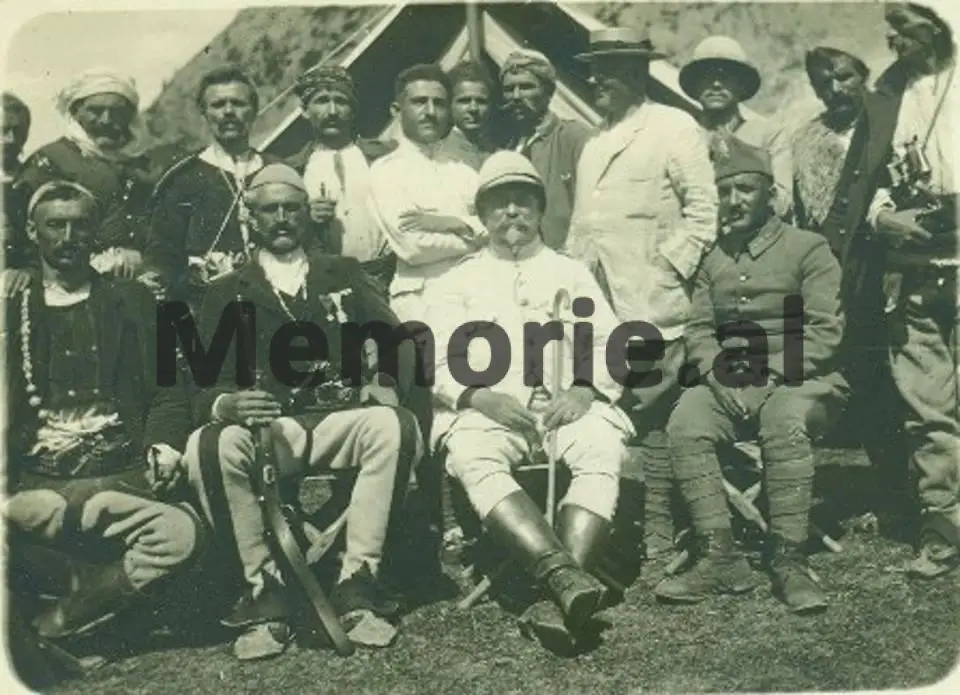
In 1925, when Ahmet Zogu was President of the Republic, he was called for cooperation. He approached the first degree, but refused. Sentenced and imprisoned for several years in the castle of Gjinokastra. With his magnificent appearance, with his protruding beard, he attracted everyone’s attention (a French painter also painted him). Enver Hoxha himself, then young, would be amazed by that almost legendary figure, and later he would eat his head.
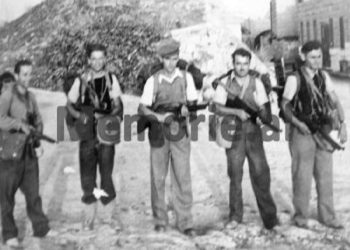
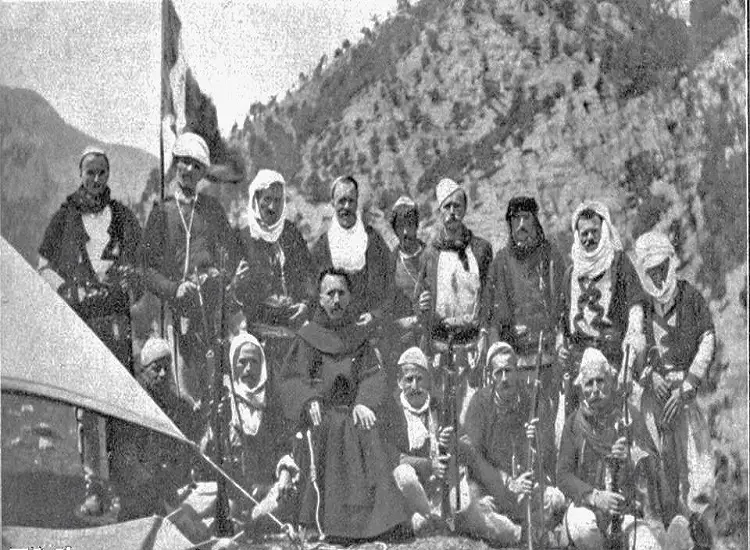
In 1944, communism would be installed in Albania, and difficult days would come for the Albanian people. Also, for Prenkë Calin. As a staunch anti-communist, what he had shown in action during World War II, he joined the anti-communist insurgent forces. Partisan brigades, after suppressing the uprising led by Llesh Marashi (Koplik, January 1945) and Vermosh, (February 1945), surround Prenkë Cal with 14 people, among them a woman, in a cave in the village of Vukël.
February 1945. A strong winter, 8 days almost without food. Prenka felt sorry for the loners, his friends. They were young, they should have enjoyed the life that the great God had forgiven them, not be killed. He decides to surrender, provided his friends are spared. That did not happen. All were convicted.
March 25, 1945. Bazaar day for the people of Shkodra and the feast of Lari for the Catholics. Prenkë Calin is sentenced to death. The trial was formal and swift. The 8 prisons that Shkodra had, which were full and full, had to be emptied as soon as possible, to make room for other unfortunates. 13 others were sentenced with him: Dom Ndre Zadeja, Luigj Gjeto Kastrati, Ndokë Nikë Bardhoku, Arif Selim, Dedë Lulash Smajli, Gjekë Nikë Luli, Dul Bajrami, Maliq Bajrami, Ndrekë Loka, Mark Lucë Gjoni, Tomë Lekë Daka, Gjokë Nikolle Voci and Pjetër Dedë Gjindashi.
Their execution took place the next day at Zalli i Kirit, after the Catholic cemetery. Witnesses testify that their relatives, after hearing the machine gun fire in the dim light, ran to see in the pools of blood, that their man was not among the victims. Then began the oil in the cup of heaven, which would shock even the criminal. This was the case in the countries of the East where the communists had come to power, but in Albania more than anywhere else.
The work of Prenkë Cali and other nationalists is remembered with respect by all those who knew him throughout Albania, he would declare: “Whatever Prenkë Cali had done, Enver Hoxha should not have shot him, but kept the 2.07 m divin. that it is a sign of a strong Albanian race”. /Memorie.al