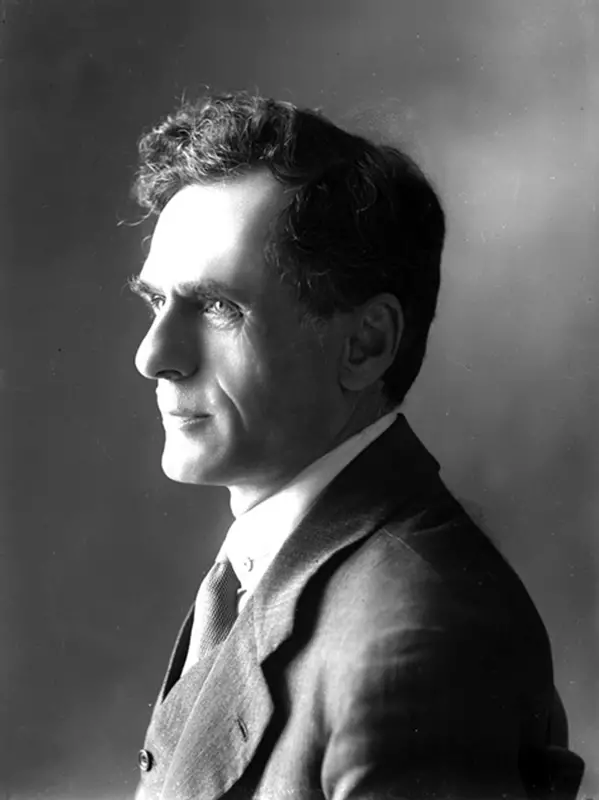
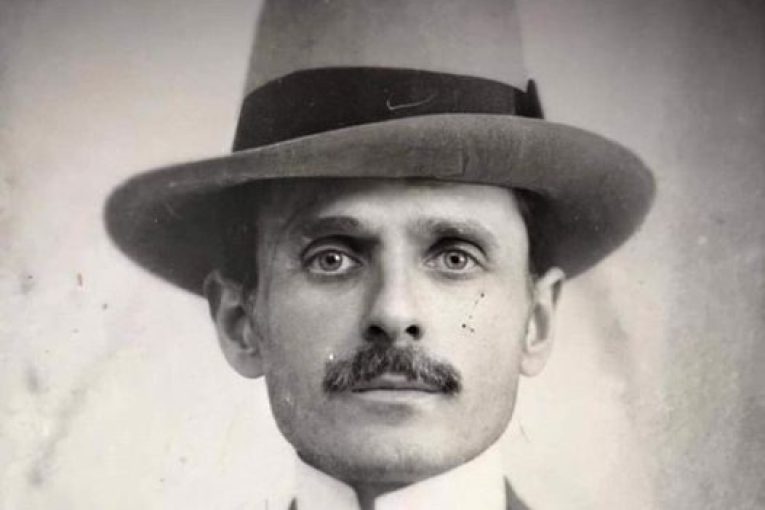
Memorie.al /The son of Abdyl Frashëri, the nephew of Naim, a signatory of Albanian Independence, and a minister in the first Government of Vlora. The untold biography of the founder of Balli Kombëtar, from his early youth to the end of his life.
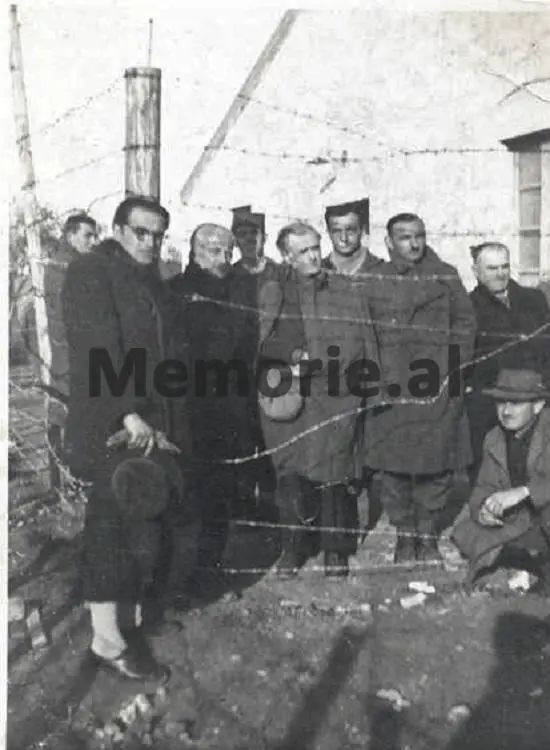
Bardhyl Quku, 65, is among the few Albanians in New York who still remembers a distant time with longing. In measured Albanian, he recounts the time when his father, Faik Quku – a Commander of Balli Kombëtar – would walk through the Barletta camp in Italy with an elderly, noble man. The man, who held the young boy’s hand, was named Mid’hat Frashëri, and everyone revered him. It was the children who loved him most, and he, in turn, devoted much of his time to them.
Fifty-some years later, now a powerful Wall Street businessman, Bardhyl Quku wishes to further clarify the enigmas of a bygone era. He converses at length with former Ballist youth leader Luan Gashi; he has purchased numerous Albanian history texts and is trying to understand the role played by the old man of his childhood in Albanian history. Half a century later, he has realized that the man whose hand he squeezed while walking the alleys of the Barletta camp was one of the most significant figures in the history of Albania.
However, he finds it very difficult to grasp the real scale of his commitment. Almost all historical texts from the communist era are censored, while subsequent ones lack serious study. As often happens in such cases, misfortune and a long dictatorship have erased from written memory many of the contributions of Mid’hat Frashëri – one of the most important men in 20th-century Albanian history.
Or even worse, they have redacted his engagement to only one part: his involvement with Balli Kombëtar during the war and his activities in exile afterward. This fails to remember that from the beginnings at the end of the 19th century until 1940, Mid’hat Frashëri had already left indelible marks on Albania’s history – marks sufficient to rank him in the great book of national memory.
Mid’hat Frashëri: A Difficult Childhood
What communism never mentioned, or carefully guarded, was Mid’hat Frashëri’s lineage and his family. Few in Albania knew that the founder and visionary of Balli Kombëtar was the son of Abdyl Frashëri, the ideologue of the League of Prizren, and the nephew of Naim and Sami Frashëri, in whose home in Istanbul he was raised.
His childhood, like his entire life, passed through the same difficulties and sufferings as the building of the National Renaissance and, later, the Albanian state. Mid’hat Frashëri was born in Janina on March 25, 1880. Abdyl Frashëri had settled there a few years earlier as an official of the Empire and had brought his entire family. However, the young boy did not have the chance to know his father during his first moments of awareness.
At that time, his father was leading the Albanian League of Prizren. Alongside Mehmet Ali Pashë Vrioni, Iljaz Pashë Dibra, and Sulejman Vokshi, they were attempting to oppose the decisions of the Congress of Berlin and preserve the territorial integrity of Albania. Mid’hat did not have the chance to see his father even later. Following the failure of the League of Prizren, Abdyl Frashëri was arrested and sentenced in Prizren, while the family was transferred to Istanbul.
Still a child, Mid’hat Frashëri grew up in the household of his uncle, Naim Frashëri – the national poet and idol of all young Albanian nationalists. Later, he described in detail his childhood near his uncle and the environment where the idea of an independent Albania was taking shape. Fortunately, Mid’hat Frashëri left many notes, books, memoirs, and literary pieces that shed light on his engagement within nationalist ranks.
He was still an adolescent when he began corresponding with several peers militating in other parts of the Empire and beyond. Most notable among them was Ibrahim Temo, a young man who would later play a unique role in pro-independence developments. Mid’hat was very young when his father, the great patriot Abdyl Frashëri, died; and he was not yet 20 when his spiritual father, Naim Frashëri, passed away. By this time, he had consolidated a clear political profile and had established ties with many figures that would later play vital roles, including Ismail Qemali and Faik Konica.
His concrete engagement in the national movement began in 1908, when he became one of the visionaries and leaders of the Congress of Monastir – the congress that laid the foundations for the Albanian alphabet and decided to open the Normal School in Elbasan. From that time until 1911, he never ceased playing a concrete role in political developments in Turkey, channeling them in favor of the Albanian cause. His commitments created many problems for the Frashëri family, and at that time, it can be said that Mid’hat Frashëri had no wealth left to his name.
Toward Albanian Independence
He was 32 years old when he decided to leave Istanbul and travel into the heart of his homeland. In truth, this long journey became his great destiny. Uran Butka, the only researcher who has written a detailed biography of Mid’hat Frashëri, has provided many details of this journey. The man who, a few months later, would sign the act of Albania’s independence, traveled from Kosovo to Skopje and from there to Elbasan on the eve of the Balkan War. He was in Elbasan when the war broke out furiously, and there, as a friend of Aqif Pashë Elbasani, he came into contact with the group of patriots preparing for independence.
Elbasan was the first city to elect three delegates for the Assembly of Independence, and one of them was Mid’hat Frashëri. Years later, he described his journey toward the city of Vlora, which, after continuous contacts, had been designated as the city where the Assembly of Independence would convene. The Elbasan delegates traveled toward Fier when, in Ardenica, they encountered a second caravan with the same destination. Riding a small white horse, Mid’hat recognized Ismail Qemali – the man who, two days later, would become the first Prime Minister of Independent Albania.
Wandering through the marshes of Myzeqe, the caravan of those few men who wanted to “make Albania” arrived in Mifol. Eqrem Vlora, one of the few witnesses who described that time, tells how the city was drunk with enthusiasm and how the Assembly of Albanian regions immediately declared independence. Mid’hat Frashëri, at 32, became not only a signatory of independence but also the Minister of General Works in Ismail Qemali’s government. Life in Vlora was not easy. Uran Butka writes that the Minister initially slept in a room of the Vlora family, later moving to the Sharra house. He set up a desk there and began building a structure that would never fully function.
Albania was completely surrounded, and the territory of the Vlora Government included only the city and a few surrounding villages. It is not entirely clear what the problems and contradictions were between the young man and the elderly Prime Minister, but a few months later, on March 30, 1913, Mid’hat Frashëri resigned. The text of his resignation is quite dry, motivated only by the impossibility of properly performing his assigned duties. From this time, Mid’hat Frashëri’s activity in Albania was reduced. He initially settled in Durrës, where he enthusiastically welcomed Prince Wied and entered his service, assisting in the Ministry of Foreign Affairs. After the start of the Essadist movement and the departure of Prince Wied, he too left Albania.
From 1914 to 1918, he wandered through the Balkans. In 1916, he arrived in Bucharest, where he was unexpectedly arrested and later interned in Moldova. In that city, he coincidentally met his old friend, Ibrahim Temo. There are no clear records of his movements until 1918, when he appeared in Lausanne at the conference deciding the creation of Yugoslavia. He sent a memorandum to this conference on the future of the Balkans, which, published 81 years later, reads like a document from one of the most important international study institutions. In it, he made a declaration that would gain unprecedented value at the end of the century: “Without solving the Albanian problem, there will be neither a new Yugoslavia nor a final settlement of borders in the Balkans.”
In 1920, while staying in Paris, he hailed the Congress of Lushnje and the Tirana Government, setting off on its behalf to the USA. Mid’hat Frashëri first established contacts with the Albanian community in America and then traveled to Paris as the Head of the Delegation of the Tirana Government at the Peace Conference. For more than a year, he engaged in feverish diplomatic activity to save Albania from losing two important regions, Korça and Gjirokastra. It seems he performed this task wonderfully, as upon his return to Albania in 1922, the Tirana Government appointed him as its Minister Plenipotentiary in Athens. During those few months, he refused to take over the leadership of the Government following the resignation of Prime Minister Iliaz Vrioni.
Mid’hat Frashëri settled in Athens on January 9, 1923. From that day until December 16, 1925, when he presented his resignation to President Ahmet Zogu, Mid’hat Frashëri carried out one of his most significant political activities. Not only in establishing diplomatic relations with Athens for the first time or in Greece’s recognition of Albania’s borders, but above all, in stopping the expulsion of the Albanian Muslim population from that country and its resettlement in Turkey.
Frashëri’s activity in this regard is detailed and deserves a writing of its own. He managed to stop an open genocide by utilizing pressure not only on the Greek government but also on the League of Nations and other influential international institutions. This act remained one of the achievements he was always proud of until the end of his life.
The Bookstore and “Balli Kombëtar”
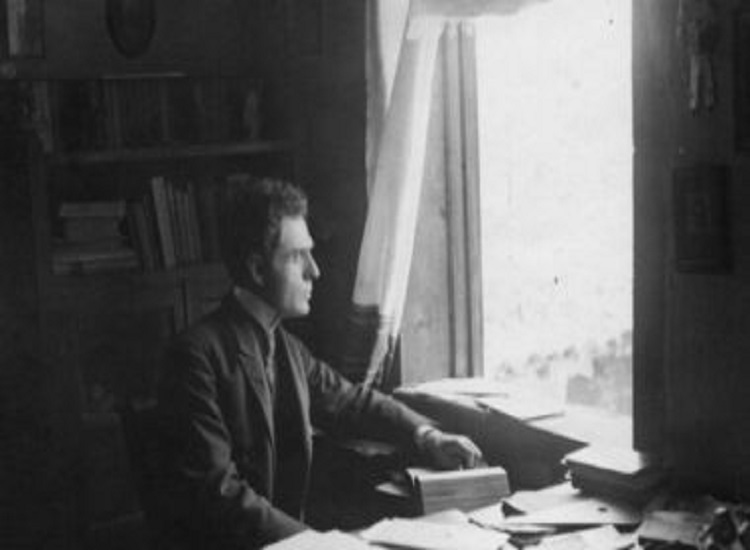
In 1925, Mid’hat Frashëri returned once again to his first passion: books and studies. Since 1897, he had begun building a personal library, which by 1925 numbered more than 40,000 volumes. He had written many books and completed several translations and Albanological studies. Saddened and disappointed by political developments in the country, he decided to withdraw into private life. In 1926, he built a simple bookstore in Tirana on what later became “Royal Road” (in 1945, “Barricades Road”), transforming it into the intellectual center of Tirana. Contemporary testimonies note that his bookstore became not only the most important cultural institution in Tirana but also the permanent meeting place for the capital’s cultured youth. The myth of Mid’hat Frashëri, dressed daily in a black frock coat and bowtie, haunted the memories of that era for many years.
Ahmet Zogu attempted several times to entice him back into political life, but he declined delicately. He named the bookstore “Lumo Skëndo” in honor of one of his brothers who suffered from mental illness. Throughout this time, Mid’hat Frashëri never ceased his efforts to establish an Institute of Albanology in Tirana. In 1929, at the age of 49 and convinced he would never marry, he wrote his will. In this testament, he placed his entire collection of books and all his wealth, including household furniture, at the disposal of founding this institute. His will was never executed after his departure from Albania, but his books nonetheless became part of the National Library’s collection.
Following Uran Butka’s research in the 1990s, it was found that 40,000 volumes in this library originated from Mid’hat Frashëri’s collection and bear his stamp. It seemed Mid’hat Frashëri had decided not to engage in politics again, but this was not to be. In 1939, after the Italian occupation of Albania, at an advanced age, he resumed political activity – activity whose roots dated back to the end of the 19th century. His subsequent history, though distorted during the years of Communism, is well known, especially as it has since taken its real place. In 1941, he became the founder and visionary of the “Balli Kombëtar” organization, and in 1942, he published its program, the famous “Decalogue.”
An advocate for Ethnic Albania and a partisan of Western democracies, Mid’hat Frashëri attempted to build a nationalist and democratic organization. However, the country’s difficult conditions, the war waged against it by the communists, and the indecisiveness of some of his party members led to its political failure. In September 1943, his best chance to lay the foundations of a democratic Albania failed. The Mukje Agreement, initially signed by the communists, was rejected by Enver Hoxha following Yugoslav insistence. In his memoirs, Petro Marko gives a very simple but significant detail of Frashëri’s philosophy.
During a meeting for his reconciliation with the communists, he set a simple condition: “Go and ask your comrades, are they for the unification with Kosovo, or not? If they agree, we will join them; otherwise, it no longer matters.” Petro Marko never returned. The failure of Mukje extinguished Balli’s chances for further success. After the start of the civil war, his forces were defeated, and in November 1944, its leaders, headed by Mid’hat Frashëri, left Albania.
Exile
The remainder of Mid’hat Frashëri’s life did not span many years. He initially settled in Italy, in the Barletta camp, and from there, moving from one country to another, he tried to influence Western allies to finance a landing against the communists in Albania. He worked hard to establish the committee known as “Free Albania,” and during a visit to New York, he died there. The date was October 3, 1949, and Mid’hat Frashëri had been 69 for just a few months.
Death was caused by a heart attack and was broadcast worldwide within hours. The funeral took place six days later in New York, to the sounds of Beethoven’s music and the lamentations of his compatriots – those who had followed him into political exile and who would honor him every anniversary at the Long Island cemetery where he rests. Under a simple bronze plaque, the only inscription reads: “Mid’hat Abdyl Frashëri, 1880-1949.” / Memorie.al