
By Prof. Gjon Frani Ivezaj
Part One
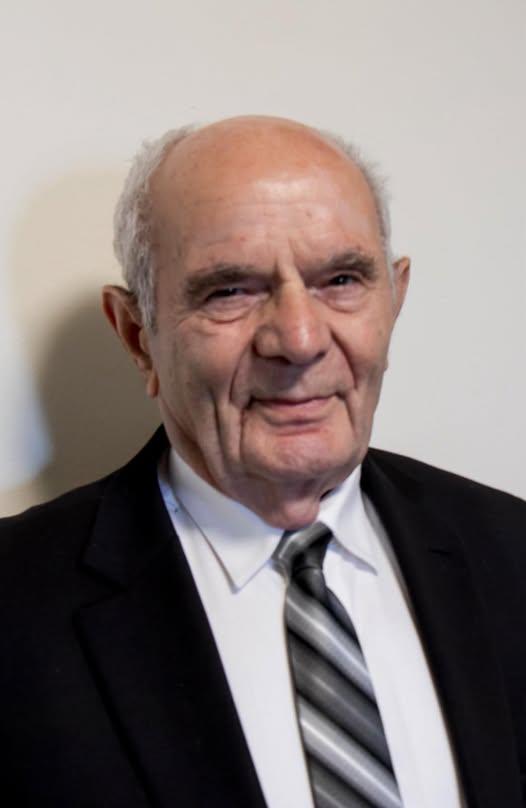
Memorie.al / Pjetër Ndue Ujka Mernjaçaj were born on October 7, 1930, in the “Pshtan” neighborhood of Selcë, Kelmend. His family has been traditionally nurtured with profound patriotic sentiments and spirit throughout the centuries. He completed his 8-year education in his birthplace and later, upon turning 20, served in the military from 1950 to 1952. While Pjetër was completing his military service, he learned that in 1951, his brother Nikolla had been arrested and thrown into the infamous Shkodra prison – also known at the time as the Branch of Internal Affairs (today a property of the Franciscan Assembly and a historical museum featuring original cells from the era of the communist-atheist dictatorship, visited by various generations after the 1990s; Author’s note, Prof. Gj.F.I.).
There, he was interrogated by the communist investigators of the State Security (Sigurimi) under the communist dictatorship of the anti-Albanian Enver Hoxha. After the investigation and severe beatings in the Shkodra prison, he was sent to other prisons across Albania, where he endured horrific suffering and terrors for several consecutive decades. As we learn from the elders who knew this prominent family closely, for many generations, this honored and respected house of the Highlands (Malësia) has been at the forefront of tireless wars and efforts against the centuries-old Turkish occupiers and the old enemies of our nation, the Serbo-Montenegrin chauvinists.
A characteristic of the Mernjaçajs is that they have always been distinguished for their generosity, expressed whenever people sought their help; their pure-hearted Albanian hospitality for all friends, well-wishers, and chance guests who stayed in their “konak” (guest room), which was filled every evening with highlanders; and their bravery shown in every battle and effort to lovingly protect the lands of our ancestors. Historically, at all times and in every instance, generation after generation, the patriotic Mernjaçaj family – thanks to a tradition inherited across many lifetimes – has spared nothing for the good of the Motherland and our nation.
With concrete historical facts, Pjetër, like his other brothers, always set a positive example for the benefit of their birthplace and the Albanian nation, constantly fighting for freedom and democracy even in the distant emigration to the USA. They were never intimidated by nor did they ever submit to the brutal regime of the communist dictatorship, which washed the innocent Albanian soil in blood during the many decades of anti-Albanian rule from the dark years of 1944–1990.
To better and more accurately understand the respect that all the Mernjaçaj brothers enjoyed in the distant emigration to the USA, we present as an illustration an evaluative piece titled: “The First Martyr of the Albanian Diaspora in the Active Struggle Against Communism,” an elegy read before the deceased body of his nephew, Nikë Marashi Mernjaçaj, written by the scion of the famous Mirakaj family, a former escapee from the communist hell of Albania, the anti-communist poet and publicist Zef P. Mirakaj:
“To the grieving, yet honorable and very proud Mernjaçaj Family, relatives, godparents, friends, and well-wishers…! Many of us, valuing and admiring the self-sacrificing determination of this young man to strive for the freedom and justice of his oppressed people – with tears in our eyes, with broken hearts, and with lips trembling with emotion – ask: Why!?… Nika respected and greatly exalted the heroes and protagonists of his country. He honored and remembered them with respect and love.
The fact bears witness that to them (the heroes of the fatherland), he had made a vow that the path they had defined – the struggle for political and national freedom – he would continue until death. And it was precisely this ‘besa’ (word of honor) given and kept that pushed him to come out (along with all his family members) in support of our people, who were being politically, economically, spiritually, and physically violated in the homeland (most brutally)!”
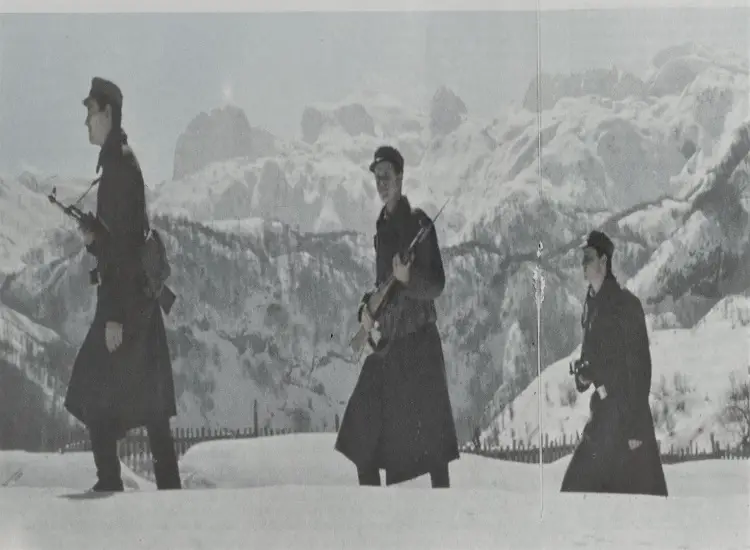
The tireless patriot of the Albanian cause, the fearless and brave highlander Pjetër Mernjaçaj, fled to the former Yugoslavia on October 22, 1958. He, along with nine members of the Mernjaçaj family, risked their lives before the armed army of the communist State Security. With great effort, they passed through difficult mountain paths. They walked for 14 hours through the night without rest and with great care to avoid discovery by the Border Pursuit Forces.
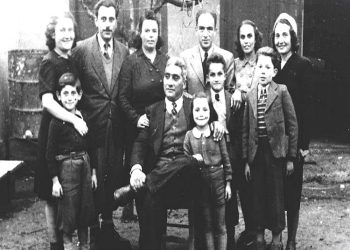
The group of nine included: the mother and father, three Mernjaçaj brothers, two sisters-in-law, and two small children. Amidst great difficulties of weather and the rugged mountainous terrain of the Northern Albanian Alps, Pjetër and the 9 other members of his family crossed the border and approached the village of Bekaj in Triesh.
Exhausted and weary from that difficult journey, they sat down to rest for a while and lit a fire. After a few hours, a passing shepherd saw the smoke and approached the people standing by the flames. The shepherd, named Tomë Kolë Preka (Gashaj), approached and asked the people warming themselves: “Who are you, men, lighting a fire here and staying in this cold mountain!?”
When he saw the exhausted state of the nine members from Kelmend who had fled Albania, according to the early Albanian tradition, he invited them to his home and served them dinner. They stayed there for several hours until 11:00 PM. The host, Tomë Kolë Preka (Gashaj), after they had all eaten, drunk, and rested, said to them: “Dear friends, I ask for your forgiveness, but it is a rule and state law that I must notify the border guard of your arrival at my home.”
The newcomers agreed with the honest words of the hospitable host to notify the Law Enforcement Forces in Podgorica of their arrival. After two hours, military vehicles arrived and took them to the police station in Podgorica. They were registered and underwent routine questioning by the Montenegrin police forces, and after half an hour, mother Mrika, father Nua, and the two wives with Marash’s small children were allowed to return to Bekaj in Triesh, to the house of their maternal uncle Preloc Marku, while the three brothers were sent to Leshkopole, where they stayed for seven weeks.
After the questioning procedures were completed, they were allowed to move freely wherever they wished to travel, work, and live within Yugoslavia. They assisted the Albanians coming from Kelmend, Albania, by providing financial aid of 40,000 dinars per month, as aid coming from the Rights of the International Commission. After an hour, Marashi and Rroku went to their uncle in Triesh, while Pjetër stayed in Shipshanik, Tuz.
As days passed, the Mernjaçaj family began to settle; one after another, the brothers started working, and later they found a rented house in Piper, near Podgorica (formerly Titograd), thus beginning a normal life for everyone. After five years, they bought a house in Maslina, Podgorica, where they stayed for many years. Pjetër, disagreeing with the Yugoslav communist system, had a specific plan with some of his friends to depart toward the free democratic world of Western Europe.
Thus, one day, on June 8, 1966, they left for Trieste, Italy, where they stayed for several months before moving to other international emigration camps, such as in Pua Caserta, Italy. There, they gained political asylum to leave for the Blessed United States of America in 1967, where, like many other Albanian-Americans, he initially settled in the Bronx, New York.
After some time, Pjetër found work and housing and gradually began to establish contact with intellectuals and well-wishers of the Albanian-American community. He was a friend of the distinguished priest Dr. Monsignor Zef Oroshi (1912–1989), with whom he often spoke about the troubles and concerns of the Albanian people, who were enduring the black night of communist persecution in Albania.
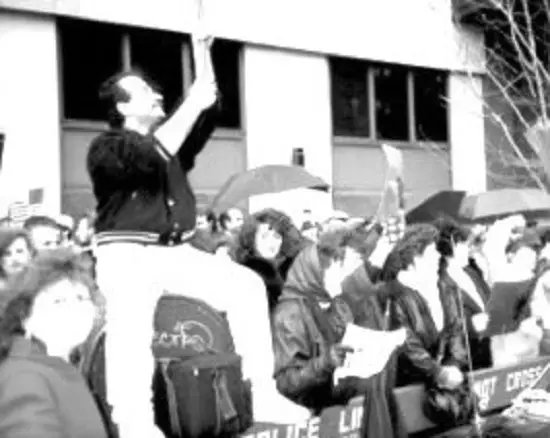
Pjetër participated in every anti-communist demonstration held for a long time in New York and several other American states. He was also a tireless activist in support of the Albanian Catholic Church “Our Lady of Good Counsel” (today “Our Lady of Shkodra”) and always collaborated with the Albanian Catholic clergy. Pjetër consistently supported the free Catholic press in America, specifically the magazine “Albanian Catholic Life” (Jeta Katolike Shqiptare), which first began publication in 1966.
After some time, Pjetër looked into bringing his brother Marash, with his wife and children, to America as political asylees to his home. Years passed, and one beautiful day, Pjetër got married (on December 12, 1967) in the Bronx to a noble highlander girl, Lena, daughter of Zef Dedi Micakaj, from an honorable, noble, generous, and respected house in Bekaj, Triesh. This typical Albanian house was always distinguished for its ‘besa’, honor, and generosity, most notably represented by Zef Dedi and his brothers: Nikollë Dedi, Palok Dedi, Luc Dedi, and Gjokë Dedi.
Pjetër and Lena held their wedding ceremony at the Mount Carmel Catholic Church in the Bronx, New York, attended by many compatriots from Kelmend and other Albanian territories. The marriage crown was placed by the tireless priest of the Albanian-American community, the staunch anti-communist, Dr. Monsignor Zef Oroshi.
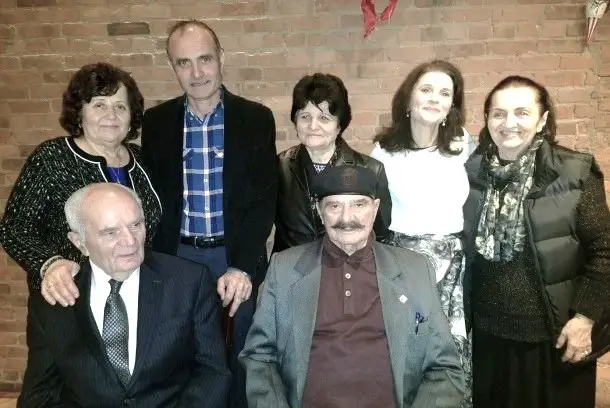
Pjetër Mernjaçaj’s wife, Lena, is a noble woman of the Highlands who never tired of working for the good of the family, being her husband’s right hand. Pjetër’s family was and remains today a great, generous house that has welcomed and seen off thousands of compatriots, having significantly contributed to the national cause alongside his wife Lena, who was and is the most honored and respected wife and mother in the Albanian community.
The crimes of the communist era in Eastern European countries, and particularly in Albania, are compared to those of the brutal Nazi period, where Germans disappeared or killed over 6 million Jews, along with millions of children, elderly, and youth from many other nations and countries. World-renowned historians and analysts have reached the undeniable conclusion that Nazism and Communism have killed and persecuted over 157 million people, of which 57 million were killed, barbarically executed, and disappeared during World War II.
The crimes of the deceptive communist doctrine began during World War II and continued after it until 1990. Analysis of historical facts shows that 100 million people were killed, shot without trial or through staged mock trials, disappeared, and died in concentration camps during the reign of the communist system in Eastern Europe and many other countries. Likewise, the government of the criminal dictator Enver Hoxha arrested all family members, such as the wife and son, and interned them in the infamous camp in Savër, Lushnjë.
In this miserable concentration camp, many children were born in wretched conditions, many died for lack of food and medical care, and thousands of young people grew up in ground-level shacks where rain and mud were inseparable companions, dying without being able to start families. Hundreds of them were mistreated and threatened with death, and hundreds of families were interned with life sentences, making Savra of Lushnjë a prison of ill-fame throughout Albania and the countries of the Eastern European Communist Camp…!
The cruel communist regime forced Albanians to painfully leave their homeland – something no foreign occupier had ever forced them to do. Young Albanians who took the path of escape at the border had to be careful not to take the merciless bullet of their communist Albanian “brothers,” who had loaded their weapons not to kill foreign occupiers, but their own fellow countrymen. In this sense, Albania resembled a large prison surrounded by wire across 28,000 square kilometers, which was the extent of its borders with neighboring states.
Today, Pjetër recalls in detail the moment he left Albanian lands to escape the collective communist massacre for a better life of dignity and prosperity, for freedom and democracy. His departure was good news to give heart to other Albanian youth, to challenge the absurd communist system that killed and bloodied its own people in the name of a hollow communist ideology imported from the Russia of Lenin and Stalin.
Pjetër’s father, Nua Ujka Mernjaçaj, passed away and was buried with ceremony and respect by all relatives and locals at the Highlands cemetery in the village of Shipshanik, Tuz. Many years later, in 1984, the mother and her son Rrok came to the USA and settled in New York. At that time, during President Ford’s era, these Albanian immigrants became American citizens, enjoying a lifelong pension. For the first time in their lives, our compatriots, and particularly the Mernjaçaj family – politically persecuted by the communist system – felt equal, just like American citizens born and raised in America.
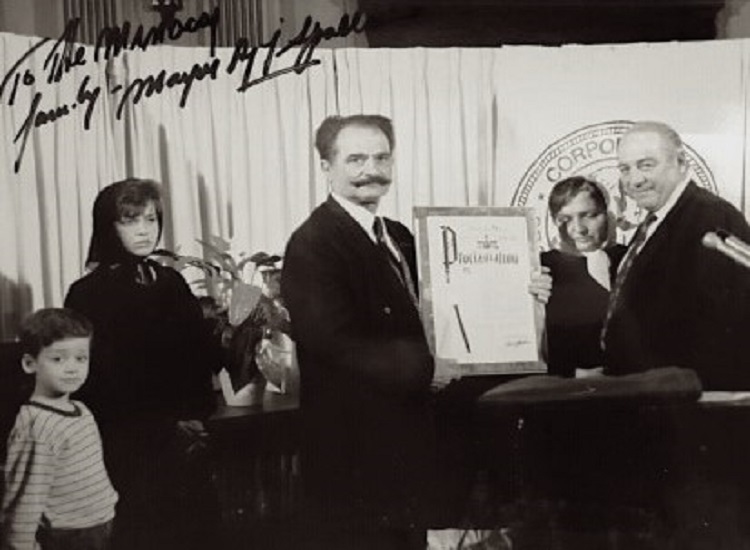
At that time, several American newspapers wrote about the history of this family from Kelmend that had escaped the black communist hell of the brutal anti-Albanian dictator Enver Hoxha. Five years after settling in America, Pjetër’s mother died. She was buried with religious ceremonies by the family, relatives, and many Kelmend compatriots and friends, with the prominent Albanian priest Dr. Monsignor Zef Oroshi speaking the finest words for this noblewoman and honored daughter of the Highlands./ Memorie.al