

Part One
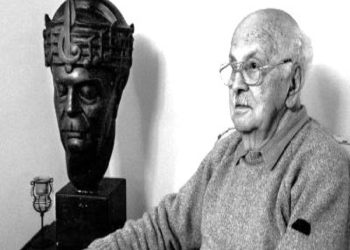
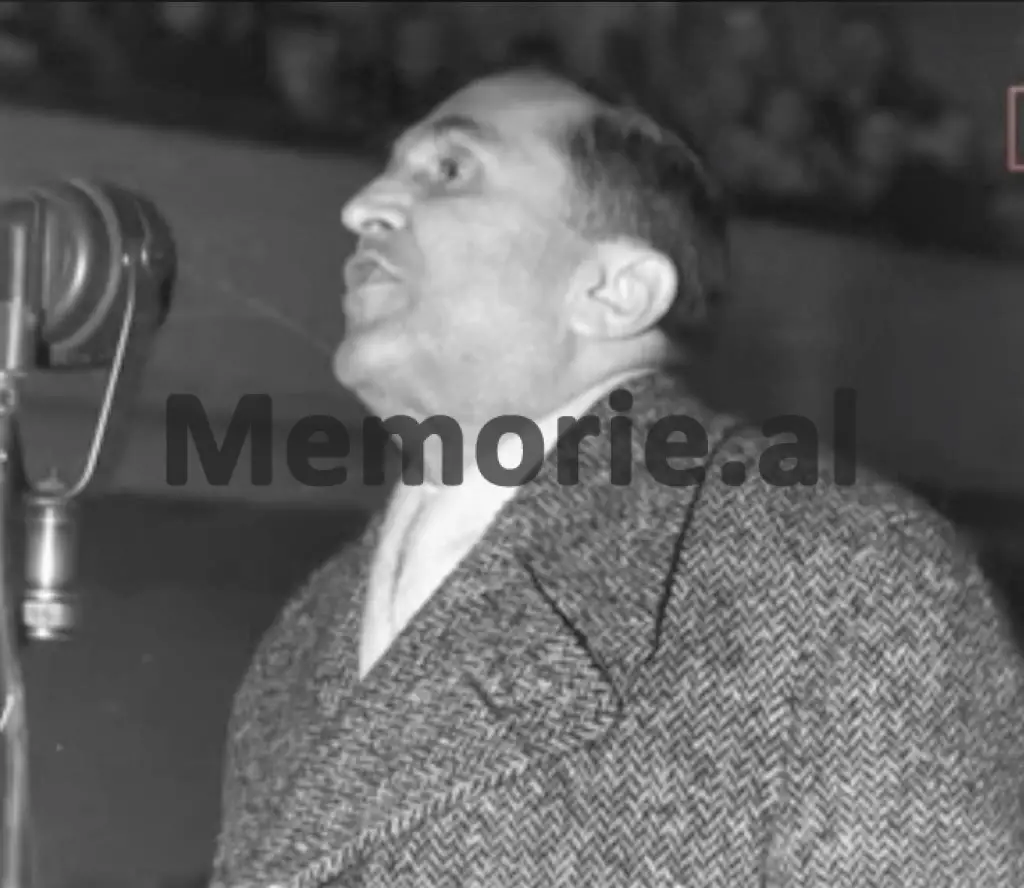
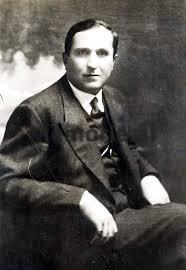
Memorie.al / Kostaq Kota, or Koço, as he liked to be called, was born on March 14, 1888, in Korça, an Albanian city distinguished for great patriotic movements, for the freedom of the fatherland, and for culture and education in the Albanian language – processes in which the Kota families were historically and intensely involved. Their origin is from the Castle of the city of Berat. Koço was the second son of Nuçi, who also had two other sons, Kristaq and Ilia, as well as a daughter, Leonora. His father was a very practical man, a merchant who dealt in the leather trade. Koço was born, raised, and formed in a family environment closely linked to the fates of the fatherland and the nation, for whose interests they were continuously engaged.
This environment strongly influenced the formation of Koço’s character and made him a relentless successor of the family tradition, the national ideal, and its patriotic feelings. Koço completed his primary education in Korça, his secondary education at the “Zosimea” gymnasium in Janina, and his higher education at the University of Athens, where he graduated in Political Science.
His higher education gave him the opportunity to meet figures of the Albanian national movement, and he quickly connected and began collaborating with them, becoming one of its most active and distinguished members. In the journey of his life, he had the fortune to meet, work with, and often collaborate closely with three of the central figures of the Albanian nation during the first four decades of the 20th century: Fan S. Noli, Ismail Qemali, and Ahmet Zogu.
After completing his higher studies and defending his diploma in June 1911, Koço Kota left Athens and settled in the city of Vlora, from where, after a short time, he immigrated to America. In the USA, he joined the society of Albanian immigrants, “Përlindja” (Rebirth) or “Malli i Mëmëdheut” (Longing for the Fatherland) and was elected its chairman. He supported Fan Noli in his patriotic activities regarding the Albanian national cause, the autocephalous Orthodox Church, and the unification of Albanian immigrant societies in America, etc.
Thanks to his patriotic activity, Koço Kota quickly became well-known among Albanian immigrants and their leaders and organizers. There, he was one of the five members of the initiating Commission that reviewed, discussed, and decided on the establishment of the “VATRA” Federation – a patriotic society of Albanian immigrants in the USA, which, as is known, was founded in Boston (USA) on April 28, 1912. “Vatra” was one of the largest, most important, and longest-lasting organizations in the Albanian Diaspora.
In 1912, the “Vatra” Federation elected Koço Kota as one of its delegate representatives to the National Assembly of Vlora, which, on November 28, 1912, declared the independence of Albania. During the proceedings of the National Assembly of Vlora, the leaders of the Assembly assigned Koço Kota the duties of scribe (secretary). With the formation of the Albanian government headed by Ismail Qemali, he was appointed to the position of general inspector at the Ministry of Education, directed by Luigj Gurakuqi.
He strongly supported Ismail Qemali and his governing program regarding administrative, educational, and agrarian reforms, which were sabotaged by the pro-Ottoman (“Turkoshak”) elements and large landowners. In early March 1914, Koço Kota, along with well-known patriotic figures and personalities of the Albanian national movement, founded the political organization “Krahu Kombëtar” (The National Wing) in Durrës, which sought to organize and lead the national movement for the protection and stabilization of the Albanian state.
On March 20, 1914, Koço Kota was appointed to the Ministry of Education, which was headed by Dr. Turtulli, Minister of Education in the government of Turhan Pasha. Since Albanian schools almost ceased to function, he left Durrës and settled in Berat, where he worked in his profession as a jurist-lawyer.
On September 4, 1914, he went to Shkodra together with the Albanian patriots of “Krahu Kombëtar.” With the start of the First World War, the military command of the Montenegrin army that occupied Shkodra arrested Koço Kota along with other patriots and interned them in Montenegro. After being released from Montenegrin prisons, he left and went to America again. On January 27, 1916, he returned to Albania after the departure of Esad Pasha and the arrival of the Austro-Hungarians.
At the end of February 1916, Koço was appointed a member of the Court of Appeals in the Prefecture of Berat. At the beginning of August 1916, he left Berat and went to Shkodra, where he was appointed education inspector at the Education Directorate, headed by Luigj Gurakuqi. He remained in this position until October 30, 1918, when the Austro-Hungarian armies left Albania and the Italian army was stationed in Albanian territory.
Luigj Gurakuqi, the Minister of Education in the government of Turhan Përmeti, on December 30, 1918, appointed Koço Kota as “Education Inspector” at the Berat Prefecture. In February 1919, he went to Korça to establish links between the National Salvation Committee of Berat and the Patriotic Societies of Korça (led by Sotir Kotta) and Alexandria in Egypt (led by Llambi N. Kotta). After the end of the First World War, the Peace Conference in Paris began, opening on January 18, 1919. An Albanian delegation also participated in that Conference.
On April 30, 1919, Kostaq (Koço) Kota, the Inspector of Education, along with a group of patriots representing the people of Berat – (Hekuran be Vrioni, Zarif Aga Haznatari, Fevzi Ruli, Themistokli Kassapi, Salih Gjuka, Adem Shehu, Islam be Vrioni, Melek be Frashëri, Xhevdet Meqemea, Zejnel be Prodani, Teki be Selenica, Zoj Tonçi, Todi Naska, Bektash H. Berberi, Gaqe papa Zaharia, Emrullah Psarizi, Hajredin Kuçi, Andon Capo, Hysni aga Kafasi, Nuri Osman Smundja) – initiated the drafting of a “Memorandum” in favor of the Albanian cause, addressed to the French Command in Shkodra, the American Consul in Albania, and the “National Defense Committee of Kosovo,” where among other things it was requested: “If the Albanian state must remain under the mandate of a Great Power, then we desire an American mandate, so that we may secure and give a national spirit to the development and prosperity of our country.”
On September 6, 1919, together with patriots and volunteers from Berat, Koço Kota was among the most active leaders in the “Defense of Korça” commission, organizing volunteer forces and collecting material aid for the protection of the Korça region and city from the aggression and attacks of Greek andarts. On December 21, 1919, he went to Korça to mobilize and organize Korça patriots, volunteers, and their supporters in the decisive struggle against Greek annexationist aims and to create the conditions for Korça to join Albania. He spoke out publicly against the Italo-Greek agreement and was confident and trustful in the Americans.
On January 21–31, 1920, Koço Kota participated in the National Congress of Lushnja as a delegate and representative of Korça, among 50 representatives from all regions included in the 1913 borders of the Albanian state. As is known, the National Congress of Lushnja was an event of special importance; it made decisions for the recovery of the Albanian state, for securing its independence, and protecting its territorial integrity.
The leaders of the Congress appointed Koço Kota as Secretary of the Congress. At the conclusion of the proceedings, the Congress of Lushnja elected Koço Kota as a member of the National Council, representing the Korça region in that 37-member body that performed the functions of the Albanian parliament – an organ created for the first time in the History of the Albanian People, marking the beginning of parliamentarism and parliamentary democracy.
In this way, the decisions of the National Congress of Lushnja, in which Koço Kota took a very active part, marked a turning point in the History of Albanians, signaling the beginning of a new period. Koço Kota not only clearly and fully understood the content of this new historical process but, with unwavering consciousness and conviction, dedicated over 20 years of his life to unconditional engagement and relentless devotion.
Archival documents of the time testify that during 1920, at the request of the Ministry of Education, Koço Kota authored the first mathematics textbook in the Albanian language for the first three grades of primary school. On June 21, 1920, the Government of Sulejman Delvina appointed Koço Kota as Prefect of Korça. Confrontations with large landowners and pro-Ottoman officials forced Koço to express to Ahmet Zogu – then Minister of Internal Affairs – the indignation of Albanian Christians toward the Ottoman laws in force and discriminatory pro-Ottoman practices.
He warned state structures of the great danger posed to the Albanian state by the continued implementation of Ottoman legislation, whose principles and practices were in conflict with the principles of the National Renaissance and the decisions made at the National Congress of Lushnja. Right at the start of the first pluralist parliamentary election campaign in Albania in January 1921, Koço Kota noted and opposed irregularities in the drafting of candidate lists for deputies, to the detriment of the Orthodox population.
To pressure the government to take measures to eliminate irregularities, and encouraged by his supporters, he withdrew his candidacy. During the electoral campaign, Koço Kota, with a group of intellectuals from Korça, presented a “Memorandum” to the Vrioni government on February 13, 1921, requesting that an “Autonomous Administration” with its own parliament and legislation be established in Southeastern Albania, centered in Korça but fully dependent on the central power of the Albanian state.
In the Memorandum addressed to the Albanian Government, Koço Kota and the personalities who supported him also presented arguments explaining and justifying their proposal. They analyzed the specific and unique political, social, religious, cultural, and legislative (legal) reasons of the Southeastern regions, which dictated, according to the drafters, the necessity of its creation as a special autonomous territorial-administrative unit, while remaining fully dependent on the central administration of the Albanian State. They even pointed the Albanian Government toward similar successful state organizations in various European countries.
When Greek state circles tried to exploit this issue in their favor, Koço Kota withdrew the Memorandum and, in a telegram sent to the League of Nations, declared: “Foreigners have no right to speak on purely internal matters of the Albanian state.” In July 1921, the government of Iliaz Vrioni appointed Dr. Koço Kota as Prefect of Berat, a duty he performed until the end of 1923. In his capacity as prefect, he became acquainted with the socio-economic situation of the regional population and set to work on opening funds and starting public works.
During the years 1921–1923, while Koço Kota was Prefect of Berat, 19 new schools were opened in Sinjë, Sadovicë, Pobrat, Drobonik, Tomorr, and Kapinovë, bringing the total to 61 primary schools. On October 14, 1921, he was involved in drafting a concrete action plan regarding the separation of Orthodox families in Toskëria from the Patriarchate and their connection with the Catholic Church. From September 10–19, 1922, with the support of Koço Kota as Prefect of Berat and the backing of Prime Minister Xhafer Ypi and Minister of Internal Affairs Ahmet Zogu, the Founding Congress of the Albanian Autocephalous Orthodox Church (KOASH) was held in Berat (in the hall of the “Mangalem” School).
On December 27, 1923, Dr. Koço Kota was elected deputy of Korça for the Constituent Assembly, which met in January 1924. On March 30, 1924, Koço Kota was appointed Minister of Public Works and Agriculture in the Vërlaci government. On May 27, 1924, he held the same portfolio in the Vrioni government. On June 16, 1924, Noli was elected Prime Minister, but on December 24, 1924, Zogu returned from Yugoslavia and arrived in Tirana. Fan Noli’s democratic government was overthrown. On January 6, 1925, Ahmet Zogu was elected President of Albania, and simultaneously Prime Minister and Minister of Internal Affairs.
On January 6, 1925, in Ahmet Zogu’s government, Kostaq Kota was assigned two very important tasks: Minister of Public Works and acting Minister of Internal Affairs. On January 21, 1925, Albania was declared a Republic. Ahmet Zogu was re-elected President. On March 2, 1925, the first constitution of the Albanian state was approved. On May 17, 1925, Dr. Koço Kota was elected deputy for the people of Korça in the parliamentary elections organized by President Ahmet Zogu.
On July 18, 1925, the Legislative Assembly of the Republic of Albania, consisting of the Senate and the Chamber of Deputies, decided to change the borders of the Vermosh and Saint Naum line in favor of Yugoslavia.
On September 23, 1925, Dr. Koço Kota was appointed Minister of Agriculture, and on September 28, 1925, he was elected Speaker of the Chamber of Deputies. On May 11, 1928, Prime Minister Ahmet Zogu appointed Koço Kota as Minister of Internal Affairs. On August 17, 1928, Ahmet Zogu, in his capacity as President of the Republic, dissolved the Assembly and announced new elections. On September 1, 1928, the Constituent Assembly met, which in its historic meeting proceeded unanimously: “Albania is a Hereditary Parliamentary Democratic Kingdom” and proclaimed Ahmet Zogu King of the Albanians./Memorie.al