
By Andrey Edemskiy
Part Four
Memorie.al / The following material are a study by Andrey Edemskiy, from the Institute for Slavic Studies at the Russian Academy of Sciences. The author is using previously unpublished archival sources for the first time: Funds 2, 3, and 10 of the Russian State Archive for Contemporary History, through which we can see the Soviet perspective on what was happening in relations with Albania in 1960-1961. These sources help to revise some myths in historiography and subsequently in the collective Albanian imagination. The myth of the “battle” at the Vlora base must be viewed beyond the narrow scope of an Albanian victory and a demonstration of force, as, at least according to the documentation in question, it does not appear that the Soviets ever intended military scenarios in Albania. Nevertheless, the Russian academic concludes the paper by emphasizing the need to compare sources to understand more of what happened. (Continued from the last issue)
Continued from the previous issue
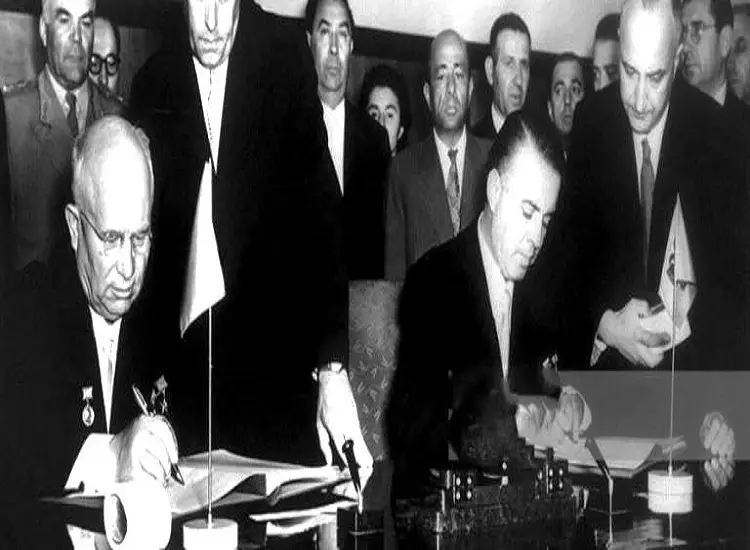
One thing is clear: despite the behavior or mistakes of the Soviets – which are acknowledged as such – Enver Hoxha did not leave the break with the Soviets to chance. He made it a political goal and provoked it to the end, firstly by cooperating with the Chinese side and secondly by undermining the climate of cooperation. What lies behind this policy remains to be explored, but for example, the author’s interpretation of the meeting in Tirana between him and Andropov and Pospelov suggests that Enver Hoxha felt personally threatened by the Soviets.
And he decided to purge the Party of any possible pro-Soviet elements, and then, in light of the Soviet-Chinese frictions, to prepare for the escalation of the situation, publicly standing as a determined communist who had caught the Soviets in an ideological error. It is also not well clarified, even with these documents, whether Khrushchev’s rapprochement with the Yugoslavs was a reflex of the break with Albania, or related to a Kremlin policy in the Balkans. The author says that in any case, the rapprochement with Yugoslavia gave Enver Hoxha an alibi, further paving the way for his final break.
The Study by Andrey Edemskiy, from the Institute for Slavic Studies at the Russian Academy of Sciences
It was decided that “in light of the ongoing unfriendly actions leading to the deterioration of Albanian-Soviet relations,” an official note regarding the bad behavior of Albanian cadets should be sent to Tirana. Copies of this document would also be sent to “the leaders of the countries of the socialist camp.” During the summer of 1961, relations continued downhill, becoming even more complicated.
In early July, Enver Hoxha made an attempt to restore the lost and reduced economic and military contacts with the Soviet Bloc countries. His attempts failed. Furthermore, Albania was not invited to the meeting of the leaders of the Communist and Workers’ Parties of the Warsaw Pact countries, which took place in early August.
Having concluded that the separation was inevitable and ready for a harsh confrontation with the Albanian leadership, Soviet leaders wanted to minimize the damage that mutual accusations could have on the image of the Soviet Union among the population of Albania, due to the anti-Soviet propaganda of its leadership.
This is evidenced, for example, in Moscow’s instructions of August 31st to the Soviet ambassador in Tirana, concerning the month of Soviet-Albanian friendship (mesiaçnik) in Albania. In previous years, the Albanian authorities had celebrated this month throughout the country. This time, under very different circumstances, Moscow acted cautiously.
On the one hand, it assessed that “the unfriendly policies pursued by the Albanian leadership towards the Soviet Union give reason to believe that they may use the opportunity that might arise in these two weeks to deceive the Albanian people.”
Since it had become a tradition for senior Soviet diplomats and various people from other Soviet organizations in Albania to participate in various festivities at the invitation of the Albanian authorities, it was recommended “to accept the invitation to participate in these events.”
Moscow’s directives for the Soviet representatives suggested not refusing to give a speech if invited to do so: “they can speak in the spirit of the speech of the delegation of the Communist Party of the Soviet Union at the PLA Congress.”
Moscow tried to avoid further worsening by warning Soviet diplomats that; “they should not touch upon Soviet-Albanian relations when speaking about foreign policy issues,” but should, in fact, emphasize “explaining the peaceful foreign policy of the Soviet Union and Khrushchev’s activities (in that area).” Soviet personnel in Albania were instructed to “immediately leave meetings and avoid participating in friendship month activities” if any anti-Soviet incident were allowed there.
The differences between Moscow and Tirana entered a new phase at the 22nd Congress of the Communist Party of the Soviet Union (held from October 17-31, 1961, in Moscow), as Khrushchev openly declared the political practice and ideological views of the Albanian leadership to be unacceptable. Besides him, several other participants in the Congress spoke in a harsh anti-Albanian tone.
Anti-Yugoslav rhetoric was also evident in a number of statements as well as in the new program of the Communist Party of the Soviet Union, adopted by the Congress. This added to the ideological disagreement with Belgrade, following the adoption of the new program by the League of Communists of Yugoslavia in April 1958, intertwined with the Soviet desire not to irritate the Chinese leadership, with a new emphasis on the Soviet approach to “Yugoslav revisionism.”
The Soviet side continued to intensify economic contacts with Yugoslavia, while economic relations with Albania deteriorated. On October 30, the Soviet leadership supported the Polish government’s proposal not to deliver a merchant ship built in Poland to Albania. The changes in relations with Tirana and Belgrade became clearly visible at the end of November, in several important decisions by key Soviet policymakers concerning the attitude taken toward the national holidays of Albania and Yugoslavia.
With Albania, the telegrams of congratulation were limited to a low level. Unlike previous years, formal greetings were sent only to the Presidium of the People’s Assembly, the Council of Ministers, and the Minister of Foreign Affairs of Albania. The Soviets sent “the warmest wishes to the brotherly Albanian people, on the occasion of the 17th anniversary of the Liberation from the Nazi occupier,” underlining that; “the decisive factor that enabled the Albanian people to be liberated from the foreign yoke and establish popular power was the defeat of the Nazi hordes by the Soviet Army.”
It was decided that the text of the Soviet greeting should only be read on the radio and not published in newspapers. As for the Soviet press, it was decided to publish articles that offered congratulations to the Albanian people while condemning “the schismatic activities of the Albanian leadership.”
The Soviet leaders recommended the preparation of some radio broadcasts for Albania in the same ideological spirit. Particular attention was paid to the possible request from the Albanian side, common in other cases, to allow the Albanian ambassador to speak on Soviet radio and television.
It was decided that such a request would be refused on the grounds that “the Soviet ambassador in Albania had not been given such an opportunity.” In addition to this, it was decided not to hold any official public celebrations by Soviet non-governmental organizations and to limit the level of presence at the Albanian embassy in Moscow of Soviet officials involved in cultural exchanges.
At the same time, Soviet ambassadors abroad were instructed to avoid participating in any celebration organized by Albanian embassies and to send “a consul or the First Secretary” to them. Special instructions were sent to the Soviet ambassador in Tirana: he should not participate in any festive event organized by the Albanian authorities and should attend government receptions accompanied by no more than two Soviet diplomats.
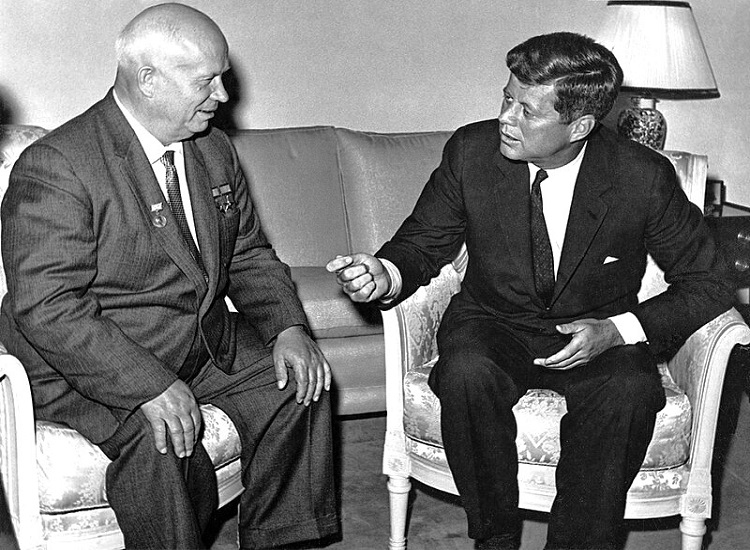
In the same period, Soviet authorities took other steps to openly strengthen relations with Yugoslavia. They demonstrated a much more attentive and friendly approach to Yugoslavia’s national holiday on November 29 than toward Albania, which also had its holiday on the same day, compared even to the behavior of previous years. The Soviet plan for the Yugoslav holiday included a congratulatory letter from Khrushchev and Brezhnev to Tito, expressing the desire “for the strengthening and comprehensive development of friendly relations between our countries.”
This text was published in the Soviet press after Tito’s response and was accompanied by the participation of senior Soviet officials in the reception organized at the Yugoslav embassy in Moscow, the publication of articles about Yugoslavia and its national holiday in the largest and highest-circulation dailies such as Pravda and Izvestia. The plan even included a speech by the Yugoslav ambassador in Moscow on Soviet radio and television, if there was a request from the Yugoslav side.
This significant drop in the level of courtesy (cordiality) in Soviet-Albanian relations on the occasion of the celebration of Albania’s national holiday was overshadowed by other developments concerning the increased control by Albania over the activities of Soviet diplomats in Tirana. On November 25, following the request of the Albanian authorities to the Soviet embassy to reduce staff by almost two-thirds, with the accusation that they were carrying out hostile activities in Albania, the Soviet leadership decided to “withdraw the ambassador, Comrade Shikin I. V., from Albania.”
In parallel with this, the Soviets informed Tirana about the impossibility of the Albanian ambassador’s further stay in the Soviet Union. The Soviet note pointed out that after the 22nd Congress of the Communist Party of the Soviet Union, the Albanian authorities created an intolerable environment for the normal activities of Soviet diplomats in the People’s Republic of Albania. It concluded that the Soviet embassy in Tirana was de facto in a position of isolation as a result of the violation of all basic norms of international law that regulated its activity.
The note expressed that the Albanian authorities intentionally created conditions under which the Soviet ambassador in Albania found it impossible to fulfill his duties according to the instructions of the Soviet government. This was followed by further measures by the Soviets against Albania. As early as December 3, Moscow had decided to cancel customs privileges for Albanian citizens, accorded by the Soviet Union to the citizens of socialist countries. Instead, they became subject to customs rules applied to citizens of capitalist countries.
At the end of the year, Moscow found a solution to the problem of Soviet properties in Albania, which were in temporary use by local organizations but were not legally registered. It was decided that they would be leased to local organizations in Albania for temporary use (airfields, geophysical training equipment, a floating dam, two sailing ships, cars, and other properties), calculated as part of the net debt of the Soviet Union, according to the provisions of the Soviet-Albanian Agreements of November 22, 1957, and July 3, 1959.
Even more impressive was the change in attitude toward Albania, as reflected in the New Year’s greeting telegrams. On December 28, 1961, the Soviet leaders approved the list of states to which greeting telegrams would be sent. This time, Albania was removed from the list of socialist countries. Moreover, it was not even on the list of capitalist countries. It was as if the Soviet leaders had erased Albania from the globe. In contrast to this, Yugoslavia appeared on the list of 11 socialist countries (after Romania and Czechoslovakia).
At the beginning of 1962, the edifice of Soviet-Albanian relations, which until recently seemed so powerful, was ruined. At this time, the diplomats of both countries were seeking the assistance of Balkan states for their diplomatic representation in Moscow and Tirana, respectively. There was, however, a paradox. Amidst the growing contradictions and worsening relations with Moscow and its allies, Albania did not announce its withdrawal from the military organization of the Warsaw Pact. On December 15, 1961, the Soviet leadership recommended that the representation of the united military forces of the socialist countries continue to be maintained in Tirana.
By the end of 1961, in less than two years, relations between the Soviet Union and Albania had fallen to their lowest level. The Soviet leadership, perhaps Khrushchev himself, failed in the attempt to restrain another growing conflict in the Soviet bloc by convincing the Albanian leaders to discuss contentious issues face-to-face. Researchers now have considerable knowledge of these processes, but large gaps remain to be filled.
Most of the important Soviet documents still remain classified in the Russian archives, but the utilization of those that are available makes it possible for researchers to gain a comprehensive perspective on the course of the Soviet-Albanian clash and to identify how, with the collapse of Soviet-Albanian contacts in the early 1960s, a Soviet-Yugoslav rapprochement began to emerge. At this moment, there is an urgent need for comparative studies of Soviet, Albanian, as well as Chinese and Yugoslav documentary materials. / Memorie.al