By Dom Zef Simoni
Part Three
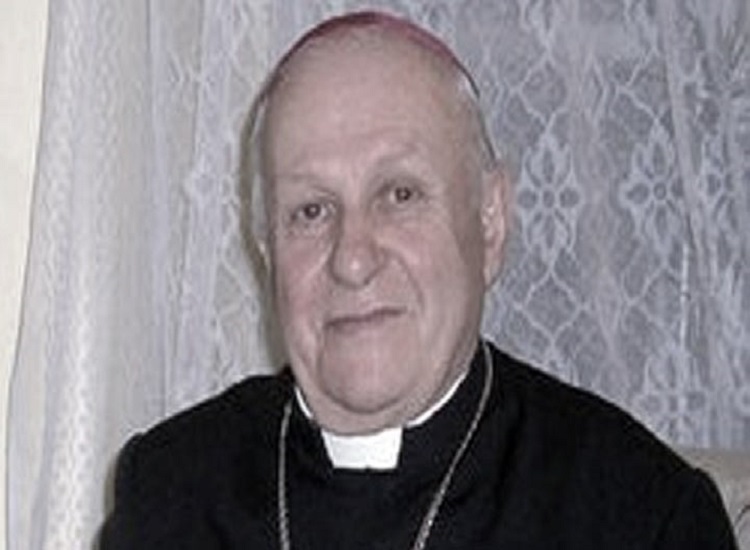
Memorie.al publishes an unknown study by Dom Zef Simoni, entitled “The Persecution of the Catholic Church in Albania from 1944 to 1990”, where the Catholic cleric, originally from the city of Shkodër, who suffered for years in the prisons of Enver Hoxha’s communist regime and was consecrated as Bishop by the head of the Holy See, Pope John Paul II, on April 25, 1993, after describing a brief history of the Catholic Clergy in Albania, dwells extensively on the persecution suffered by the Catholic Church under the communist regime, from 1944 to 1990.
Dom Zef Simoni’s full study, starting from the attempts by the communist government in Tirana immediately after the end of the War to separate the Catholic Church from the Vatican, initially by preventing the return to Albania of the Apostolic Delegate, Archbishop Leone G.B. Nigris, after his visit to the Pope in the Vatican in 1945, and subsequently with pressures and threats against Monsignor Frano Gjini, Gaspër Thaçi, and Vinçens Prenushi, who firmly opposed Enver Hoxha’s “offer” and were consequently executed by him, as well as the tragic fate of many other clerics who were arrested, tortured, and sentenced to imprisonment, such as: Dom Ndoc Nikaj, Dom Mikel Koliqi, Father Mark Harapi, Father Agustin Ashiku, Father Marjan Prela, Father1 Rrok Gurashi, Dom Jak Zekaj, Dom Nikollë Lasku, Dom Rrok Frisku, Dom Ndue Soku, Dom Vlash Muçaj, Dom Pal Gjini, Fra Zef Pllumi, Dom Zef Shtufi, Dom Prenkë Qefalija, Dom Nikoll Shelqeti, Dom Ndré Lufi, Dom Mark Bicaj, Dom Ndoc Sahatçija, Dom Ejëll Deda, Father Karlo Serreqi, Dom Tomë Laca, Dom Loro Nodaj, Dom Pashko Muzhani, etc.
Continued from the previous issue
In such an office, I was in the heart of the city, which you cannot see well from afar. You have to be inside to see how a city begins to decay, to smell; because that prefecture, calm and dignified a few years ago, took on another meaning: that of; “offices without officials”, where the end of the world might come, in that place where the phenomena of the revolution dawn and darken. But Providence was protecting me. It would cast its light. Always, however, when it is darkness and you can’t find the way, its light is needed, when you climb uphill and when you are at risk of falling. It never leaves you, never lets you down. And then, when trials fall upon us and you find yourself amidst fights, attacks, difficulties, Providence takes you by the hand and you find yourself under its guidance, and it is this that has its free projects which become yours. At first you don’t see. Later, everything starts to become clear, and when you look at your past, you realize that everything has been done well, with an order touched by Divine Providence.
The secretary, the professor, and I thanked him for those words. “Entering the Lyceum will happen later,” the professor told him. “Now, he should start his duty in education, first in the primary grades.” Within a few days, at the age of 18, I found myself working as a teacher in the city, in the heart of the city, among many of its good families, in a fourth-grade primary class. I, a student of the clerical school for years, I, a seller of meze in the city center taverns, became a teacher for the “People’s Power.” I, too, was surprised where I was. Without the meze bowl. Well-dressed and with the energy of a young man. The joy of my mother and father, my brothers and sister increased when we were also given a house in a very good neighborhood, in the center of the city, where we still live today. This is where the official external appearance of our poverty ended. The personal extreme need was removed, and we would continue to suffer badly, like many, many others. We were equalized with the misery of the whole city. It was said that people would eat with a golden spoon, but nothing was needed, not even a wooden spoon. You won’t have much use for a spoon. For more than forty years, we would mostly receive dry food. My family and I found our place with everyone. I would no longer be the city’s public pauper, but the city and the nation would be publicly pauperized. With speed and little preparation this year, I also obtained my high school diploma, as an external candidate. After one year, they sent me to a very good qualification course in Tirana, for language and literature. They placed me in the best seven-year schools in Shkodër, and one year in a school near home. The desire of the Committee Secretary was fulfilled, because when I finished the Higher Pedagogical Institute in Tirana, for the Language and Literature branch, I also taught at the Commercial High School. Everything was going well for me. I was a teacher for the People’s Power, but never belonging to it. In everything, I kept my distance from it. For them, I wasn’t a reactionary, but I was gradually making myself such, because I wanted to walk as a human being and never be a slave of the People’s Power.
“Reactionary” teacher! The school principal, Mr. Ndoc Fishta, a finished man, skeletal, sick, spitting blood from his mouth, near the age of fifty, and who would end his life that summer in a sanatorium in Belgrade, on March 17, 1947, introduced me to the students. As soon as we entered the classroom, the children immediately rose to their feet. There was a childish silence. For the first time, I was addressed as “Mister” at this age, because he said this while mentioning my name: “Mister Zefi is your class teacher.” It was the fourth grade of primary school. “Behave well and learn well,” he said these words, with a light and somewhat weary, raspy, elegant voice, as his manner and clothing were. I don’t even know how I felt when I heard those words. I thought being a teacher was something beautiful. The principal left, leaving me alone with the students, about thirty children, aged 10-11, who, seated in double desks, gazed at me, more curious than anything, because the new teacher makes an impression at first, until the children get used to him. I heard a child whisper from the middle of the desks that the new teacher was short in stature. I approached the podium with respect and speed. My childhood years and memories of my teachers, especially those in primary school, flashed through my mind. This first-day hour was more about fantasy and satisfaction for me, without being able to properly assess anything, as I had no knowledge or preparation for this duty. It was only a day of joy, not work.
Seated in the dedicated chair with respect and as if with fear, without saying a word, I took attendance in the register, trying to prolong it both to get to know the students and because I didn’t know how to start and end the hour. Everyone rose to their feet, answering with the resonant word; “here”. No one was absent. Later, I would understand that the roll call in the classroom is a noble presentation. The children often had a slight smile, and with a gentle voice in their answer; “here,” they expressed the state of their being, and the teacher begins to notice their nature, the state of the day, and the joys and worries they have. Since it was springtime, two or three children brought flowers from home and formed a beautiful bouquet, which I would find on the desk almost every morning. I had to do something, so I started by addressing some simple question to them, and immediately they fluttered like a flock of birds. They were all ready and answered me. And when, with a sentence I wrote on the blackboard, with my not-bad handwriting, I asked to know who the first and last names were, liveliness erupted in the classroom, the children raised their fingers, saying: “I’ll say it, mister teacher! I’ll say it, mister teacher!” Later, the most irrational term would enter: “comrade teacher”, to form a society without any ideal of respect for the elder, only respect for the party and the tyrannical leaders. The degradation of character was beginning. Marxist ideology had found and conceived this term in its furious rages with a class concept, to divide Albanians into enemies of one another.
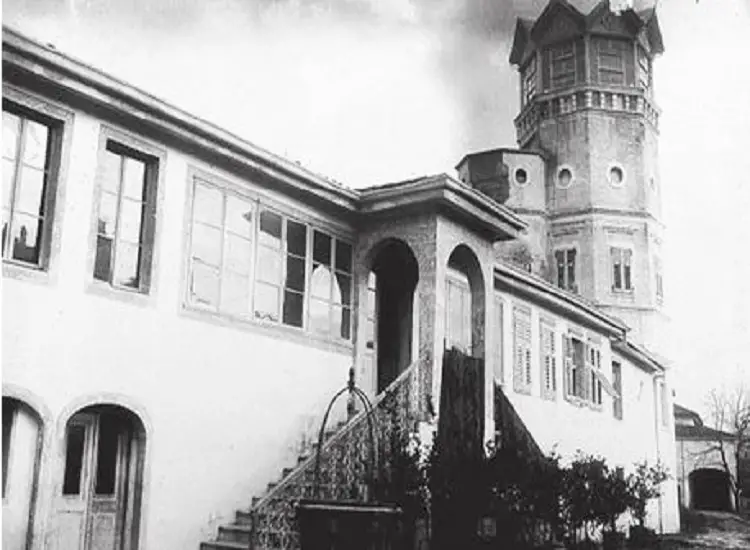
And the children did this, raising their fingers, wanting to outdo one another. Although I explained slowly during this hour, I still had a few good minutes left before the bell rang for the end of the class. This situation could not continue. And I would understand this well later. When that wretched bell rang for me, I was even happier than the children, and I immediately found myself in the principal’s office, taking the register with me; it was like a sacred book to me. All the teachers came and gathered around me, to know how I spent the first hour. I had received some quick instructions from them, and I would continue to receive them throughout the year. They had experience. They also had knowledge. They were all teachers, with regular pedagogical secondary schools. To teach others, you would take lessons from others. I noticed that there was quiet in the school. The students entered and left the class in an orderly manner, in that building with towers that had been the house of Gjon Marka Gjoni, the Captain of Mirdita. The state had made it its own, it had nationalized it. As a young man, I would never call the male and female teachers only by their first name, but I would say; Mr. Principal, Mr. Teufik, a wise old man. There was also a lady there, who was 6 years older than me: Ms. Vitore, the sister of the literature professor at the Lyceum. She was a very good, virtuous, and very polite person. She was dressed in black; her brother, whom I had as a good classmate at the “Illiricum” Lyceum, had died. When I went to Mass, she would be kneeling on the benches of the Franciscan church of Gjuhadol. Easter of that year came. As soon as classes ended, on Saturday, I wished her a Happy Easter, as we were descending the school stairs. Tears flowed from her eyes. She was remembering her brother in this first Easter without him. Even I, in these moments, felt pain and natural affection for her, but with the strength of virtue. From one day to the next, from one year to the next, I immersed myself in the life of a teacher. In its external form, this life has rules, but every minute is connected to the world of younger and younger people, to discover talents and individuals. The word “responsibility” that the teacher has is sacred. Oh, what good rules education had!
Every teacher was obliged to keep a logbook for the lesson hours, a meticulous logbook. It would start with frontal questions and then, the names of the students would also be noted, to question them, to give them a grade. It continued to show in the logbook the way I would explain the subject, with corresponding examples. Finally, after a summary, the exercises that would be given for homework. The logbook was an obligation for the teacher, and in cases of inspection that the school principal or inspectors might make, their first request was to see the logbook. Not finding the logbook in order, or its absence, weighed heavily on the teacher and had consequences for him. And the logbook was considered a heavy burden for the teacher, his tedious work. Keeping the logbook was reasonable work, but through this, the teacher was controlled, and the party’s education was monitored, with its violence. In this way, the screws were tightened on the new apparatus of the reformed and, gradually, terrorized school. Based on the program, every two weeks, so-called methodical circles were held with teachers, according to classes and seven-year schools, according to subjects. The subject was determined for two weeks. Discussions and unifications were made. Also, exemplary lessons, several times a year. In this case, a teacher developed the lesson with the children, in front of the teachers of the same class, and in the eight-year school, in front of the teachers of the same subject.
The pedagogical methods had planning with the bad substance of the Yugoslav and Soviet system. Everything was fastened in such a way that the students, through the subject matter, would have their minds blocked and their spirit suffocated by the heavy ideology of the dictatorship. The hours of science and social studies were materialized. The history class had lies; the political geography class had the camps and spheres of the world. The literature class had many deviations and poisons against the sky, the clergy, culture, and the most prominent writers of the North and the South. Philosophy was not done. Its hour was taken up by historical-dialectical materialism. Students could not ask questions to find the truth. These were dry, distorted, truncated hours. Lies were united with slander. Thus, the teacher became a superficial, harmful, mechanical educator. The “red teachers” gave the bad lessons with passion. They were State Security teachers. The rest would work mostly to get a salary. Almost everyone worked just to get a wage. The majority spoke against their own will. Even the students knew that they were talking nonsense, without heart.
I avoided fault-finding. It was constantly said that the teacher has an important duty, and I thought that when my teachers acted like children with us, we would be like that too, to have a communication with them. So, I went to school with joy. Could they not respect and love you? They behaved well. I too loved and respected all the students, without making distinctions. I maintained a kind of distance with them, while having a closeness of kindness and behavior. I discovered that children are always great, they have their world open, and so I was careful not to reprimand a child among others for any fault of his. I tried to be delicate in my behavior. Children would sometimes quarrel over small things. Antoni fights with Marku. Gjoni took Enriku’s notebook or pencil for fun. Girls, several shreds, while playing with a rope, pushed each other. These are sometimes important. But at first, these actions belong to the remnants of childhood life. Man goes through mistakes. And when a child came to the desk to report his classmates who were not behaving very well at certain moments, I, seeing his nature, trying to get into my good graces, did not accept it. I told him softly: “When someone bothers you, let me know. Not for others.” This child later ended up as an informant, and became a secret tool of the time.
I worked with the students mostly as an instructor, giving the subjects of the Albanian language, reading, geography, and history in the seven-year school classes, and when I moved to the Commercial Lyceum of the city, I taught the beautiful subject of literature. These subjects attracted students and learners greatly. Through these subjects and during the comments, I tried to give them a good direction. I could instill ideas and ideals that were not against the time, but which the time did not like much. It wanted the crudeness of materialism. I certainly thought that good work could not be done properly. Never properly. For the teacher who has the work of an artist of souls, of a moralist, to instill in students the concept of a monster state, which means having everything in hand—property, person, conscience – this action, even by teachers, falls into serious social crimes, and the terrorized teacher becomes a very negative figure. The students understood that I had a reactionary spirit. The students had faith in me and liked me because I didn’t talk to them about the State or the reforms. Even when I explained them sometimes, I presented them quickly and insignificantly, mostly by showing them historically, without the passion of analysis and commentary. I kept in touch with the students’ parents. “We don’t know how these children are growing up,” many would say. “The schools seem futile to us.” They spoke these words to me. And I told some, in whom I had confidence: “They want people without faith, poor in knowledge, weak in will, strong in self-interest, and clever in wickedness.” In the new-type school, in the formation of this person, everything flies and is thrown into the air. Unseen emancipations. This was not speed. This was not momentum for progress. They talked about “progress.” Everything was done badly: the building, the road, the factory, the plant, the shop. Is this socialism really a bastard?! It invents “offices for officials.” It confuses the lives of young people in schools, the conditions for hiring in enterprises, with many forms, and with low goals. The low goals are the strongest exploitations. And all this work is done gradually, systematically, with diabolical plans, with the personal power of the weak and the quarrelsome. It is the crisis of the beginning of the construction of socialism, which left you without food, without clothes.
It was the rationing system with little bread, little food. For people who were not working, the ration was at one time 250 grams, and this corn bread, and later 400 grams. For those who were working, 500 grams. For schoolchildren, 600 grams, and for teachers and some categories, up to 900 grams per day. For the category of reactionaries, there were no ration cards, no bread, no food. Even private citizens did not have bread ration cards. Food rationing included: cheese for the family, up to three kg. per month, marmalade up to four kg., olive oil 1 kg., meat per person, 250 grams, 700 grams of fish, 3-4 kg. of fish per family, sugar 400 grams per person per month, soap up to 6 bars per month per family, flour up to 6 kg. per month per family, and up to 4 kg. Per month per family of corn flour. But, sometimes an item was missing, and then the money/salary was burned/worthless, and eventually, the ration card itself began to be burned/worthless, only to reach later the day of cheese and meat, and eggs…! On a trip with the schoolchildren outside the city, a seventh-grade student, fourteen years old, with a tormented look on her face, told me: “We suffer a lot at home. Often, in the evening, we don’t put anything in our mouths. And in the morning, I often come without eating. And there are many children in the class in this condition.” I thought to myself: “Me too.” But I felt very sorry for the children. I knew well what poverty was. And the poverty of socialism never leaves you, and every day it came and tied your life to the bite of the mouth.
And concerning the work for construction, everywhere in education, courses were opened, courses against illiteracy. They would learn vowels, consonants. Great importance would be given to the vowel with the capital letter E. It is the first letter with which the word of the “master” of the new house began. This would be the new Albania, the danger of this sinner who was being burdened with many sins day and night, with shifts without shifts, in rain and in sun. Education too would resemble a cancer that spreads roots. Albania, a place with roots, with much grass. Memorie.al