
By Prof. Dr. Bardhyl Çipi
Memorie.al / A few years ago, I prepared and published a study on the forensic medical and criminalistic arguments that supported the version that Mehmet Shehu’s death was a murder. In truth, this event caused a stir, not only because Mehmet Shehu was the second most important figure of the communist regime, but also because of the many doubts that emerged about the manner of his death. These have influenced it to be analyzed in detail through the publication of countless articles, many scholarly books that continue to appear even now.
According to the known data of this event, the dictator Enver Hoxha, one day before Mehmet Shehu’s death, at a meeting of the Political Bureau, its members harshly criticized him, forcing him, according to the official version, to kill him. This elimination confirmed once again one of the most negative manifestations of this dictator’s life.
Researcher Donald Harvey has said of dictators: “They controlled the lives of other people, whether they should live or die. They had the power of control!” Even the Albanian communist dictator, Enver Hoxha, during his over 40-year rule, among other things, eliminated a large part of his collaborators through murders, suicides, and various other deceptive methods.
According to a known opinion, “the lies and deceptions that dictators used to cover up their crimes have had a great damaging effect on the moral fabric of society; therefore, investigating and exposing them are essential for the healing of this society.”
This was one of the main reasons that drove me to conduct this study, published a few years ago in our country’s press and media, also included in my book: “Scientific Evidence of Impressive Deaths”, published in 2023.
From what I have learned, it has been well-received and read by a large number of people, who have generally expressed positive opinions about it. But many of them, as they have told me themselves, lacking sufficient medical and legal knowledge, have not been able to fully understand some of the forensic and criminalistic aspects of this bitter event, even though at the time I tried to present it in as simple and understandable a way as possible for ordinary people.
Under these circumstances, as well as the fact that in the last year, the portal Memorie.al has published many new archival documents about the death of Mehmet Shehu (in the period December 2024 – January 2025, nearly 34 consecutive issues) by journalist and researcher Dashnor Kaloçi, I am analyzing it again.
The investigation material of the Tirana Internal Affairs Directorate, on the conclusions of the crime scene investigation and examinations regarding the death of Mehmet Shehu, is signed by the Chief of Investigation of Tirana – Koço Josifi, the head of the Forensic Medical Service – Bashkim Çuberi, and the criminalistics expert Estref Myftari, while the decision to close the case, dated December 29, 1981, is signed by Koço Josifi.
In these documents, it is noted that Mehmet Shehu’s death was the result of suicide by firearm, verified by the crime scene inspection, the examination of the corpse, the ballistic examination of the pistol, bullet, and cartridge case found at the scene, the dactyloscopic examination of the fingerprint found on the pistol, the investigative experiment, and the questioning of witnesses.
According to the decision to close the case: “the enemy Mehmet Shehu at the moment of suicide was lying in bed with his shoulders resting on the pillow. He fired from front to back, from top to bottom, and slightly from right to left. The shot was fired with the pistol that Mehmet Shehu himself possessed.
The index finger of the right hand, found at the time of examination more contracted than the others, the presence of traces of gunpowder particles on the nail of the thumb of this hand and on the skin 2-3 mm away from it, as well as the presence on the right side of the trigger guard of this pistol of a fingerprint identical to that of the thumb of Mehmet Shehu’s left hand, prove that this enemy loaded the pistol with his left hand, while with his right hand he fired and committed suicide!”
At first glance at these two documents, even for an ordinary, non-specialist person (lawyer or expert), it is noticeable that this event has been presented and appears sewn together in a logical way, supported by numerous forensic and criminalistic data, which even explains how the victim committed the suicide act.
This manner of presentation, I believe, was politicized, because the principle of impartiality was violated, if only for the fact that the victim is referred to as “the enemy Mehmet Shehu”, or for the manner in which he committed suicide, it is written that: “…this enemy loaded the pistol with his left hand and….”! It is unacceptable that the name of a victim, given in legal documents, is accompanied by discriminatory epithets.
The members of the investigation and expert examination of this case appear to have been forced to present it as a suicide at all costs. This is all the more so because performing an autopsy on the victim was prohibited, even though an autopsy was essential for such an unusual death for the time. So there was pressure from above for this.
For example, the Minister of Health at the time, Prof. Dr. Llambi Ziçishti, who was also a surgeon, after examining the victim’s corpse, publicly declared several times that this death was a murder, which apparently must have influenced his arrest and death sentence.
At that time, I had only a few years of work as a forensic doctor in the Bureau or Central Forensic Service, today called the Institute of Forensic Medicine (IML). Its head was Doc. Bashkim Çuberi.
As far as I remember, in the first days after Mehmet Shehu’s death, I had noticed a kind of feeling of unease in him. When I think about it today, I think this may have been due to the doubts he may have had about Mehmet Shehu’s death and the obligation or pressure to present it as suicide.
Nevertheless, in the examinations and analyses of the experts, which are found in the investigative file of this case, they have nonetheless left many traces that do not coincide with the official version of suicide, which I think the time has come to examine in detail. More specifically:
1 – The first piece of data that calls suicide into question is the direction of the shot: from front to back and from top to bottom, which the experts determined on the victim’s body. This is because such a direction is typical in murders. Whereas in a suicide, the direction of the shot should have been from front to back and from bottom to top, or horizontal.
2 – Another discrepancy has to do with the lying position with shoulders resting on the pillow, a position in which, according to the investigation documents, Mehmet Shehu fired the suicidal shot. This finding is completely contrary to the fact that the fatal bullet was found at the top of the bed, where the victim was lying.
In other words, in the victim’s supine position, the bullet after firing should have gone downwards, towards the middle of the bed, according to the front-to-back and top-to-bottom direction (according to the corpse examination data). But it was found up high, near the head of the bed.
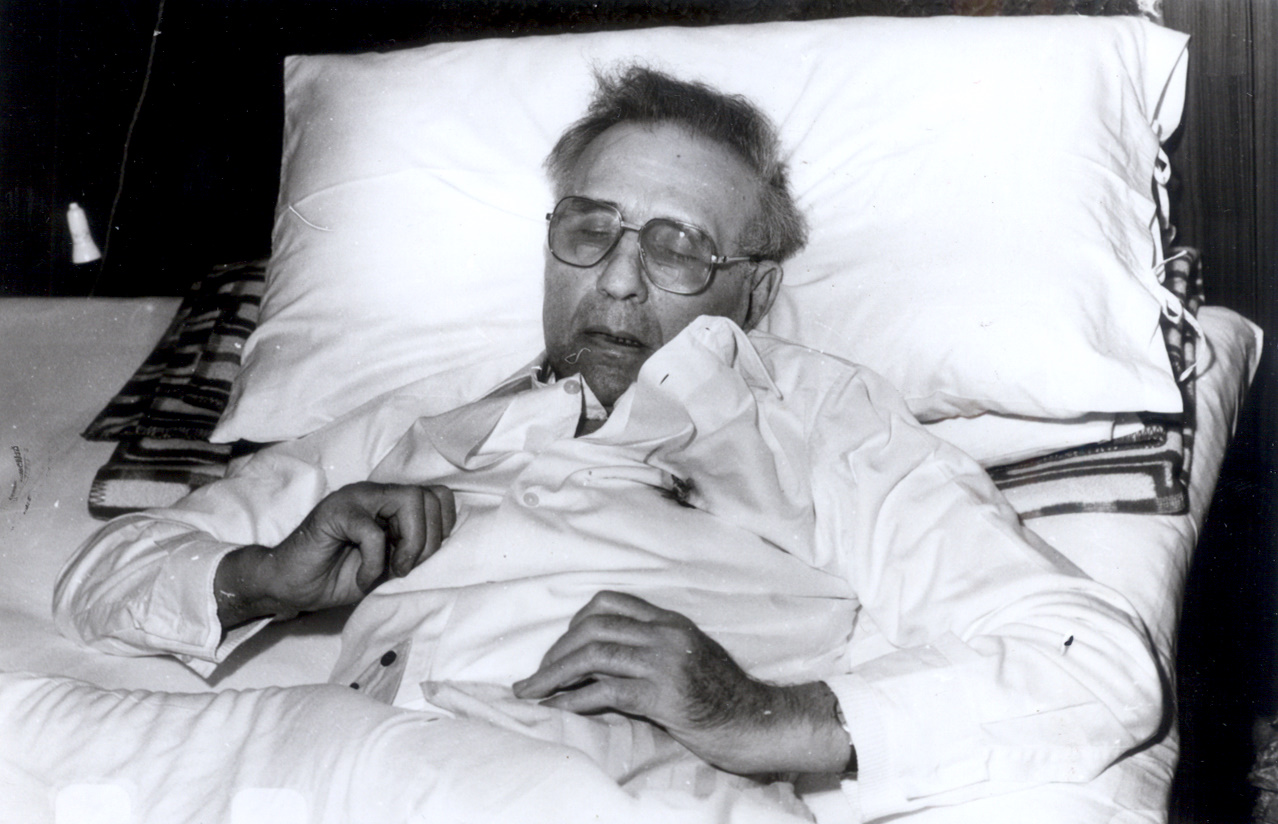
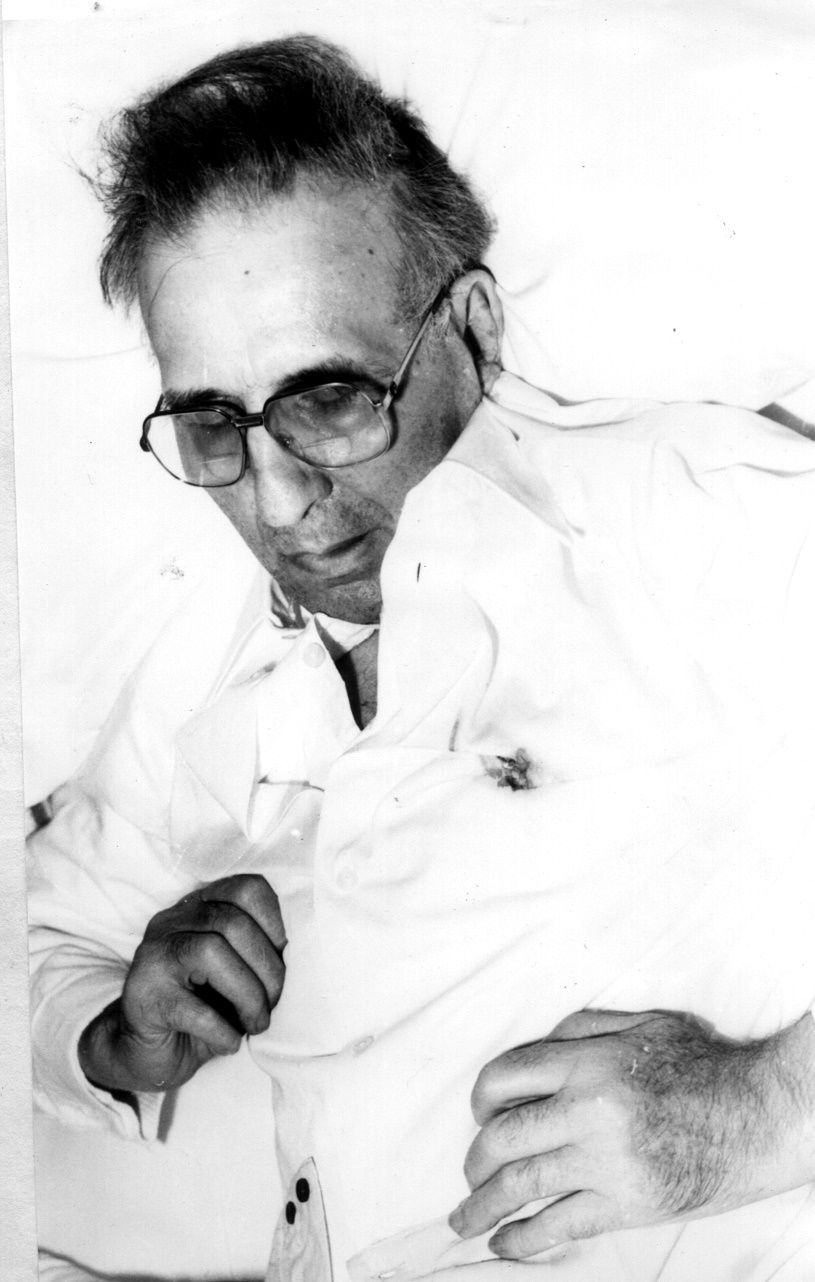
This discrepancy clearly shows that at the fatal shot, the victim cannot have been in a lying position, but rather raised or sitting. This is also evidenced by the widespread presence of blood in the form of stains, on the lower part of the clothes, below the bullet holes, which is clearly visible in the relevant photo in the investigation file.
In fact, with the available data, the place where the bullet was found, the angle of the shot based on the oblique direction of the bullet’s passage through the body from top to bottom, the heights of the entry and exit holes in the victim’s body, an investigative experiment should have been conducted at that time to fully reconstruct the event.
Such an experiment, as has always been done in other cases of similar incidents with firearms, would have been very useful for a more accurate determination of the victim’s position when shot and consequently for the complete discovery of all the elements of this event.
In fact, only one experiment was allowed to verify whether the gunshot sound should have been heard or not by people sleeping in other rooms of the residence, which clearly would not have had any particular value for the investigation. Besides these, there are many other contradictory or untrue elements that call suicide into question.
Here are some of them:
1 – In the two final documents of the investigative file of this case, it is written that: “the victim committed suicide with his right hand,” a claim reinforced by the determination that the direction of the shot was slightly from right to left. But this is not correct, because the forensic experts, in their description of the corpse, according to the investigative file, determined the position of the entry hole on the left front side of the chest as more to the left of the midline, compared to the exit hole of the bullet, which was also on the left side of the back, but closer to the midline.
Thus, this shows that the direction of the shot through the victim’s body was slightly from left to right and not from right to left, as written in the investigative documents. This calls into question the official version that the victim held the weapon with his right hand!
2 – The commission of suicide with the right hand, according to the investigative file, is reinforced by the presence on the victim’s thumb nail of traces of gunpowder particle action. But this finding does not appear to have been verified with a simple laboratory analysis. Moreover, in the crime scene inspection report, the forensic experts described on the corpse only dark blue spots that do not wash off.
So they could have been ink stains, because the night before he was found dead, the Prime Minister had prepared in writing the self-criticism he would deliver the next day at the Political Bureau meeting, during which writing he must have stained the thumbnail of his right hand with ink.
3 – The same can be said for the fingerprint on the pistol, for which the investigative file only states that it was of the same type as the thumbprint of the victim’s left hand. With just that little, the probative value of this comparison is completely insufficient, without comparing the many individual characteristics of the papillary traces, as a proper dactyloscopic examination requires.
There are many other findings of this nature, which have been described in more detail in the previous article, included in the aforementioned book. All these reinforce my conviction that Mehmet Shehu’s death was a murder.
Before publishing the first article on this important event, I met with Skënder, the second son of former Prime Minister Mehmet Shehu. I had known him since my youth, in the early 1970s.
I showed him and gave him the manuscript of the article about his father’s death. He took it to examine in detail and after a few days, after consulting also with Bashkim (the younger brother), he returned it to me, allowing me to publish it.
During the meeting, I also asked him about Mehmet Shehu’s farewell letter, made public 20 years after his death, whether he had seen it, and he told me that he had read it in the State Archive, not the original but a photocopy of it.
Often about the first article on Mehmet Shehu’s death, I have discussed with various people who have expressed their opinions to me, that the arguments I gave were very convincing, but that, according to them, the problem was to find the murderer.
Regarding this, I have explained to them that forensic medicine and other forensic sciences have as their task only to help determine the forensic form of the event, as in this case, where it was officially declared: suicide.
With the analysis I have made of the materials of this file, I have argued and reached the conclusion that we are dealing with a murder and not a suicide. I have told them that the task of reinvestigating this case, in order to discover the direct perpetrator of this murder, belongs to the relevant justice authorities. Nevertheless, even if the file were to be reopened, discovering the murderer(s) would be very difficult, but not impossible.
The communist regime made many attempts to hide the true discovery of this event, such as; pressures on those who conducted the investigations and expert examinations to present this case as a suicide at all costs, not allowing the autopsy to be performed, several repeated burials and exhumations of Mehmet Shehu’s corpse in order to leave no trace of it, the appearance 20 years after his death of a farewell letter from Mehmet Shehu that does not appear in any of the final documents of the investigation of this case, and many other pieces of data.
All these have made it difficult to discover the exact mechanisms of this event and the direct perpetrators who carried it out, despite the fact that the dictator and his circle had definitively decided on the elimination of Mehmet Shehu.
For this reason, and for that part of public opinion that is still unclear about the sensational event that occurred in Tirana on December 17, 1981, I am bringing it once again to attention, with explanations as simple and understandable as possible. / Memorie.al