
Dashnor Kaloçi
Part Seven
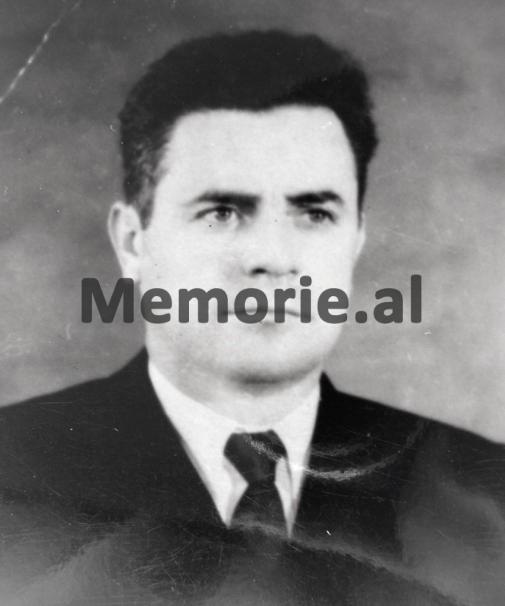
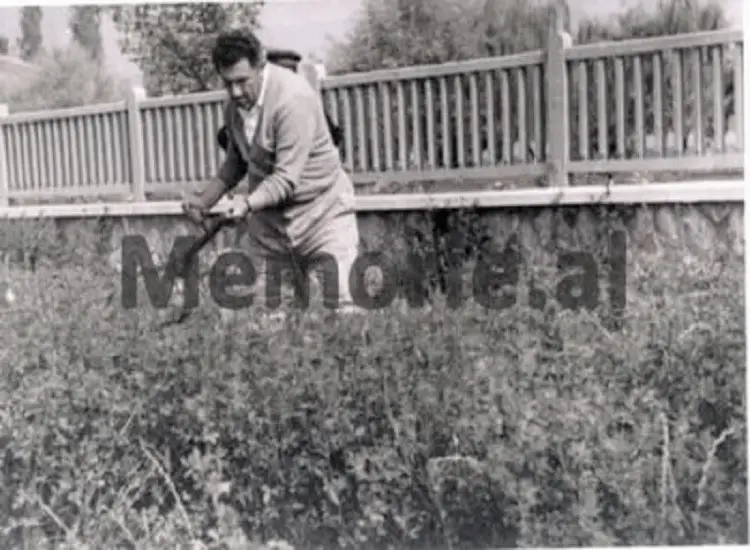
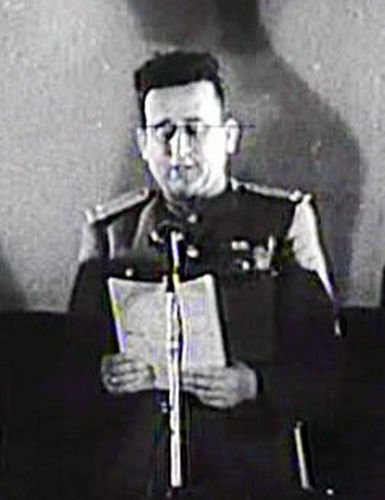
Memorie.al/ publishes the unknown history of Major General Panajot Plaku, originally from the village of Hoçisht in Devoll, Korçë. After graduating from the “Normal” school of Elbasan in 1936, he returned to the city of Korçë, where he connected with communist groups. During the occupation of the country (1939–1944), he became engaged in the Anti-Fascist Movement and for his activity was arrested and imprisoned by the Italian authorities in the city of Durrës. After his release, he joined the partisan ranks, being appointed deputy commissar of the First Assault Brigade commanded by Mehmet Shehu, upon its formation in August 1943 in the village of Vidhkuq, Korçë. How did Panajot Plaku climb the ranks of his military career after the war, starting as commissar and division commander in the Korçë district, corps commander, Director of the Operations Directorate and deputy chief of the General Staff of the Albanian Army in the Ministry of People’s Defence with the rank of major general, deputy minister of People’s Defence for the Border Directorate, and finally to the post of minister without portfolio in the government headed by Mehmet Shehu? How did Panajot Plaku manage to escape from Albania in June 1957 (while holding the position of minister without portfolio and Chairman of the State Committee for Geology) by secretly crossing the state border near Lake Pogradec from the village of Lin and reaching Yugoslavia, where he settled in Belgrade as a political asylum seeker and sent a letter to the leader of the Soviet Union, Nikita Khrushchev, denouncing all the crimes of Enver Hoxha and his regime? The mystery of Panajot Plaku’s death in 1966 in the hotel where he lived in Belgrade, and what he wrote in his memoirs about Enver Hoxha and the high leadership of the Party of Labour of Albania, which he compiled for publication in a book titled “Violence upon the Revolution in Albania”. After his death, the book was also translated into Serbo-Croatian (by Predrag Vuqiviq, editor of the newspaper “Borba”, and Vela Popoviq, editor of Belgrade Television), a book that had great resonance and was later published by the “Rilindja” Publishing House in Pristina in the Albanian language in 1985.
Continues from the previous issue
Memoirs of the former minister without portfolio, Major General Panajot Plaku, written in Belgrade in the years 1957-1966
Terror at the First Congress of the CPA!
I was elected a delegate to the First Congress of the Communist Party of Albania while in the Soviet Union, where I was attending the “Voroshilov” Academy. When I came to Tirana, my family complained to me about the extremely difficult economic situation in the country. They told me that they had had considerable income – they received my entire salary and lived together with my younger brother, who at that time was director of State Agricultural Farms in the Ministry of Agriculture (in 1956, my brother was poisoned on Enver Hoxha’s orders) – yet despite this, they lived a hard life.
Because not only was everything expensive, but often the most basic food items were impossible to find. They told me that it was very incomprehensible how the people could live like this. Work had stopped not only on the largest projects but on all other projects as well. Their impressions were completely correct. Under such conditions, the First Congress of the Communist Party of Albania was held from November 8 to 21, 1948. The Congress was held in the Assembly hall (later the State Opera House). The building was decorated with red flags and portraits of Marx, Engels, Lenin, Stalin, and Enver Hoxha.
The presidium of the Congress proceedings consisted of a small number of former members of the Central Committee. All the others were little known or completely unknown among the Party membership. The Congress formally gave its consent to the liquidation of the proletarian core of the Party leadership. The following were officially expelled from the Party: Koçi Xoxe, Pandi Kristo, Ramadan Çitaku, Nesti Kerenxhi, Xhorxhi Blushi, Vaskë Koleci, Naxhije Dume. Drastic measures were taken against Kristo Themelko, Bajram Sinoimeri, Pëllumb Dishnica, Petro Papi, Rrahman Parllaku, Iljaz Reka, Teki Kolaneci, Gjin Marku, Dali Ndreu, Koço Titko, Haxhi Kroi, and others.
All these – until then members or candidate members of the Central Committee – were not only not re-elected, but received party punishments and were dismissed from their functions. In other words, out of 32 members and candidate members of the previous Central Committee, which had led the Party and the people of Albania during the National Liberation War and the people’s revolution, as well as the reconstruction of the country in the post-war period, 23 of them were dismissed and liquidated. This liquidation, in fact, had been prepared a very long time before, without any consultation with Party members or leaders of party organizations.
The name “Party of Labour” is opposed!
The First Congress of the Communist Party of Albania decided to change the name of the Party. The Communist Party of Albania changed its name and became the Party of Labour of Albania. The proposal for this change was presented by Tuk Jakova, who, since the 11th Plenum, had been performing the duty of organizational secretary of the Central Committee in place of Koçi Xoxe. When Tuk Jakova presented this proposal, a massive protest arose in the hall. Delegate Ramadan Xhangolli stood up and declared himself against this proposal. He said that this new name brings to mind the “Puna” organization which, as a product of the Communist Group of Korçë, had the character of a mass workers’ organization.
“Surely,” emphasized Ramadan Xhangolli, “our Communist Party, which led the people of Albania in the most difficult battles and which carried out the people’s revolution, opening new paths toward socialism – should it now give up its own glorious old traditional name?” These words were greeted with frenetic applause. Then Tuk Jakova spoke two more times, trying to convince the audience of the need to change the Party’s name. When these interventions of his brought no result, he finally said: “Regarding the change of the Party’s name, we have discussed much in the Political Bureau. However, we have not been able to reach any decision.
When I was in Moscow, I asked Comrade Stalin for his opinion on this problem. Not only did he agree with this change, but he immediately also congratulated me on the new name of our Party.” After these words of Tuk Jakova, silence reigned in the hall. Thus the new name was born: the Party of Labour of Albania.
During the Congress, on several occasions, Gjin Marku – who was at that time the head of the Political Directorate of the Army and about whom everyone was convinced would be elected not only to the new Central Committee but also to the Political Bureau – begged me to speak in the Congress. I categorically refused. I was convinced that this was an initiative not only of his but also of the Political Bureau. I knew that their aim was for me also to declare myself against Koçi Xoxe, so that I would be elected to the Central Committee.
But I refused to do this, with the motivation that I had nothing to say. Gjin Marku himself, who had advised me thus, in his own subsequent discussion, attacked not only Koçi Xoxe but also the other leaders who had previously been engaged for other relations with Yugoslavia. Since Enver Hoxha and the others interpreted this as an attack also against themselves, Gjin Marku was harshly criticized and not only was he not elected to the Central Committee, but he was immediately dismissed from his position and was effectively politically liquidated.
The First Congress of the C.P. of Albania definitively liquidated the revolutionary core of the Party leadership, broke the continuity of the people’s revolution in Albania, widely opened the doors for Stalin to command the Party of Labour of Albania, and legalized Stalinism as the only method of leading the Party and the Albanian people. The events that developed after the First Congress of the Communist Party of Albania show, apparently, the application of Stalinist methods in the conditions of Albania.
The remnants of the party past leave very visible traces in everyday life in Albania
The mutual connectedness of people, members of the same family, as one manifestation of this patriarchal way of life, also had its positive side during the war for the liberation of the country. It also influenced the polarization of forces in the complicated conditions of the National Liberation War. It happened, almost as a rule, that all members of a family were active participants in the people’s revolution or its dedicated sympathizers, if one of its most authoritative members was a communist.
Nepotism in the high leadership of the PPA!
Naturally, not everything can be explained by this. Political views and dedication to socialist ideas played a decisive role. But this factor should also be taken into account, because not only whole families and groups of families, but entire localities and even whole regions were without exception for the Anti-Fascist National Liberation War throughout Albania. Until then, throughout the Central Committee, there existed only one married couple: Nesti Kerenxhi, candidate member, a brave man – I will point out a few examples that show how the system of married couples developed more and more, etc. – his wife Nexhmije, member of the Central Committee, director of a Directorate of the Central Committee, member of the Presidium of the People’s Assembly, etc.
Mehmet Shehu, member of the Political Bureau and chairman of the government, his wife Fiqirete, candidate member of the Central Committee, second secretary of the Tirana City Committee, vice-chairwoman of the People’s Assembly. Hysni Kapo, member of the Political Bureau, second secretary of the Central Committee, etc., his wife Vito Kapo, candidate member of the Central Committee, chairwoman of the Women’s Union of Albania, member of the Presidium of the People’s Assembly. Josif Pashko, member of the Central Committee, former minister of Construction, his wife Eleni Terezi, candidate member of the Central Committee, assistant to the minister of Industry.
Other such examples could be mentioned, since the practice that reigned in the highest organs soon began to be applied also at middle and lower levels of functionaries. The closure of this circle, the family merry-go-round, was practiced also in other lines. The network of in-laws is equally interesting. Here, as illustration, we will point out six pairs of in-laws: Pirro Kondi, member of the Central Committee, head of a Directorate of the CC of the PPA, his son-in-law Hysni Kapo, member of the Political Bureau, organizational secretary of the CC; Sadik Bekteshi, lieutenant general, deputy minister of Defence, member of the CC, his son-in-law Manush Myftiu, member of the Political Bureau, deputy chairman of the government; his son-in-law Pilo Peristeri, candidate member of the Political Bureau, chairman of the Control Commission; his son-in-law Rita Marko, member of the Political Bureau, etc. Bilbil Klosi, minister of Justice, his son-in-law Karaman Ylli, candidate member of the Central Committee of the PPA.
A clan of brothers-in-law in the Political Bureau!
There are also other directions in which this complicated network of mutual connectedness was woven. This is also shown by these four pairs of brothers-in-law: Hysni Kapo, his brother-in-law Gaqo Nesho, member of the Revision Commission, secretary of the Vlora District Committee; Adil Çarçani, his brother-in-law Xhafer Spahiu, candidate member of the CC, chairman of the Committee for Mineral Wealth; Ramiz Alia, member of the Political Bureau, secretary of the Central Committee, his brother-in-law Bilbil Klosi, minister of Justice; Manush Myftiu, his brother-in-law Pirro Kondi. Thus, in the CC of the PPA, large kinship groups were formed, among which one of the characteristic groups is undoubtedly this one: Vito Kapo, candidate member of the CC, chairwoman of the Anti-Fascist Women’s Union, her husband Hysni Kapo, member of the Political Bureau, second secretary of the CC; her brother Pirro Kondi, member of the CC; the son-in-law of Sadik Bekteshi, Manush Myftiu, member of the Political Bureau and deputy chairman of the government; Manush’s son-in-law Pilo Peristeri, candidate member of the Political Bureau; Pilo’s son-in-law Rita Marko, member of the Political Bureau, and others.
The leadership “Bllok” in Tirana e Re, where they live in luxury with guards!
With such family ties, several generals, deputy ministers, and ambassadors were even more closely connected. But counting their mutual connections would take us far. However, in essence, the circle does not close in this way. Maximum efforts have been made to make it appear visually as isolated from the outside, since it had long been completely separated and isolated from the people of Albania. The members and candidate members of the Political Bureau of the PPA live in the so-called “Bllok” (Block), known as “Tirana e Re” (New Tirana), located right in the city center. It consists of two small streets.
Near the “Bllok” live the members of the CC. In the center of the “Bllok” are villas surrounded by gardens with permanent greenery. This whole part, reminiscent of a military zone, is full of signs reading: “Entry Forbidden”. All around are quite sparse guard barracks and many guards with Kalashnikovs on their chests, ensuring compliance with the order on the signs. At night, the number of guards is larger. From the “Bllok” you go directly into the building of the CC of the PPA.
The building itself is designed according to the general hierarchy of the leadership and the mistrust that reigns. It has four entrances:
– For members and candidate members of the Political Bureau.
– For members and candidate members of the Central Committee.
– For functionaries and employees of the Central Committee.
– For service personnel.
All entrances are rigorously controlled by State Security, whose members carefully check that no member of the CC enters or leaves through the entrance designated for members of the Political Bureau, except in those cases when he is with a member of the Political Bureau. At the end of the area, there is a special health institution for the leadership, then a nursery for the preschool children of the leaders, and a school for their grown children. In the area is also the “Party House”, which contains a cinema, a hall for recreational games, and a rich buffet where food and drink are free.
The “Party House” also has television sets, but only Italian programs can be watched, since Albania does not yet have its own television. In the “Bllok” there are also two commercial shops: one for members and candidate members of the Political Bureau, the other for members and candidate members of the Central Committee. The assortment in them is good. There are many goods from foreign countries – from socialist countries, but also from capitalist ones – while prices are lower than in the city, set according to the privileges enjoyed by different categories of buyers.
The other leadership “Bllok” on the beach of Durrës!
A few words about the beach in Durrës. The special zone on the Durrës beach is several times wider, the villas are more numerous, and there is also the “Party House” and shops, as in Tirana, since the majority of the leaders of the PPA and the PR of Albania spend a very large part of the year in Durrës. There they also sleep, while they come to work in Tirana by car. Members of the CC do not pay rent for the villas in which they live. In addition, each of the members and candidate members of the Political Bureau has separately a cook, two servants, one or two attendants, an automobile, and a driver.
While members of the CC have a maid and an attendant, all without any payment. However, a directive of the Political Bureau forbids all leaders – members of the CC and of the government – to appear informally among the people, to walk in the streets of Tirana or anywhere in Albania. They are allowed to circulate only by car, always accompanied by the present “shadows”, whose duty is twofold: to protect the leaders and, even more, to control their every step.
Thus the circle closes mercilessly. The isolation in which Albanian society has fallen today is complete. This is, above all, political isolation, but at the same time also physical isolation from the people of Albania. The liquidation of the best people of the revolution, mass terror and the establishment of concentration camps, the extraordinarily great increase of the bureaucratic-police and military apparatus – these are undoubtedly the most severe concrete results of the beginning of Stalinism in my country. But not only that. There is also something that worries me, even more when I meditate on all these things. This is the fact that Stalinization has sown the seeds of discord in interpersonal relations./Memorie.al