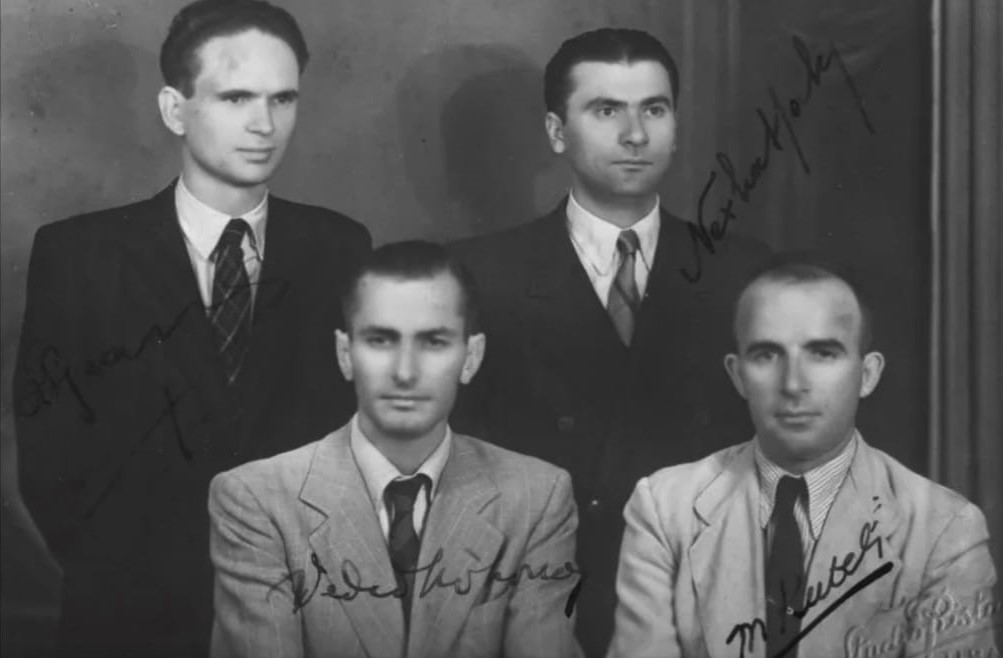
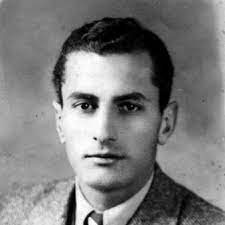

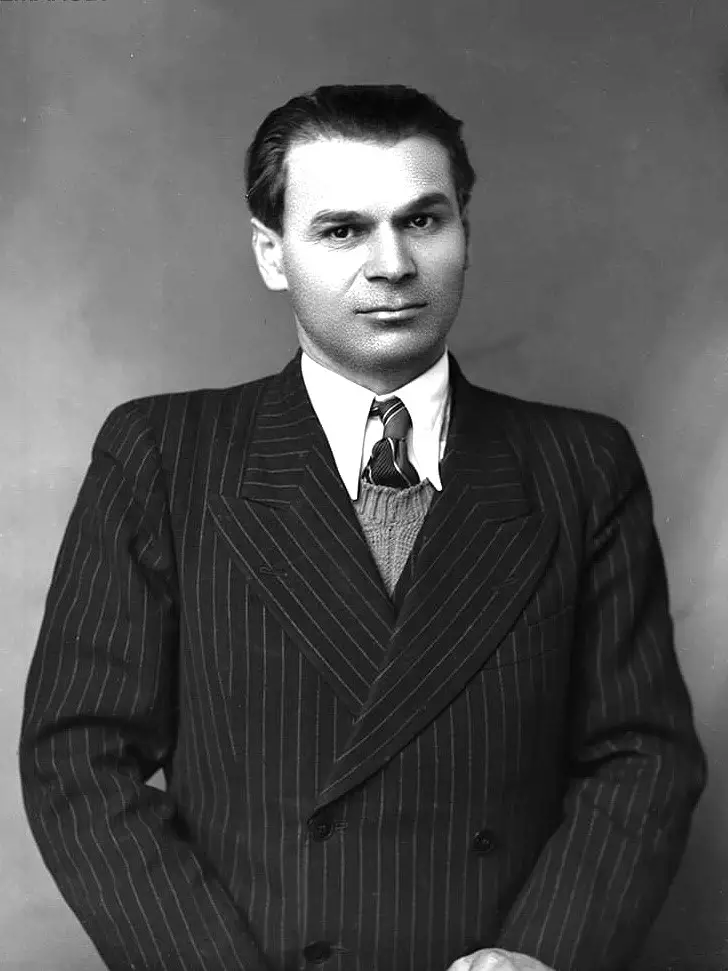
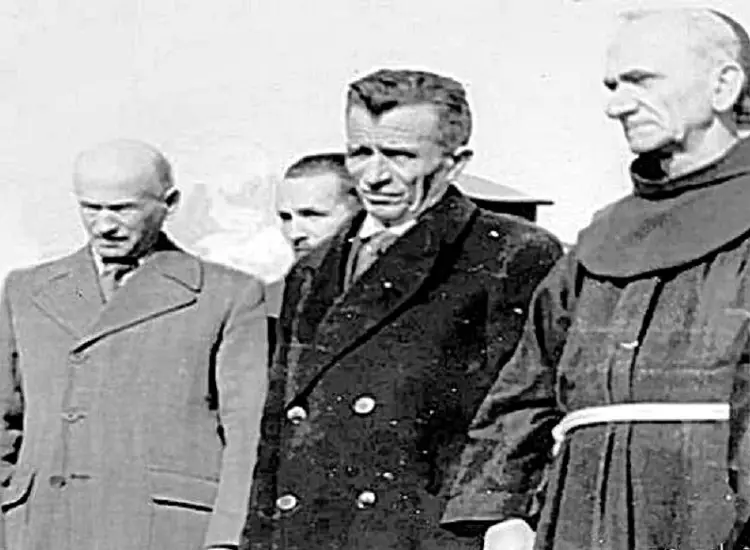

Memorie.al / He spoke very little about himself, but in fact, he showed a great deal about who he was. Even now, when he is no longer with us, the writer and translator Vedat Kokona decided to come among us simply, serving his own life just as he naturally experienced it. “His best friend was always the book. He was not a man of ‘tables’ (café life) or idle chatter, but always just worked,” says Mirvjen Kokona, the daughter of the renowned Kokona, in this interview as she recounts the life and memories of her father. “He had many friends and loved literature. It remained regret for him that he could not live longer to finish his works,” she adds, speaking of her father and his “regret” at the end of his life.
What is the first thing that comes to mind when you speak about your father?
The first thing that comes to mind when I speak about my father is that he was a human being first and foremost; he was a wonderful parent – though every parent is wonderful to their children – to me, it seems he was special. He was a friend, he was very hardworking, and a man who deeply loved the Albanian language and his country.
From my childhood until he was separated from us, I remember my father only working. He knew only work, and in his free hours, he would talk with us, radiating wisdom and telling us those things he felt we truly needed to know and learn.
When my sister and I were little, he tried to teach us French, but it was a bit difficult to learn French at that time as it was looked upon unfavorably; nevertheless, we learned French to some extent. He always spoke to us about literature and read to us the passages he was translating, and as he translated, we would take the pages from the typewriter. Since then, he instilled in us a love for literature, always speaking to us about literature, art, and music. He was also a very great admirer of music and painting.
What is the most special memory you hold of him, and did your father have many friends?
All memories with him are special; he was truly very loving. His closest and dearest friend was the book. That was his friend, before whom no other came, and all other friends came after. He had many friends, but he was not a man of cafes and large social circles, because he always closed himself in his work. Every day he started work at 8:00 AM; we would call him for lunch, he would rest for an hour, and then start again only to stop at night. He had absolutely no desire to watch television and only read.
Who were the people your father liked to spend time with the most?
He liked to stay with all people. I cannot say he had specific friends, but he very much liked “men of letters,” cultured people, as he shows himself in his memoirs and as he told us. He always esteemed and valued these people immensely and tried to take the best qualities from them and imitate them.
Did your father have contacts or correspondence with famous literary figures?
He did not have specific correspondences. He always wrote letters to family members and always wrote them beautifully. It is truly a mistake that we did not save these letters, because each one of them was truly a poem or poetic prose. Even the New Year cards he sent were very special.
What did he tell you about his youth, and can you tell us when your father started engaging with literature and translations?
He always told me and my sister, Moza, about his memories. These were events we heard from his own mouth. He told us all the events of his life, with the exception of the episode when he went to Rome with my mother before they were married. He started learning French in Izmir. When he began his studies at the Lyceum of Korça, he began the perfection of the French language, and out of a great desire for literature, he started reading French poets and began translating them. Always driven by a great desire, he would say: “Why should I enjoy these beautiful things alone? Let my compatriots enjoy them too, even those who do not know French.”
Who was his most preferred author?
To him, all writers were very preferred. He admired the French classics, Shakespeare, Dickens, Lermontov, Chateaubriand, etc. He adored the great writers. He loved Lamartine very much, as well as Musset. He “died” for Rabelais.
Did your father have relationships with political figures of that time?
He had no relations with people of politics. He expressed his thoughts on these people just as he stated them in his book. He did not like politics; he was not a man of politics. He was only a man of books; even when they tried to take an interview from him or ask a question, he always turned it back to literature.
What can you tell us about his memoirs? When did he decide to put them on paper and what value did they have for him?
He always had a lot of work and left his memoirs to be written at the end of his life. Apparently, the right inspiration to write them had not quite come to him. It was only on the shores of the Ionian Sea that he found that inspiration in 1996. Unfortunately, in 1997 we could not go there, while in 1998, unfortunately, he fell ill and could not write his memoirs, which he could only put on paper on the Ionian shore and nowhere else.
They are his memoirs just as he wrote them, but he did not manage to publish them until the end of the ’70s, as I say at the end of the book in the section “Wandering during a flight.” He had left his memoirs ready on the typewriter, just as there were small things that needed translation and this required some technical work, but his work was absolutely not touched. I have tried for the book to come out perfect, but that is never achieved.
How do you remember your father at the end of his life?
At the end of his life, he was who he had always been. A man of extraordinary clarity with the only difference being that he did not have the energy and strength he had before he fell ill.
Did something remain unrealized, or did your father have any regret?
Yes. He regretted not having another five years of life to finish his work. But I am sure that even five years would not have been enough to finish his work. Even if he had 50 years of life, they would not have sufficed; he would have needed another life to finish his work. Nevertheless, his concern was the memoirs. He said; “it is fine even as much as they are.”
Add also that “Wandering during a flight” at the end and let the memoirs be published as they are. I have a desire to publish in French the Albanian poets that he adored. In fact, a part of them are published, but they are scattered here and there. This includes starting from Vaso Pasha, Gavril Dara, Naim Frashëri, up to Ismail Kadare, Llazar Siliqi, Risto Siliqi, Hilë Mosi, etc. He did not manage to see this published either.
When he met Mehdi Frashëri
It is natural that his daughter, Mirvjen, relies on what her father left in manuscript when she speaks of his memories. But she knows how to speak much about the meeting her father, Vedat, had in his childhood with Mehdi Frashëri. “Father was very small, while Mehdi Frashëri was an important figure, and then his father took him by the hand and led him to Mehdi’s office because my father begged him. He wanted very much to stay with people older than himself and always benefit from them, from people who were cultured.
I rely on his memories because I either did not exist then, or I was too small to remember them, but I can speak about the acquaintance he had with Mehdi Frashëri,” says Mirvjen, adding that her father highly valued the cultured people of that time. “He valued them and certainly expected some appreciation for himself from them and was happy when they praised him or wrote to him. Thus he writes that he ‘grew wings’ when ‘Lumo Skëndo’ wrote the preface to the volume of poetry Dritë e hije.
Since he was young, he valued people,” continues Mirvjen, mentioning other names her father noted in his memoirs. “He wrote about Nebil Çika, about Branko Merxhani, whom he valued immensely as the publisher of the magazine Përpjekja shqiptare, together with Ernest Koliqi, as well as Lasgush Poradeci whom he had as a friend along with Dhimitër Pasko.
But he had a special relationship with Petro Marko. Whenever he returned home he would say: I met Petro. Ah, how charming that Petro is, because they would tell ‘qyfyre’ (funny tales), some story of theirs, and he valued them for some gift they had which he did not. He was especially enthusiastic about Petro Marko and Skënder Luarasi, while Dhimitër Pasko died young,” she concludes.
Free to write
According to Mirvjen, her father, Vedat Kokona, felt free to write what he wanted, or rather knew how to find this freedom after 1945. “He wrote when he wanted and how he wanted. He wrote the drama as he wanted and the novel as well. Then he also wrote pieces for children, as well as those he wrote before the liberation. Since he could not write much as he wanted from ’44 onwards, just as he wrote the memoirs in 1996, he turned to translations and lexicography with the drafting of dictionaries whose beginnings date back to his school days when he began dealing with translations.”
In 1920 he returned to Tirana, where he completed primary school. In 1935 he finished the Lyceum of Korça. Later he pursued higher studies in Law in Paris. He graduated in 1939. In the early ’40s, he was appointed professor in the gymnasiums of Tirana. He worked as a translator at the “Naim Frashëri” publishing house in the years 1950-1965. 1965-1988 lecturer of French at the University of Tirana. He holds the titles “Knight of the Order of Arts and Letters” from the French Ministry of Culture and “Officer of the Academic Palms” from the Ministry of National Education of the French Republic, as well as “Doctor Honoris Causa” of the University of Tirana.
Works: Nga Tirana në Stokholm (1934); Dritë dhe hije (Poetry) 1939; Yje të këputur (Stories), 1940; Shtatë prilli (Poem), 1944; Me valët e jetës (Novel), 1961-1963; Hijet e natës (Drama) 1966; Lulja dhe Shega (Children’s piece); French-Albanian, Albanian-French, Albanian-English Dictionaries; Theory of Translation; Endur në tisin e kohës (Memoirs) 1996.
Translations: Thousands of translations from French, English, and Italian such as: Corneille, Hugo, Musset, Lamartine, Rutebeuf, Ronsard, Baudelaire, Dante Alighieri, Petrarch, Shakespeare, Omar Khayyam, Longfellow, Kipling, Yesenin, etc. Prose from: Voltaire, Balzac, Dickens, Shaw, Hemingway, Turgenev, Chekhov, Tolstoy, etc.
Vedat Kokona: How did I know Enver?
Vedat Kokona expressed his relationship with Enver Hoxha very clearly in his book. For Kokona’s daughter, Mirvjen, these are just a few memories among many others. “He expressed his relationship with Enver Hoxha very clearly in his book. He was his cousin; he knew him as jovial and a jokester. He liked to be with him because he was older than him and because he was a witty person. Kokona himself writes in his memoirs:
“In the Lyceum of Korça, Enver Hoxha was also a student, who had arrived the year I went to Korça. Enver was five classes above me. I stayed often with them and, as I was younger, I wanted to learn from them. I was especially attached to Enver, who was from my mother’s tribe and whom I often provoked with relentless questions about French writers, so much so that he gave me the name ‘rrokan’ (chatterbox), and every now and then would tell me: ‘you’ve rattled my brain’ (më rrokanise)!”
Unspoken Memories
For his daughter, Mirvjen, every day spent with her father and every event described by him is special. “Each event has its own uniqueness. There are many memories he could not put down. When he was ill and my sister and I were reading the memoirs to him, there were many events where he said: I have forgotten this and this too. Perhaps one day we will work on them,” says Mirvjen, recalling one of these events. “When he was small and came to Tirana, he did not go to play here and there, but went to the ‘Carnarvon’ library that used to be in Tirana and tried to find the books he liked,” she says, thus recounting her father’s early passion.
Assessments for…
Petro Marko
“I was not of Petro Marko’s breed, who when called one day by that Minister of the Interior, Musa Juka, and told that communists were sold for money, had raised his leg and placed on the minister’s desk his shoe with a torn sole. I have never been brave like Petro!”
Lasgush Poradeci
“You rest there in the earth of the village to which you wove a crown of glory, and I remember you today with longing and love. I remember you and think: what did you gain for that great gift you gave the country? You barely built a small house in Tirana; you sang in the sweet language, just as no son of Toskëria had ever sung.”
Ernest Koliqi
“I admired Ernest Koliqi; I had known him since 1933 in the editorial office of Ilyria. At that time I was a young boy; I admired him like Fishta. He had a golden pen like that of the Belgian poets of the French language, to whom he had dedicated a beautiful piece in Minerva, where he had also published a bunch of sonnets of Scheherazade.” / Memorie.al