
By URIM ELEZI
Part six
Preface
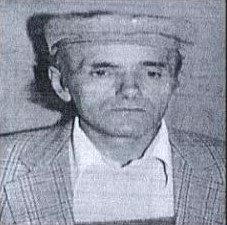
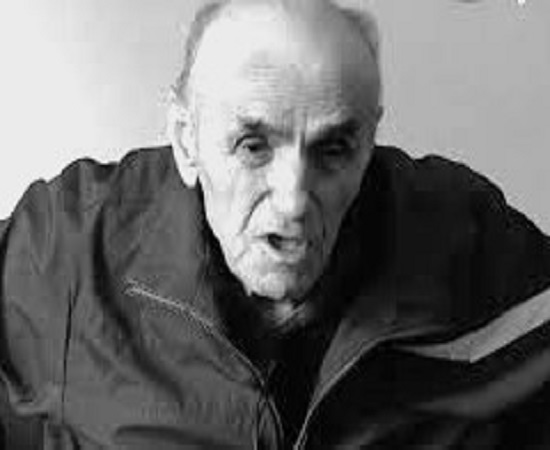
Memorie.al / Urim Elezi, born on 18.10.1941 in Floq, Korça, are among those convicted twice by the communist regime with many years of suffering. He was imprisoned on 26.10.1963 and was released from there on 10.2.1989. He entered at 22 years old and left at 48, even blinded. At the age of 18, he completed the Instruction school in Gjirokastër, where he was promoted to non-commissioned officer. During his first sentence, he was a soldier in Unit No. 9357 Gjirokastër. The first time he was accused based on Article 64, in combination with Articles 10 and 14 of the Penal Code. He was on military service, together with his friend Hekuran Shyti, in Gjirokastër. According to the court, he had proposed to Hekuran to escape because a good life was lived in capitalist countries and especially in the USA. Hekuran is released earlier from the army and during this time finds the other persons with whom they would carry out the escape. Hekuran sends a telegram to Urim in Gjirokastër, with the request to depart as his mother was ill.
Thus, Urim joins his friends, Hekuran Shyti, Durim Shyti, and Robert Morava. Poorly oriented, betrayed by a local resident, they were caught by border forces at the border post of Nikolica in the district of Korça. The Tirana Military Court, with decision no. 21, dated 27.2.1964, declared him guilty and sentenced him to 18 years of deprivation of liberty, confiscation of property, the removal of the right to vote for 4 years, and the loss of the rank of sergeant. It was upheld by decision no. 23, dated 31.3.1964, of the Military College of the Supreme Court. For the second time, he was arrested on 19.2.1980. He was accused based on Article 55/1 of the Penal Code with very aggravating articulations. The Fier Internal Affairs Branch, with letter no. 112, dated 15.1.1980, requested the Prosecution Directorate to approve the arrests for three citizens, among them the aforementioned Urim Elezi. He had been taken into active processing on 17.5.1979 because he was conducting propaganda among the convicts.
Reports about him were made by “The Penitent” and “The Technician.” He was said to have expressed: “The Sigurimi has painted its hands with the blood of this people. They have committed the most hideous crimes that can exist in history, the Sigurimi has treated the people and the individuals worse than the fascists and Nazis have treated them..! There is no one viler than the communists. I call communists all those who have a star on their forehead like a tomato, regardless of whether they believe in Marx’s beard or Stalin’s mustache…! The most monstrous crimes in Albania were committed when the communists came to power! Life for us is a prison.”
The Fier District Court, presided over by Sokrat Dautaj, with the participation of prosecutor Kiço Koçi, with decision no. 94, dated 18.4.1980, declared him guilty and sentenced him to 10 years of deprivation of liberty, as well as the removal of the right to vote for 5 years. Convinced of the futility of communist decisions, Urim Elezi did not appeal the decision. After having sent a letter to Enver Hoxha, where he described him as a “colorless monster, sick with persecution mania,” on 6.12.1981, he was beaten by the police of Burrel Prison until he went blind. He was released on 10.2.1989, from Unit no. 305 Përparim, of the Saranda district.
Continued from the previous issue
Re-sentencing in Department no. 309, Ballsh
The Arrest
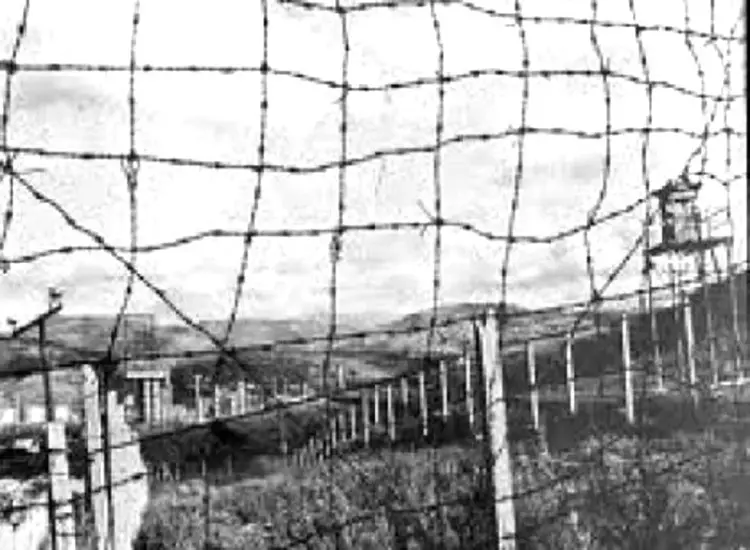
On February 16, 1980, I had a meeting with my brother, Bilbil, who had come for the umpteenth time to find out the date of my release after nearly 17 years in prison. Through the heavy barbed wire that denied us any possibility of physical contact, my brother insisted on knowing the truth about when I would be released, for he did not trust that system. Nearby stood the records clerk, Safet Liçka from Vlora. My brother pleaded with me to ask him, just to be sure that I would truly be released on the set date. He too assured us that I would be released on the day recorded in the file, providing my brother with the release date in writing on a small scrap of paper. I agreed with my brother that on March 3, 1980, he would stay overnight in Ballsh, so that on March 4, when I was to be released, he would be there to wait for me.
On February 19, 1980, while we were eating, a young policeman arrived – policeman Fadil…! He asked me to go unload coal, but with great agitation. I want to mention that to unload the coal truck, one had to pass through two perimeters; therefore, only those on the verge of release were assigned to unload it. Until I finished my meal, Fadil stood there, as if he were guarding me and waiting for me at the same time. I finished eating, walked through the first perimeter gate, and ten steps to the left was the lot where the trucks were. As soon as I arrived, I saw there were no trucks. Fadil seemed to “evaporate” at that moment; he was nowhere to be seen. He was gone, but there were six people: four policemen and two civilians holding handcuffs. One was the prison operative, Gjergji Stefa – a criminal and a man devoid of morality from Drenova, Korçë – and the other was Enriko Anastasi (I later learned in Interrogation who he was).
At this time, I said to Gjergji: “What are these handcuffs for?!” – “Patriot, turn back, do not do anything foolish,” Enriko Anastasi said to me. I froze and my eyes filled with tears. I immediately glared at Gjergji Stefa, who from the beginning approached me with an unprecedented nervousness and hatred. The other four policemen surrounded me; I remember the names of two of them: one was named Papi from Dibra, while the other was an Egyptian, Petrit from Tirana. Gjergji Stefa turned my hands and placed the handcuffs on me, tightening them hard. – “Don’t tighten them so much, Comrade Operative,” said Enriko Anastasi. – “I will tighten them hard today, Urim, as much as I want, and in ten years when you get out, I will be the Branch Chief in Korçë and I will arrest you again,” Gjergji Stefa told me. (A chill ran through my body).
They took me and put me in a seven-seater, a “Karpat” as they called it, which was very high. On the sides, there were some welded iron benches where those who would carry out the firing squad stood, while in the middle stood the prisoner destined for execution. It was built in such a way as to travel to wild natural locations where executions took place. I was accompanied by the four policemen. We traveled for a long time. Suddenly, a gray car appeared in front of us. Two policemen stepped out of it, holding another prisoner with bound hands by the arms. The seven-seater stopped and the policemen communicated with each other. At this moment, Enriko Anastasi stepped out of the other car and sat across from me. The “Karpat” set off for Ballsh, only to stop in Fier.
Along the way, I noticed that the gray car was escorting us, staying almost glued to the “Karpat.” We arrived in Fier, at the Internal Affairs Branch of Fier. There, the place was buzzing with policemen and civilians. Immediately after us, the gray car also stopped. The person brought by the gray car was Nikoll Përleci, from Mirdita, Rrëshen – a cooperative chairman, party secretary, member of the district plenum, etc. I recognized the area because our prison, which “they” called a “labor camp,” was less than 1 km away from Ballsh. Enriko Anastasi took me by the arm and led me inside the office, while someone else came to take Nikoll Përleci.
The Interrogation
In the interrogation office, I sat in a chair at a desk, and across from me sat Enriko Anastasi, who pulled a sheet of paper from a drawer. He took it and read it to me. The text was this: “Today, on February 16, 1980, the interrogation department of the Ministry of Internal Affairs reviewed the file of the defendant Urim Elezi, who has committed the crime of ‘agitation and propaganda,’ and the attempt to overthrow the power through terror in collaboration with 28 other revisionists…! Head of the investigative group, Llambi Gegeni; deputy head, Gravosh Andoni!”
I looked Enriko Anastasi in the eye and said: “Untie my hands so I can sign it.” – “Will you really sign it?” he asked me. “Yes,” I said. (He untied my hands, and as soon as I took the paper, I tore it into small pieces. At this moment, several policemen appeared at the office window). After Enriko Anastasi turned pale in the face, he said to me: “Patriot, what have you done? Don’t you see the courtyard is full of soldiers?” – “Listen, now that you have done this to me, I am not moving from here without settling the score with you,” I told him. For about two minutes, Enriko began pacing around the office; it was clear he had lost his composure. When he sat down, I told him: “Listen, write this: if you are to consider anyone an enemy, put me first!” My mind was on my mother, whom it seemed I would not meet again.
My eyes filled with tears when, in our last meeting, my mother told me that her soul would not leave her body without meeting me again. – “Get your act together, patriot, so you aren’t sentenced too much, but only six years.” Write: – “Regarding what I will depose here, do not ask for sources and do not ask a question twice! And you do not waste time with me, and I will not stay in agony over what you will do to me, for I expect everything! Torture me, do whatever you want. Do not waste time with the tortures you have done to me before, because you will gain nothing from those, but perform new ones on me.” He took his hands off the typewriter, groaning, and stood up. – “Patriot, please, enough now, sign this and go calm down in the dungeon.” Very agitated, I stretched out my hands and said: “No, I will not sign, you sit and write.”
“I call upon the Prime Minister, Mehmet Shehu, for my friends and his enemies have told me that he is a criminal, but he is brave, and bravery is the virtue of virtues.” – “Please, patriot, I cannot destroy the arrest warrant, but do not include that you said ‘criminal’.” (I insisted and he included it). – “Then how is it possible,” I continued, “that such a man is led by a colorless monster, a bisexual, and a man sick with persecution mania…?” – “Please Urim, I cannot write these things, do not torture yourself further. Please listen to me, for I am having a conversation with you that is outside my nature. Do not put me in such a position as to write what you are saying, to cause trouble for you and to violate the Party line.”
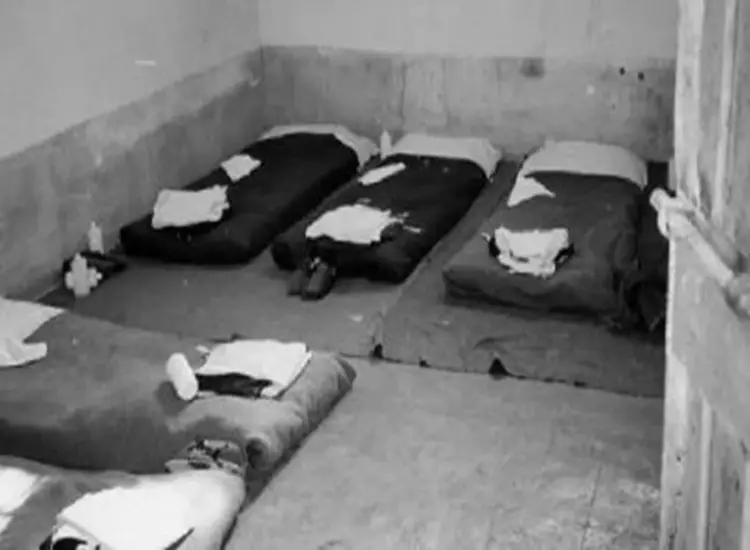
I signed; he took me by the arm, untied without handcuffs, and led me to the cell. I stayed in cell no. 15 for about a month. After a month, the Chief of Interrogations in Fier, Shkëlzen Bajraktari – a very orderly man who never insulted me – called me in. The interrogation began. After I told him the same things I had emphasized before to Enriko Anastasi, he said: “Urim, we see that you are hitting the hammer in only one place, but this is not good for you. Instead of being sentenced to six years, you will be sentenced to ten years. And if you continue further, you will receive a capital sentence.” The interrogation continued with the Chief of Interrogations Shkëlzen Bajraktari, the district prosecutor of Fier, Zija Shahini, and Rapi Mino, the General Prosecutor of the Republic. In the cell, an investigator they called Dule Dule put five ordinary criminals in with me to kill me. Out of these five, I will never forget two: Luan Lutaj from Hekal, a driver in the army; Kristaq Siku from Zvërnec, who worked with tractors. These two provoked me:
– “Hey, what is your opinion on Mehmet Shehu?” – “I sent him a telegram in 1969, with 25 words, where I told him what I am telling you now…! He is a criminal, but he is brave. He should be the head of state!” – “Careful Urim,” these two told me. – “They will provoke you, for that is the purpose they have set for us. Just don’t speak, because if these others lay a hand on you, we know what they will do to you.” – “I have heard and read about spies and perverse people…”! – “If you want to know the wickedness and the vilest people in the world, go to the prisoner’s rear lines.” (Charles Dickens in the book David Copperfield. If Uriah Heep were standing before Jonuz Troci from Dibra – the schemer, fabricator, and instigator of others – he would be an angel).
The Decision
These were the most disgusting words with which the second decision of the People’s Court of Fier District began. By now, I was accustomed to all the intrigues of the communist system. I expected everything! However, this time, I expected something unheard of, perhaps a death, but not one of the usual or heard-of ones! As for why I was sentenced… I do not want to prolong it further, but I am presenting the second decision to you, which is clearly visible. I will only tell you this: “Agitation and Propaganda in prison!” I was sentenced to 10 years of deprivation of liberty and the removal of electoral rights for 5 years. March 18, 1980, People’s Court of Fier District: Chairman of the Judicial Session: Sokrat Dautaj, Judge Nevrese Saliaj, and Assistant Judge Lulo Duraj.
I only want to mention a few moments from the Decision: “He remains faithful to his previous thoughts, for which he has stayed about 17 years in prison. He is cursed by the mothers, sisters, and the sons and daughters of the Party, who protect the untouchable borders. He does not give up his criminal activity. He has opposed the revolutionary measures for the education of other convicts, calling them charlatans, sycophants, and spies. It is impossible for the party to take him into its bosom. He spews venom against the people’s power and praises the capitalist system of the USA. Article 36 of the Penal Code of the People’s Republic of Albania sentences him to ten years of deprivation of liberty and the loss of electoral rights for five years.”
Burrel Again, the Second Confrontation
After keeping me for about a month in the Tirana prison, they took me to Burrel. There, from the very first days, they began to conduct numerous searches and various provocations, “those whom the party had inserted, both in and out of uniform.” I single out Ismail Shahaj, “Ismail the dog.” Room four, Burrel. It is not worth dwelling further, because by now you too are accustomed to the types of provocations and tortures that were “of the house.” When I returned to the room, out of the thirty people who were there, I only knew Adem Allçi, regardless of the fact that among them there were also many good people, such as: Eduart Vata – Shkodër, Gaspër Gaspri – Gurëz-Kurbin, Manol Qirici – Përmet. I remember these men very well, because we always cooked together.
After a few days, as they always did, the command moved us between rooms, thus dispersing the prisoners. Into our room one day, they brought an old prisoner I had known since Laç, in the years ’64-’65, Mersin Vlashi from Burrel. I remember that with Mersin they also brought Rrok Bituku, Bërdicë-Shkodër; Gjergj Peçi from Tirana, whom I knew in Ballsh and who was sentenced again in Fier to another 10 years of imprisonment; Demir Pojani, etc. After many provocations, on December 5, 1981, I wrote a letter to the cursed one, Enver Hoxha. The text was this: “Colorless monster, bisexual sick with persecution mania”…! I read this to Mersin Vlashi and Rrok Bituku. Rrok Bituku told me that he too would write a letter to Ramiz Alia, because he was very fed up with the provocations.
Rrok wanted me to “embroider” (compose) the text for him. He told me a story (an event involving a horse, a bride, and a calf, which I cannot repeat). This story would be the theme of the letter. I composed the content of the letter and gave it to Rrok. At this moment, Mersin Vlashi asked me for a pair of wool socks and showed me a poem he had written for the cursed one. With that poem, Mersin was as good as dead. He had served more than 20 years in prison and had another 75 years to go. At 16:00, the three of us put the letters in the mail. After the Roll Call was done at 7 in the morning, at 8 o’clock the cell door opened and the policemen entered: Xhemal Varani, Met Varani, Mustafa Lika, Ramazan Lika, Agim Kërtuka, and Abaz….!
They asked for Mersin Vlashi first. Mersin raised his hand and told them: “I know you are going to kill me, but you, Xhemal and you, Met, do not dare to do anything, for we are neighbor to neighbor in the village and you will have to deal with my people.” Before he could finish his words, they lunged at him. Two of the policemen removed his pants and began to strike him. Mersin’s voice could be heard: “Strike, you thugs of Enver, strike!” (They dragged him down the corridor). “Rrok Bituku!” they called. Before he could exit the door, one of the policemen grabbed Rrok by the scruff of the neck and slammed him to the ground. They began to beat him…!
My Blinding…!
After 4-5 minutes, the door opened and Mustafa Lika entered. – “Urim Elezi, come out quickly” – he said. Across from me was Thoma Bejo. I lost it completely. – “Get your act together, Urim, what have you done!” – Thomai said to me and put one of his coats on me, so that I wouldn’t feel too much pain when they struck me. I went out into the corridor, but I saw neither Mersin nor Rrok Bituku. Mustafa Lika opened the iron door and took a key for himself. I went out into the courtyard and went to the other iron door. There, in the room like a bunker, where you could scream as much as you wanted and your voice would not go outside, I entered along with Mustafa Lika and Agim Kërtuka. Inside, Xhemal Varani, Met Varani, Ramazan Lika, Ismail the dog, Abaz… and another called Velo were waiting for us…! Undress and throw your clothes there: said Mustafa Lika, Agim Kërtuka, and Ismail the dog.
(I took off my clothes and was standing in my underwear). – “Take off all your clothes, quickly,” Ismail the dog and Mustafa Lika shouted at me. At this moment, policeman Nikollë Skana arrived. As soon as I turned my eyes to see who had arrived, all the policemen lunged at me and with wood and rubber batons; they struck me so hard that I lost consciousness. I woke up and saw that they were kicking me, forcing me to stand up. I stood up and Xhemal Varani, who was apparently instructed, asked me:
– “With whom did you write the letter?”
– “I wrote it myself,” I replied.
– “Did you read it in the room?”
(I didn’t know what answer to give, because I would implicate others). – “Speak,” said Agim Kërtuka, insulting me and measuring his rubber baton to strike me. Ramazan Lika struck me and I caught him with my left hand on his right wrist. Immediately, Ramazan Lika ordered me to let go. They all rushed in and began to strike me continuously on the head. By the Great God, my head was cracking and my eyes were seeing sparks. In front of me, Agim Kërtuka had opened his arm to strike me again with wood. Met Varani caught his hand, while the others continued to hit me with kicks and punches.
It seemed to me for a moment as if I fell down into a gallery chute and was trying to hold onto bodies, but in reality, there was also wet blackness. The mud could not hold me and I was flying downwards. I screamed with all my soul; “Help!” I did not understand what happened next…! After several months, Dhori Gërnjoti told me that Agim Kërtuka and Ramazan Lika both struck me with rubber batons, wood, and chains on the head. On December 8, 1981, at 9:00: I opened my eyes, everything was darkness! I could not see from my eyes, I had been blinded! / Memorie.al