Memorie.al / When the Bushatllis needed to fully subjugate the Pashalik of Shkodër, in order to later extend their power throughout the North-Western Balkans; they had to clash with one of Shkodër’s most important families. Known as the Gjylbegajs or Gramshejs, they were defeated by Mehmet Bushatlliu and were forced to leave Shkodër, until the great pashalik collapsed and they would quickly return to become one of Shkodër’s most prominent families, giving Albania a series of military commanders and political leaders.
Early History
The Gjylbegramshej family is among the few feudal families in Shkodër whose descendants continue to live in this city, although many are scattered throughout Albania or the world. This family, over the course of time, was divided into two parts, Gjylbegaj and Gramshej, surnames that members of this family used separately in two eras.
Thus, throughout the Turkish occupation, they used the surname Gramshej, both in official acts and in commercial correspondence, while after Independence, a part of them used the surname Gjylbegaj. Referring to historiography and cadastral documents, this feudal family extended to Zadrima of Lezhë, Mirdita, and a part of Dukagjin, specifically the Korthpulë area, while they also have ties with the Begollaj of Pejë.
Some studies by authors like Stavri Naçi and Dom Ndoc Nikaj show that the armies of feudal lords like Tahir and Musa Begu (the ancestors of the Gjylbegajs) fought with the army of Mehmet Pasha Bushatlliu in 1770, a war they lost and in which Hysen Begu was killed and his nephew, Jusuf Begu, was hanged. Over the years, the family settled in the Qaf-Hardhi neighborhood of the city of Shkodër, precisely after the fall of the Pashalik of Shkodër.
The Return to Shkodër
It is said that the first scion of the Gjylbegaj family who came and settled in Shkodër after the fall of the Bushatllis was young and entered the city secretly. In the neighborhood where they settled, the Gjylbegajs built some charitable works that were known as toponyms until recently: “Gjylbegaj’s Well” (Pusi i Gjylbegajve) and “Gjylbegaj’s Bridge” (Ura e Gjylbegajve). In this neighborhood, they had a small dwelling and engaged in salt collection, trading it, and later began collecting wool for export.
The sons of Gjyl Begu moved and bought a house at Çinari i Hoxhë Dheut, where their descendants still live today. The Gjylbegajs had a branch that lived in Bushat, but after the conflict with the Bushatllis, they moved, leaving as a trace in that area a discovery a few decades ago, which according to the toponym was called “Gjylbegaj’s Bath” (Banjoja e Gjylbegajve) and was connected to “Çelepi’s Spring” (Kroni i Çelepisë), from where it was supplied with water.
The Uprisings
Their settlement in Shkodër belongs to the end of the 18th century. Scions of this family were active in the political movements and armed uprisings of the time, leaving their mark on the history of the ancient city of Shkodër. Sulejman Gjylbegu (Gramshi) participated in the Hamz Kazazi uprising in 1835 against Hafiz Pasha, where he was wounded. It is said that he, on horseback, went out and gathered people in the Market (Pazar), convincing them to close their shops and take up arms to fight and not accept the sending of volunteers from Shkodër to fight alongside Turkey.
His son, Hysen Begu, participated in the Millet War in 1878, along with his uncle, Molla Begu, and his cousin, Selah Begu. But despite being a time of wars, the Gjylbegu family was mainly engaged in trade, some in collecting wool and others in collecting hides for export. Another part of them dealt with the trade of manufactured goods (fabrics), in addition to the lands they owned. Hysen Begu and his heirs were considered the first large landowners (latifondistët) of the Shkodër district until before 1944.
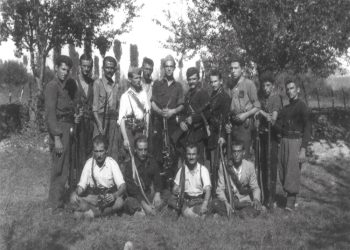
The Gjylbegajs took an active part in the National Liberation War as well
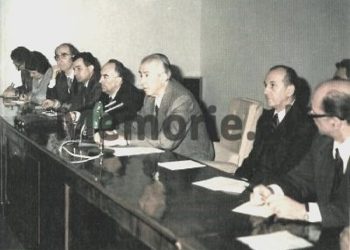
Beqir Gjylbegaj was known because he was in the gendarmerie of the Congress of Lushnjë; it is even said that under his command, the control of the government that emerged from this congress extended to Pogradec. Beqir Gjylbegu supported Fan Noli in the “June Revolution” of 1924, and was later interned by Ahmet Zogu in Krajë. During World War II, he was a sub-prefect in Ulqin for a short time, and then joined the National Liberation Movement.
During World War II, this family had two “Martyrs of the Nation” (Dëshmorë të atdheut): Eljaz Gjylbegu, killed in Prishtina (brother of Beqir Gjylbegu), and Naim Gjylbegu, “Hero of the People,” one of the 5 Heroes of Vigu (nephew of Beqir Gjylbegu). Beqir Gjylbegaj, in the 1950s, was the Chairman of the Executive Committee of Sarandë, as well as a deputy in the People’s Assembly until 1972.
The Man who Declared Independence Twice in Shkodër
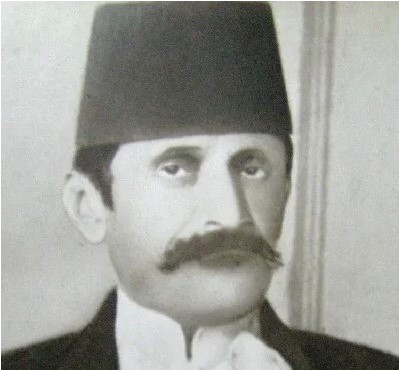
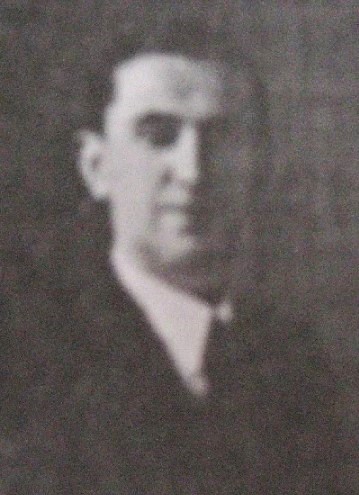
The history of a city like Shkodër, filled with revolts and uprisings, sieges and re-sieges, has given many patriots the opportunity to enter the pages of Albanian history of independence struggles. One of the most important is the man who raised the flag of independence in 1913, a year after Albania had declared its self-governance, while Shkodër was treacherously handed over to the Montenegrins. The man who gave Shkodër its “independence” in 1913 was Muharrem Gjylbegu, the Mayor of the capital of northern Albania.
The First Independence
In 1910, he entered the political scene as the Mayor of Shkodër, leaving a good name among all strata of the population. Before being elected mayor, he was a cloth merchant who traveled the route of Istanbul, Thessaloniki, and Monastir, an activity he later left to his sons and his brother. He remained in office until 1916 and had the fortune to raise the flag of independence with his own hand for the first time in the city of Shkodër, on November 28, 1913, on the balcony of the City Hall building.
Since Shkodër was besieged in 1912, on the anniversary of the declaration of independence, Muharrem Gjylbegu requested the international government administering the city to raise the flag of independence in Shkodër, on the balcony of the Municipality building. This was met with a massive demonstration by the people of Shkodër, who had not yet been able to see the double-headed eagle waving in the city.
The Second Independence
After it was determined that Shkodër would remain within the borders of Albania, the delineation of which had given the majority of the lake to the Montenegrins, Muharrem Gjylbegu, who continued to be the Mayor of the city and who had helped it as much as he could during the siege, decided to raise the flag in the ancient Rozafat Castle. The raising of the Albanian flag by Muharrem Gjylbegu at Rozafa Castle in March 1914 was greeted with 101 cannon shots fired from the Tepë hills.
Both of these small but significant “independences” for the political life of Shkodër were reflected in the press and chronicles of the time. Muharrem Gjylbegu was re-elected mayor and opened the first official public school. It was furnished with all teaching aids by the municipality and was the origin of the national school in Shkodër.
The Siege
Muharrem Gjylbegu knew how to serve the city during its most difficult and dangerous moments, especially in 1912, when Shkodër was under the attack of Serbian-Montenegrin shells. He tried to secure bread for the people of the besieged city and went to the villages himself to secure grain for the city, even though he risked falling captive into the hands of the enemy. Muharrem Gjylbegu, at the head of the Shkodër Municipality, had earned the honor and respect of the representatives of the Great Powers in that city and of the Turkish commander, Hasan Riza Pasha. Citizens of the three religious faiths had sympathy for the Mayor.
During the Austrian occupation of Shkodër in 1916, he was overthrown because he refused to act militarily against the interests of the people. In the demonstration of the people of Shkodër and its surroundings against the measures taken by the Austrian command of Shkodër, Muharrem Gjylbegu was part of the organizing group, was arrested, and was sentenced to one year in prison. He died in 1943, escorted by many citizens of Shkodër, while his death and activity in favor of equality and the freedom of the homeland were reflected in the press of the time.
The Man with the Plis that Read “I am Albanian”
Another honored figure from the Gjylbegu family is Hamit Gjylbegu, a Captain in the Albanian army, a graduate of the Military Academy of Istanbul, who was dedicated to the national cause since he was a student. He was born in 1886, and the Balkan War found him serving in the Ioannina army.
When he was a student in Istanbul and came to Shkodër for summer holidays, during his travels to and from, he wore a white qeleshe (traditional Albanian cap) on his head, where it was written: “I am Albanian.” Being a very capable officer, the Turks offered him a position there in the Royal Guard, but he refused and returned to Albania. Hamiti served wherever he was needed, and in the Koplik War in 1920, he distinguished himself for bravery and as a military strategist. He later contributed to the Kosovo Committee and supported Fan Noli’s government.
Zogu’s government placed him on early retirement, as he was a well-known anti-Zogist. With an academic culture, he dedicated himself to literary creation, publishing several brochures with lyrical and philosophical verses, poems for children, folklore, and translations, as he mastered several foreign languages. According to those who knew him, after the liberation in 1944, he continued to remain marginalized, and even never voted.
His son, Virtyti, died in Maliq, Korçë, where he was serving his sentence as a political prisoner under the ruling communist regime. Other capable military men also emerged from the Gjylbegaj family, even without attending an academy, such as Ismail Gjylbegu, sentenced to death and executed by hanging after being accused of participating in the “Vlora Movement” in 1932, as well as Xhevdet, Jonuz, Beqir, and Isuf Gjylbegaj.
The Gjylbegu Who Donated His Library to an Italian University
An honored figure of this family, one of the most well-known in Shkodër, is the distinguished teacher Ragip Gjylbegaj. Until 1944, he was a primary school teacher. After the liberation, he served as an inspector and school director in the city of Shkodër, distinguished both for his teaching skills and his organizational abilities as an extracurricular employee. In the “Parruca” school, he created the school band, which was equipped with the corresponding uniform and managed to give concerts and artistic programs outside the city, and even abroad.
He had a passion for books, and his personal library contained complete collections of Albanian newspapers and periodicals. In 1995, his very rich library became the property of the University of Cosenza in Italy and is the basis of the Albanology sector of this university. Other members of this family have contributed to the social life of the city and the country, such as Skënder Gjylbegu, a teacher, or the obstetrician and pediatrician doctors, Ilir and Xhavit Gjylbegu, who are well-known not only in Shkodër but also in Tirana. / Memorie.al