

By DASHNOR KALOÇI
Memorie.al/ Although Enver Hoxha’s communist regime had begun its war and attacks on religious institutions and various clerics of the three faiths since its rise to power in December 1944, when it started executions, imprisonments, or mass internments of hundreds and hundreds of clerics, the banning of religion and the destruction of various cult objects and religious institutions was only undertaken in the years 1965-1967. Initially, after Enver Hoxha’s speech on February 6, 1967 (known from propaganda and official historiography before the ’90s as the “programmatic speech of February 6”), where the essence of his speech was the fight against religious beliefs, the very next day, in the newspaper “Zëri i Popullit” (Voice of the People), an article was published by the youth organization of the “Naim Frashëri” school in the city of Durrës. They not only expressed solidarity “with the words of comrade Enver,” but also called upon all other youth organizations to follow their revolutionary initiative for the prohibition of religion and the destruction of cult objects. Legally, this happened on November 13, 1967, when by decree of the Presidium of the People’s Assembly, all decrees approving religious activity in the country were revoked. Thus, after sanctioning the ban on religion with a special law, official Tirana declared Albania the only atheist state in the world.
Against that absurd and unprecedented decision undertaken at the time by the high communist leadership of the Albanian Party of Labor (PPSH) and personally by Enver Hoxha – a decision which, as we emphasized above, was initially camouflaged by attributing it to an initiative and request from some school youth organizations of the high schools in Durrës and Tirana – there were considerable objections and harsh reactions, both from specific individuals, believers, even entire villages, as well as from clerics of all three religions practicing their activity throughout the country.
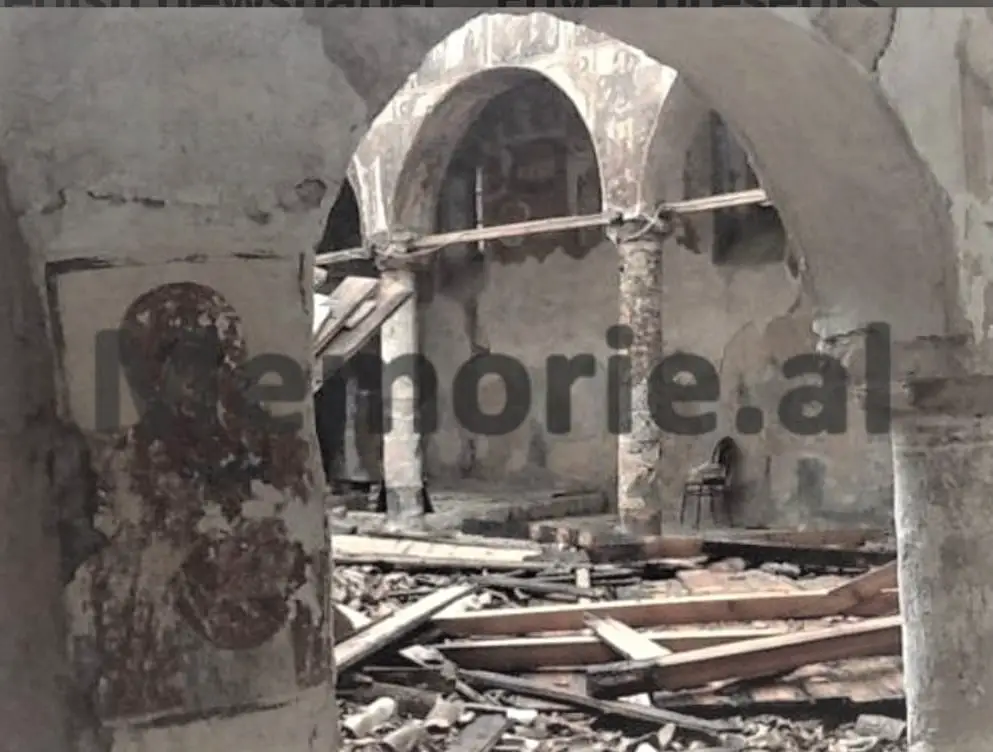
But the reactions and oppositions of clerics and various believers became even more inflamed when the directive of the PPSH’s high leadership, regarding the legal prohibition of religion and the destruction of cult objects and religious institutions, was being implemented by high party and state officials in various districts of the country. Camouflaging themselves under the slogan “Let us declare war on backward customs,” they immediately began attacks on churches, mosques, shrines, monasteries, and other cult objects, demolishing, destroying, and razing most of them, later converting them into cultural centers, stables, warehouses, grain depots, etc.
At that time, when the attack on religious faiths and the destruction of various cult objects had just begun, some of the high clerics as well as numerous believers from all over the country thought that this was indeed an initiative of the school youth organizations. And, to prevent what was happening, they began sending letters addressed to the First Secretary of the Central Committee of the PPSH, Enver Hoxha, denouncing the actions undertaken against religious objects by party and state officials in the districts. With those letters and complaints, they hoped that the Party’s main leader would intervene with his absolute authority and stop those actions that were being taken.
In fact, the closure of some cult objects, such as churches and mosques, had begun as early as 1965-’66, e.g., in the city of Shkodër, in June 1966, when the Catholic church (“The Shrine of Our Lady of Good Counsel”) near Rozafa Castle was closed as a religious facility, under the pretext that it was near a military unit and could no longer fulfill its function. Although there were many reactions to this action, with letters addressed to the Central Committee of the PPSH and its main leader, Enver Hoxha, even from the Archbishop of Shkodër himself, Monsignor Ernest Çoba, nothing stopped official Tirana in its initiative. The Shkodër church was the prologue to an irrevocable war against the three religious faiths and all their cult objects.
A year earlier, such a letter had been sent to Enver Hoxha by a group of believers from the Elbasan district, who, among other things, wrote: “This is the second letter we are sending you, Comrade Enver, and for a while the workers stopped demolishing the Ballje mosque, but today, on 27.X.1965, they started demolishing the mosque. We believers are grieved and request that the said mosque not be demolished and remain in place. We know that religion is free and we enjoy all religious rights, and therefore we request that the Ballje mosque, which is historical – but if we don’t accept it as historical, let it be beautified and repaired – but just let the mosque remain in place and not be demolished. From the faithful, from the Xhemiat and believers of the city of Elbasan. Only your order stops every action. We remain with high hope. On 27.X.1965”.
After receiving no response from the letter sent to Enver Hoxha, they sent him another letter, but this time somewhat threatening, where among other things they wrote: “We request that the mosque not be demolished while it is not too late, and that the Mufti be completely removed from our religion. If the demolition is not stopped and the mosque repaired, on Tuesday, the 2nd, some of us believers will come to meet with you to get clarification. With respect, the Xhemiat and believers of the city and villages of Elbasan. With faith and full hope. On 30.X.’65”.
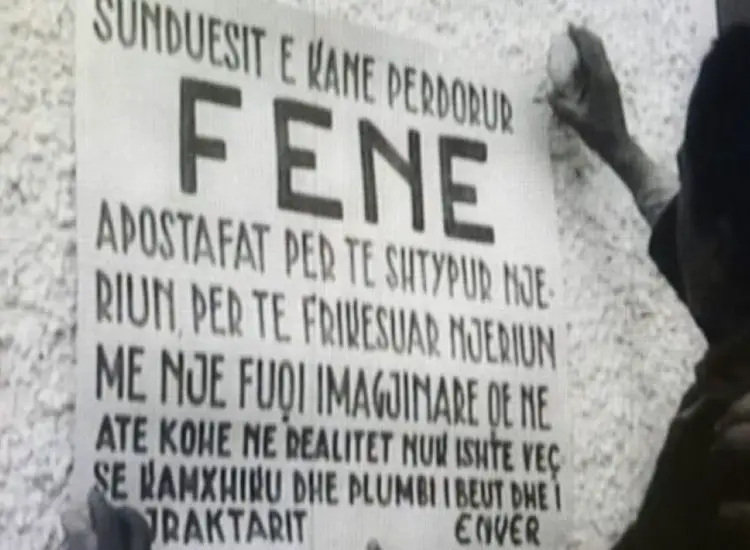
In those attacks on religious institutions, initially they sent school students, military units, and fanatical activists of youth organizations, who acted according to the directives and instructions they received from the party committees of the districts. Initially, that task was entrusted to the youth organization of the “Naim Frashëri” general high school in the city of Durrës, which, under the patronage and instructions of the District Party Committee led by first secretary Rita Marko, became the “standard-bearers of that initiative” undertaken just months after the creation of a special sector within the Institute of Marxist-Leninist Studies (headed by Nexhmije Hoxha), which would deal with the publication of documents and materials of the Albanian Party of Labor. Which in fact meant: “The publication of the works of comrade Enver?” So, Albanians now had to believe in only one God, and that was Enver Hoxha.
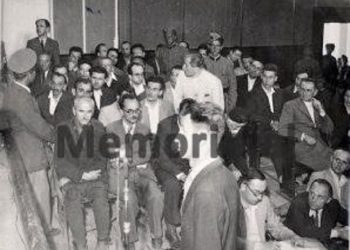
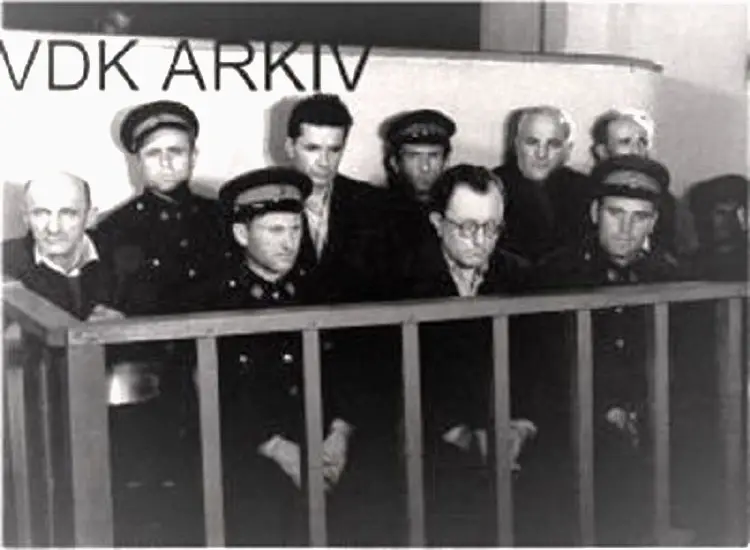
At that time when the “Naim Frashëri” high school was “seething” from the undertaken initiative to demolish churches, mosques, monasteries, tekkes, and other cult objects, 52-year-old Ahmet Xhemal Mezini (originally from Peqin and residing in Durrës), a devout believer, after writing several leaflets (tracts) with “counter-revolutionary content,” at the end of December 1967 (on the occasion of Christmas), threw them into the premises of that high school. But unfortunately, he was discovered by the State Security forces, which arrested him, and the trial held precisely in the premises of the “Naim Frashëri” school sentenced him to 10 years of political prison.
Ahmet Mezini, after serving his sentence, returned to the city of Durrës, but he met a sad fate, as he was forced to commit suicide. This fact is also revealed by a secret State Security document dated June 8, 1978, which among other things states: “On 7.6.1978, Ahmet Xhemal Mezini, aged 63, born in Peqin and residing in Durrës, previously convicted for hostile activity, who was released from prison on 20.5.1978, was found hanged in his residence. He left a letter stating: ‘Testament, I, Ahmet Mezini, residing in Durrës, today end my life, without any cause, without condemning anyone else, without any complaint against any other person. All the belongings here belong to Shaban Mezini. They should be given to him.’ Investigations reveal that after his release from prison, his wife and children did not accept him home, while one of his brothers found him a rented room, where he was found hanged. The case is under investigation.”
But the reactions against the communist regime in power and the high leadership of the PPSH headed by Enver Hoxha regarding the decision taken concerning the prohibition of religious beliefs and the destruction of cult objects were not only through letters; in many cases, they also turned physical, where many party and youth organizations in various districts of the country, from South to North, in their action clashed and faced strong resistance and opposition from various believers, even entire villages, physically fighting with them. As, for example, in the Saranda district, an event about which Enver Hoxha himself was forced to speak, in his letter sent to all district party committees on February 27, 1967, where among other things he wrote:
“Today I am informed that in Finiq of Saranda, the party secretary and the cooperative chairman themselves went to remove the icons from the church, and the women opposed them and hit them; it started with 2-3 women, but in the end, it became 40 women. How unfortunate, and again the secretary of the district party committee who informs us, tells us as if nothing is wrong that this is the work of some provocateur. There is certainly a provocateur, but 40 women are not provocateurs, and when a provocateur manages to turn the village around, this means that not only is the matter of faith a deep thing, but the Party does not control the situation there. Therefore, absolutely, new instructions must be given, comrades must be sent down, to clarify things for them, not to fall into conflicts with the people, to convince them, to work with them patiently, patiently, because this work is not a matter of days or months, but years and years.”
As for the above, we have now published all these events from time to time in full on Memorie.al, with the relevant archival documents, while in this article we are publishing a completely unknown event of May 1967, which at the time was even attempted to be kept secret by the relevant authorities, because it was extremely serious and revealing for the communist regime in power and also for the initiative undertaken by the high leadership of the PPSH headed by Enver Hoxha, for the legal prohibition of religion and the destruction of cult objects. As we will also see in the document in question (the incident that occurred in Shupal of Tirana), the communist regime in power “hid” behind the organization of the Union of Albanian Working Youth, attributing that initiative to them. For more details about this, etc., the document in question, extracted from the Archive of the Ministry of Internal Affairs, published with the relevant facsimile by Memorie.al, and informs us.
THE ARCHIVAL DOCUMENT WITH THE TOP SECRET OPERATIONAL COMMUNIQUE OF THE MINISTRY OF INTERNAL AFFAIRS, REGARDING THE INCIDENT IN SHUPAL OF THE TIRANA HIGHLANDS, IN MAY 1967
PEOPLE’S REPUBLIC OF ALBANIA Top Secret
MINISTRY OF INTERNAL AFFAIRS Copy No. 1
“GENERAL DIRECTORATE” Tirana, on 5.VI.1967
OPERATIONAL COMMUNIQUE NO. 128
TIRANA
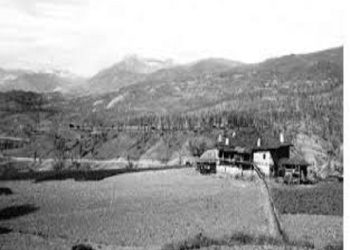
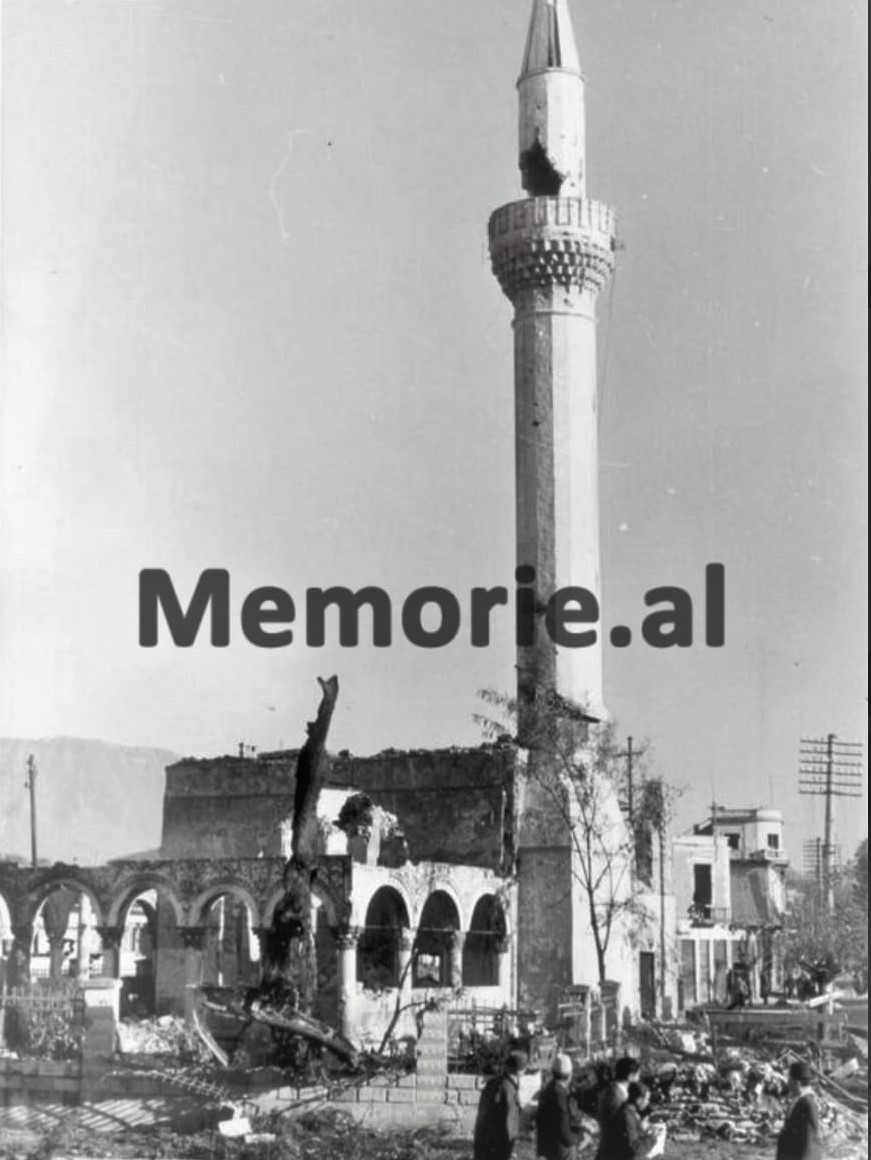
On 17.V.1967, at 16:00, youth activists from Tirana who were working as volunteers in the village of Bulcesh in the Shupal locality, at the time when, based on the joint decision of the party and youth organization of the village, they were demolishing the minaret of the mosque, were attacked by a number of villagers, men and women, who were holding axes and shovels.
After the young people stopped the work of demolishing the minaret, the villager Adem Basha gravely insulted the activists and attempted to strike the secretary of the basic party organization, Astrit Sula, who came from Tirana to the village for three years, with an axe on the head, but the crime was avoided through the intervention of another villager.
Five other villagers attacked to beat the teacher Halil Skënderaj, and one of them, Skënder Bashaj, slapped the teacher in the face with his palm. A little later, the villagers, incited by Adem Basha, attacked the young activists who were resting at the school, who, upon seeing the villagers with axes and revolted, got scared and fled.
The villagers chased them running as far as the village of Zall-Mner, where Selim Gega from the village of Zall-Mner came forward and stopped the villagers of Bulcesh by custom, telling them that they were not at the border of their village, etc.; then Selimi condemned their bad deed, calmed the villagers down, and brought the young people back to the village, telling them that these are strangers and have nowhere to stay.
From the investigations, it appears that none of the party members and youth of the village took part. It is suspected that this may have been done intentionally and in an organized manner, because the secretary of the village youth organization, Demir Ahmeti, who was aware of the implementation of that decision, had left that day to visit friends in another village. Until now, no measures have been taken against the villagers who are the main instigators of this matter.
This event has had a negative impact in the Shupal area. On 31.V.1967, the Tirana Directorate notified the District Party Committee and the 1st Section of the 1st Directorate with a report. However, they did not notify the General Directorate as an extraordinary event, in accordance with the order on information. This was learned by chance by our side in a conversation with a citizen, and when the Tirana Directorate was asked, it resulted as above. / Memorie.al
CHAIRMAN OF THE GENERAL DIRECTORATE
GANI GOXHI