
By Dr. Genti Kruja
Part One
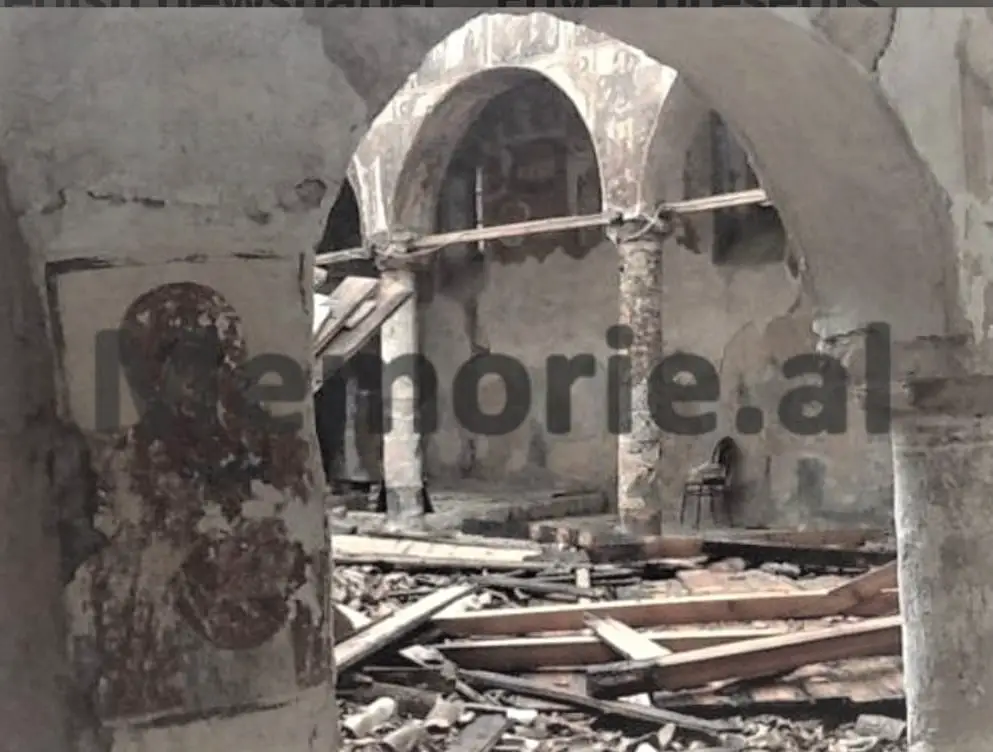
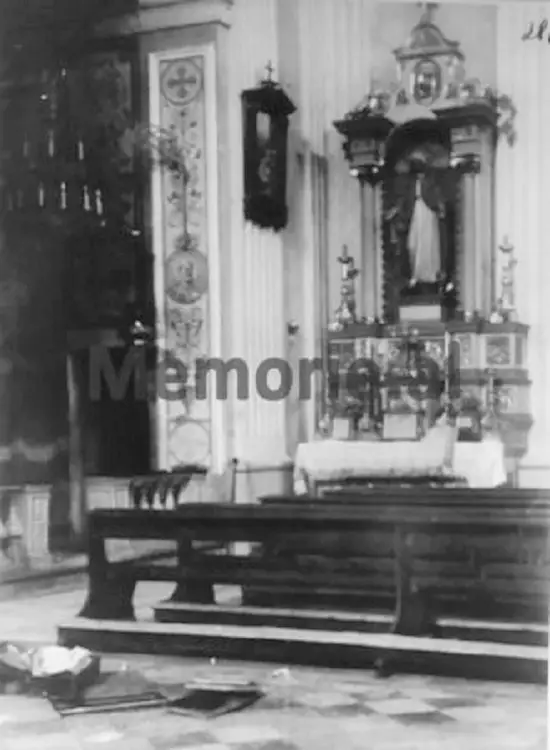
Memorie.al / February 6th marked approximately 60 years since Enver Hoxha’s speech that raised the curtain on atheism in Albania. In this context, the magazine “Zani i Naltë” has published an order by Enver Hoxha (likely signed, but not written by him) and an informative report from August of that same year, discussing the efforts made against religion, the results, and the problems. It seems unbelievable how the regime managed to liquidate so simply a millennia-old presence, represented at that time by 2,169 cult objects, of which 740 were mosques, 608 Orthodox churches and monasteries, 157 Catholic, and 530 tekes, shrines (tyrbe), etc. Resistance was minimal, while religion seems to have been left in the lurch even by the flock that had found a new roof. Below are the documents of historical interest:
The Order of Enver Hoxha
“Considering that recently the struggle against religion, prejudices, and religious customs has intensified in many districts, and in order for this struggle to be carried out as correctly as possible, without errors and with greater success, it was deemed necessary to provide the following orientations:
Religion is the opium of the people. We must do everything possible to make every person understand this great truth, including those (and these are not few) who are poisoned and whom we must de-poison. This is not an easy task, but it is not impossible.
We must not leave this great struggle to spontaneity or be satisfied by saying that the younger generations will abandon this opium, or that religion and its practices only maintain their existence among old men and women. This is not accurate; these can only lose their virulence if we fight and expose them, whereas they are revived, propagated, and expanded if we underestimate them.
Certainly, religion deals with worldviews and conscience, but over centuries, religion and clerics have not only turned these into philosophical dogmas, but to root this animist dogma into the conscience of the people, they have accompanied it with concrete disciplines, special organizations, and linked it to the events of human life. Religion has tried to link everything to the occurrences of a person’s life, making every thought and action of theirs connected to religion, to idealistic and mystic belief, etc.
Our struggle against religion must be directed both against the religious dogma itself – against its philosophical, idealistic, and mystical views – as well as against the religious disciplines that have entered into the daily customs of those who believe, and even those who do not believe but occasionally practice them without knowing or taking care. Our people, in general, are not religious in the sense that many other peoples are. This is true, but nevertheless, they still believe in something…!
We have left them no school, not even a primary one, to produce new clerics or to give them a regular and interpreted education of their religious doctrine…! Thus, the clerics of every faith have been depleted and will be depleted even further as cadres. As for the printing of books and their dogmas, this died for them long ago…
Thus, we have destroyed the material and propagandistic base for the reproduction of religious books. We have also eliminated the possibility of producing cadres. Now the issue is to destroy their churches and mosques – the only primary means where clerics gather believers to keep the faith alive, even in decadent forms.
The destruction of churches, mosques, tekes, and monasteries, naturally, presents itself as more difficult, for the reason that one must not go into direct conflict with that part of the people that believes.
But many of them have been destroyed without provoking any reaction; others have been destroyed because they collapsed; some have been turned into warehouses or left without an imam or priest and practically do not function. In these forms we must continue as long as they do not function. In these forms we must continue until we level them from the face of our earth. We must take from religious institutions – wherever we have left anything – all the land, any olive trees, or other income that churches, mosques, etc., might still have.
It is interesting that in our countryside there is no resistance to these things. This is a result of the atheistic work the Party has done and continues to do, but also due to the absence of imams and priests in the villages and the lack of religious books. Generally, in the villages, the matter of religious belief is maintained in life customs, in their pragmatic interpretation, which is not to be underestimated or neglected, for it still harms us greatly in the development and progress of the country. To eliminate religious practices, we must fight them, especially with a revolutionary and patriotic spirit.
The struggle against religions, particularly in our country where it could not develop in sophisticated philosophical forms due to the lack of an educated and cultured clerical base, must be carried out persistently against customs, traditions, lifestyle, and the interpretation of phenomena. Through this path, clerics have been able for centuries to inject the poison of religion and mix this poison with the joys, sorrows, and daily manifestations of human life.
It is our duty, therefore, to study in detail where and how this poison manifests, in what forms, what shapes it has taken during development, what practices are implemented, how they are implemented, and how they are camouflaged.
We must analyze these from when the infant is born and baptized or circumcised, etc.; to when a person marries – an event linked to many customs into which church custom has penetrated like a worm inside a red apple. By knowing these, from here must begin the studied, systematic ideological, political, and organizational struggle – without ceasing, without ceasing.
The struggle with religion is quite complicated; therefore, whoever is not well-armed against it may not achieve the results we desire. We have all the possibilities, and our terrain is favorable to carry out this struggle successfully.
A historical weapon against religion and reactionary clerics is the fact that the Muslim religion was the ideology of the Turkish occupiers; the Orthodox religion was the ideology of the Greek chauvinists who occupied our country in the past; and the Catholic religion, centered in the Vatican, was the ideology of the Italian occupiers, of Austrian imperialism, and of Italian fascism.
The patriotic feelings of our people and their struggle to liberate themselves from the foreign yoke have, over the centuries, collided – if not directly – with the religious ideology of the occupiers and those reactionary clerics of every faith who served them. In this historical fact, we cannot fail to see one of the reasons why our people are not so fanatic or tied to religions, for these, in principle and in fact, have been in opposition to the idea of national liberation.
Keeping in mind all that we have said above, we as communists and atheists must also be realistic. Despite our organized propaganda against religion, rites, dogmas, religious institutions, and professional clerics, we must constantly keep in mind not to enter into open conflict with the people, because among the people there will also be honest individuals, tied to the Party and fervent patriots, who will maintain their beliefs in their conscience for a long time, perhaps until they die.
Work with them will be an effort of continuous persuasion and great patience, which we must not allow to become offensive. With these people, the Party must behave, so to speak, like a good doctor who makes every effort to heal the patient, to return them to the joys of life.
Vain religious beliefs will not be found only among clerics. These are the professional people who propagate them, who keep them alive, who engage in speculation and foul deceptions, but they also exist among the people. Therefore, without slowing down for a single moment the propaganda against religion, we must always keep in mind that we are dealing with the people. Rash, exultant actions must be avoided. For every action, the political terrain must be carefully prepared.
To seize mosques and churches with a campaign and an order is an easy task, but one must also think about the consequences among the people. Bad consequences are avoided by carefully preparing the people so that they understand this vanity, eliminate religion from life customs, and abandon its practices with conviction. Then, the mosque or church, the priest or imam, has not the slightest importance for them. This is a harder task, but a surer one.
Many churches and mosques are being abandoned and falling into ruin. Let no construction be done on them. Some may be converted into museum works, if they are such; some that the people want can become warehouses – do not hesitate to take them, and so on – not through violence or fanfare, and without obtaining the approval of the people, who must be prepared spiritually and politically…!”/Memorie.al
FIRST SECRETARY OF THE CENTRAL COMMITTEE
OF THE PARTY OF LABOR OF ALBANIA
ENVER HOXHA