

By NAUM PRIFTI
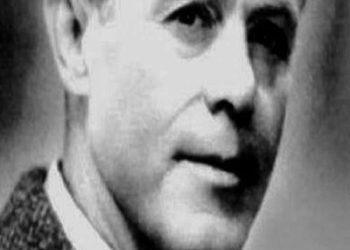
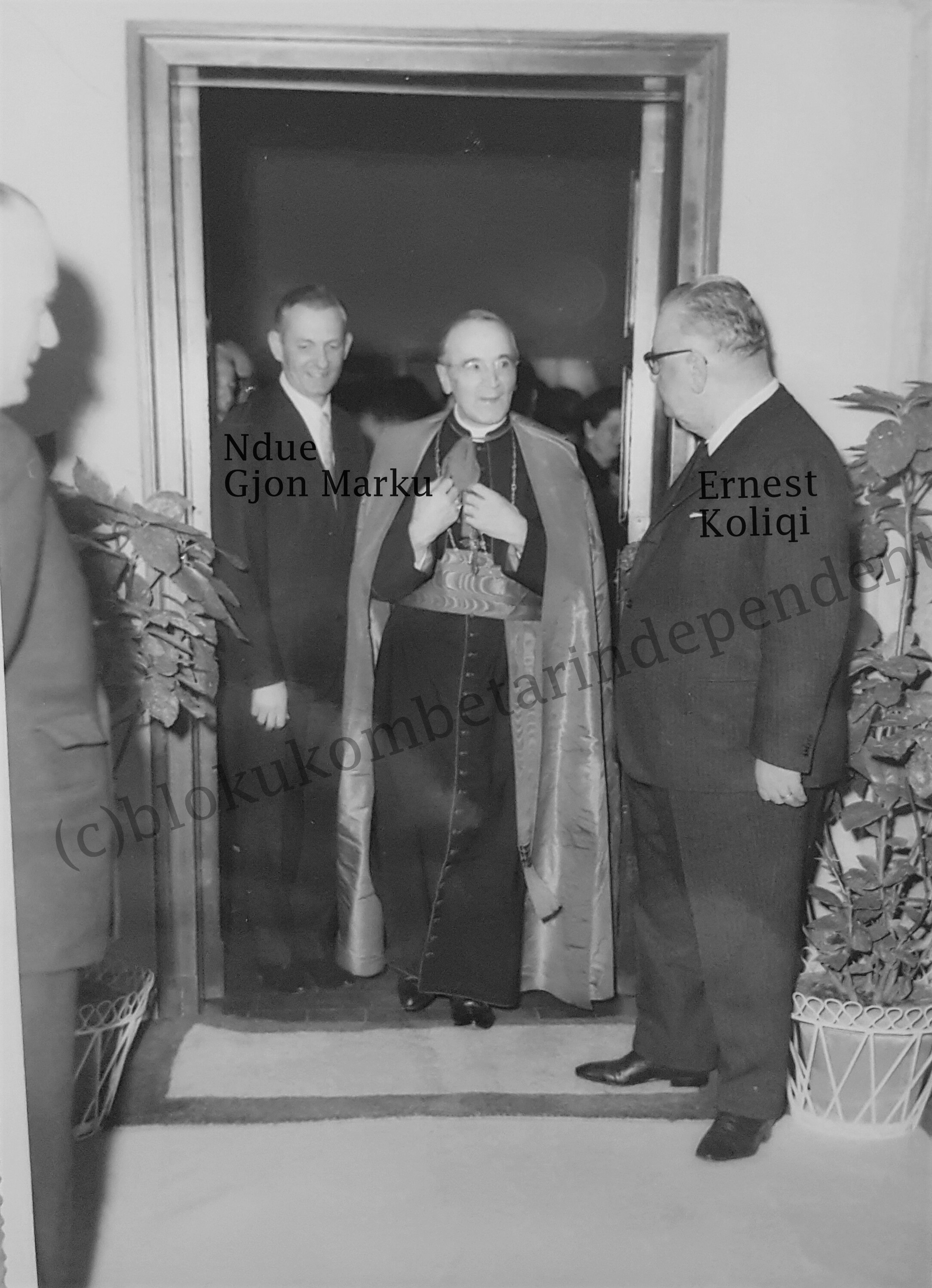
Memorie.al / Koliqi’s views on the Albanian diaspora in Italy and America and their efforts during the Cold War years 1945-1960. The novel was published under a pseudonym in exile in 1960. Ernest Koliqi began his literary journey with poetic sketches (“The Mirror of Narcissus”), collections of short stories (“Flag Merchant” and “The Shadow of the Mountains”), poetry, criticism, drama (“Roots Move”), studies, translations, and concluded it with the novel “The Taste of Leavened Bread” (Shija e bukës së mbrume). On the cover of the first edition, Rome, 1960, the name “Hilush Vilza” appears a pseudonym of Ernest Koliqi, which he often used in the editorials of the magazine “Shejzat.” The novel was re-published by “Camaj-Pipa” Publications in Shkodër in 1997, which gave the Albanian public the opportunity to become acquainted with it.
We do not know of the author having written any other novel, and the fact that he published it under a pseudonym leads us to believe that he was aware that the work would provoke discussion and criticism for the political views advanced for the time, as indeed happened when it was published in parts in the magazine “Shejzat.” Rarely are literary works accompanied by a preface by the author. This happens only in cases where they deem it necessary to provide explanations to the reader to clarify the message they convey and to preempt unfounded remarks and interpretations.
Ernest Koliqi’s presentation (preface), marked with the initials H.V. (Hilush Vilza), is notable for its modesty, self-critical sense, and sincerity. He admits that the novel has some shortcomings or flaws, noting the limited space occupied by the fighter Gjin Bardhok Frisku and the intellectual Foto Damushi, as well as the lack of broad and deep knowledge of the life of Albanian immigrants in America.
The author visited America several times, invited by his well-wishers and friends, and he poured some of those impressions, such as the descriptions of New York and the city of Charleston in South Carolina, a rare oasis of American natural beauty, into the novel. Koliqi, a master of Albanian short stories, influenced the literary path of young prose writers, who regarded him with respect as their teacher, just as I did. I have read and re-read his stories with pleasure, where the Albanian world is so beautifully painted.
The novel “The Taste of Leavened Bread” explores the spiritual drama of a young Albanian man, thrown out of his homeland by the consequences of the Second World War. It is the first serious literary work that reflects the situation of the political diaspora in America and Italy, their concerns and efforts during the Cold War years 1945-1960 to help the homeland be liberated from the communist yoke.
Koliqi wrote the novel in the late 1950s, setting forth his views on the future of Albania, which today is worth seeing as his political testament. One feels the resentment towards the fragmented diaspora, divided into micro-parties, wasting time and energy in futile discussions, without clear objectives for concrete activity, at a time when the homeland suffers under the Slavic-communist regime.
The sharp analyses of Albania’s situation are accompanied by his democratic ideas for the structure of the future post-communist society, where the vision of the European intellectual stands out. Koliqi believed that communism, as a foreign ideology, would one day collapse in Albania. The subject, the bed of the novel, wanders between legend and reality. The legends that circulated before the war, both in the homeland and in the Albanian diaspora in America and around the globe, are well known.
They revolved around the fate of the immigrant boy who meets the daughter of the boss or factory owner, falls in love with her, gets married, and then enjoys luxury and the pleasures of the high spheres of society. In our time, fortunately, these legends are no longer heard, as no one believes them. Have there been such fortunate marriages in the past?
It is difficult to believe that an unknown immigrant, with no wealth other than his own hands, would be accepted by the families of the middle spheres of American society, let alone the upper ones. Traditional American families have strong Puritan principles and could never accept such marriages. Those family ties were the product of the immigrants’ imagination, their dreams of escaping physical labor, or the boasts of braggarts trying to impress their compatriots.
Even in our time, there are strong objections from American families when they learn that their children want to marry Albanian immigrants (or those of other nationalities), despite the fact that today’s boys and girls are highly educated and hold respected professions. The novel encompasses the spiritual drama of a young Albanian man, Jorgji Koja. The protagonist wanders through foreign countries in search of a harbor to rebuild his life. “The life of every emigrant includes a special drama,” says Koliqi. A series of misfortunes befall Jorgji’s life.
Orphaned as a child, he is cared for by his uncle, Vasil Koja, and aunt Vida, who loves him devotedly as her own son. Vasil Koja’s biography reminds us of the fate of many first-hour patriots who sacrificed their strength and wealth for Albania’s independence. A scion of a merchant house in Durrës, Vasili “had acted with inexhaustible fervor for the establishment of a free Albania,” but after posts, armchairs, ranks, and honors were snatched by those who shed not a drop of sweat or blood for the homeland, he was left aside, forgotten.
“Pitiless honors, destructive uprisings, the intrigues of locals and foreigners, the misunderstanding of crowds plunged into the darkness of ignorance”—this is Koliqi’s synthetic analysis of the years of independence. The occupation of the homeland by Italy and the circulation of new ideas confuse Vasil Koja. With difficulty, he manages to secure a study scholarship for his nephew in Italy. During the war, the communists want to exploit his name and oratory to serve their propaganda, but after he refuses and joins the nationalist side, they eliminate him through a guerrilla unit. Jorgji learns of the loss of his uncle, his closest and dearest person, in Italy and is left like a “shot bird.”
After a short time, Aunt Vida also dies in misery, and thus all of Jorgji’s kinship links connecting him to the homeland are severed. Jorgji loses his bearings, finds no rest anywhere, and finally enters the refugee camp in Italy. Concerned about the fate of the homeland, Koliqi unfolds his thoughts in the dialogue between Jorgji Koja and Sadik Luma. Koja asks: “What do you say, Mr. Sadik, will this shed blood and tears go to waste? Will the Albanians achieve nothing by going through these indescribable miseries?
Will our mouths always be open in curses, will the soul be fed on anger, will the hand be raised in threat?” And Sadiku replies: “You are right, my honest friend, to doubt the ability of Albanians to behave well and to organize themselves into a state with sound and unshakable foundations…! Nothing in this world is built on a foundation of hatred and division, let alone the happiness of a nation!”
According to Sadiku, the burden falls on the youth, who must free themselves from the bondage of past models, choosing the best substance to knead the dough of modern Albania. These thoughts position Koliqi as a standard-bearer of new ideas, far from the political passions of the time, when the emotional charges of the warring parties were strong.
Meanwhile, Jorgji Koja unexpectedly receives an invitation from his godfather who lives in America. Jani Berberi (Dhjonizi) has secured him a postgraduate scholarship from a charitable society. Jorgji goes to New York and, with good recommendations and his professional skills, manages to secure the post of surgeon in a reputable hospital. Godfather Jani struggles to bring him closer to the Albanian emigration, but Jorgji, disillusioned by the bitter experience in the refugee camp in Italy, rejects every request from his generous friend.
Even Jani’s efforts to introduce him to a wealthy Albanian-American girl fail. Jorgji cuts him short, telling him not to meddle in things that belong to his soul and body. Nevertheless, Dr. Jorgji meets that girl, despite the circumstances the author introduces not being entirely convincing. The love line and misunderstandings between the two young people form the axis of the novel, organically linked to the efforts of political immigrants for the fate of the homeland suffering under the communist regime and the effective ways for its liberation. On the political level, he has elaborated his thought simply and clearly, despite the relatively limited space.
As an intellectual with long life and political experience, he makes sharp analyses of the miserable state of the homeland. The protagonist, Jorgji Koja, cries out bitterly in the refugee camp: “Where did this backward, destructive spirit sprout in us? Why has God forsaken us in this way? We have risen up to eat each other alive…! The barbaric wrath of the foreigner raged upon us through the cruelty of the locals!” It is beautifully expressed how Koliqi shows the vassalage of the Albanian communists, turned into zealous servants of foreign states.
“The journalist Nonda Varasi declares that in the name of Marx, the imperialist plans of Peter the Great and Tsarina Catherine are implemented. This judgment aligned with the opinion of European analysts who maintained that Stalin’s policy proceeded on two tracks: Pan-Slavism and World Communism.” Koliqi expresses his thoughts on post-communist Albania and the direction it should take. He does not idealize inherited patriarchalism; on the contrary, he sees it as an obstacle to social progress.
One of his characters states that the Albania idealized by poets has entered our hearts, but not yet our minds, meaning that we still do not have a clear idea of its structure. Discussing the problem of the two currents, East or West, Koliqi expresses through Emin Dashi that both sides are wrong. “Albanian life must be a synthesis of all currents, a harmonization of all aspirations, but the roots must be firmly established in the myth of the common language and blood.”
The writer affirms: “For the solution of the Albanian problem, pens, rifles, and money are needed.” He gives the primary role to a clear political platform and not to fundraising. After the overthrow of communism, he does not want the restoration of the old regime, nor revenge, but a harmonization of interests, reconciling the ideal rooted in the past with reality, as a foundation for coexistence. Koliqi knew the Albanian diaspora closely and portrays it faithfully. He notes the divisions within it, as well as the feudal tendencies, creating groups and groupings in permanent enmity among themselves.
He respects intellectuals with vision like Foto Danushi, Malush Lalo, Emin Dashi, Nonda Varasi, honest owners and craftsmen like Sadik Sopoti, Theodor Stasa, Jani Berberi, and unwavering fighters like Gjin Bardhok Frisku, while he stigmatizes pretenders like Bilo Shtërpari. The author loathes Bilo as a hypocrite, a braggart, who does not care at all about the triumph of the national cause, but oscillates between different parties, ready to latch on where he can best fulfill personal interests.
Bilo aims to come out on top, and if he fails, he undermines the association by all means. Such types circulate among emigrants even today. Koliqi rightly notes that the diaspora lacks a political platform; it moves aimlessly, has no clear program toward the goals it aims to achieve. Second in line, but not in weight, Koliqi is concerned about the preservation of identity, mainly the language and traditions, in the scions of the second generation of Albanian immigrants. Although Koliqi, as a realistic writer, softens the well-known legend by introducing believable circumstances, they remain romantic nonetheless.
Here is how Diana describes her mother’s first meeting with the Albanian lawyer Erakli Dada. Miss Gladys Jakobson goes on a tourist visit to Egypt with her father to extinguish the grief after her mother’s death. “One evening, in the garden of the ‘Mena-House’ Hotel beneath the Great Pyramid,” the young 19-year-old American falls in love at first sight with the unknown Albanian young man.
“M-other, as you know, was a handsome brave man, so rarely seen. Add to his handsomeness a refined elegance, some manners of a sophisticated humanity, not studied but entirely natural, and you will understand the reason that prompted Mother to immediately get acquainted with that dark-haired, black-eyed young man.” As the daughter says, “they became fond of each other” and “at the beginning of the month they were married.”
The young man from Përmet, Erakli Dada, liked Miss Gladys without knowing that his wife was the heiress to an astonishing fortune. No matter how naive the reader is, it is difficult to accept this event as true. Furthermore, the author states that the couple had only one child, and Erakli, as an Albanian, was disappointed that a girl was born. He changes her baptismal name from Diana to Dan, to make it sound like a boy.
During a tourist trip in 1938, Erakli takes his little daughter to Përmet to meet her grandmother and the Albanian world. One day, he takes Diana into the church and there asks her to swear before the icons that she will love Albania and will do for it what he could not do. Erakli dies suddenly in 1945. His wife, unaware of the dying wish, asks her daughter to marry an Albanian, to approach the qualities of her father and to be “active in the field of patriotism.” After several not-so-likable candidates, the young doctor Jorgji (George) Koja enters the scene, who coincidentally meets Diana Dada-Jakobson.
Diana likes the young doctor, as he is handsome, intelligent, and broad-minded, but he stays away from the social and patriotic activities of the Albanian diaspora, and this circumstance vexes the young girl. After some setbacks and misunderstandings, Diana invites George to her villa in the city of Charleston, South Carolina, and there, amidst a romantic landscape, Diana surrenders to the feeling of love and agrees to marry him even though he is not active in Albanian associations.
With this stratagem, Koliqi frees love from the shackles of conditions, viewing it as the most noble human emotion. But in the meantime, Dr. Koja has agreed to join the commission for drafting the program that will serve as a compass for patriots to liberate the homeland from the communist yoke. Thus, the young immigrant, the intellectual Koja, enters the high spheres of American society, thanks to a fortunate marriage, which is considered a continuation of the well-known legend.
It requires strong will and understanding to believe all the links of this romantic story: the marriage of Diana’s parents, the loyalty of an American girl to her father’s dying wish, the dedication to the Albanian cause, and even the preservation of traditions. Miss Diana learned from her grandmother to bake leavened bread with her own hands, which amazes guests and visitors.
Some passages of the novel about the role of power and those in power are so current for the political situation in Albania that they seem as if they were written today. “Unless the political stage is cleared of those who consider the national issue a source of gains and profits, from the capos (leaders) who lie to their compatriots to gain popularity by feeding them with hopes that exceed national power and capabilities, the work will never have benefit (grat).” The novel “The Taste of Leavened Bread,” written half a century ago, has artistic value and at the same time expresses the author’s credo for the future of the homeland. / Memorie.al