




BY DASHNOR KALOÇI
Part One
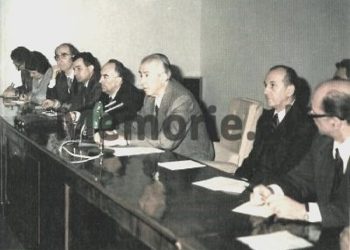
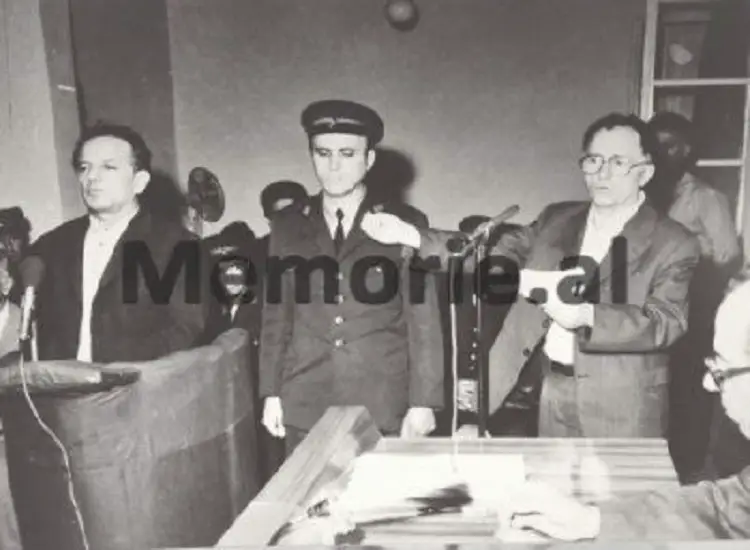
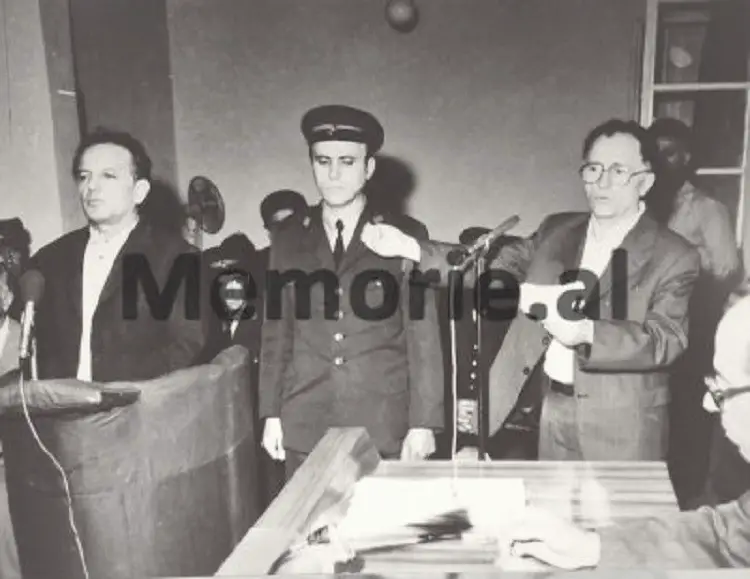
Memorie.al / Around the middle of October 1982, just a few days after the arrest of the Minister of People’s Defense, Kadri Hazbiu (former Minister of Internal Affairs in the years 1954-1979) and the Minister of Internal Affairs, Feçor Shehu (arrested since March 22, 1982), upon the directive of Enver Hoxha and by order of the Minister of Internal Affairs Hekuran Isai, the Special Operative Group was created, headed by the Deputy Minister of Internal Affairs and simultaneously Director of State Security, Zylyftar Ramizi, with Enver Zeneli and Hasan Ulqinaku as his assistants. The main task of this group was: “The discovery and investigation of the activity of the hostile group,” led by Kadri Hazbiu, which also included Feçor Shehu, Llambi Ziçishti, Nesti Nase, Mihallaq Ziçishti, Llambi Peçini, Fiqret Shehu (with her two sons, Skënder and Bashkim), etc., as well as the connections they had with the former Prime Minister Mehmet Shehu.
In addition to other duties, such as reviewing, studying, and analyzing a large number of files and archival documents belonging to a long period (1945–1982), the “Special Operative Group” summoned some of the former high officials of the PPSH leadership and former senior cadres of the Ministry of Internal Affairs, State Security officers, etc., to provide written accounts of what they knew or suspected regarding the “hostile activity” of Kadri Hazbiu, Feçor Shehu, and their collaborators. By order of Minister Hekuran Isai, three groups of experts were also created with respective specialists from the Ministry of People’s Defense, the Ministry of Internal Affairs, and the Ministry of Health.
These three groups of experts, after studying and analyzing the “hostile activity” of the three main former heads of these ministries, namely Kadri Hazbiu, Feçor Shehu, and Llambi Ziçishti, would compile a detailed report, which would be handed over to the Special Operative Group, led by Zylyftar Ramizi. Likewise, in addition to these three groups of experts, two other groups were created from the districts of Durrës and Korça (including high officials of the Party Committees and Executive Committees), who would study and analyze the “hostile activity” of Mihallaq Ziçishti, during the period he served as First Secretary of the Party Committee in those two large districts of the country. In this context, the group of experts selected from the Ministry of People’s Defense included: Agur Baxhia, Adem Dino, Koli Dano, Lili Bullari, Arqile Veshi, Niko Zako, Janko Konomi, Et’hem Ruçi, Zija Beqiri, Seit Xhoxhaj, and Veli Alliaj, who would provide their report, including on the aspect of fortifications.
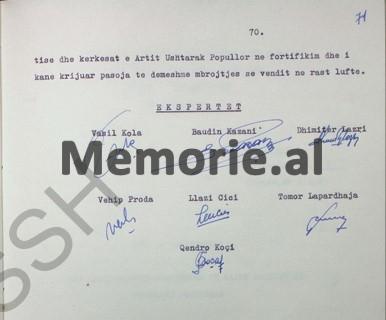
Meanwhile, the group of experts selected from the Ministry of Internal Affairs, who would also provide their report on the aspect of fortifications, included: Vasil Kola, Baudin Kazani, Dhimitër Lazri, Veip Proda, Llazi Cici, Tomor Lapardhaja, and Qëndro Koçi. At the end of their work, both of these groups of experts drafted a report-information of hundreds of pages, which was handed over to the Special Operative Group. After “studying and analyzing” it, again with other experts attached to that group, the main documents were handed over to the group of investigators appointed for the investigative process of the so-called “Hostile Group of Mehmet Shehu” (led by Kadri Hazbiu, Feçor Shehu, Llambi Ziçishti, Nesti Nase, Mihallaq Ziçishti, Llambi Peçini, Fiqret Shehu, etc.), which would constitute the basis for the indictment against them.
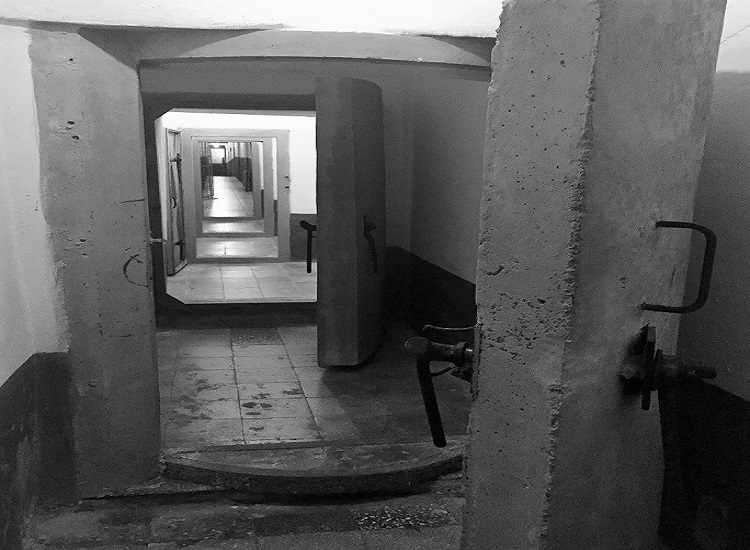
In the report-information of the group of experts from the Ministry of People’s Defense and that of the Ministry of Internal Affairs, a key place was occupied by Kadri Hazbiu’s “sabotage” in the field of fortifications, both during the period when he led the Ministry of Internal Affairs in the years 1954–1979, and that of People’s Defense, from the beginning of 1980 until the day he was arrested on October 15, 1982. That part of the report-information also discusses two of the most critical underground facilities of the Ministry of Defense and the Ministry of Internal Affairs: the “General Command Post” (a facility which for several years has been known as the “Bunk-Art 1” museum ), where, in case of war, the General Staff and the Defense Council led by Enver Hoxha would take shelter, and from where the war would presumably be directed in the event of an invasion or military aggression against the People’s Socialist Republic of Albania.
And the other underground facility located beneath the courtyard of the Ministry of Internal Affairs (the “Bunk-Art-2” Museum), where the leadership team of that ministry would also take shelter in case of war. Regarding these and other points from the report-information of the respective expert groups of the two ministries, concerning “Bunk-Art 1” and “Bunk-Art 2” – which for years have been sites visited by foreign tourists who continue to have great curiosity and interest in learning about communist Albania – we are informed by these archival documents, extracted from the Archive of the Ministry of Internal Affairs (for years part of the fund of the Authority for Information on Former State Security Documents), which are published for the first time with the respective facsimiles by Memorie.al.
(The report-information of the expert group for the Ministry of Internal Affairs is 75 pages long, but here in this article, we are publishing only the part that talks about the two main command posts, those now known as: “Bunk-Art 1” Museum and “Bunk-Art 2” Museum)
ARCHIVAL DOCUMENT WITH THE DECISION OF THE MINISTER OF INTERNAL AFFAIRS HEKURAN ISAI, FOR THE ESTABLISHMENT OF THE EXPERT GROUP TO GIVE OPINIONS ON THE HOSTILE ACTIVITY OF KADRI HAZBIU, MIHALLAQ ZIÇISHTI, AND FEÇOR SHEHU IN THE MINISTRY OF INTERNAL AFFAIRS
PEOPLE’S SOCIALIST REPUBLIC OF ALBANIA SECRET
MINISTRY OF INTERNAL AFFAIRS Exemplar No. 1
No. 92/15 Prot. Tirana, dated 10.6.1983
ACT – EXPERTISE
ON THE HOSTILE ACTIVITY OF KADRI HAZBIU, MIHALLAQ ZIÇISHTI, AND FEÇOR SHEHU IN THE MINISTRY OF INTERNAL AFFAIRS
Tirana, 1983
By decision dated 25.4.1983, of the Head of the Investigation Group, Comrade Hekuran Isai, we, Vasil Kola, Deputy Secretary of the Party Committee of the Ministry of Internal Affairs; Baudin Kazani and Dhimitër Lazri, Counter-intelligence officers, Vehip Proda, Intelligence officer; Llazi Cici, Jurist; Tomorr Lapardhaja, Cadre Instructor, and Qendro Koçi, Construction Engineer, have been appointed as experts to give opinions on the hostile activity of Kadri Hazbiu, Mihallaq Ziçishti, and Feçor Shehu in the Ministry of Internal Affairs.
For this, we have been asked to clarify these questions:
1.
THE SECRET REPORT WITH THE EXPERTISE ACT OF THE EXPERT GROUP OF THE MINISTRY OF INTERNAL AFFAIRS, ON THE “HOSTILE SABOTAGE WORK” OF KADRI HAZBIU IN THE FIELD OF FORTIFICATIONS
PEOPLE’S SOCIALIST REPUBLIC OF ALBANIA SECRET
MINISTRY OF INTERNAL AFFAIRS 12791-A
Directorate of Investigation
No.
INVESTIGATION FILE
No. 14
ACTS OF EXPERTISE
On the hostile activity of Kadri Hazbiu in the field of fortification of the organs and units of Internal Affairs:
From the study of the Party materials and the situation regarding fortifications in the Ministry of Internal Affairs, it emerges that the enemy Kadri Hazbiu sabotaged in various ways also in the field of combat readiness of the organs and units of Internal Affairs, and especially concerning their equipment with fortification facilities. He disregarded the orientations of the Defense Council and the conclusions drawn from the exercises carried out.
Chapter VIII – point 2, of the orientations of the Defense Council “On the measures for the state-civil preparation of the country for wartime,” stipulates that: “to ensure uninterrupted command during wartime, state and economic organs, starting from the Council of Ministers, ministries, and central institutions, the Executive Committees of the People’s Councils of the districts down to the grassroots level, must build, complete, and keep in readiness the main command posts for wartime, as well as the reserve ones, and complete them with the necessary material base and communication means.”
To realize these tasks, the Operational and Preparation Directorate, with study No. 202, dated 11.9.1979, “On the situation and measures that should be taken for the main command posts in the ministry and the Internal Affairs Branches, proposed taking measures to rectify the situation.”
For the central apparatus of the Ministry, including communications, its main command post was necessary to have 41 working rooms, but the enemy Kadri Hazbiu reduced it to 23. If measures had not been taken after the arrest of Feçor Shehu to complete the project, the facility would not have met all the needs for wartime command.
The Internal Affairs Branches of Shkodër, Durrës, Elbasan, Vlorë, Korçë, Berat, Fier, Gjirokastër, Sarandë, and the Directorate of Internal Affairs of Tirana needed their main command posts to have 13 working rooms, filter-ventilation facilities, sanitary processing node, shelter for the electrical group, and communication. Kadri Hazbiu did not accept this project and gave orientations for these branches to have 2–10 working rooms, utilizing existing shelters, but these are not suitable for command.
Internal Affairs Branches of the second category should have 10 working rooms for the main command post, in addition to the auxiliary facilities that the above-mentioned branches would have. For these as well, the enemy Kadri Hazbiu assigned the task that in Librazhd, Pogradec, Lushnje, Lezhë, Rrëshen, Përmet, and Krujë, the existing shelters should be utilized for the main command post without any additions for working rooms or other auxiliary facilities, except for one facility for their filter-ventilation.
Another direction of Kadri Hazbiu’s hostile activity in terms of fortification is the violation of construction criteria for command posts. Thus, without building the main command post of the Ministry of Internal Affairs, the reserve command post No. 21 was built, for the second stage of the people’s war.
Although the works in this command post have been completed, because it is situated in a limestone formation with water content, it is unsuitable for work and command, as it has humidity. And the internal temperature is 9 degrees Celsius. The construction of this command post began in 1966 and ended in 1972.
Reserve command posts No. 2 was built for the Internal Affairs Branches in Sarandë, Gjirokastër, Fier, and Ersekë. This was done without first building the main reserve command posts No. 1 for these areas. With these constructions, the enemy Kadri Hazbiu implemented, in the fortification sector, the theory of sliding and retreat, in the strategic zones of the country. The aforementioned organs are still not equipped with a main command post or reserve No. 1.
Without taking measures for the construction of main command posts or reserve No. 1 in the Internal Affairs Branches of Skrapar, Përmet, Tepelenë, Gramsh, Gjirokastër, constructions have been made for shelters for reservist companies and for the personnel of the Branch, claiming that ostensibly, we should have them as shelters and later convert them into command posts.
This has resulted in severe damage to the defensive capability and the undermining activity against our organs in wartime. The distribution of funds across many facilities (an average of 40–50 per year) without concentrating them on the most essential ones, such as the main command posts or reserve No. 1, resulted in the constructions not being completed on time.
Thus, in the decade 1970–1980, dozens of shelters for personnel and 31 shelters for fire trucks or those within the structure were built. As a result, many facilities were left unfinished because, in the preceding years, funds were cut.
The Archive of the Ministry of Internal Affairs and the State Archive without tunneling, both for the fund that is within the city and in the designated places for evacuation, has created difficulties, making it susceptible to damage in wartime and more easily falling into the hands of the enemy.
The construction of several command posts with insufficient working areas and low defensive capability, and leaving some organs and units without main command posts, was covered by the enemy Kadri Hazbiu under the pretext of savings, ostensibly “not to burden the state.”
From the overall analysis of the hostile activity in the field of fortification in the Internal Affairs Organs, we conclude that the enemies Kadri Hazbiu and Feçor Shehu sabotaged the Party line and the requirements of the People’s Military Art in fortification and caused harmful consequences to the defense of the country in case of war./ Memorie.al
THE EXPERTS
Vasil Kola Llazi Cici Baudin Kazani
Tomor Lapardhaja Dhimitër Lazri Qëndro Koçi
Veip Proda