By Prof. Dr. Përparim Kabo
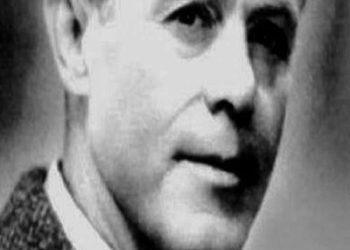
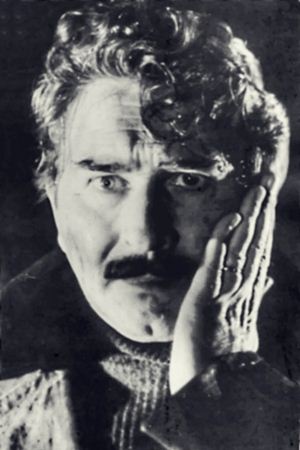
Memorie.al / Honored Maestro, I am troubling you, I want to talk because the days have flowed and the years, one after the other, since March 24, 1985. It was a tragic Sunday, “A Bitter Spring,” as the movie that had begun filming was titled! You had not been warmed by this title; holding the script in your hands, you often said, “I don’t like this title!” It turned out to be so; it arrived to announce your departure from the physical world, from loved ones, from colleagues, from the theater stage, from the filming sets. A bitter one, Maestro, compounded by a Monday with a terrible rain, when everyone, with deep sorrow, escorted you to your final resting place; all Albanians wept here and beyond the border, wherever they were.
Their hearts were severely wounded. They were escorting their Ismail Qemali, their Dhaskal Todri, Dajë Vrana, Sefedini of “General Gramophone,” with the regret that the words he spoke with a rope around his neck had to be deciphered: “O people, how many things are done in your name, even His Majesty speaks in your name!” Truly Sandër (please forgive me for addressing you like this, in such human confidence), what is the relationship of an individual with the people? This equation cannot be solved without an essential given: the homeland and the place it occupies in the human consciousness!
The people have a homeland; the individual has a birthplace, because each of us came into this life one day without our permission and leaves another day with our approval, and this only happens when the mission of life has been fulfilled, and you lived it with patriotic ideals and civil values, unwavering in the face of challenges and with human love in every circumstance. It has been 25 years, Maestro, since you have been in the world of spirits, but we have you almost every evening in our family hearths. Because, one time you come to us as Dr. Kristo Borova (I like this name, both Christ and the martyred Borova who was burned by the Nazi Germans), but you are also welcome as Engineer Abdyl Sharra, as the director of the Debatika school, and as Jaho Labi!
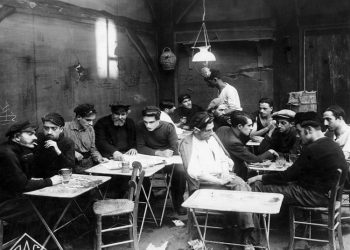
Beautiful is that story, Maestro, when dressed as the character, you were staying at the cafe, and the “owners” did not recognize you and mistook you for someone who had just descended from the mountains, and they did not serve you coffee! The character was found, and the necessary social type was built. But even as Professor Mirashi in “The Warm Hand,” you come across as warm, human, kind-hearted, but also firm against the murderous vice that can creep into a person like a worm and gnaw at them throughout life.
Pilo the Miller, in the film “The Man with the Cannon,” is beloved by us, and Birçe Hasko’s line: “You swine infidel, shut your mouth, you’re a newcomer to our village!” It is not for nothing that I pause here, Aleksandër Prosi. It has been about 20 years since churches and mosques in Albania have reopened, and people freely go on Sundays and Fridays. We hear the church bell and the voice of the muezzin from the mosque, but we remain a secular country and society.
It sometimes happens that when you are in the theater and find yourself captivated listening to the actor’s words, and along with them come the echoes of the one who releases the call from the mosque! Last year, Sandër, I was watching Euripides’ “The Trojan Women.” Hecuba, Priam’s wife (read: I am the first) was Margarita Xhepa. She was wailing and seeking the body of her husband, the King of Troy, to bury him. When, in the middle of that funeral solemnity, the echo from the Mosque arrived: “Why did you groan, Maestro?!” I understand, it hurts your soul! Margarita is as you left her, a powerful emotional pearl on stage, with pathos and human vitality in her soul.
Ah, you might say, Maestro! “Come, father, to show me the fields!” That Desdemona in “Othello”! That performance was truly a miracle! Accept, honored Maestro, that I mention two or three facts to you, despite the fact that you never liked praise. Understand them as an obligation to institutional memory, from which historical memory is nourished and national memory comes to life. You worked for four years to realize ‘Othello’. Four years in the Shakespearean waters, saying and repeating the text of ‘Othello,’ but also Desdemona’s, so much so that even your young son at the time, Aristidhi, learned them and, when friends came home, hidden under the table, he would recite them innocently.
Are you laughing, Maestro?! I feel it! How much I have missed that deep, pure laugh of yours, which came rarely, but when it poured out, it brought a sincere and highly humane human spirit. Today, masterpieces are staged, dear Sandër, but for four months, and often the quality is lost, the messages are misunderstood, and universal values sometimes fade. Alas, Maestro, it is not as it was back then! The green forest of theatrical values is becoming sparse.
Of the first directors, Mihal Luarasi and Piro Mani are still alive, but the latter is far from the theater, having gone to America. About three years ago, we gathered in the Theater (National Theater we call it now, and not Popular; I think it is better this way, isn’t it?!) to commemorate your departure from physical life. Pirua had sent a very moving letter from across the ocean, full of yearning. Let me mention two words from it: “To the deserving Sandër Prosi!” Forgive me, “Noble of the Stage,” for setting you to thinking, didn’t I?! Are you asking me where I found this epithet, “NOBLE OF THE STAGE”?!
This is the name your colleague and friend from the stage, your partner in so many premieres, the wise woman and artist of logical format, Drita Pelinku, gave you. Did I make you happy or not? That’s what I thought I heard you say, Maestro! How many times in the ‘husband and wife’ roles! When I decided to talk to you, “People’s Artist” Aleksandër Prosi, I couldn’t help but turn to our wonderful Drita! She pulled out her notes and read to me with yearning and deep human sorrow many of the notes she kept. But she extracted those related to your nobility like ‘pearls from living memory.’
Educated with a ‘Germanic upbringing’ expressed in courtesy to everyone, care in communication to advise without hurting, sincerity in appreciating colleagues’ work, and dedication to great works to bring them with contemporary emphasis! I would like to take you through memories to some seemingly small details, but which, as Oscar Wilde said, show ‘the character of the man.’ You, together with Mrs. Pelinku, left the theater that day; rehearsals were underway for the play by the Romanian playwright, Caragiale (if I don’t misarticulate his name), titled “A Lost Letter”!
A prefect campaigning for elections (Aleksandër Prosi – played the prefect) had lost a love letter, certainly not for his wife, so his reputation was at risk! And Drita was upset because she wasn’t achieving the role as she wished. You walked, and your feet took you to your old house, somewhere near (the former “17 Nëntori” Cinema)! Why do I say former, Maestro, forgive me, but they demolished it! Bad times have come; they are otherwise called “market times”; everything is traded: goods, feelings, personalities, state posts, even dreams and fairy tales are sold. We live in the time of transaction, Maestro!
Anyway, you invited Drita for coffee, and you sat in the yard, and someone from your family brought coffee to help her emerge from that state of anxiety! Drita couldn’t remember who, perhaps your sister or Mother Aspasia, that noble woman whose death shook you deeply. You escorted her with honors, but that same night, you went to perform at the theater! This incident reminds me of a similar event. Aleksandër Moisiu was in America and was warming up his voice before the performance when he was handed a telegram. He read it and put it in his pocket. The show ended successfully. Afterward, he mourned the news the telegram had brought about the death of one of his parents. But let’s return to the event we were discussing. You wanted to calm Drita.
And then, what happened?! You picked up the violin, Maestro, and began to play for your colleague and partner. The violin, your first artistic love, the one that had been entrusted to you in your school youth by the Albanian maestro, Ludovik Naraçi, the former student of the “great master” Czech (the most prominent violinist and methodist of the time), Ševčík. You played for Drita; she calmed down because music therapy is irreplaceable. Drita reminded me of your words: “Go home, don’t open the text, calm down, and you will see that everything will be fixed!”
That is indeed what happened! I don’t know, Sandër, if you have heard, but let me remind you that even the father of Greek tragedy, Sophocles, initially studied music and then entered the wide sea of theater. He, unlike Euripides, did not compromise with the authority of the state and religious institutions – so to speak, he refused to be confirmed.
Just these days, his Electra is being staged! The director is from Elbasan, but with a name and surname from antiquity, Adonis Filipi, but with Voskopojë roots. I imagined that you, too, were in the hall, dressed in white, standing there in the box, as was your custom, following the work of colleagues with equal love. When the show ended, I moved to approach you and speak, but you dissolved and left, saying: “Beautiful!” Doesn’t it seem like you have an artistic gene from Sophocles, our Maestro!
First music, and then theater, you, Aleksandër Prosi, in all your roles avoided ideology, politics, power systems, and chose roles where the focus was on the patriotic or anti-patriotic person, but never partisan! This is why your art, 25 years after your final departure, has not aged – on the contrary, it is 25 years younger, so not only was it not forgotten, but on the contrary, it is strongly ingrained in the artistic, civil, and civic consciousness of Albanians, so much so that many do not know that you are no longer alive!
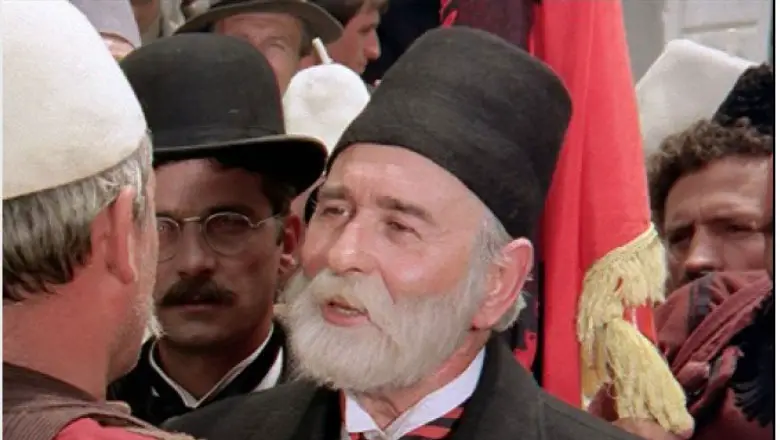
If the historical work of Ismail Qemali does not die, your work, Aleksandër Prosi, cannot die either! We are in 2010. In two years, we will celebrate the 100th anniversary of Independence. But we will also celebrate the 30th anniversary of the film “The Second November,” where Ismail Bey Vlora is you! I have the impression that if you meet him in the paths of the ether, he will tell you: “You are my artistic look-alike?!”
You are perfect, you even made me more beautiful and wiser, Maestro, who was born in Shkodra with blood from Elbasan and roots from the wise Albanian Vlachs, whose existential streams of life come from the mixture of Romans and Illyrians!” And I think you would reply that what you brought to the film reel is very, very little compared to what the patriots did those who built Albania “united, free, and independent”! Tell Ismail Bey that Isa Boletini’s delay was also resolved!
Now, for two years, Kosovo has also been an independent state separate from Serbia, but with a somewhat different symbolism; during celebrations, they use the Skanderbeg flag, but their official flag is a “European creation.” We are still the same nation with roots and veins from the Pelasgo-Illyrians, Arbëresh, and Albanians, but with two states. Europe, Ismail Bey Vlora, Europe, Aleksandër Prosi-Ismail Qemali, is still not freed from the nightmares of its follies that began at the Conference of Ambassadors in London in 1912-1913! We will convince them, Ismail Bey, O first European Prime Minister of Albania, we will convince them, O Ismail Qemali of Albanian cinema, that when you filmed that movie, you were 62 years old and stood there dressed and made up for hours in a scorching heat of 40 degrees Celsius, because it was very little compared to what the true heroes of the nation had done!
We have one blood and one language, Albanian and Kosovan, Albanian, O Dhaskal Todri, because the letters you brought from Germany, even though Ndrio killed you, did not rot in the water of Dushkan. Tunxhi, your son (indeed Bujar Lako, your best friend, has been transformed into a son of your acting, Sandër. He has a brilliant career in theater, but especially in cinema) did not let that wealth be lost! We also have a history that shows we are one of the oldest peoples in these lands, and part of it is cultural history, so know this Aleksandër Prosi: for several years, even before Kosovo’s independence, the Drama Theater in Mitrovica bears your name, Maestro!
It is called “Aleksandër Prosi Theater of the Nations”! We Albanians love dignity, and we don’t give it up for flattery or money; this pride has sustained the Albanian! As you said, Maestro of the Stage, when interpreting Schiller’s musician Miller in the masterpiece “Intrigue and Love”: “You are the country’s prime minister, but not the master of my house.” And your daughter, Luiza Miller (Yllka Mujo), has become such as you wished, dear Sandër. A star of the stage, a distinguished, mature, vital, and high-quality artist. She is a worthy fruit of your generation! Last year, she played Filomena Marturano by De Filippo! A scenic miracle in pathos, in experience, in communication, in feeling, in action, in gesticulation, in meditation!
The name Filomena tempts you, Maestro! Your wife of life was named so, that heroine to whom you said when you were given the title “People’s Artist,” half of it belonged to that noble woman whom you always brought flowers to and kissed her hands! Hey ‘Knight of Feeling and the Stage and Screen,’ the sidewalk next to Hotel “Dajti” (please don’t ask about the hotel, I’d be ashamed to answer you) misses that couple in the late evening, Sandri and Filomena, chirping like two birds! Like those birds you kept in the house with such love.
Perhaps it’s because our ancestors, the Pelasgians, were compared to birds like the stork, or because birds are very faithful to love in couples and not polygamous like many other beings in the animal kingdom. Filomena was your only inspiration, the woman of love and an exemplary companion. Perhaps she told you about your grandson, whose name is (S)Andri, while his baptismal name is Aleksandër, like his grandfather! Filomena undoubtedly told you how she watches your movies and how she bursts into tears when she thinks she never met you in this world!
I think I have tired you, O Noble of the Stage! But we must say some other things no less important. I often imagine you with Naim Frashëri; he as Hamlet and You as Horatio! With those pauses of yours that thrilled with silence, with the gaze, and with the internal monologues. I see you with Loro Kovaçi; You as Moisi Golemi and he as Skanderbeg, I see you with my dear friend Prokop Mima and with Violeta Manushi, with Kadri Roshi and Sulejman Pitarka, with Ndrek Luca and Bexhet Nelku, O God, there are so many of you, it seems to me that the Pantheon is over there, here only a few traces of a history called Albanian Theater remain! Mihal Luarasi has written several books because he is very concerned, and one of them is titled “Theater at the Crossroads.”
Please, Sandër, gather in an ‘assembly of angels’ and send a petition with the signature of the “Pelasgian Zeus,” as Homer said, to show that the world was born from the theater, that politics came later, that it explains the world and administers it or even manipulates it, while art, with theater at its head, changes the world, because it created and re-creates man from virtue and values! I see with my mind’s eye how you spend hours with Viktor Gjika and Vath Koreshi. Perhaps you want to realize that film about Bajram Curri, or the one about blood feuds! Last year was the 85th anniversary of the assassination of Father Shtjefën Gjeçovi by Serbian gendarmes.
Also, the 85th anniversary of the events of 1924, the assassination of Avni Rustemi, the 95th anniversary of the departure of Prince Wied, the “King of the Albanians”! But there were no films about them. It is said that a film about Skanderbeg is being worked on in America, despite the fact that here in the motherland there are some corrupted people who say he fought for revenge, that he has Serbian blood, and many ridiculous things bought at the “flea market”! Hey heroes of art, maybe you will remember to film a movie about the poet Naim Frashëri, who this year in May marks 110 years since his death, or a film about Mother Teresa, who this year marks 100 years since her birth!
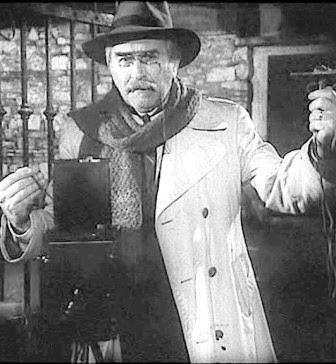
Now, dear Sandër, we will go together somewhere, to a place where I would like to talk completely alone. It was Wednesday, March 20, 1985. You and Aristidhi were going to the train station because they were expecting you in Durrës for the filming of the movie “Bitter Spring,” where you played the photographer who captured the moments of the country’s occupation on April 7, 1939, if I’m not mistaken, with director Muharrem Fejzo!
You told Aristidhi, your son: “Come with me to Durrës for three days.” He refused because he was at work. Then you asked him at least to come that day so you could have lunch together. He did not come! Could it be that at that lunch you would talk to him about the “bread-body and wine-blood” like Jesus?! You had a connection with Him because you were born on January 6th (1920), the day of the “throwing of the cross into the water”! You traveled for the last time on that train. There, as the photographer of death locked in the darkroom where negatives are developed and photos are printed, what did you archive?!
You walked those days by the sea and looked as if you virtually threw your hidden thoughts, those deep meditations of yours, into the sea…! And you returned again to the photographs, which in the film brought man face-to-face between life and death, because war was intervening. And you entered the ranks of the dead who fell martyrs and, with their silence, refuse to testify. While the winners might manipulate!
Initially, it was thought that the part that was filmed with you would remain and be linked to what Rikard Larja would continue. Later, this idea was abandoned. One day, I will want to return to those filmings that are perhaps still in the film archive. There, in those moments of sadness and deep reflection through that character, I am convinced that I will read the unspoken messages, the secret that was looming but did not arrive!
Because it comes to my mind that the first piece related to You, Sandër, as a man of the stage, was “William Tell” in high school, here in the Tirana gymnasium, which forewarned the Italian occupation and was banned by the authorities. This cornerstone at the foundation comes to be completed as a career closure with a ‘half-film’ that narrated the waiting for fascism in front of the man of memory – the photographer. Reason (Zeus – the voice of conscience) in marriage with Mnemosyne (the photographer – visual memory) gave birth to the muses, initially music (Euterpe), perhaps dear Sandër, in that celestial flight (like ‘Leonardo da Vinci’s man of the air’) you sang Symphony No. 6, “The Pastoral” by Beethoven, that hymn to nature which you held so dear. Today, his 9th Symphony with Schiller’s words in the fourth movement has become the anthem of the European Union, but in the face of nature’s damage, the global anthem of the globe should be that Pastoral.
You know, Sandër, you were educated in Vienna, as Beethoven said, “if it weren’t for nature, I would kill myself”! So the great people of art find reasons not to live anymore and meet death by creating art, as happened with Mozart who created the Requiem. Perhaps the departure from life without telling the final secrets is an artistic separation from life as a history that cannot be read! This, too, is a muse, the second in order, called Clio, which brings after it death, the fourth muse in order, which is tragedy – Melpomene! Your death, Aleksandër Prosi, was a pair of twins, Clio-Melpomene, a tragic history, so to speak, a twinning of muses that remains for us, your living admirers, and a grief waiting to be unlocked!
Thank you, “Noble of the Stage and Screen”! On the 25th anniversary of your physical departure and the 90th anniversary of your arrival in life, we have decided to gather at the head of state’s house, because “The Nation honors its own children”! This is as ancient as the theater and its epic! The world cannot forget where it comes from, where it is, and where it is headed! Your work helps us on this journey, which does not fade with the passing years! Memorie.al