By Dashnor Kaloçi
Part two
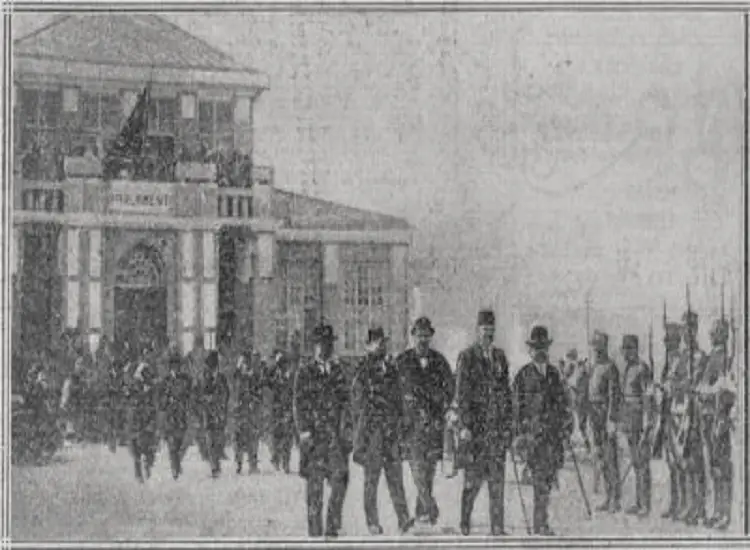
Memorie.al / The history of parliamentary elections in our country, or more accurately, the attempts at elections, date back to the time of Ottoman rule, when Albania was part of the Turkish Empire. One of the first Albanian deputies elected to the first Parliament of Turkey, which opened its work in December 1877, was Abdyl Frashëri. But that parliament did not last long, as it was dissolved by the Sultan himself, due to the start of the Russo-Turkish War. After the dissolution of the first Turkish parliament, there were several other attempts at elections, all of which failed for various reasons. The first regular elections in Albania were held only in 1908, when the Young Turks came to power in Turkey. Those elections were not direct but by representation, or as they were otherwise known; with second-degree electors.
The first Parliament of Turkey opened on December 10, 1908, and out of 266 deputies, 27 of them were Albanians elected in the four vilayets of Albania. At that time, members of the “Union and Progress” Committee in Turkey, which included many Albanians, were divided and grouped into three political groups. The first group was “Union and Progress” (the Turkish-Macedonian party) with 164 deputies, where 130 were Turks, 5 Arabs, 1 Greek, and 15 Albanians, who were led by Hasan Prishtina, a deputy of Kosovo.
The second group, called: “Liberal Union,” (the Greco-Albanian party) which included 45 deputies, had 12 Albanians led by Ismail Qemali. Among the other Albanian deputies in the Turkish Parliament at that time were Esad Pasha Toptani, Nexhip Draga, Rexhep Pasha Mati, etc. After 1908, there were several other elections where Albanians continued to vote for their representatives in the Turkish Parliament, and that lasted un1til November 1912 when Independence was declared and Ismail Qemali was elected Head of Government.
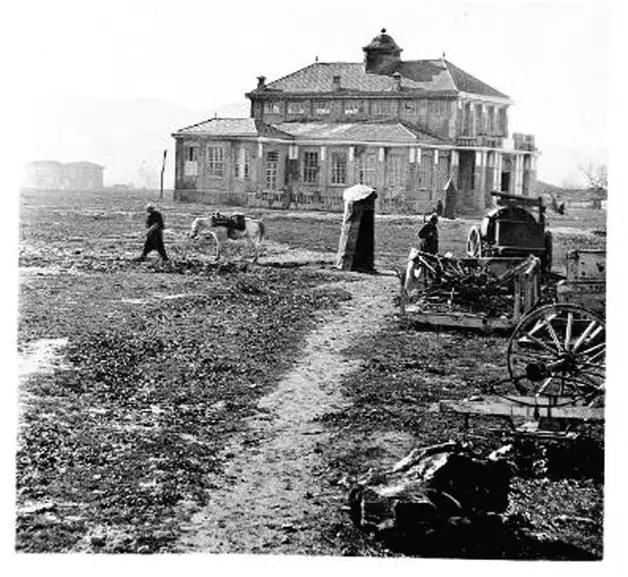
The first parliamentary elections in Albania were held in the spring of 1921, as they had not taken place until then due to the First World War, in which Albania was also involved. The first Albanian Parliament opened on April 21 of that year, and the first building of the Albanian Parliament was where the Academy of Sciences is today, and 76 deputies participated in that parliament, who were elected after a relatively regular process from the nine prefectures of the country, such as: Berat, Durrës, Elbasan, Gjirokastra, Korça, Kosovo, Shkodra, Vlora, and that of the Albanian colony of the USA. As in the past, those elections were held by the system of representation, or as otherwise known, with second-degree electors, where based on territorial division, the representatives of each region had the right to elect their deputy. As mentioned above, as well as a brief history of parliamentary elections in Albania from that period until 1991, Memorie.al has published in previous issues, here we publish the full Fundamental Statute of the Albanian Republic (Constitution) of 1925, where the legislation of the parliamentary elections of that time, as well as the Regulation of the Parliament, with the rights and duties of the deputies, which was published by the “NIKAJ” Printing House in 1925, holds a special place.
Continued from the previous issue
Fundamental Statute of the Albanian Republic (1925)
(Tirana, “Nikaj” Printing House 1925)
II.
The Senate
Art. 49. The Senate consists of 18 members, two-thirds elected by the people according to a special law, and one-third by the President of the Republic.
The President of the Senate is elected by the President of the Republic from among the 18 Senators.
When, for whatever reason, the seat of any Senator from the two-thirds (elected by the people) remains vacant before the special law on the election of Senators is implemented, the Senate and the Chamber of Deputies gather together and, by majority vote, elect the missing Senator or Senators.
Senators are elected for six years.
For this time only, two-thirds of the Senators are elected by the Constituent Assembly.
Art. 50. Senators are obliged to take an oath in their Chamber in the manner specified in Art. 20 for deputies.
Art. 51. In case of a joint meeting of the Senate and the Chamber of Deputies, the Presidency of the meeting is held by the President of the Senate, and proceedings follow the internal regulation of the Chamber of Deputies.
Art. 52. No one can be elected as a Senator without having reached the age of 40 years, and without possessing, besides the qualities specified in Art. 12 for deputies, one of the following qualifications:
- A diploma from any higher school.
- Former Minister or former Deputy.
- A high civil or military official, who has demonstrated patriotism, complete competence, and obedience to the laws through clear evidence.
- A major merchant or industrialist, who has demonstrated full competence and is known in the economic field,.
Art. 53. Every bill accepted by the Chamber of Deputies, before being submitted to the President of the Republic for Approval, must go to the Senate for consideration and voting.
Art. 54. Every bill accepted by the Chamber of Deputies must be put up for discussion by the Senate within one month from the day of the bill’s submission, when the session is open; otherwise, it is considered accepted and submitted to the President of the Republic.
When, for whatever reason, some or all senators do not attend the joint meeting within one month from the specified date, then the Chamber of Deputies meets together with the senators who may be present, and if none are present, the Chamber of Deputies meets alone, and they proceed together or the Chamber alone with the action that caused the joint meeting.
Art. 55. Any bill once rejected by the Senate cannot be presented again in the same session.
Art. 56. If the Chamber of Deputies encounters opposition from the Senate on any decision or law, and the Chamber insists on its opinion, the President of the Republic has the right, with the consent of the Senate, to dissolve the Chamber of Deputies.
If the new Chamber also insists on the opinion of the first Chamber, then the decision of the new Chamber is final.
Art. 57. In cases of high treason, assassination attempts against the security of the State, and impeachment of Ministers by the Chamber of Deputies, the High Court is established by decree of the President of the Republic.
In this case, the High Court consists of five senators and two presidents of the Court of Cassation (Diktimit). The duties of the Prosecutor are carried out by a Parliamentary Commission of four deputies, together with the Chief Prosecutor of Cassation. In this case, these five Senators withdraw from the political body and become a judicial body.
Art. 58. Senators enjoy all the rights specified for deputies in this Statute.
Art. 59. The Senate meets in the same sessions as the Chamber of Deputies.
Neither Chamber can open without the other being assembled.
Art. 60. Senators have the right to receive an allowance of 6,000 gold francs per year, and their President 10,800 gold francs.
This sum can be changed from time to time by law.
Art. 61. The Presidency of the Senate, besides the President, is elected in the manner specified in Art. 18 of the Statute for the presidency of the Chamber of Deputies.
Art. 62. The Senate, through its internal regulation, determines the manner in which it will perform its duties, in conformity with this Statute.
Art. 63. A newly elected Senator, whether by the people or by the President of the Republic, who, without properly justifiable reasons, fails to appear before the Senate within two months to take the required oath, is deemed to have forfeited the Senatorship.
The judgment on the admissibility or non-admissibility of the justifying reasons belongs to the Senate.
Art. 64. A Senator who is absent from the meetings for two months in a row without the authorization of the Senate is automatically considered stripped of the Senatorship.
Art. 65. The quality of Senator is incompatible with any communal employment or with active religious service.
Art. 66. The meetings of the Senate are held in the manner specified for deputies in this Statute.
Art. 67. The Senate examines the powers and legal qualifications of its members, and judges and decides upon them according to the provisions of its internal regulation.
Art. 68. Until it drafts its own regulation, the Senate operates according to the internal regulation of the Chamber of Deputies.
Part C.
Executive Power
PRESIDENCY OF THE REPUBLIC
Art. 69. The President of the Republic is elected by the joint meeting of the Senate and the Chamber of Deputies for seven years, by an absolute majority of votes, and if, for two consecutive times, he is not elected by an absolute majority, he is elected by a relative majority of votes the third time. For this time only, he is elected by the Constituent Assembly.
Art. 70. No one can be elected President of the Republic without being Albanian by race and language, without being an Albanian citizen, without enjoying civil and political rights, and without possessing all the other qualities required for deputies.
Art. 71. The seven-year term begins from the day of election. One month before the end of this term, the new election is held.
Art. 72. The President of the Republic, before entering office, takes an oath before the Senate and the Chamber of Deputies according to this formula: I swear in the name of God and upon my honor that I shall be a faithful guardian of the independence and territorial integrity of Albania, of the Republic, as well as of the Statute and the laws of the State.
Art. 73. The President of the Republic has the right to receive an allowance of 10,000 gold francs per month.
This sum can be changed from time to time by law.
The expenses of the official residence of the President of the Republic are regulated by a special law.
Art. 74. The President of the Republic is irresponsible, except for high treason and for his acts that do not bear the countersignature of the competent Minister or Ministers.
Art. 75. The President of the Republic is the highest head of the State, has the General Command of the armed forces, appoints and dismisses the Ministers chosen by him, the high officials of the State, and all officers of the armed forces, is the director of the State’s policy, and has the right to make all kinds of treaties and agreements with foreign States, with the consent of the two Chambers, and to accept and accredit diplomatic corps.
The President of the Republic does not have the right to declare war or make peace without the consent of the Senate and the Chamber of Deputies, except in case of defense.
Art. 76. The President of the Republic orders the announcement and implementation of bills voted by the two Chambers. He also has the right of veto.
Art. 77. If the Ministerial bodies, with changes, do not receive the vote of confidence from the Chamber of Deputies for two consecutive times, the President of the Republic has the right to dissolve the Chamber; but if the new Chamber also does not give the vote of confidence, then the Ministerial body is dismissed.
Until the conflict ends, the last Ministers who did not receive the vote of confidence from the dissolved Chamber of Deputies remain in force.
Art. 78. The President of the Republic has the right of pardon (grace).
The proposal of the law for amnesty belongs only to the executive power.
Art. 79. The President of the Republic can call the two Chambers into extraordinary session.
Art. 80. The proposal of laws belongs to the executive power and the Senate and the Chamber of Deputies, but the proposal of laws that entail increases or financial burdens belongs only to the executive power.
Art. 81. No act of the President of the Republic has validity without the countersignature of the competent Minister or Ministers.
Art. 82. In times of insurrection, internal or external war, general mobilization, or public calamity, the Presidency of the Republic, under the responsibility of the Ministerial body, declares a state of siege, and implements the relative law throughout the State territory or in any part of it; if the Chambers are assembled, authorization must be obtained, and if the Chambers are not assembled, the Executive Power implements it, but the decree of the declaration of the state of siege must be presented to the Chambers at the beginning of the next session.
The decree of the declaration of the state of siege is presented to the Chamber of Deputies after its assembly for approval or rejection, which, within 30 (thirty) days from the date of presentation of this decree, gives the decision of its rejection or approval.
A special law will regulate the suspension of the articles of the Statute relating to personal freedom, the right of assembly, the right of association, the inviolability of residence, the freedom of speech and the press, and the secrecy of letters.
This law can be implemented entirely or partially.
In case there is no Chamber of Deputies, the previous Chamber is convened only for the purposes indicated above, and these Deputies, for this duty, enjoy all the immunities of a deputy.
Art. 83. The President of the Republic presides over the Ministers appointed by him; but they must appear before the Chamber of Deputies, no later than 5 days after the day of appointment, announcing their program to receive the vote of confidence, otherwise, they are considered to have received a vote of no confidence.
Art. 84. In case of death, incurable disease that prevents action, or resignation of the President of the Republic, if the legislative bodies are assembled at that moment, they elect the new President of the Republic, and if they are not assembled, the President of the Senate automatically substitutes the Presidency of the Republic, and at that moment the two legislative Chambers automatically assemble to elect the new President of the Republic.
Except for the cases mentioned above, in the absence of the President of the Republic, the President of the Senate substitutes, and in the absence of the latter, and the President of the Chamber of Deputies.
MINISTERS
Art. 85. Anyone who has the qualities required by law to be elected a deputy can be appointed Minister.
Relatives by blood of the President and the President of the Senate, up to the second degree, cannot be appointed Minister; likewise, two relatives by blood up to the third degree, in the same Ministerial body.
Foreigners by race, who are naturalized as Albanian citizens, cannot be appointed Minister.
Art. 86. Ministers enter freely into the Senate and the Chamber of Deputies and are heard whenever they request the floor, but only those who are Senators and deputies vote in their Chambers.
Art. 87. Ministers, before entering office, take an oath before the President of the Republic.
Art. 88. When the legislative bodies are in recess, the Government has the right to make decree-laws; but these must be submitted to the legislative power at the beginning of the next session for consideration and acceptance.
If they are not presented or not accepted, they are automatically considered dismissed.
Art. 89. Ministers are politically responsible before the Chamber of Deputies, jointly for their general policy, and each Minister individually for their own actions.
Art. 90. The order of the President of the Republic can never release the ministers from their responsibility.
Art. 91. Ministers enjoy parliamentary immunity.
Art. 92. In every appearance of the Ministers, the Minister of Justice holds the main place.
The Financial Control Council
Art. 93. State finances are controlled by the Financial Control Council.
Art. 94. The organization of this Council, the manner of exercising its functions, and the qualifications of the members who comprise it, are determined in the special law.
Art. 95. The rights of this council are the preventive and repressive control of the accounts of the entire State administration and those determined in the special law.
Art. 96. The President and the members of this Council are appointed by the President of the Republic, and the other officials, according to the law.
Art. 97. The irremovability of the Financial Control Council is secured in the manner specified in this Statute for the members of the Court of Cassation, with the difference that it is only for five years, from the day of the appointment of each of them.
Part D.
Judicial Power
Art. 98. The courts are independent. In giving their judgments, they depend on no other authority except that of the law.
No state power, neither legislative nor executive, can interfere in judicial matters.
Art. 99. No one can be called or judged by another court, except by the one to which he legally belongs. Extraordinary courts for judgments on specific cases can by no means be formed.
Art. 100. Proceedings before the courts are public, except in those cases where the judges deem it appropriate to keep the doors closed in the interest of public peace and morality.
Judges decide and vote secretly, but the judgments given are pronounced loudly and publicly.
Every judgment must contain the reasons one by one and the articles of the law on which it is based.
Art. 101. Every person accused of a crime must have a defense counsel from the day he is placed under indictment. If he fails to take care of getting a defense counsel, the court automatically appoints one for him.
Art. 102. All judges and prosecutors are appointed by decree of the President of the Republic, following the proposal of the Ministry of Justice based on the selection made by a special commission. This commission will have as President the Minister of Justice and as members the General Secretary of the Ministry of Justice, the Presidents and the Chief Prosecutor of Cassation.
The qualifications of judges and prosecutors will be determined by law.
Art. 103. Judges and prosecutors are guaranteed irremovability from their office.
A judge cannot be dismissed from work against his will for any reason, except based on a judgment given by a competent court, or a judgment of the Court of Cassation for disciplinary offenses.
A judge cannot be called to court for acts concerning his office without the decision of the Court of Cassation. The decision of the competent authority to place a judge under indictment entails his suspension from work in the cases foreseen by law. A judge cannot be transferred unless he first shows in writing that he approves of the new position.
A judge cannot be retired against his consent, except when he has completed the years of service, or has exceeded the age specified by law, or when physical or mental illness makes him incapable of service. In this last case of his retirement, it will be done based on a decision given by the Court of Cassation.
The procedure for placing under indictment and judging for disciplinary offenses of the members of the Court of Cassation will be regulated by a special law.
Art. 104. Judges can under no circumstances be placed at disposal (vehen në dispozitshmi – i.e., suspended indefinitely without pay or duties).
Art. 105. A judge cannot accept any other employment in public administration, either with a salary or without a salary.
Art. 106. Judges are strictly forbidden from engaging in politics. Otherwise, they will be dismissed from work.
Art. 107. Only judges who have the qualifications foreseen by the law to be enacted, enjoy the rights specified in this chapter, after three years of service. Memorie.al