• Rreth Nesh
  • Kontakt
  • Albanian
  • English
Saturday, March 7, 2026
Memorie.al
No Result
View All Result
  • Home
  • Dossier
  • Interview
  • Personage
  • Documentary
  • Photo Gallery
  • Art & Culture
  • Sport
  • Historical calendar
  • Others
  • Home
  • Dossier
  • Interview
  • Personage
  • Documentary
  • Photo Gallery
  • Art & Culture
  • Sport
  • Historical calendar
  • Others
No Result
View All Result
Memorie.al
No Result
View All Result
Home Dossier

“It was an awkward moment in Elbasan when members of our group began singing and dancing to ‘Tuca Tuca’ by Raffaella Carrà, but a Party official…” / The report of the Italian photographer, in ’82.

“Ishte një moment i sikletshëm në Elbasan, kur nga grupi ynë filluan të këndojnë e të kërcejnë me ‘Tuca tuca’, të Raffaella Carrà-s, por një partiak…”/ Reportazhi i fotografit italian, në ’82-in

By Onide Donati (Photographer)

      – A photographic journey to Albania, during the country’s time of isolation –

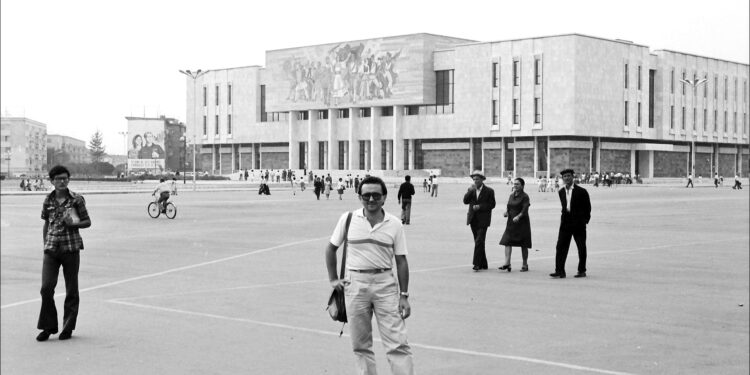
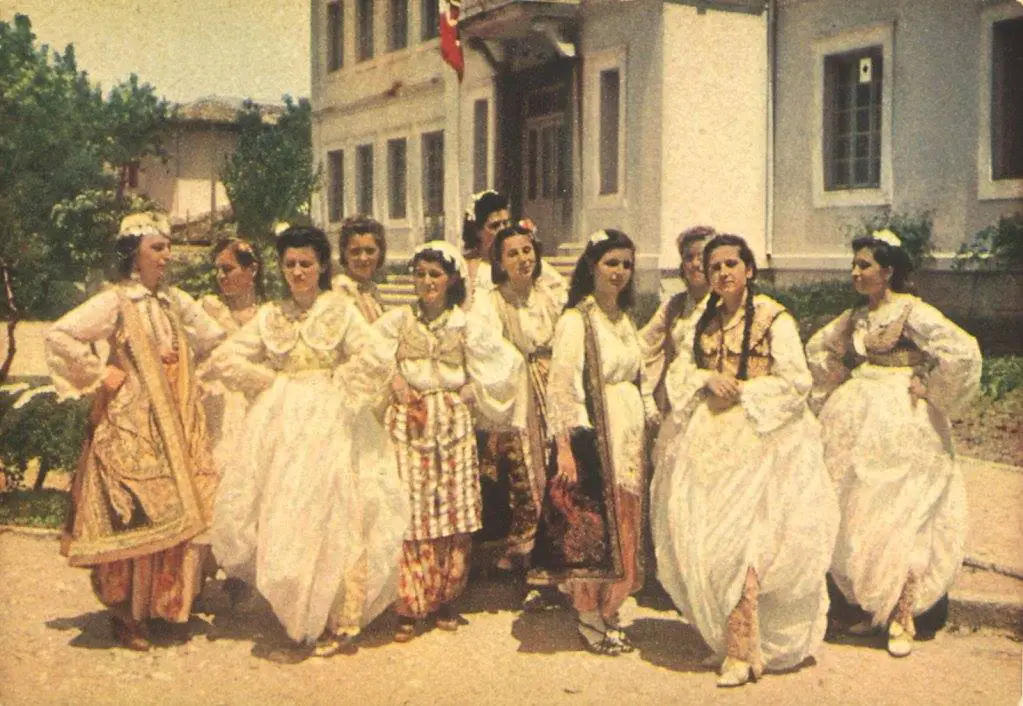
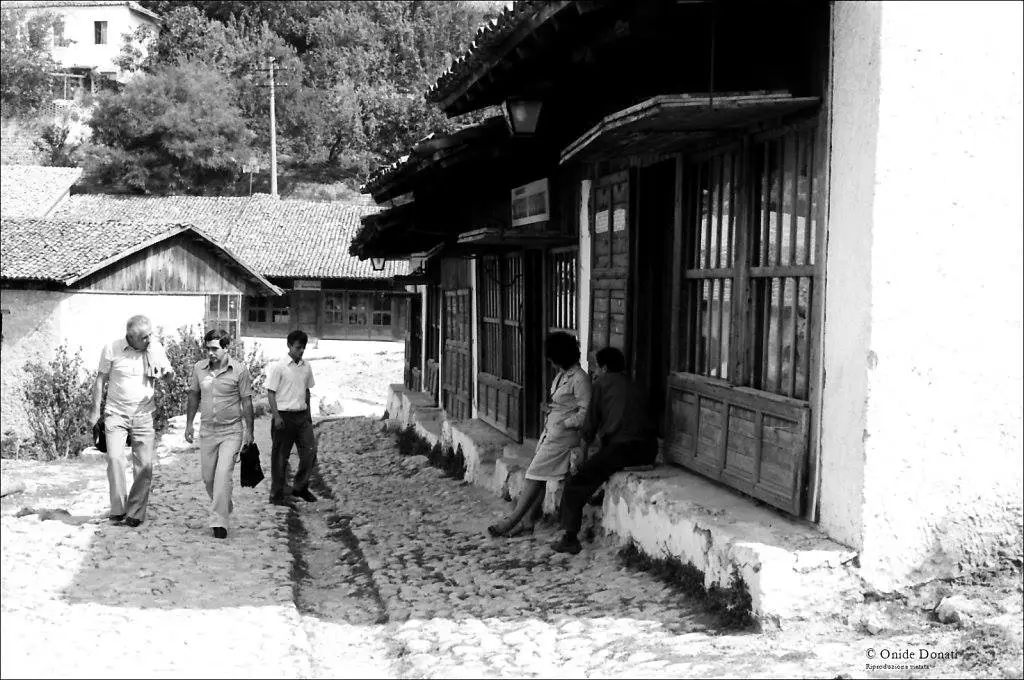
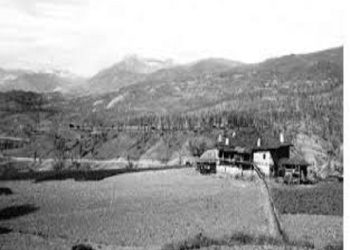
Memorie.al / The images of Onide Donati resurfaced from a dusty box that had survived three moves. Inside was a fragment of Albania’s memory from a difficult period in its history. It was the end of the summer of 1982, more precisely September 21–27. He has always believed that he is among the few who captured on film – and later preserved – photographic images dating from a different political and historical era.

The Story

Gjithashtu mund të lexoni

“When Isak Alla is summoned by the Communist Party District to Miftar Hoxha’s house in Miraka and asked to join them with his squad, he…”/The unknown side of the conflict between nationalists and partisans!

“Rikard, do you remember ’97, when I asked you why you didn’t flee to Greece and you told me; I’d rather die from a blind bullet of my compatriots than…”!/ ​​Memories of a friend of Shkodra artists

In the distant year of 1982, he learned from an advertisement by an agency in Rimini specializing in travel to Communist Eastern countries. For the first time, Albania was being proposed, and he thought it was an enticing opportunity to go and discover the mysterious country on the other side of the Adriatic.

The Journey

Previously, he had had only one contact with an Albanian citizen: a truck driver carrying a load of tomatoes whom he had met in Austria. He proposed the trip to several friends, and four of them joined him.

The Memories of Onide Donati

“We entered Albania from Montenegro; the border crossing was at Hani i Hotit, judging by the possible crossing points on the map. I remember the bus dropped our group in front of a barracks, and the Yugoslav border guards directed us without formalities toward the barrier marking the frontier. On our right was Lake Shkodra. After crossing a hundred meters of no man’s land, the Albanian border guards took charge of us.

On both sides of the building, Yugoslav and Albanian soldiers watched each other, fully armed, apparently with a round in the chamber. Customs procedures were long and meticulous. Each tourist was inspected and every bag was opened.

Books were compared with a list held by the border guards, and many were confiscated. Newspapers such as Corriere della Sera and La Repubblica passed inspection, but not L’Unità (the newspaper where I would later work for more than thirty years).

In any case, all items were returned to us on the way back, at the same crossing. My cameras passed unharmed. After customs procedures were completed, the group was entrusted to two guides (a young man and a young woman), and we boarded a Fiat minibus.

Albania in 1982

Our first stop was Shkodër, which we reached after skirting the lake. In the city we found ourselves immersed in another era. Shkodër was very poor, half in ruins. I was struck by the sadness of the people and their already withdrawn demeanor. The group was carefully monitored; contact with locals was impossible, but their eyes were enough to understand many things.

“You may take photographs, but the more discretion you use, the better it will be for you,” was the instruction given by our escorts. The only prohibition was pointing the camera at the concrete fortifications (bunkers for firing positions) scattered everywhere – an impossible defensive garrison against an enemy invasion. It was precisely in Shkodër that I noticed several times I was being monitored. On one occasion, a person approached me and made it clear that I should not take photographs.

The trip was intense; we were never allowed to stay more than one day in the same place. From Shkodër we went to Tirana, from Tirana to Durrës, from Durrës to Berat, from Berat to Elbasan, and then back to Shkodër.

We stayed in simple but dignified hotels and ate modestly. The rare dialogues with locals permitted by the guides took place without language problems, since almost everyone knew Italian, learned from television.

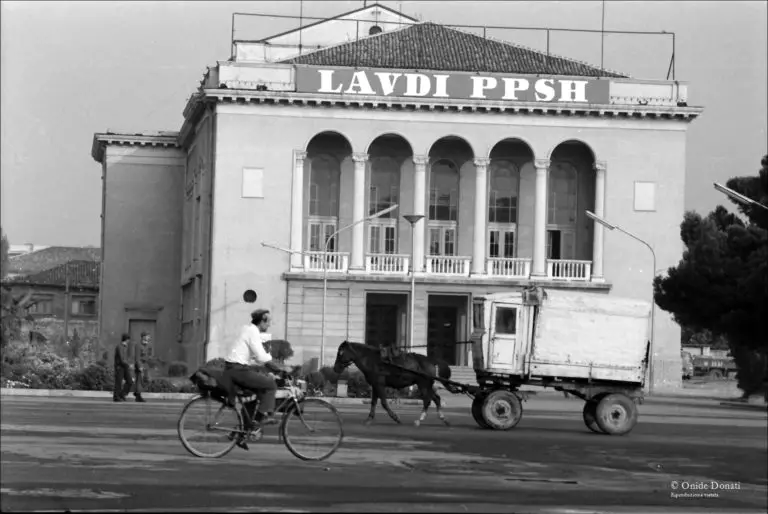
I kept no travel notes, so I rely on memory. Certain flashes remain vivid. Meanwhile, there was the obsessive exaltation by our companions of the General Secretary of the Communist Party, Enver Hoxha, who had ruled the land of the eagles since the end of the Second World War. I remember the slogan “Glory to our beloved leader, Comrade Enver Hoxha,” written everywhere – even on mountain ridges, with stones arranged to form words.

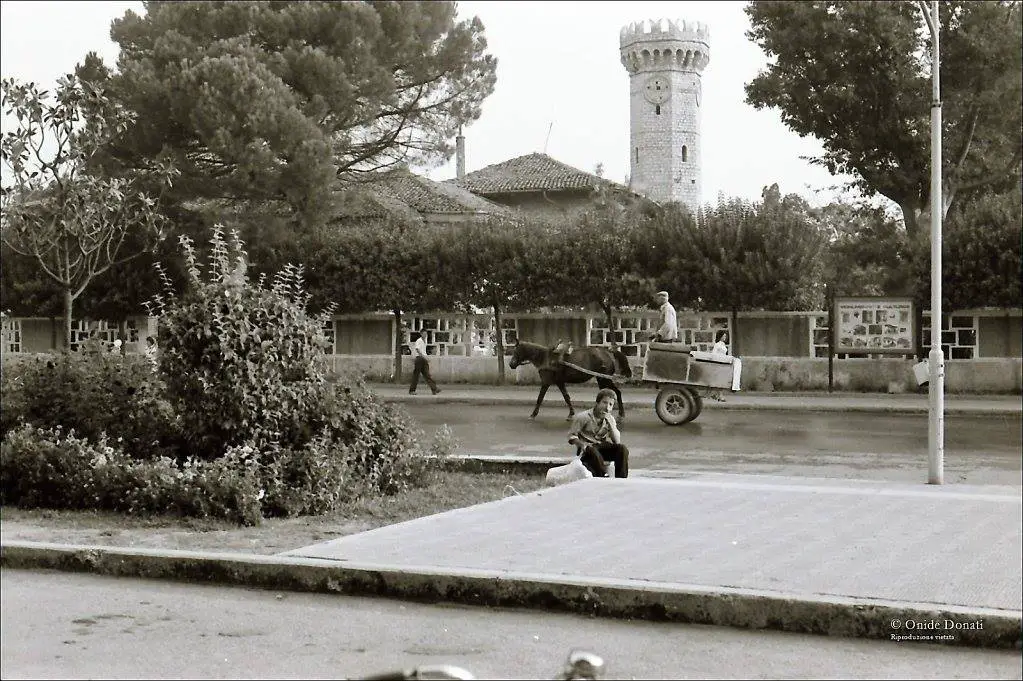
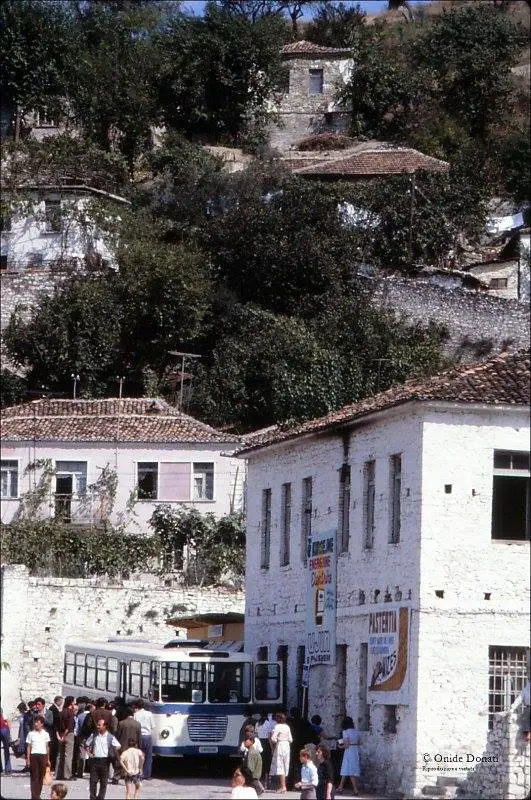
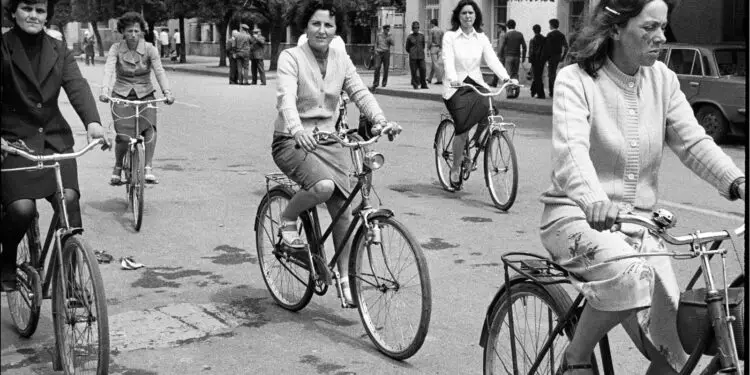
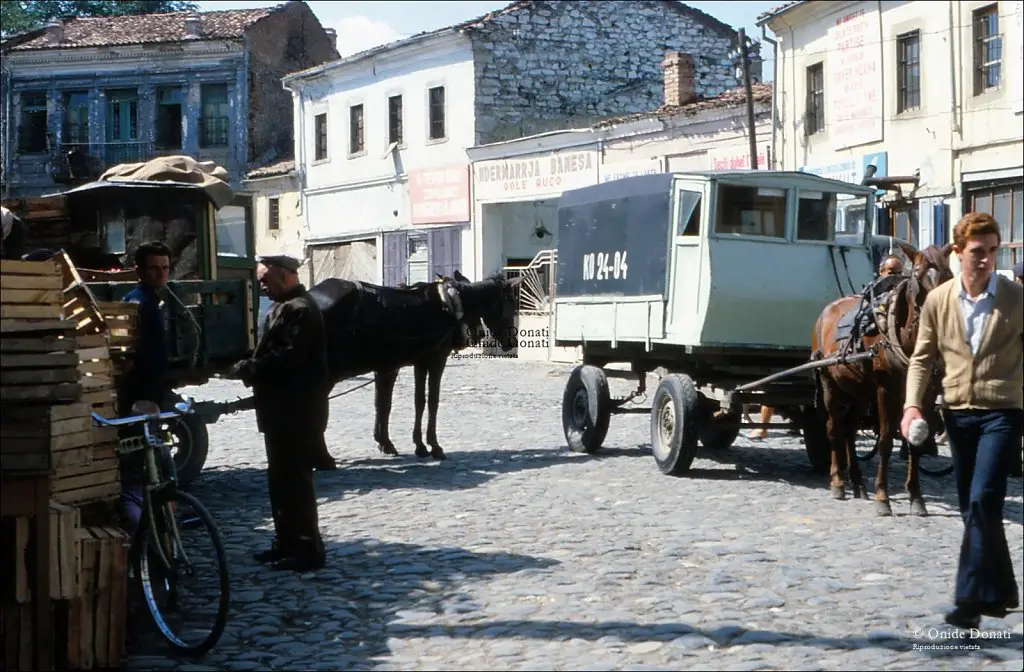
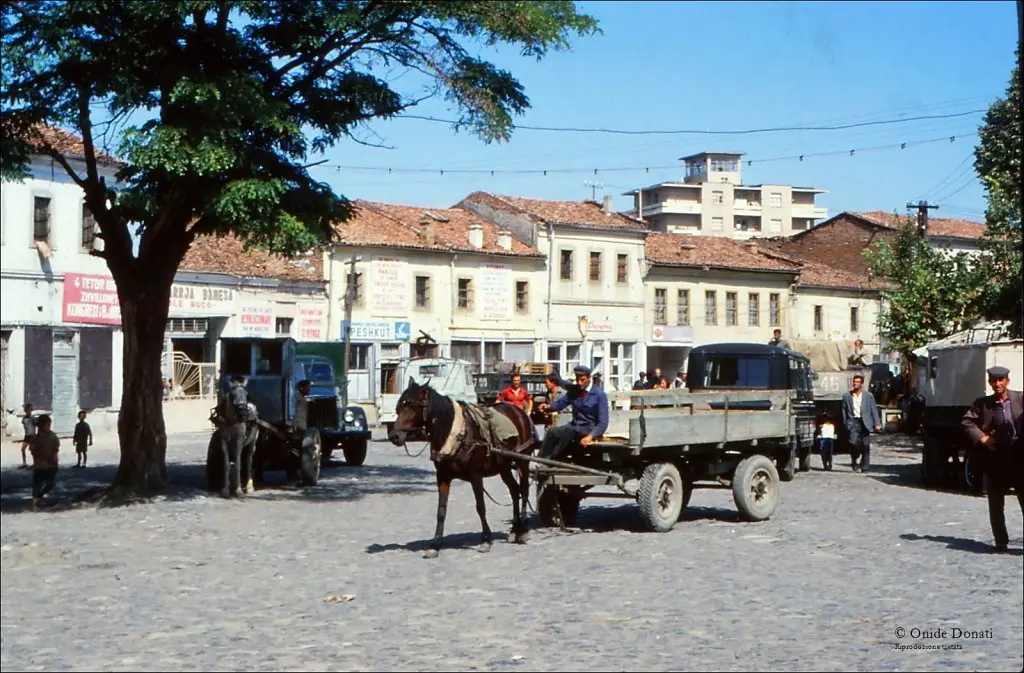
And then the absolute absence of cars: small roads occupied by bicycles and carts pulled by horses and donkeys; a few rare motorcycles; some public buses (I believe manufactured in Czechoslovakia); old Chinese trucks; a few rare and modern Fiats. Trucks used to export goods (I believe agricultural products) to the capitalist West.

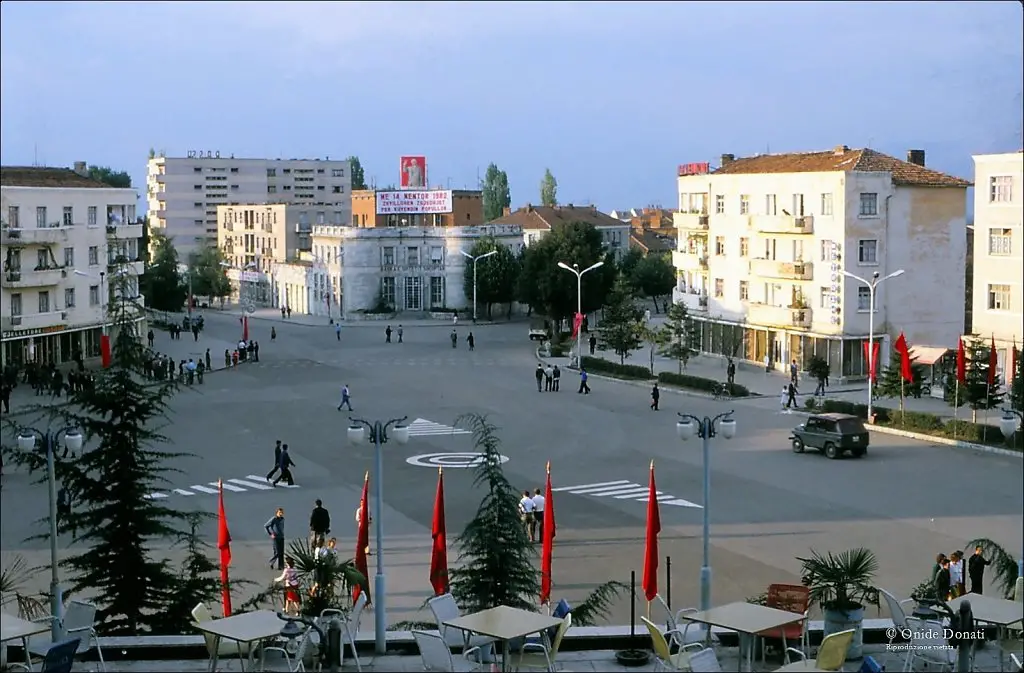
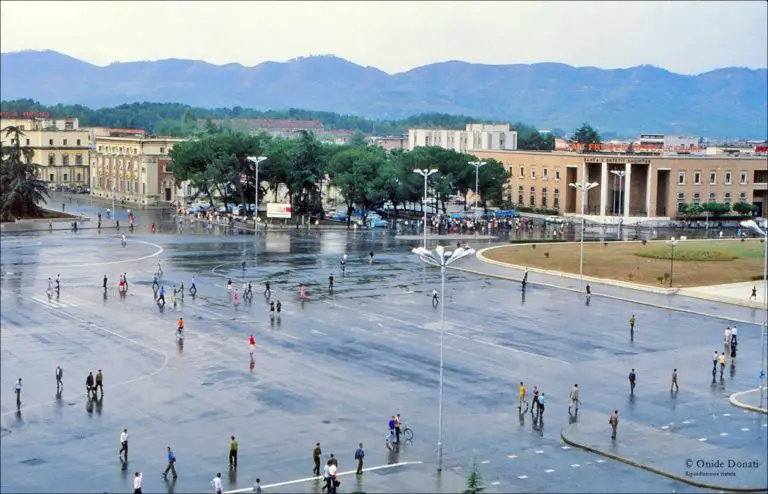
In Tirana, where the standard of living was higher than in the rest of the country, one would occasionally see some cars, usually Mercedes vehicles from embassies and ministries. Road and square infrastructure seemed of better quality in the capital, poor elsewhere.

I was struck by the desolation of the city of Durrës, the rust of its port – from which, ten years later, ships of refugees would depart. I was deeply affected by the veiled women: “ethnic tradition,” our Albanian guides told us, but in reality it was a clear religious manifestation in a country founded on atheism.

It was an awkward moment in Elbasan when, in a restaurant – perhaps thanks to a few too many glasses of raki – some members of our group began singing and dancing to “Tuca Tuca” by Raffaella Carrà, asking the orchestra to accompany them.

Carrà was very well known in Albania, and the musicians sketched out the notes of the song. But this was categorically interrupted by a Party official who had suddenly appeared. Another unpleasant episode occurred at the end of the trip, on the way back to Shkodër. A lady from our group, upon leaving, had left at the hotel a package of clothes labeled: “For the poor.”

The package was returned to her on the bus by the usual official, who sternly reprimanded her, explaining that in Albania there were no poor people and that they did not accept charity from Western capitalists like us. Most of the group protested, and the end of the journey concluded in a tense atmosphere, after a stop on the shores of Lake Shkodër. Border authorities returned our confiscated items grudgingly and made us transit through Montenegro without even deigning to say goodbye.

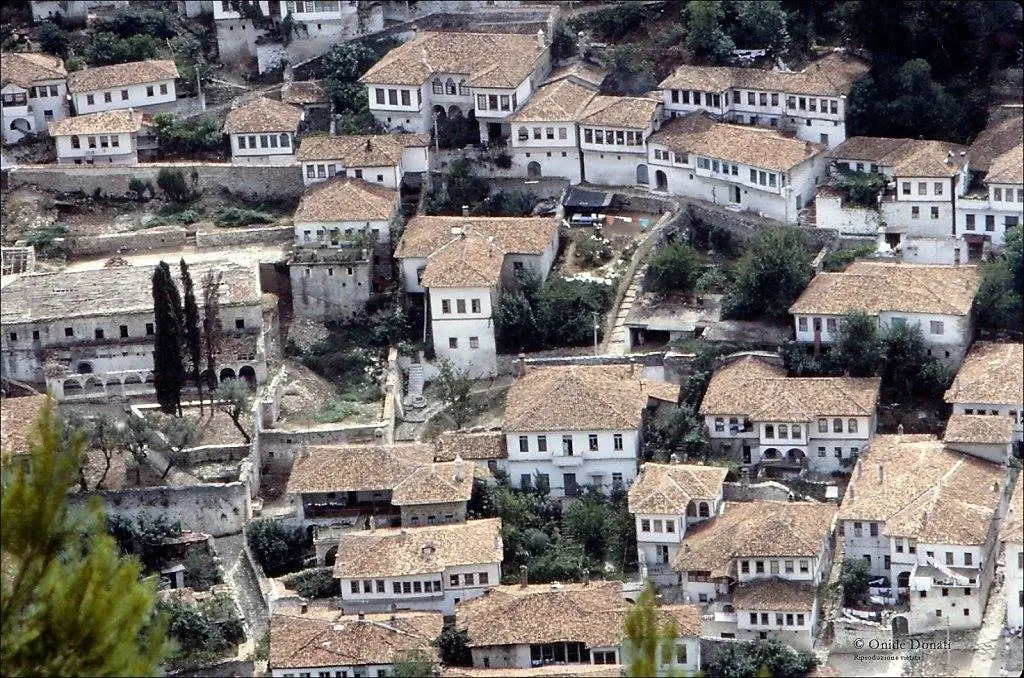
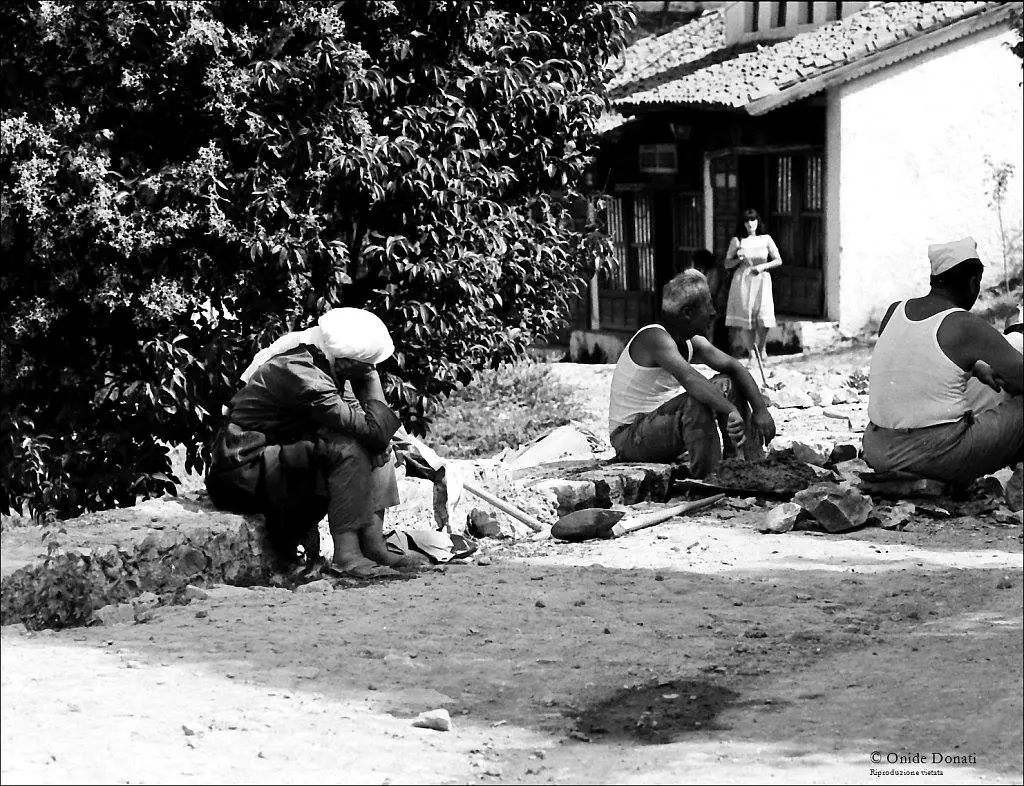
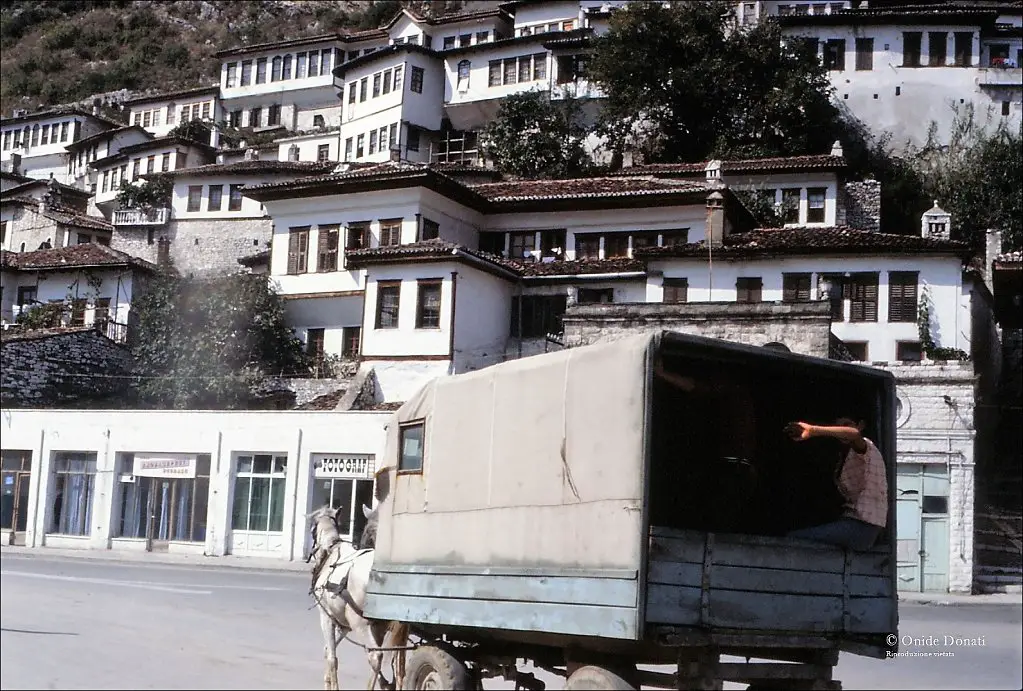
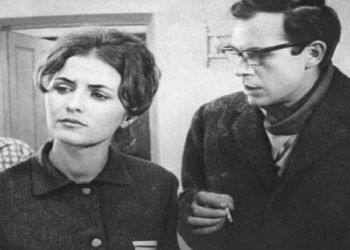
I am aware that my photographs do not possess any particular artistic or technical value. Nevertheless, I believe they document the climate of that year, 1982, in Albania, in the midst of the dictatorial rule of Enver Hoxha.

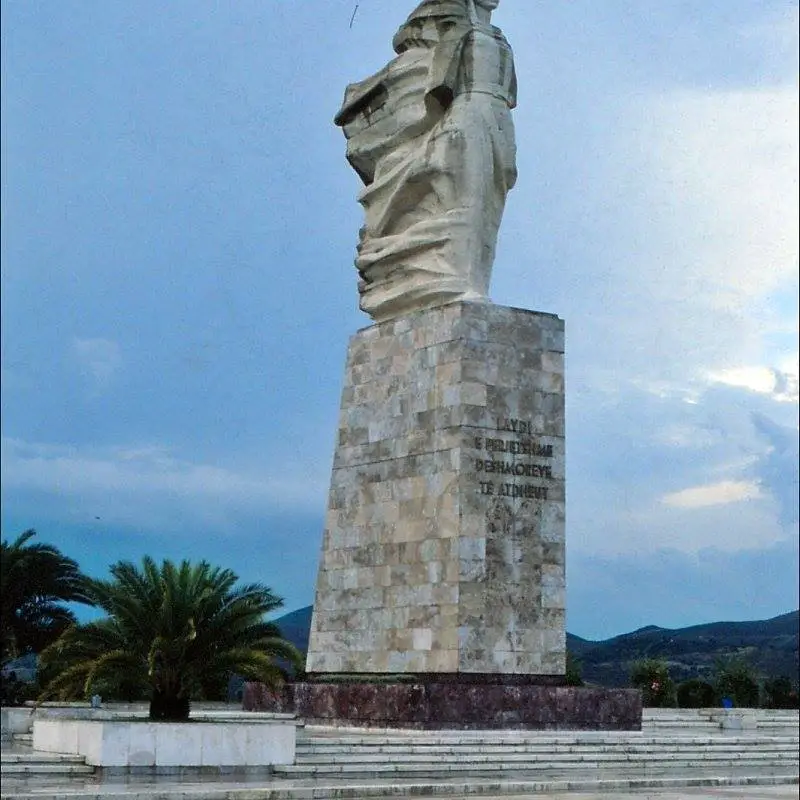
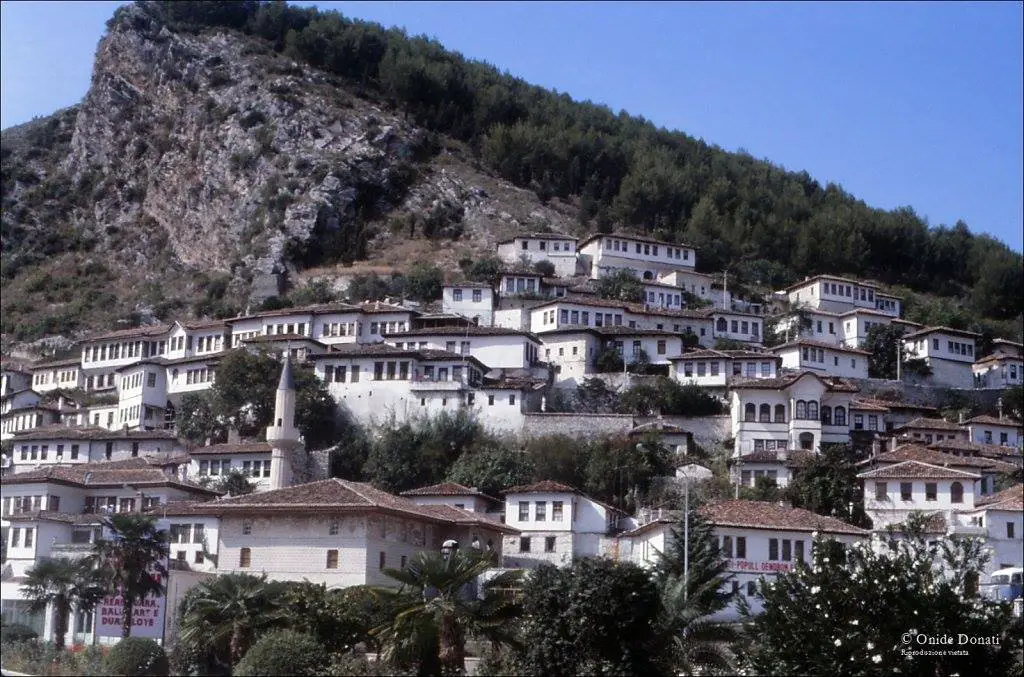
It is difficult for me to attribute essential information to each photograph. I recognize some cities – first and foremost the unmistakable and characteristic Berat. Two of the most beautiful photos, those of the ice cream vendor with his cart, were taken in Tirana. The statue of Stalin, beneath which I took my photograph, was undoubtedly in Shkodër, as I was able to verify on Google.

Considering what I saw and documented in Albania in 1982, what has happened since seems like a miracle. I would like to retrace the steps of that distant journey. Sooner or later, I will.”/Memorie.al
ShareTweetPinSendShareSend
Previous Post

“Anton Mazreku was not merely a football commentator; he excelled in poetic creation, literary essays, and the artistic translation of poetic works...” / The unknown side of the master of the sports microphone.

Artikuj të ngjashëm

“When Isak Alla is summoned by the Communist Party District to Miftar Hoxha’s house in Miraka and asked to join them with his squad, he…”/The unknown side of the conflict between nationalists and partisans!
Dossier

“When Isak Alla is summoned by the Communist Party District to Miftar Hoxha’s house in Miraka and asked to join them with his squad, he…”/The unknown side of the conflict between nationalists and partisans!

March 7, 2026
“Rikard, do you remember ’97, when I asked you why you didn’t flee to Greece and you told me; I’d rather die from a blind bullet of my compatriots than…”!/ ​​Memories of a friend of Shkodra artists
Dossier

“Rikard, do you remember ’97, when I asked you why you didn’t flee to Greece and you told me; I’d rather die from a blind bullet of my compatriots than…”!/ ​​Memories of a friend of Shkodra artists

March 6, 2026
“Flag Day, November 28, is not being celebrated, while November 29 – which is the day of Albania’s occupation by the beast – is…” / The tracts of Shkodra’s lyceum students in 1948, which shook Enver Hoxha’s regime.
Dossier

“Flag Day, November 28, is not being celebrated, while November 29 – which is the day of Albania’s occupation by the beast – is…” / The tracts of Shkodra’s lyceum students in 1948, which shook Enver Hoxha’s regime.

March 5, 2026
“As soon as Kosygin left, Kissinger ran to the Middle East and the world was told that he went with a ‘peace plan’ for…”/ Writing by Enver Hoxha, December 1973, about the conflict between Israel and the Arab countries
Dossier

“As soon as Kosygin left, Kissinger ran to the Middle East and the world was told that he went with a ‘peace plan’ for…”/ Writing by Enver Hoxha, December 1973, about the conflict between Israel and the Arab countries

March 5, 2026
“Xhavit told Xhafer Vokshi that the house of Aqifi and Haxhi Lleshi’s father were eaten by every government, therefore they were never patriots, but…” / Eavesdropping of “Vigëlent” for the internees of Zvërnec
Dossier

“At his trial, when one of the witnesses testified, that when Shefqet Dobra was asked; who could be elected in place of Hysni Kapo, he was told…”/ The unknown story of the Dobra family from Librazhdi

March 7, 2026
“Tonin, oh how many nights we spent in that beloved room, where you and Justi would sing until sunrise – oh God, what a pleasure…!” / The memories of the former liberal prosecutor, the friend of Shkodra’s artists.
Dossier

“Tonin, oh how many nights we spent in that beloved room, where you and Justi would sing until sunrise – oh God, what a pleasure…!” / The memories of the former liberal prosecutor, the friend of Shkodra’s artists.

March 6, 2026

“Historia është versioni i ngjarjeve të kaluara për të cilat njerëzit kanë vendosur të bien dakord”
Napoleon Bonaparti

Publikimi ose shpërndarja e përmbajtjes së artikujve nga burime të tjera është e ndaluar reptësisht pa pëlqimin paraprak me shkrim nga Portali MEMORIE. Për të marrë dhe publikuar materialet e Portalit MEMORIE, dërgoni kërkesën tuaj tek [email protected]
NIPT: L92013011M

Na ndiqni

  • Rreth Nesh
  • Privacy

© Memorie.al 2024 • Ndalohet riprodhimi i paautorizuar i përmbajtjes së kësaj faqeje.

No Result
View All Result
  • Albanian
  • English
  • Home
  • Dossier
  • Interview
  • Personage
  • Documentary
  • Photo Gallery
  • Art & Culture
  • Sport
  • Historical calendar
  • Others