Memorie.al / Denunciation of Serbian massacres in the early 20th century were not done only by Albanians or local heads of their administrative units. The periodical of the time also “lines up” on the side of those denouncing the Slavic-Montenegrin murderers.
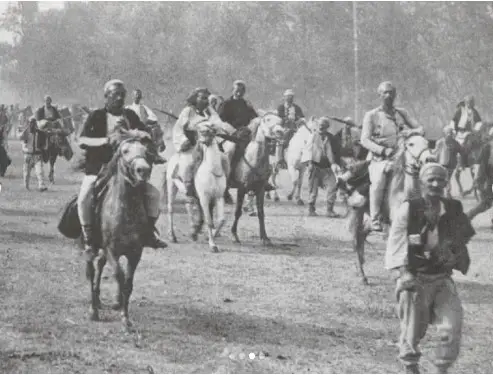
“In Podrime, near Gjakova, in the Bajrak of Asterzub (one of the most renowned bajraks for its men), a fierce battle took place last week that lasted four days and nights. The people of Podrima, unable to endure any longer the atrocities of the Serbs, who – besides trying to forcibly Serbianize – raped women and girls, rose up together with the manhood born of despair and, lacking firearms, took up swords, axes, and clubs. About sixty men with rifles, who were in the mountains, joined those without guns. The Serbs, although they had five cannons and four battalions, did not manage to quell that uprising, which was quenched in blood with the arrival of five Montenegrin battalions with four cannons, who attacked our men from behind.
The people, tormented by the enemy’s vermin, have crossed into the borders of Albania, but of those who fled, only 860 individuals have survived. A great many drowned in the Drin while fleeing. The Serbs were not content with burning only the houses of the insurgents, but also those of the entire bajrak. The number of burned houses is at least 1,800. Neither mouth nor pen can describe the merciless cases, the carnage, and the atrocities! Long live diplomacy and the International Court of Justice!”
(Newspaper “Taraboshi”, 6-7 April 1914)
Complaints from Peja
“In Malci of Peja, specifically in Gjorgjevik, the Montenegrins, seeing an insurgent coming out of his house – as they could not capture him – driven by their vile feelings, set fire to the house, inside which they burned alive sixteen captives, mostly women and children. This vile incident occurred about ten days ago. The house belonged to one Ahmet Brahimi, who lost his life along with all his kin and friends.”
(Newspaper “Taraboshi”, 22-23 April 1914)
Slavic misdeeds, 180 men dismembered in Ponashec
“Without any cause whatsoever, 180 brave men, a few days earlier, were put to the knife and cut down mercilessly by the Montenegrin government in Ponashec, in the Highlands of Gjakova. Forty large houses of this village were burned after their goods and livestock were looted. Three hundred and fifty women and small children, after being stripped of everything, were driven out across the border into the Highlands of Gjakova, which remains Albania, where they are dying of thirst and cold.
These things are happening now, these very days, when Montenegro, with its consuls and bravado, is seeking friendship with Albania so that goods may pass freely into Cernagore [Montenegro], where the people are suffering because of the war. It is a great shame that in this century, in the heart of Europe, people should be slaughtered and butchered in such a bestial manner. What then will the English liberals, the civilized French, say about their Slavic friends?”
(Newspaper “Besa Shqyptare”, 17 April 1915)
Montenegrin atrocities
“A few days ago, members of the Cetinje government denounced Sadik Rama of Ponashec for a Mauser rifle he had hidden. Seeing himself cornered and his house in danger, Sadik Rama handed over the old weapons. For this reason, Sadik Rama, along with his family, fled and entered Albanian territory. The Montenegrins seized his house and property, entering by force. When Sadik Rama learned that his house had been made a military post, he set out with some companions, taking with him a chisel with which he broke through the wall of the house and entered, shooting the guards who had fallen asleep.
Because of this incident, the barbaric and unreasonable government informed Veshoviq in Gjakova, who sent named soldiers to surround Ponashec and half of Morina at night, and by day, all males over 10 years old were to be beaten. The rest, women and children, were to be driven by force from their own houses, leaving behind their livestock and property, to go into Albania.”
(Newspaper “Besa Shqyptare”, 29 April 1915 – a news item that should have been published on 27 April 1915)
Serbian atrocities
“From people coming these days to the Albanian lands under Serbian rule, we learn of the evils that the Albanian people are suffering, about which we have written many times. Albanians are not only robbed, imprisoned, dishonored by Serbian officials, and killed without any fault, but the Serbian government also wants to show the outside world that in these events – which it calls Albanian uprisings – some notables (pashas – note by V.H.) of free Albania have a hand.”
(Newspaper “Besa Shqyptare”, 3 June 1915)
“In the village of Ponashec in Reka e Gjakovës, the Montenegrins have killed and torn apart 116 people, among whom were women and children. Most of these innocents were dismembered in a bestial manner. The Montenegrins, having finished this vandalism, have driven the remaining families across the border. This village has 36 houses. Let these atrocities be heard by those who claim to be fighting for the freedom of nations, while they support those who mercilessly kill innocent people.”
(Newspaper “Populli”, 14 April 1915)
“On the 11th of this month, the Serbian government ordered that all livestock be taken away. In a village near Gjilan, they gathered 1,400 cows, goats, and sheep, without giving any receipt to the owners. The wretched Albanians of Kosovo are suffering misery from the plundering of the Serbian government.”
(Newspaper “Populli”, 30 May 1915)
Albanians in Serbian prisons
“We are informed that the Serbian government, just as it earlier killed eight bajraktars (chieftains) who were accused of having an agreement with a bey of Kosovo, has now begun to imprison some innocent Albanians because they had relations with Hasan bey Vuçiterni. In this way, they have also imprisoned Muharrem efendi, the cousin of Hasan Bey. These events are not surprising, because the Serbs are accustomed to barbaric acts.
One is imprisoned because he is Albanian, another to be flayed worse than in the time of Hamid (Sultan Hamid – note by V.H.). We know that the Serbian regime does not want to hear from our writings, but so be it. We make these notes to remain as memories for tomorrow, so that the Albanians of a free Albania may see what bondage and self-denial mean.”
(Newspaper “Populli”, 30 May 1915)
Excerpt from a letter received by the Kosovo Committee on 5 February:
“According to reliable news we are receiving from Peja, the people there are suffering under a cruel and plundering rule. There is no security of life. A man is killed for no reason, without being questioned or mourned. Those who have property in Peja and its districts are being fined and robbed from 5,000 up to 500,000 crowns. The Albanian notables are scattered in various houses, because the Serbs have posted a guard at every door and do not let them speak to anyone.
In the region of Rugova, which lies between Peja and Plava, the Serbs have brought three mule-loads of soldiers, and everything this army needs to live have been imposed on the people of Rugova. And so the people there are dying of hunger. It is known that the people of Rugova are so poor that they live by selling loads of wood in the market of Peja…”
(Newspaper “Populli”, 10 February 1919)
In Plava and Gucia
“According to accurate news that arrived yesterday in Shkodër, Serbian and Montenegrin komitadjis, after a bloody battle that lasted five consecutive days with the local Albanian population, have forcibly captured Plava and Gucia, causing great destruction and damage with cannons, besides the people who were killed in this clash. The village of Vuthaj, of 200 houses, has been almost completely razed under the fire of cannons. Groups of refugees are expected to arrive in Shkodër.”
(Newspaper “Populli”, 25 February 1919)
The people of Plava, Gucia, and Rugova as refugees in Shkodër
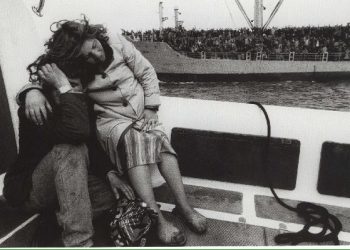
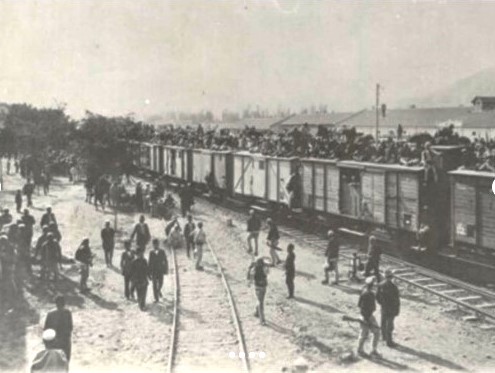
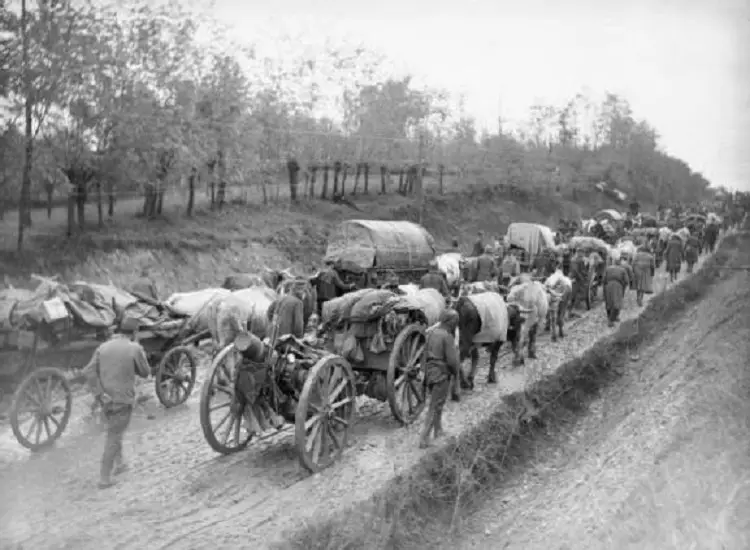
“The day before yesterday, on Monday, the first group of refugees began to appear in Shkodër, and of this unfortunate people of Plava and Gucia, the line of their pitiful suffering has not yet ended. Among these refugees, the people of Rugova also appeared in their own place, because that region too has been burned and devastated by the Yugoslavs…! This Albanian population, forced to become refugees, numbers up to fifteen thousand souls, but a part has gone toward the Highlands of Gjakova. The number of those who have been killed cannot be known, because, as they say, ‘the dog does not know its master’.”
(Newspaper “Populli”, 28 February 1919)
Also in Hot and Gruda
“We learn that the Serbo-Montenegrins, following their ‘achievements’ against the people of Plava, Gucia, and Rugova, have now recently also entered Hot and Gruda. With the haste of these ‘masters’, we find ourselves like Nastradin Hoxha when they told him the oven had fallen.”
(Newspaper “Populli”, 8 March 1919)
Aid for the refugees
“His Excellency General B. de Fourton, commander of the Allied forces in Shkodër, had the generosity to give these refugees 1,000 crowns and 500 kg of flour. Mr. Musa Juka gave 1,500 crowns, Mr. Sulçe Bey 500 crowns, etc. Total aid given was 23,150 crowns.”
(Newspaper “Populli”, 8 March 1919)
List containing the barbarities and atrocities of the Serbs committed over two years in Kosovo
Century of Civilization
| Regions | Killed | Imprisoned | Injured from beatings | Houses burned | Houses looted |
| Lumë and Prizren | 836 | 2,700 | 120 | 770 | 1,562 |
| Gjakova | 68 | 200 | 25 | 56 | 78 |
| Peja | 1,510 | 3,800 | 240 | 714 | 1,970 |
| Mitrovica | 133 | 1,700 | 30 | 42 | 104 |
| Vučitrn | 2,179 | 2,940 | 215 | 1,463 | 2,431 |
| Prishtina | 4,600 | 3,650 | 350 | 1,340 | 2,190 |
| Ferizaj | 1,695 | 2,400 | 190 | 720 | 960 |
| Kaçanik and Elez | 340 | 1,300 | 160 | 295 | 350 |
| Gjilan | 680 | 2,400 | 220 | 450 | 630 |
| Presheva | 260 | 970 | 85 | 180 | 240 |
| Rugova, Plava, Gucia | 1,740 | 300 | 70 | 180 | 240 |
“This is the general nominal list of Albanians killed in Kosovo by the Serbian gendarmerie and Serbian disciplinary forces, sent to us by the National Defense Committee of Kosovo. In all regions of Kosovo, bribes ranging from 5,000 to 30,000 dinars are taken from prisoners for their release. But they are again arrested and imprisoned to be fined anew.
Prefects and sub-prefects are changed frequently, solely to imprison and fine the entire population. Prisoners are not sentenced until all their property has been taken as a bribe. It has often happened that people have been imprisoned and released 7–8 times, each time being very heavily fined. In prisons, many have died from beatings.” / Memorie.al
(Newspaper “Koha”, 30 April 1921, Korçë)