

By Harallamb KOTA
Part Two
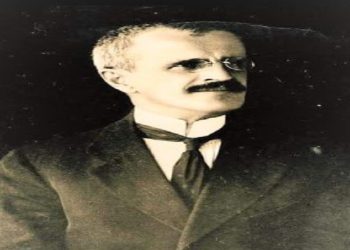
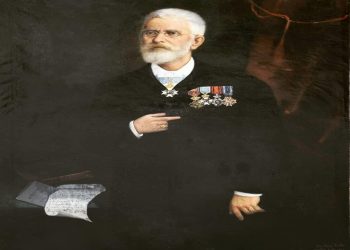
Memorie.al / Fierce Albanian anti-communists, among them Mit’hat Frashëri and Koço Kota, foresaw early on the danger of the Slavic-communist invasion, which swept furiously into the Balkans and Albania. According to Eugen Shehu’s perspective, the events of the autumn of 1944 unfolded such that with the fall of the Third Reich, the Albanian national-liberation forces gained the time and opportunity to fight their political opponents. Under these conditions, dozens of Albanians left their homeland. Such a fate also befell Nuçi Kotta, the son of the former Prime Minister Koço Kota. He left for Italy, and from there moved to France, where it is known he found it easy to climb the career ladder. However skeptical in their predictions, Mithat Frashëri and Koço Kota had not foreseen the exodus of the Cham Albanians that occurred in the years 1944-1945, nor the organized persecutions by the Tirana regime in the coming years against Albanian nationalism and elements supporting the return of King Zog.
Continued from the previous issue
Kostaq Kota: I do not know this. This is what the Mayor, Agathokli Xhitoni, told me.
Koçi Xoxe: Fejzi Alizoti told us that Koço Kota was against the resistance!
The Witnesses: Fejzi Alizoti is questioned as a witness, and the opposite of Koçi Xoxe’s claims is proven.
Later, the statements of Kostandin Mine and Frederik Nosi against Koço Kota are read.
Koçi Xoxe: But why do these men testify? Do they perhaps have a grudge against you!?
Kostaq Kota: As I said, I have not signed any act of submission. If I were of that opinion, I would not seek to enter into an agreement for a movement here in Albania.
Koçi Xoxe: When and why did you come to Thessaloniki?
Kostaq Kota: After the capitulation of Italy, I came from Athens to Thessaloniki to enter Albania, because I had learned from the newspapers that Albania was independent…!
Koçi Xoxe: Were you appointed by the Balli [Kombëtar] and the Government, through Xhavit Leskoviku, as a delegate of Legaliteti in a military alliance with the Greek reaction?
Kostaq Kota: I learned of this letter here, and I am very sorry. It is completely absurd that, with a letter from an unknown organization, I would be presented for a military alliance.
The Sentencing, Imprisonment, and Death of Former Prime Minister Koço Kota
After the court sessions ended, the Prosecution, directed by Koçi Xoxe, requested the death penalty for former Prime Minister Koço Kota. But here, a problem arose.
The Special Court sentenced the former Prime Minister to 30 years in prison
The question arises: Why did the Court not accept the Prosecution’s request? The answer is: Because from the materials of the trial proceedings, there was no evidence to sentence him – not for 30 years, but not even for a single day. Andon Sheti accompanied the former Prime Minister to room No. 7 of Burrel prison. Later, they put him in an unnumbered cell. According to Avni Bejkova, a fellow sufferer in Burrel prison whose account was published in the newspaper “Shqip,” we learn the following:
“I first met Koço Kota around the end of 1946 in Burrel prison, where I had been sent to serve a 25-year sentence. From the very beginning of our arrival there, we understood the purpose of why they had brought us, and everyone became convinced they would not come out of there alive. There, better than anywhere else, Dante’s saying was embodied and put into practice: ‘You who enter here, leave all hope outside, for you may never leave here alive.’
Nevertheless, hope is the last to die. Even under those conditions, I had the desire and curiosity to know some of the former high-ranking politicians from the time of the monarchy and the war period, about whom we had heard and read in the newspapers. In these circumstances, I had the chance to know Koço Kota closely; he was a very serious man, spoke very little, and had a limited circle of friends. Koço was friendly and stayed mostly with Qemal Vrioni, Mihal Bellkameni, and Major Atif Golja, who were very intelligent and serious men.”
In Burrel prison, everything was on the edge of the unimaginable. According to Avni Bejkova, the case of Koço Kota and his three companions – Vrioni, Bellkameni, and Golja – is unique for the beastly and inhuman methods used to bring about their deaths. While they saw how proudly the patriot from Korça, Dr. Koço Kota – whose name brought honor to his nation – carried himself in the dark dungeons, the criminal anti-Albanian Slavic-communist segments preferred a gruesome death for him.
They left him for days without bread or water. They gave him salt, struck him with whatever they could, even with bayonets, and his cries were desperate. Prisoners have recounted that they heard the word “bread, bread, bread” for hours on end, until it began to fade. From the torture of beatings, hunger, and thirst, abscesses formed on several parts of his body. The flesh on his body began to crack from this situation, and then his voice could no longer be heard at all. Instead of helping or treating him, the guards would cut his flesh with bayonets in the places where it had cracked, until his final death came.
Death in the Prison He Himself Signed to Build
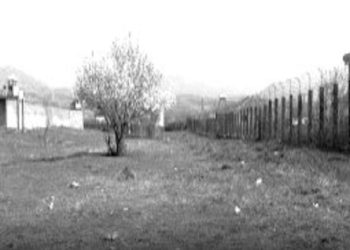
Referring to the book “Dreams of Exile” (Ëndrrat e Mërgimit) by writer Albert Zholi, Koço’s story perhaps reminds one of mythology. When he signed for the start of the prison’s construction, he could never have imagined that he was also signing for the place of his own death. Former Prime Minister Koço Kota was buried in the prison yard at what is called the “famous cherry tree.” Based on official documents, the death certificate issued by the Civil Registry Office of Korça states that Kostaq (Koço) Kotta died in Burrel on September 1, 1947, at 5:00 AM.
The administration of Burrel prison, forced by the Minister of the Interior, Koçi Xoxe, wrote in the death report: “…accidental death…”. Anti-Albanian, Serbo-communist, and “Xoxe-ist” segments fabricated all sorts of denigrating stories about the life and death of the patriot and distinguished Albanian statesman, former Prime Minister and former Speaker of Parliament, Koço Kota.
The Sentencing of Koçi Xoxe: Proof of the Farce Trial against Prime Minister Kota
The tragic death of former Prime Minister Koço Kota was an evil omen at the foundations of the new communist state. The discovery of traitors, the sentencing of opponents, and political killings would not cease. The most sensational process within the “communist clan” was against Enver Hoxha’s closest man, the Yugoslav agent Koçi Xoxe.
According to Kastriot Dervishi, on January 10, 1949, to implement Stalin’s directives, an investigative commission was established against the “unprincipled bandit Koçi Xoxe” and “his group.” The commission would, in truth, reveal issues that had been general work practice during the years 1944-1948.
By an irony of fate, the Albanian-Macedonian Koçi Xoxe faced a prosecutor with whom he had sent 17 people to their deaths in the “Special Trial,” while imprisoning and harming about 43 others. The Special Investigative Commission, among other things, accused Koçi Xoxe of violating Article 63 of the Statute of the People’s Republic of Albania, having ordered and committed:
- Illegal mass arrests,
- Torture,
- Murder and internments,
- Taking illegal actions that led to the “suicide of Nako Spiru,”
- Exploiting his positions in the party and the state and embezzling money from the Ministry of Interior’s treasury.
The Judicial Process against Koçi Xoxe Began on May 10, 1949, in Tirana
Hundreds of people’s names were mentioned during the interrogation sessions to highlight the criminal actions committed by Koçi Xoxe. A grave case was that of the death of lawyer Myzafer Pipa, after torture with red-hot irons driven to the bone, which, after much suffering, caused the tragic loss of his life – which the Sigurimi manipulated by presenting it as “killed during an escape attempt.”
Another grave case was that of the death of former Prime Minister Koço Kota. Before the investigative commission, cases were mentioned regarding the step-by-step reduction of food by the Sigurimi, which led to the deaths of many prisoners, among them former Prime Minister Kostaq Kotta in Burrel.
Koçi Xoxe and others confessed during interrogation that the Sigurimi had used numerous means of torture against various citizens, having in every case the support and backing of the Politburo, which made the decisions for such cases.
Xoxe emphasized that the organization of the Sigurimi had been done by Yugoslav officers of the OZNA. On June 4, 1949, prosecutor Bedri Spahiu requested the death penalty for Koçi Xoxe. On June 10, 1949, the Criminal Judicial Council of the Supreme Court delivered its verdict: Koçi Xoxe – death by firing squad.
On June 11, 1949, at midnight, the execution of the “bandit Koçi Xoxe” took place. With the shooting of the bandit Xoxe, a thread of the Yugoslav agency had been eliminated. In fact, the Slavic-communist danger to Albania, warned of by the royal Prime Minister Dr. Koço Kota, had already taken on catastrophic proportions. / Memorie.al