

By SAMI REPISHTI
Part Nineteen
Sami Repishti: – “In Albania, the communist crime of the past has not been documented and punished; there has been no ‘spiritual purge’, no conscious confession and denunciation of ordinary communist criminals!” –
‘Under the Shadow of Rozafa’
Memorie.al / During the 1930s and 1940s of the last century, as the unstoppable storm of fascism and communism descended upon Europe, and sooner or later upon the entire world, “fate” also seized the Albanian nation by the throat. Like all young people, I too found myself at a crossroads where a stance had to be taken, even at the risk of one’s life. Back then I said “no” to dictatorship, I took the path that had no end, a sailor on a boundless sea without shores. The rebellious act that almost killed me simultaneously set me free. I am an eyewitness to life in the fascist and communist hell in Albania, not as a “politician” or “personality” of Albanian macro-politics, but as a student, as a young man who became aware of my role, at that time and in that place, out of love for my homeland and the desire for freedom; simply, as a young man with a pronounced sensitivity, loyal to myself, to a life of dignity.
Continued from the previous issue
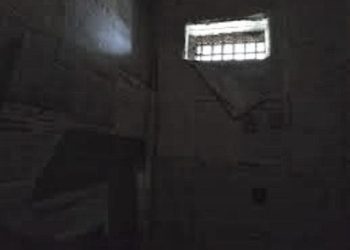
During my high school studies, whenever talk turned to fortresses, cells, torture, killings and hangings, the heaviest, ugliest, and most incomprehensible image that remained in my memory was the face and gestures of the executioner who had performed his “duty” as a torturer, the face of the murderer who had the audacity to reappear in the outside world – a world that was not his own. What lay hidden behind the boasting displayed by criminals after committing a crime? What lay hidden in that mind, in that heart, in that conscience? What did our director think when he faced his family, his wife and children, who did not know that their husband and father was a criminal?
The manly stance of the majority of prisoners was inspiring! Many of them came from “good, old families” with noble traditions, whose ancestors had distinguished themselves in one way or another, especially for martial valor, hospitality, and given word – traditional values that required great sacrifices in land and people. Their stance was a spark of heroism in this field of misery. For this social class, resistance and suffering in prison were a duel with fate that they accepted face-on, viewing it as a form of contemporary stoicism. For them, the manly stance was a continuation of inherited tradition!
In the large rooms there was also a considerable number of worthless elements: former fascist spies, professional killers, and double agents whom the Security kept inside because they did not trust them, and who at the same time remained informants. In the presence of such elements, the solitude of prison was not limited to the four walls. It became unbearable also because of self-imposed loneliness, self-isolation. Fortunately, on both sides of me I had two true friends: a Franciscan friar who spent long hours reading the New Testament in French, meditating on every word and phrase.
The other friend was a young man from Dukagjin who had finished high school, had joined the National Liberation Movement, but disappointed by their behavior in Dukagjin, had demonstratively left it together with his brother. The “power” had sentenced him to ten years in prison. His older brother, a former professor of Albanian literature and for a short time also a deputy for Dukagjin, had been shot. In the deserted home, their elderly mother lived alone. The execution of his brother had crushed him spiritually. He told me of the family’s endless poverty, and the countless sacrifices made to educate his brother until he had finished school.
Revolted by the daily scenes of life in the city, and especially in Dukagjin, the young professor had thrown himself with youthful enthusiasm into the camp of the “Movement” and had served it loyally. But his sense of loyalty to his own people had been more developed in him than loyalty to a political movement. The merciless repression of Dukagjin had embittered him. In the inevitable conflict, the young professor remained loyal to him, refused submission, and accepted death. Mark was not calm whenever the memory of his brother covered him like a powerful sea wave.
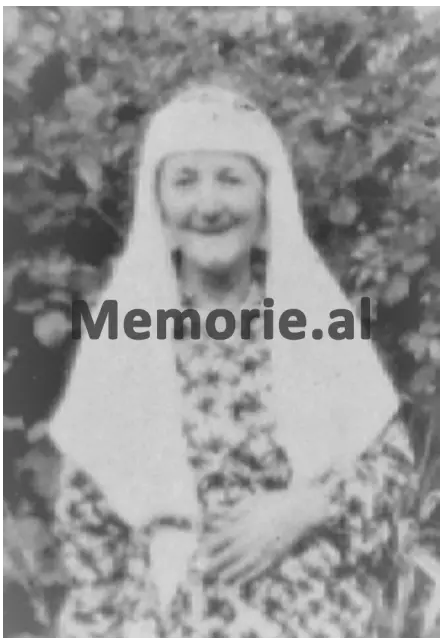
Then he would vent with the harshest words, but unluckily for him, he shed no tears, nor was he relieved of that mountain of memories and the hatred they brought. “My mother is breaking my soul,” he would lament, “she is alone. Without a mourner in the house! I don’t even know how she lives.” When the old woman came to visit him once a month, she did not complain. She spoke slowly, blessed her son, and left. The young Dukagjin native would return silent and lost in thought.
I had not had the chance to see my mother since the day of my arrest, and I eagerly awaited the visitation day. When the guard called my name, I flew to the Iron Gate. My mother smiled, and my brother and sister, who accompanied her, smiled too. I was very happy and smiled as well. – “How is your health?” she asked.
– “I am fine,” I replied. – “I am perfectly fine!” – “You look a bit pale and tired. Do you need anything?” – “Nothing! I have everything.” My mother looked at me carefully, and in a full voice said: – “Listen! Don’t worry! You are in good company…! We will do everything to help you. Hold on!” Words stuck in my throat, faced with the dignified stance of my elderly mother, unsupported, struggling for her daily bread. Looking at my brother and sister, who were still smiling, I answered briefly, filled with emotion: – “Thank you, Mother! I don’t worry, but I worry about you. Look after them! They are still not fully grown!” – “I take care of them,” she told me in a serious tone.
There was no place for longer discussions. I asked about my sisters and their families, and my mother assured me they were all well. In this meeting so long awaited, I could not find words to say. Her civil courage left me speechless. The guard whistled his whistle, and we exchanged our goodbyes without even being able to shake each other’s hand. I returned to the room and, strangely, I felt satisfied. My mother’s dignity knew no bounds, and I felt exalted.
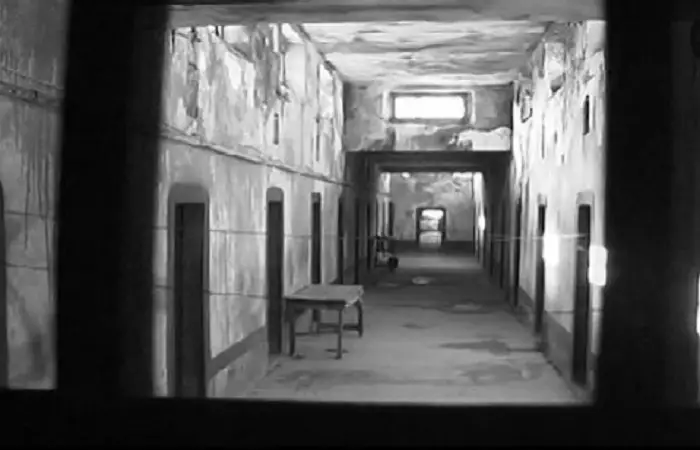
The internal police regime required that we all spend the long day sitting on our bedding, without moving. Visits with one another were forbidden. Any exchange of words with others was forbidden. Low-voiced conversations were allowed only with the two friends on either side. When the companionship with them deepened, the overseer would change the sleeping places. The fear of “conspiracy” inside the prison demanded such a measure!
The Franciscan friar who slept next to me was about fourteen years old, but he showed a prematurely white crown of hair. He was perhaps the calmest man in the prison. After the morning wash-up, he would eat a piece of dry bread, never forgetting to make the sign of the cross and say his daily prayers, alone before God. Without wasting time, he would open a copy of the New Testament and read it with persistence and full attention. Occasionally he would ask me about an expression he was unsure of. After trying to find the right word in Albanian, he would write the translation on small pieces of paper with a tiny pencil. He worked for hours without speaking, as if that was the task assigned to him there. When he tired of the fine work in the half‑lit, unventilated room, the friar would exchange a few words with me and the friend on the other side. He did not complain, asked for nothing, and when bodily pains sometimes tormented him, he would call the prison nurse for help.
In prison, the greatest help was the “medical counsel” provided by the nurse Elezi, with a spirit of compassion and understanding that was worth more than the medicine itself. One day, he insisted that the friar be sent to the hospital for surgery. Our life moved calmly on the surface, but the internal revolt grew every day. Spending hours, days, whole months without any activity, without maintaining regular contact with others, without work, without studies, and without hope that tomorrow would be better—that was the suffering of hell on earth.
Sometimes I had the impression that I was living in a void that took my breath away, unable to hold onto anything, to do anything, to be anything, and I would end up in a spiritual state where great boredom advised me to despise everything, casting me into the arms of despair. This prison, organized without any consideration for the prisoner as a human being, had a specific purpose: to keep the victims in a state of tension day and night, to cause as much spiritual suffering as possible through complete isolation, and physical suffering through limited food, to hinder every opportunity for normal development of mental and physical faculties, and to instill in the prisoner a deep sense of failure.
It was a system designed to kill any hope in the prisoner that one day the suffering would end and a new life would begin! In this respect, the “authority” sometimes succeeded. My observations among this mass that worried me and pained me at the same time drove me to analyze their words and gestures. As the long days passed without any activity, the content of conversations in that room became extremely simple. Long silences followed the stories; this was the best proof that the “material” for conversation was exhausted.
Then, in their faces I observed a gaze lost in space and an expression of despair that revealed the great fear of the emptiness they felt inside, which consumed them mercilessly. In the room there were also a number of educated intellectuals and students in the phase of their intellectual formation. For them, the passage of time without any activity was the greatest concern. Deeply shaken by the physical mistreatment and daily humiliation that they felt intensely, they saw themselves caught in the trap of a merciless fate that limited every opportunity for development and threatened their physical annihilation.
The idea of death in prison terrified them, not so much for the physical suffering it might bring, but for the denial of the opportunity for full development of their potential by a brute force that they despised unconditionally, fought against without reserve, yet aware that they had lost the battle in this confrontation. To die in prison, without any means to react and without hope of release, especially for those still young, was undoubtedly the hardest form of death. A supreme injustice, as well! Aware of this injustice imposed by brute force, and unable to believe in “divine” intervention, I slowly slipped into atheism.
The first conclusion was the denial of God’s existence as Creator, with all the attributes religion ascribes to Him: omnipotent, generous, merciful, just, infallible…! How was it possible, then, that the “God” in whom millions believe could be so unjust or powerless as to allow the injustice we witnessed every day, and so perverse as to mock us in such an inhuman way, creating us as “humans” yet treating us like mangy “animals,” endowing us with the power of reason and the grandeur of conscience while at the same time condemning us to die in prison without reason or explanation—an absurdity that destroyed everything in us?!
This desperate, rebellious inner cry was the main point of disagreement with my friar friend, who did not allow despair. He had submitted unconditionally to God’s will, which he saw as the only source of every good on earth. But evil? That was the responsibility of those who had lost the right path, not of God, who had nothing to do with it. How great a happiness it must be, to find a point of support in life! My friend insisted that God sees things differently from men, and consequently, as a friar, he judged the world around him only through this prism. I could not oppose this in theory, because I too was a believer “sui generis” in the Creator, but I found its application to the problems of daily life impossible.
For me, such acceptance would mean submission and the pursuit of “salvation” through the path of escape (prayer, perhaps?) that avoids confrontation, the conflict, and the noble feeling that comes from striving to become master of one’s own fate. How could I submit completely to “God’s will” in a state where every passing minute sounded in my ear like a call to revolt, the supreme command of my rebellious conscience, like a persistent, undeniable revolt that demanded my release, without the hope of intervention from “Divine Providence”?!
The inhumanity that surrounded me, which grew fuller every day, further inflamed this call. Sometimes I had the feeling that I was drowning in this pool of planned evil. Moreover, the material poverty of all those who suffered, and especially of that limited portion of victims who understood the tragic traps of the situation threatening our lives, was undoubtedly one of the strong and painful nails of our “cross.” It highlighted even more the moral value of the individual’s rebellious resistance, as well as the monstrosity of the “people’s power” that caused it.
These sublime moments of awareness gave life a meaning: it had to be lived because, in the face of death that annihilates everything, it represented a supreme, irreplaceable value. In this stance, I saw the highest form of civil heroism. In our prison, there were idealistic young men and women who rebelled against the kingdom of evil in our country. But the drama of those difficult days was not the youthful enthusiasm, the hero of civil courage who tried to block the devastating avalanche with his chest and paid with his life. The drama of the difficult days was the sluggishness, the lifeless life of the amorphous masses, which lived only for bread and by bread, and with incurable fear.
It was hopeless indifference…! When terror becomes master of the land and slavery a Medean queen, nothing else fulfilled the plan of annihilating human dignity better than this cancerous carelessness, like the vegetation of equatorial jungles that for millions of years without respite fed only insects and snakes, with deadly plants. In our jungle, the carnivorous beast ruled unhindered, omnipotent! When prisoners were taken for execution in the early morning hours, and they shouted: “Criminals! Down with communism!” or “I don’t want to die! I am innocent!”—everyone fell silent. The whole world seemed to be sleeping the sleep of death, which knows no life.
And yet, prisoners continued to die as before, more than before, like never before, unseen, unheard, unmourned, unlamented! Left desolate in houses where families were extinguished, the wretched mothers and wives, widowed before their time, embraced the fate of their lives, which no longer had a purpose, and tried, with unending tears, to lift the dark curtain that poisoned their endless, unfortunate days. Everything in silence, a silence that killed mercilessly! There was something dignified in the persistence of not submitting, which I saw in my friends who thought.
Many others persistently hated. Their problem was simple: the impossibility of taking revenge! They were emotional and simple in their thoughts. The solution was the coming of the day of revenge. With such “types” there were few words, and I avoided conversation as if it were a plague that could bring about my destruction. But the “race that thinks” inspired me with a belief that “something” inside the shell of the body remained alive – a feeling, an ability to confront the imposed situation, a threatening adversary, a monstrous weight that annihilates.
This must have been the sense of pride in being human, the cultivated substance of heroes, when I thought that all of them were aware that, in the event of a mad crisis of the “power,” they would be killed leaving no sign, no trace – the tragedy of the privileged who think! Here, religious thought took the great qualitative leap! For those who accepted it, there was “something”! That drove them to despise reality, with a conviction that another world beyond existed – higher, more inspiring, more promising – a world that was not this one we were living, imposed by force by men.
For them, there was a “reality” that, for the depth of conviction and the grandeur of hope, assumed the proportions of a faith linked, supported, and justified by divine powers beyond mortal hands, beyond the fatalistic persistence that crushed. Such a path despised the tragic sense of life that others accepted face‑on!
XVI
The closed, banal, oppressive life imposed on us in prison was interrupted one morning by the guard’s call and order for all prisoners – about six hundred victims – to come out immediately into the prison yard. The “veterans” of the Vloçisht extermination camp near Korça understood that we were being prepared for a new labor camp. The terrible experience of draining the Maliq swamp froze them in place. They told in vivid colors of the indescribable sufferings in that extermination camp, and they were aware of what awaited us. A black shadow covered the prison!
In the yard where we were gathered, surrounded by guards holding sticks and others with machine guns in the surrounding towers, we were lined up in long rows. After the sick, the elderly, and the crippled were pulled out, the rest of us underwent a “medical examination.” At a table before us sat the doctor and the prison director. The doctor asked the questions, the director answered: “You are healthy!” and with a stroke of his pencil on the roll, the prisoner was assigned to work in the camp. When my turn came, I tried to explain that, a short time earlier, I had spent two months in the hospital.
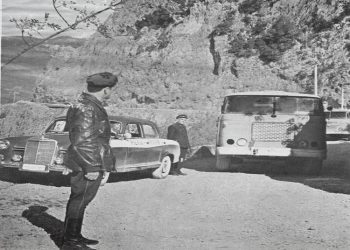
Before the doctor could answer, the director interrupted: “You are cured now! There are no other problems!” and he made a pencil mark next to my name. I was not more shaken than the others. But what surprised me was the director’s behavior and his determination to send me to the camp at all cost…! One hot day in June, we were loaded onto military trucks, tied hand in hand two by two, and the bodies with rope. It was impossible to move for lack of space, packed like sardines in a box. Around us were guards with sticks, and two others with automatic weapons.
We had no right to stand up, move, or speak. During the journey, the guards beat with sticks anyone who complained or moved their numb legs. The sun was strong, and sweat began to flow like a river. The truck moved fast, bringing a blessed coolness, but when it stopped for the policemen to refresh themselves, the truck was an oven. We arrived at the camp in the late afternoon. We descended one after another, in a line, and after the count, we entered through the main gate. The camp was set on a hillside, overlooking a field dotted here and there with pools of water – a half‑drained swamp that we later learned was called the Beden Swamp, Kavajë. / Memorie.al
To be continued in the next issue