
By Fatos Lubonja
Part Two
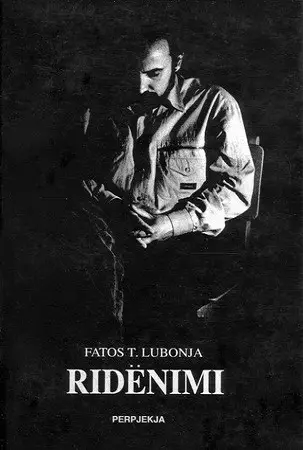
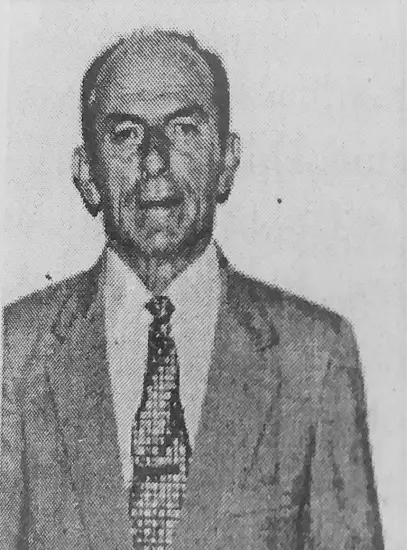
Memorie.al / A well-known writer, publicist, journalist, and analyst. In 1975, shortly after completing his higher studies in Physics at the University of Tirana, he was arrested and sentenced by Enver Hoxha’s communist regime. He was accused of “agitation and propaganda against the people’s power” because, during a search of his home, several diaries and notebooks were found containing writings “against socialist realism and with hostile content.” At the same time, his father, Todi Lubonja (a member of the Central Committee of the APL and Director of the Albanian Radio-Television), was also arrested and sentenced to 25 years in prison, serving his sentence in Burrel until 1988, followed by internment alongside his wife, Liri Lubonja, and their other son, Agim.
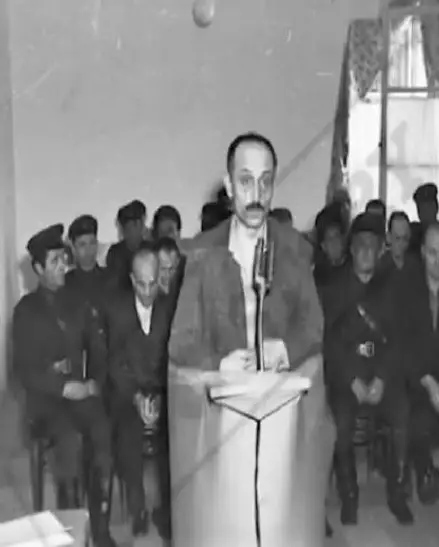
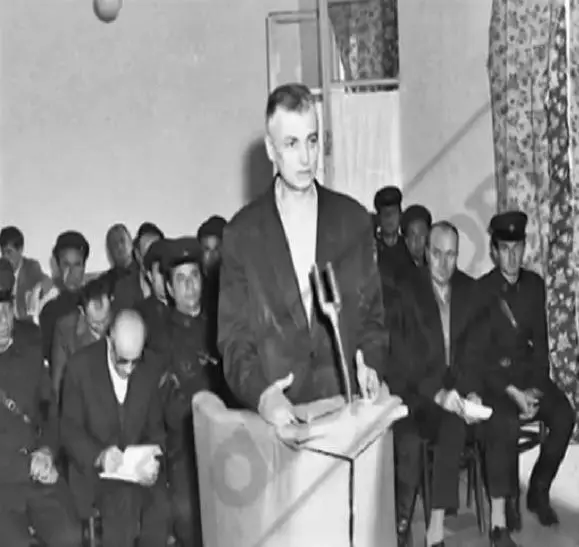
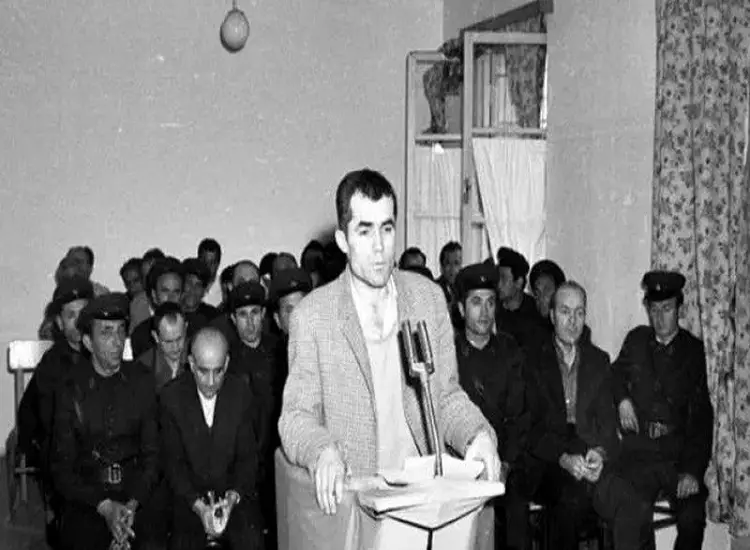
Meanwhile, while serving his sentence in Spaç Prison in 1979, Fatos was arrested again, accused of being a “member of a counter-revolutionary organization” alongside Fadil Kokomani, Vangjel Lezho, and others (Kokomani and Lezho were sentenced to death and executed). He was re-sentenced, spending nearly 17 years of his life in the camps and prisons of that regime. Fatos Lubonja is recognized by his entire fellow political prisoners for his dignified stance, refusing to work in the Spaç camp – an act that forced the regime to transfer him to the notorious Burrel Prison. He was released in March 1991 with the last contingent of political prisoners. Since then, Lubonja has been active in public life as a writer and intellectual, publishing the cultural magazine Përpjekja (The Effort) since 1994.
To be continued from the previous issue
FRAGMENT FROM THE BOOK “RE-SENTENCING” (RIDËNIMI)
In the courtyard where I had arrived five months ago, I found myself with four others re-sentenced from our “organization”: Beqir, Dhimitër, Nuredin, Robert, and three from the other organization: Bardhosh, Sarandi Lulo, and Ernest Kraja. Nearby, the prison van (autoburgu) was waiting for us.
From the gate of the transition cell (kaushi), they brought several first-time convicts, mostly young, who would travel with us. They shackled us two by two and crammed us, along with the bundles of clothes belonging to the first-timers, into the sheet-metal cage of the prison van.
This was a club closed on all four sides, with iron seats around the perimeter and a bucket for vomiting in the middle. Scant air and light barely filtered through a small hatch in the ceiling. We knew the journey would be torture, but it didn’t faze us; finally, we were meeting each other and could speak freely.
We didn’t have the slightest curiosity to talk to the youths or to look through the tiny window above the door. Our main conversation revolved around the ultimate fate of Fadil, Vangjel, and Xhelal. Robert and Sarandi had been in cells near theirs on the first floor. They had spent those nights almost without sleep and were certain they hadn’t heard anyone coming to take them for execution.
Even that morning, they had heard them being led, bound with ropes, to the latrines. There was still a shred of hope that perhaps they wouldn’t be shot. Sarandi spoke of their trial, how Xhelal couldn’t believe it when he was sentenced to death… and had asked for an hour to prepare his final defense.
-“Maybe they wanted to scare them, and the Presidium will grant them clemency,” he said – a thought that remained without comment.
-“I have hope that they won’t shoot Vangjel,” I told Robert, who was beside me.
-“I have very little hope,” he replied.
“Why?” I asked.
-“I’ll tell you later.”
There were moments when questions went unanswered, when the conversation stalled, and we felt estranged from one another. We discovered, suddenly, that the ordeal had crushed us and molded us into a different shape; we were stunned to observe in ourselves and each other the new forms we had taken.
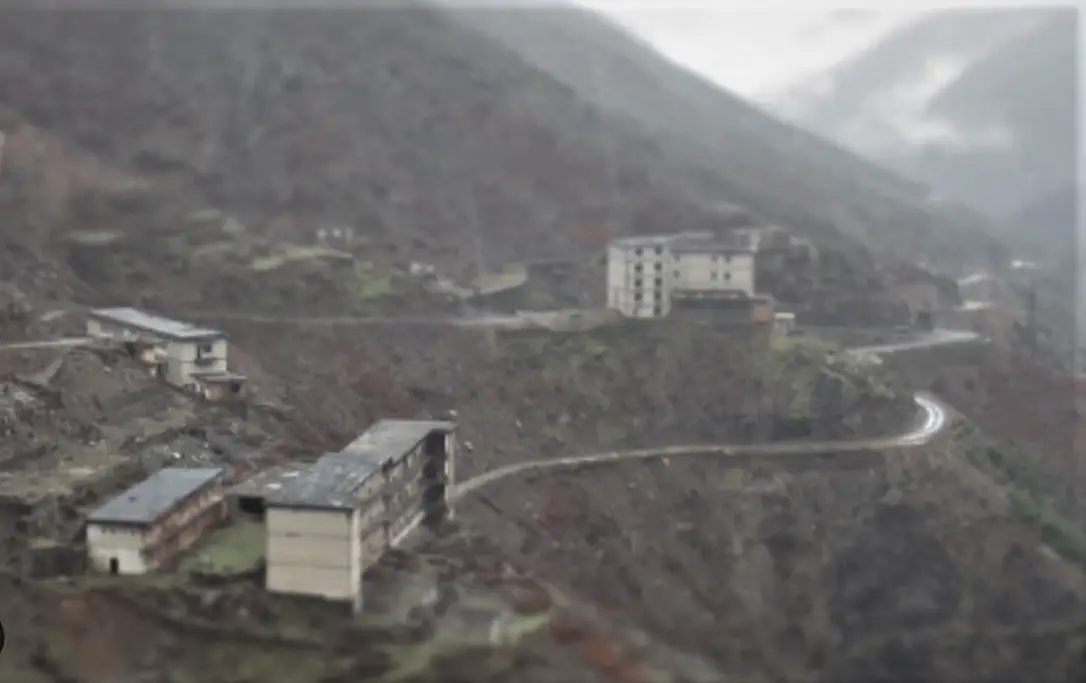
After fifteen minutes of travel, we realized we were heading north. We were convinced they were sending us to Burrel Prison, but when the youths at the small window told us we had passed under the arches of King Zog’s Bridge, it became clear: they were returning us to Spaç.
This was the hardest choice. The conversation shifted. We weren’t even gaining the one benefit of being re-sentenced: leaving Spaç. We would have to enter the mine again for endless years. The mountain of the mine began to loom over us threateningly.
When we reached the iron gate of Spaç, the van stopped without turning off the engine. As the door opened, Bardhosh voiced the anxiety that had gripped us all:
-“By my mother’s soul, they’ve brought us here to finish us off. The investigator told me that none of us would make it out alive.”
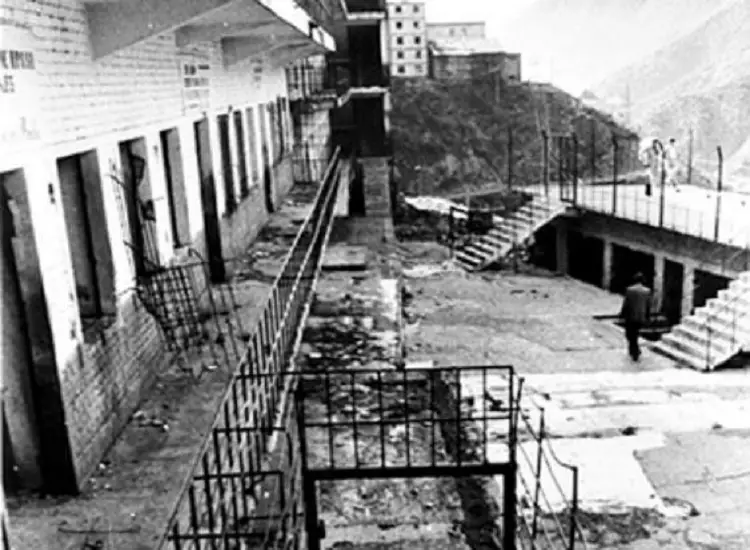
The van entered the restricted zone of the camp, where the “meat inspection” (body search) took place. We stepped out one by one, hunched over, waiting for the search. Shortly after, the internal guard approached us – coincidentally, it was the same Pjetër Leka who had searched me five months prior. He came closer and, with his grey metal tooth, began asking us how many years we had been re-sentenced to.
Below, the noise of the prisoners could be heard; they surely knew of our arrival and had gathered at the field, waiting for us to descend. A few bolder, more impatient heads peeked through the small door to see and greet us.
But something wasn’t right. Though the search was over and the youths had already descended, they kept us there. We spent half an hour waiting when, suddenly; they ordered us back into the van. We welcomed this with joy; hope was rekindled that perhaps they were taking us to Burrel after all.
As soon as I entered the metal cabin, the stench of the vomit bucket horrified me. I knew I wouldn’t escape this torture on the return trip. Yet, as we set off, a sense of relief prevailed – the thought that Spaç had rejected us because the witnesses who had returned there before us might have complained.
The van began to move faster than it had come, making the dizziness from the road’s curves even worse. Once again, we lost hope for Burrel Prison when, after passing Zog’s Bridge, we continued straight toward the south. That left Tirana or Ballsh. This would be determined 50 km further, at Fushë-Krujë.
When we arrived there, my head was in the vomit bucket. For a good part of the way, I had done nothing but strain to empty my stomach, and since it was empty, the torture was even more severe. However, the turn we took toward Tirana seemed to sober me up. What was happening? Why back to Tirana? A new anxiety seized us all. Had they changed their minds about our sentence?
The same doors opened, I climbed the same stairs I had five months ago, and found myself back in my cell. It was exactly as I had left it: the four blankets in the right corner and the urine flask half-full. The trip to Spaç felt like a dream.
The next day, Tuesday, I waited in agony. Speculations rose one after another, only to vanish into a black abyss. It grew even darker when no one called us that day. Wednesday passed the same way.
Thursday morning, I felt something moving near the old interrogation wing. I pressed my eyes and ears to the door. After an hour, I heard a man’s slightly hoarse voice from the corridor, which sounded familiar.
-“I’ll give you the list so you can bring them to me in order.”
I was waiting. After a few minutes, I heard the characteristic sound of shuffling feet combined with the steps of the escorting guard. I peered through my peephole. I saw a brown jacket and a khaki one pass by. They entered the old interrogation room.
I wasn’t sure if I was the fifth or sixth when my door opened and Ali Balla appeared, German handcuffs in hand. I turned with my hands behind my back. I felt the paleness in my face. He cuffed me and tightened them without a word.
We crossed the cell corridor into the old interrogation wing, and there he turned me right into one of the first rooms. He stayed outside, waiting.
I found myself facing a face I recognized immediately: Kapllan Sako, the Deputy Director of State Security. I could never forget the first day of my first arrest and his first words: “We have brought you here to ask you what your political views are.”
Kapllan was waiting on his feet. He had changed little – thin, sharp, half-grey, the typical State Security man from his attire to his hair. Another person with a very dark face, whom I didn’t know, sat behind the desk. On the corner of the desk, near me, I spotted a white sheet of paper.
-“Are you Fatos?” Kapllan spoke.
-“Yes,” I replied. “Do you recognize me?”
-“Yes.”
-“Where did we meet?” he added, skeptical that I remembered.
-“In July of ’74,” I answered.
He seemed pleased that I remembered.
-“Why did you take this stance in court?” he said. “We didn’t expect this from you.”
-“I haven’t done anything,” I said. “I couldn’t admit to things I didn’t do.”
I had no intention of fighting him; my only thought was that they were preparing another sentence, which I had to be very careful of.
-“So, our People’s Court sentenced you for nothing?” he raised his voice.
“He seems to believe his own fabrications,” I thought, stunned by how he mentioned the “People’s Court” as if it were something sacred.
-“The files are there. Let’s open them again,” I replied with a show of determination.
He fell silent for a moment, not wanting to prolong the talk, and as a counter-reply, he said:
-“And what about you say: ‘I will have Fadil Kokomani as my closest friend,’ do you know that?”
I felt that this statement had caused me trouble.
-“I said it in a moral sense,” I replied, “because he stood his ground like a man.”
He seemed to recoil at this answer.
-“What man, you? What man?!” he spoke, twisting his face. At that moment, he approached the white sheet on the desk and pulled it away violently:
-“Here, here is your closest friend!”
I don’t know how much Kapllan’s finger guided my gaze or how much I moved it myself. Under that white sheet were several photographs taken at night, with a flash.
I was initially drawn to one where I saw the eyes of Fadil, Vangjel, and Xhelal, looking at me with a gaze more bewildered and stunned than terrified. They were sitting on a bank with their hands handcuffed behind them and the three of them bound together with a rope. They were photographed moments before being shot.
Kapllan continued to shout hysterically: “This is where you belong!” “This is where you belong, if you ever come to this door again!” – and pointed his finger at one of the photographs. A bloated face appeared, seized by a slab of blood that spread from the forehead and covered the eyes, part of the nose, the cheeks, and then extended in three or four streaks down to the throat.
I could barely recognize it was Fadil’s face. A strange shiver ran through me. The sight seemed frightening, almost alien. I had felt something similar in childhood seeing photos of “saboteurs” killed and displayed at the Ministry of Internal Affairs exhibits.
Kapllan continued to howl that I, too, would deserve a bullet to the forehead that they would blow my head off if I came back to that door. I was so dazed and under such pressure that I couldn’t focus on the images of Vangjel and Xhelal. My eye only slid to the other large photo below, where the three bodies lay side by side, dead. Strangely, my mind fixed on Pirro’s grey jacket, which Fadil had worn throughout the trial.
I lifted my head without being able to say a word.
-“And you say: ‘I will have Fadil Kokomani as my closest friend’!” Kapllan vented once more.
-“What should I say?” I replied.
-“Long lives the Party! You should say: Long lives the Party! Guard, take him!” he turned to Ali.
I left in silence. They put me back in my cell, and there, utterly crushed, I began to pace incessantly. The slab of blood on Fadil’s face wouldn’t leave my mind, nor the feeling I had seeing them dead. Why had I become so alienated? Why had the childhood fear of the dead seized me? Then Kapllan appeared in my mind. How was it possible that he found it normal, immediately after the killing of my friends and my re-sentencing, to ask me to say “Long live the Party”? Was he playing a part, or did he truly feel what he said?
Then the eyes of Xhelal, Fadil, and Vangjel appeared – their gaze, more bewildered than terrified. They didn’t want to believe what was happening. And again, Fadil’s dead face.
I tried to free myself from the initial impression that sight had left and feel sorrow, but I couldn’t. A dizziness I couldn’t restrain began to blur the scenes I had experienced those months. I went to sleep hoping that, when I woke up, I would see everything that had happened more clearly… and in my dream, I saw the three of them alive, wrapped in the grey prison coats, pacing quickly to warm their feet on the square in front of the barbershop in Spaç! Memorie.al