By Llambi Kotta
Part One
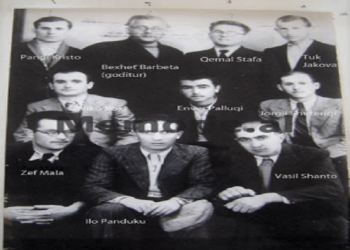
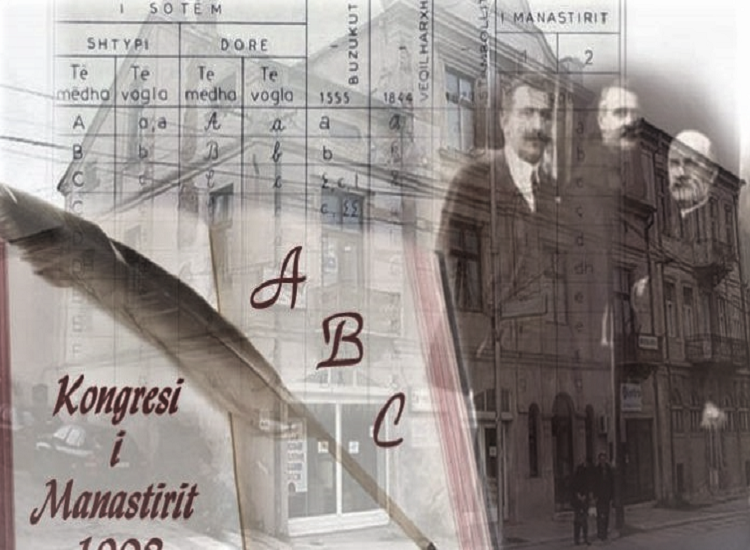
Memorie.al / In November 2009, my home phone rang, and a voice from afar introduced itself: “I am Elida Jorgoni. Am I speaking with Mr. Llambi Kotta?” “Speaking,” I replied. “I wanted to ask you,” she continued, “what was your grandfather’s name?” “Llambi Kotta,” I answered. “Then,” she said, “I have finally found you; listen to me closely. On the occasion of the celebrations dedicated to the 100th anniversary of the Second National Congress of Monastir, which took place from April 9th to 11th, 1910, in the city of Monastir, an organizing committee has been established to direct and lead all the work to realize the defined program for the celebrations. Among other things, the committee is trying to find and invite Congress delegates to participate in the ceremony, or in their absence, their descendants – sons or daughters. On this occasion, since Llambi Kotta was a contributor to that Congress and a participant in the Congress of Dibra (July 23–26, 1909) as one of the four representative delegates of the city of Korça, and since Llambi is no longer with us, you are invited to represent him, as you are his grandson and bear the same name.”
I was surprised, but it was a pleasant surprise. I could not believe my ears, so I turned to my interlocutor: “Please, if possible, tell me the matter once more, as I did not fully understand.” Ms. Elida, without any hesitation, with full readiness, elegance, and care, repeated the words she had told me moments before. I thanked her and expressed my deepest gratitude for everything she said on behalf of the organizing committee, asking her to convey my thanks and gratitude to them.
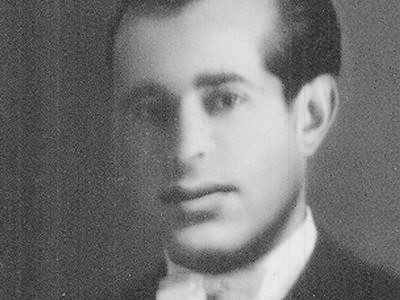
Immediately, a feeling of joy overwhelmed me, and my heart began to beat faster. Until that moment, I had no knowledge of my grandfather’s patriotic activity, but only a few scant details about his life which I had heard from my father and my family members. According to them, his ancestors had left Berat in 1801 and settled in the city of Korça in 1803, where both his grandfather and father were born. Llambi – my grandfather – was born on March 21, 1878, in Berat, at the Kotta house in the “Kala” (Castle) neighborhood.
In Egypt
In 1881, his family settled in the “Goricë” neighborhood, and in 1888, they left Berat and immigrated to Egypt, settling in Alexandria. In October 1909, he returned to Berat. On October 5, 1909, his wife Elena gave birth to their son, Jorgji, and on April 21, 1912, to their daughter, Evgjenia. However, Llambi stayed very little in Berat; he spent most of his time in the city of Korça, where he had cousins, and from there he sent goods for his shop in the “Goricë” neighborhood in Berat. On April 21, 1912, Llambi’s wife, Elena, passed away, and in July 1918, his daughter died after contracting cholera, an epidemic that swept through the city of Berat at that time.
His son survived by a miracle because Elena’s family sheltered him first in Ballsh and then in Drobonik. Finding no trace of Llambi, they presumed him dead from cholera. On January 28, 1922, his maternal uncles moved Jorgji from Berat and settled him in Tirana. In the registrations organized by the administration of the Albanian State, Jorgji’s relatives declared Llambi N. Kotta as deceased. This was the extent of the knowledge I had about my grandfather’s life and family; therefore, the news I received from Ms. Elida Jorgoni surprised me and awakened a desire, hope, and curiosity to know his life and activity, which was unknown to me and which, in truth, it was entirely up to me to discover.
I accepted with pride and pleasure the invitation to participate in the celebration ceremonies to be held in the city of Monastir on April 9 – 11, 2010, on the occasion of the 100th anniversary of the Second Congress of Monastir. I participated in those celebrations together with my wife and in the company of Mr. Perikli Jorgoni and others, demonstrating our patriotism at the Museum House of the ABC, at the home of the Qiriazi sisters, and in the venues designated for that manifestation. The Albanian flag was unfolded and waved in the streets of Monastir, and we sang patriotic songs.
From that moment on, a sense of curiosity and a great desire arose in my civic consciousness to set to work to discover and learn about the patriotic and political activity of my grandfather. Many thoughts, dilemmas, and many unknowns, accompanied by a certain sense of self-doubt and uncertainty, circulated in those first moments. Nevertheless, I was determined to begin the work. In the initial moments, I was encouraged by several facts, albeit very episodic, about the life and activity of my grandfather Llambi Kotta, which I learned during the days of the 100th-anniversary celebration of the Second Congress of Monastir.
In the Museum stands dedicated to those National events, I found photocopies of Albanian newspapers from the years 1908, 1909, and 1910, in which I also found data on my grandfather’s activity. Also, in informal conversations with participants in the celebrations, they recommended sources where further information about my grandfather Llambi Kotta could be found. Participation in those celebrations opened a new horizon for the realization of the task I had set for myself. Above all, I began to orient myself correctly and gained confidence that I would achieve my goal. Their recommendations prompted me to begin my research process.
LLAMBI KOTTA’S VIEW AND OPINION ON THE UNIFIED ALPHABET OF THE ALBANIAN LANGUAGE. HIS LETTER ADDRESSED TO FEHIM ZAVALANI, ONE OF THE MAIN ORGANIZERS OF THE CALL FOR THE CONGRESS OF MONASTIR (NOVEMBER 14–22, 1908)
Initially, I sought out and came across a very important piece of information, of great value not only historically, politically, and patriotically but also very significant for my goal of clarifying the aforementioned issues. This was a very important scientific work, an academic publication, the Monograph “The Congress of Monastir,” authored by the honored academics and professors, the well-known Shaban Demiraj and Kristaq Prifti, published by the Academy of Sciences of Albania in 2008. On page 22, it is noted, among other things, that… “Regarding the Latin alphabet, Llambi N. Kotta (My grandfather – Ll. Kotta) also expressed his view in the letter he sent to the Club of Monastir from Alexandria on October 20, 1908.”
It is known that a few days later, on November 14, 1908, the First Congress of Monastir convened, during which the unification of the alphabet of the Albanian language was discussed and decided. Thus, Llambi addressed the letter to the initiators and organizers of the Congress, through which he presented his opinion on the problem of the alphabet expected to be discussed and decided at the congress, as various alphabets were in use in Albanian territories at that time. Llambi Kotta supported the Latin alphabet and proposed that the Congress organizers also take his opinion into account. Based on this information, I dedicated myself persistently to finding the aforementioned letter.
It was located in the funds of the Central State Archive of the Republic of Albania, where, according to state rules and laws, I managed to obtain a photocopy of it. The letter is complete, and I intend to present it in its entirety to the reader, exactly as I found it. The letter was addressed directly to one of the prominent figures of the Albanian National Renaissance, Fehim Bey Zavalani, who at that time was among the main organizers of the call for the Congress of Monastir for the unification of the Albanian alphabet and chairman of the “Bashkimi” (Union) club of Monastir. Here is the full content of the letter that Llambi Kota sent on October 20, 1908, from Alexandria to Fehim Bey Zavalani in Monastir:
“Valued friend, Mr. Fehim Bey, In Monastir. I beg your pardon that due to unforeseen business, I have been delayed in replying to your honorable letter. It rejoices me beyond measure the movement that has begun with great desire in all parts of Albania to learn its own language. The greatest Philosophers have said that man is not fundamentally refined except through his own mother tongue; for this reason, we Albanians must also work as much as we can toward this goal. We learned of the beginning of the Monastir Club not only from your letters but also from many of your pages!!! I pray to the Great God of the Albanians to grant your life and ultimate progress.
I beg you, therefore, to do me the honor of writing me in as a member in the club which you honor as President, and I await the Constitution so that I may send the funds for the yearly subscription. I received again another letter concerning the unification of the Albanian ABC; I believe our Brotherhood here will write to you at length on this matter. My mind is that the one of the Shkodra Society should be chosen which purely Latin is without having any Greek or Slavic letters. The Albanian ABC must be clean, noble, and of good stock (not mixed with many juices [foreign influences]), for in this way it will also have beautiful calligraphy. I beg you to give my respectful greetings to all our friends and comrades, especially Mr. Jashar and Mr. Natsi. I embrace you with much honor.”
Your friend, Llambi N. Kotta
This was the complete letter. Anyone who reads it understands that it expresses the thought and viewpoint of Llambi Kotta at that political moment in the development of the Albanian National Movement. The fundamental issue of the letter was the expression of Llambi N. Kotta’s opinion and proposal for a unified alphabet, a matter he treated not only as a cultural problem but also as a political problem – a means and a way to unite Albanians: one nation, one alphabet. He prays to the Great God of the Albanians (here he has in mind the Albanian nation united around the national idea with the feeling of Albanism above all else, regardless of religions).
With this concept, Llambi proves that he was of one mind with the great Renaissance figures who emphasized that all Albanians are brothers and have one god, and this god is Albanism. With this viewpoint, Llambi appears as a visionary patriot seeking the departure of Albanians from the Orient and their approach to the Occident – the West. As is clearly seen in the letter, while expressing his support for the Latin alphabet, Llambi also explains the reasons why he supports it. “My mind,” he emphasizes, “is that the one of the Shkodra Society should be chosen, which purely Latin is without having any Greek or Slavic letters.”
Thus, he values it as a pure alphabet because it contained no letters from the Greek or Slavic alphabets. He goes further in his reasoning. Llambi emphasizes that the Albanian ABC must be clean, noble, and of good stock (not mixed with many juices), because in this way, he reasons, it will have beautiful calligraphy – beautiful writing.
His proposal contains a fundamental feature and goal: the necessity of creating an original alphabet, distinct and distinguished from the alphabets of neighboring Balkan languages, because the Albanian language itself was distinct among the languages of other Balkan peoples. The originality, individuality, and distinction of the alphabet to be created were requirements of the time and the program of the most forward-looking circles of the Renaissance. From the letter, it is clear that Fehim Zavalani had sent a letter to Llambi, asking him to give his opinion and express his viewpoint on the alphabet variant he supported. Thus, the great patriot Fehim Zavalani was waiting for a reply from Llambi Kotta.
From the very first sentence of the letter, Llambi asks Fehim Zavalani for forgiveness for the delay in his reply due to unforeseen work. A correspondence existed between these patriotic personalities. It is known that correspondence between prominent figures during the period of the Albanian National Renaissance was quite intense, not only as a means of communication but also as a way to display their thoughts and alternatives for the solution of political, patriotic, cultural, and social problems troubling the Albanian nation. Correspondence was a necessary process because it strongly influenced the processing of the political-social thought of that period of Albanian history.
In this specific case, the correspondence between Llambi Kotta and Fehim Bey Zavalani gives us the right to affirm that Llambi Kotta belonged to the ranks of those patriotic figures whose culture and dedication to the issues of the Albanian nation were so valued that their opinions were sought on fundamental problems of the Albanian National Movement, such as the unification of the alphabet. In the letter, Llambi states: “the movement that has begun with great desire… in all parts of Albania to learn its own language rejoices me beyond measure.” This idea shows that although he was far from Albania, he followed the progress of political, cultural, and economic developments in all regions of Albania with the greatest care and attention.
The movement of Albanians to learn the Albanian language rejoiced him immensely. In this movement, he distinguished two main features: 1 – it began and developed with great desire, and 2 – it took place in all parts of Albania (i.e., in all Albanian territories). These features gladdened Llambi N. Kotta’s heart. This letter also proves that Llambi was aware of the program and fundamental tasks of the Albanian National Movement that preoccupied the nation in that very important period of the first decade of the 20th century.
The content of the aforementioned letter draws attention to one of the most important problems of the political and historical moment. It is clear that at that time, Llambi valued and experienced that problem with the feeling of a patriot dedicated to the cause of his Fatherland and nation. Llambi was conscious and understood clearly the weight and role that the unified alphabet would play (as it indeed did) not only in the cultural aspect but above all in the national political aspect, for the unification of Albanians and the further consolidation of the originality and individuality of the Albanian ethnicity in its own lands.
In the letter, Llambi Kotta asks Fehim Zavalani to register him as a member of the “Bashkimi” Club of Monastir and to send him the club’s statute, for which he would send the corresponding funds. Llambi N. Kotta signed this letter with his signature, Ll. N. Kotta, thereby clarifying for us that his name, published in the press of the time, would appear sometimes as Llambi N. Kota and sometimes as Llambi N. Kotta. / Memorie.al