By Beqir SINA
Part One
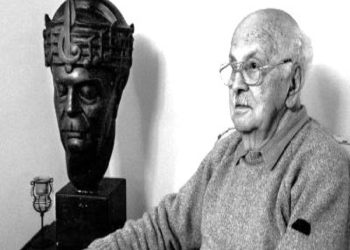
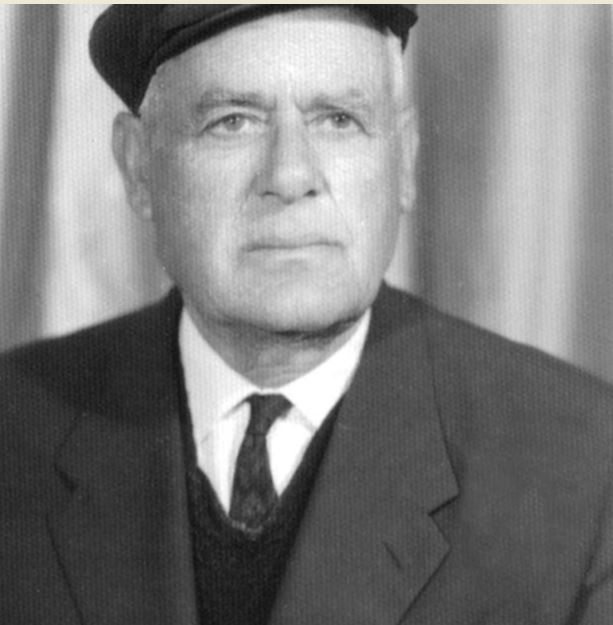
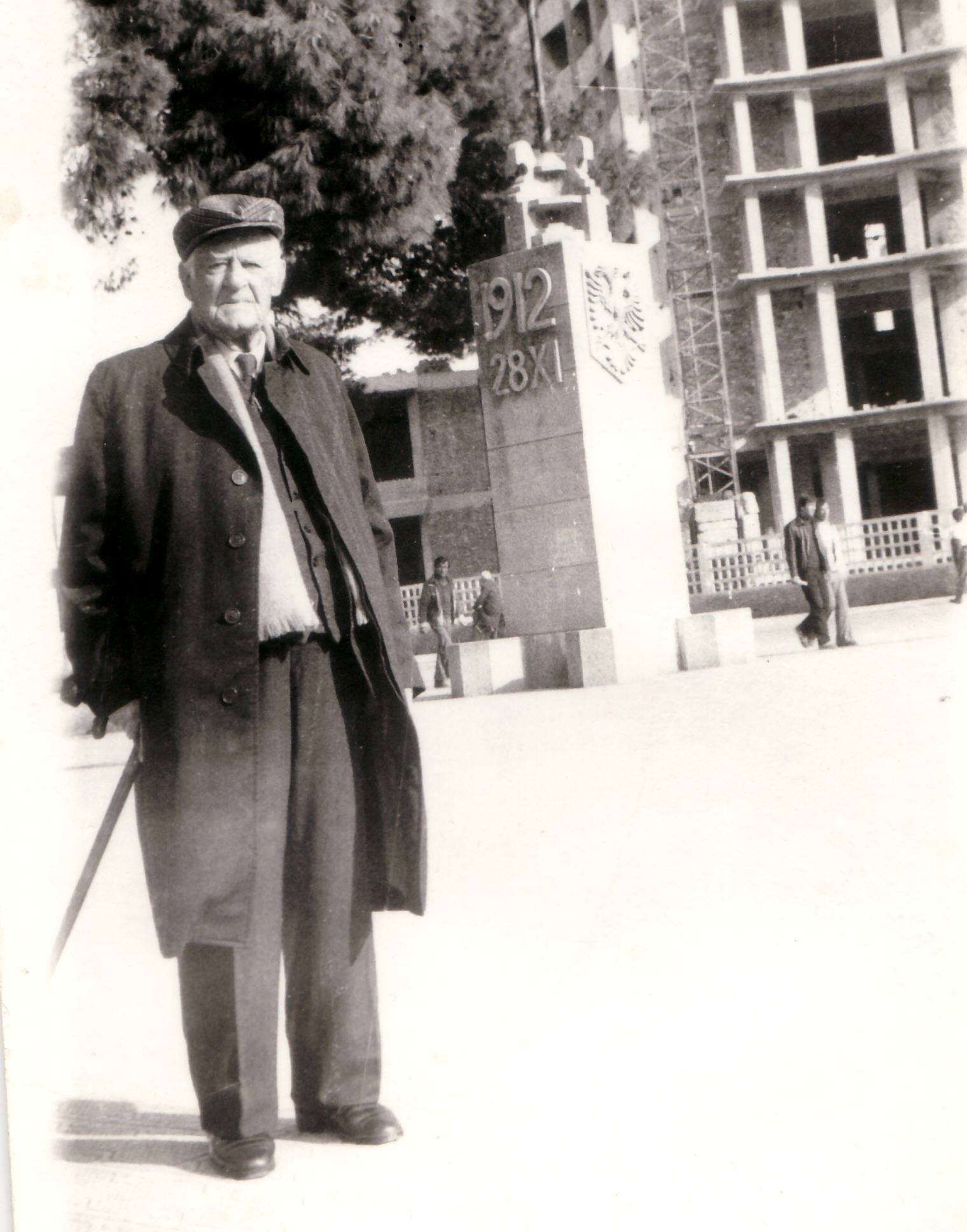
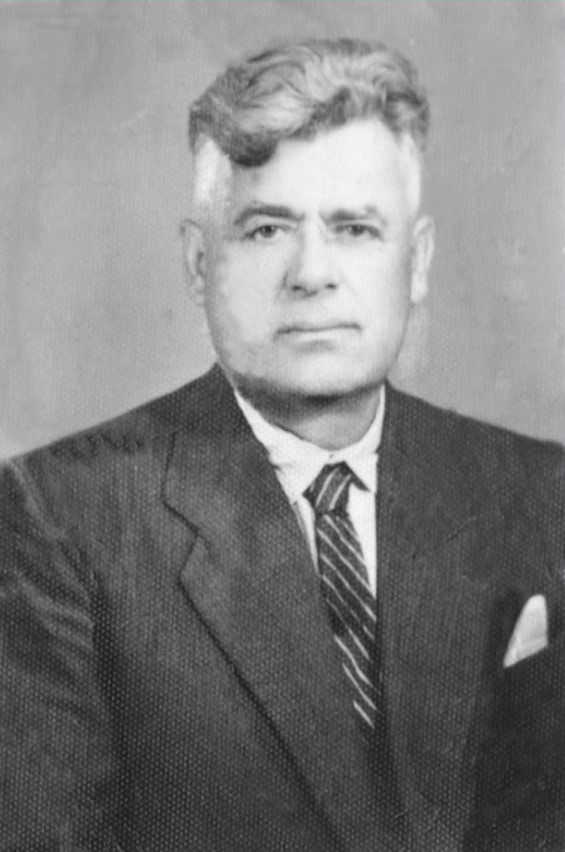
Memorie.al / Virginia (USA). It is a great and special honor to speak about a personality of education, culture, and patriotism, such as the “Teacher of the People,” Janko Ll. Pali. We hold it as an honor, but also a duty, to respect at the highest level this Albanian who contributed so much to national culture, education, and patriotism. Janko Ll. Pali was, and remains forever, a complete figure of national proportions in this part of the Albanian pearl, the Ionian Coast. A beloved and well-known name of the Ionian Coast, Janko Ll. Pali belongs to the honored pleiad of outstanding figures in Albanian culture, politics, and patriotism during the entire period he lived. Surprisingly, after becoming acquainted with his work, the question arises: Why was even Janko Ll. Pali placed behind the “wall of silence”?!
Although his life was never peaceful – on the contrary, it was difficult, full of anxieties and sorrows, with forced movements dictated by tragic-historical circumstances across all periods our country endured – he was born in exile, raised an orphan, and died in exile. This occurred on September 12, 1994, when this giant of education passed away, a man whose career and the traces he left in the region and beyond speak for themselves. He spent his childhood abroad, in Greece and France; these hardships tempered and molded him, providing him with his philosophy of life.
He possessed fiery patriotic passions. Throughout his life, he worked, wrote, read, translated, and handled deeds, histories, monographs, and texts… specifically dictionaries, such as the “Albanian-French” dictionary, a true monumental work of thousands of words… which was never published because “someone else” deals with it now! Even after retirement, his thirst for knowledge never ran dry. He mastered English, French, Esperanto, Italian, Spanish, Greek, Russian, and to some extent, German.
He was a virtuous family man. From tracing his autobiography and extensive literature, we learn that he was born on July 20, 1898, in the village of Çoban Ishah, Izmir (Anatolia), and died on September 12, 1994. He was born there, where his parents had previously migrated, and where his older brother (Pilo) and father (Llambro) died. They passed away just one year apart when Janko was only 10 months old. This shows that his life began with a true drama that would follow him throughout his life, as the facts demonstrate.
One can list from the start that his moral standing throughout his time, until death, was exemplary. He never acted or thought of performing any action that would attach even the smallest moral stain to his name and family. His moral and political standing during 50 years of social activity can be divided into several stages:
- The Period of Emigration (1914–1928)
- Service as a State Official until 1939
- Service during the Occupation (1939–1944)
- The period from the end of the War until Retirement (1944–1964)
- The period from Retirement until his passing.
The Period of Emigration (1914–1928)
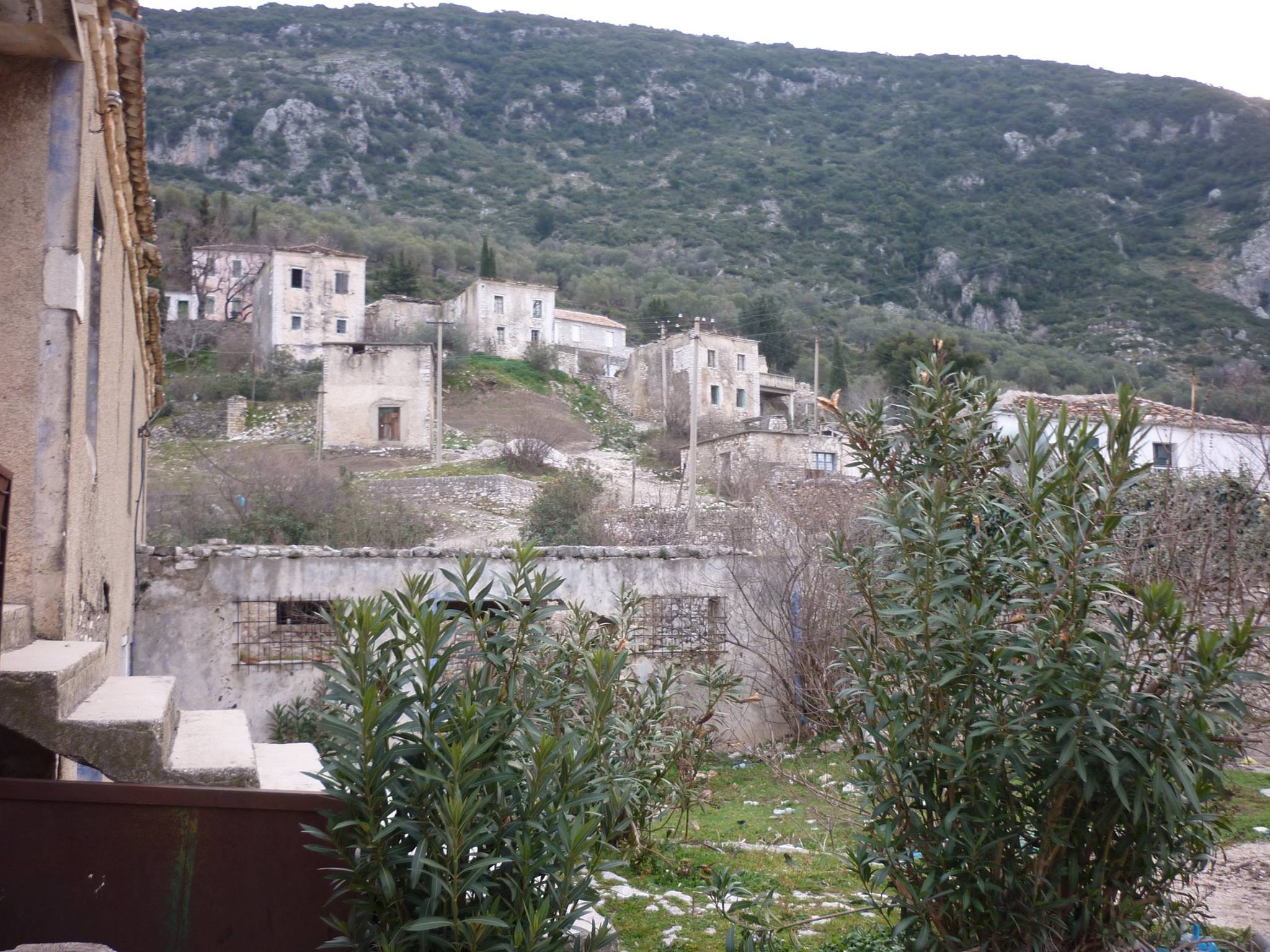
In 1900, Janko Pali returned to his village with his mother, while our country was under the rule of the Ottoman Empire. He grew up and entered the schools that existed at the time on the Coast – Greek-language schools (according to the propaganda of the Patriarchate). In 1912, despite good results, he finished his 7-year education but had no economic means to continue further, as the Balkans were in a state of fierce wars and schools were closed. He remained unemployed during 1912–1913 until he became a shoemaker’s apprentice in a former shop of Kiço Sava.
In June 1914, unemployed in the village, he decided to emigrate. He left the country for Athens, where his uncles and cousins worked in various jobs. He fell ill with a joint condition (flat feet). Ill and out of work, he returned home in March or April 1915. Once his health improved significantly, through the mediation of his paternal uncle, Leonidha Pali, he went to Piraeus as a technical student at the Greek Train Workshop for the Piraeus-Larissa-Border line.
There, he also enrolled in vocational night school along with his lifelong friend, Neço Muka from Himara. Later, finding himself without work in November of that year (1915), he was forced to leave school and go to Laurium, where he started as a blacksmith’s assistant in the workshop of the French Company of Greek Mines. He stayed in Laurium until June of the following year (1916) and returned to Piraeus. He worked there until May 1917, when he was forced by the hunger imposed on Greece at the time due to its unfavorable policy toward the Allies.
In 1916, he registered at the French Consulate in Piraeus to go to France. After arriving there in June 1917, he was engaged as a mechanic’s assistant in Marseille and worked at the large A. Grammont enterprise in Pont-de-Chéruy, near Lyon, for nearly 10 months. In February 1918, through the interest of a Greek friend he had met in Pont-de-Chéruy, Thanas Koropuli, he went to Paris.
Simultaneously, he left Boulogne and went to the city of Saint-Étienne, staying in the “Kodoshode” quarter, where he began work as a marker at the “Leflaive” factories. The low wages paid in that Loire stronghold, which offered no prospect for a sustainable living, convinced him (perhaps along with nostalgia) to return to Paris, the “City of Light.” After changing many jobs, he finally went to the “Salmson” plant and remained there until the day he finally left the land of the Gauls in 1928.
He left Paris after living there from February 1918 until October 4, 1928. He departed France for Piraeus on October 8 of that year, meeting his uncle Leonidha Pali. He traveled through Greece to return to the homeland on October 17, 1928, and three days later, he resumed his duties as a teacher. According to his own notes, he felt satisfied with this new role, which elevated him from the status of a manual laborer. His joy was expressed in having become a civil servant within his own state (Albania).
All of this occurred after a bitter 14-year period of exile which had claimed a significant part of his life. Although he occasionally felt a strong nostalgia for the open horizons, society, and entertainment he had left behind – sometimes making him regret the decisive moment of return – he chose to put it all behind him and solve life’s problems in his own country, Albania.
Service Period as a State Official until 1939
Janko Pali began his duties as a teacher in the first grades of primary school, taking upon himself the education of the young sprouts of our race and nation. He served with great passion and devoted all his efforts, dedicating himself unreservedly to his duties and the study of various materials to become an effective educator and produce capable, skilled students – students who would serve both their own lives and the society where they would eventually be called to contribute the knowledge gained in those early grades. On this noble path, he was guided by the axiom: “The educator educates himself.”
In 1932, he was called to perform military service at the Supplementary Officers’ School in Tirana, along with a large group of other companions. He attended that school and was commissioned as a reserve aspirant in the Albanian army. He spent twelve months of service there in the engineering section, later specializing in communications as a radio-telegraphist. After completing his military service, he returned to his duties as a teacher.
The lack of textbooks at that time stirred his conscience and moral responsibility, forcing him to copy many school texts, often sourced from foreign literature. Alongside these transcriptions, he simultaneously engaged in the study of various texts that he either found in Albania or requested to be sent from Greece, France, and Switzerland.
In 1935, he decided to go to Elbasan, to the “Normale” school, to take the Pedagogical Proficiency exam to certify his ability to be a good and suitable educator for the new generation. After staying there for over a month and passing the required exams in all subjects taught at that school for teachers, he passed his exams and returned to his village. He was appointed head teacher, taking responsibility for the school and teaching the higher grades.
During his tenure, he followed the politics of the time, aiming to make his students understand the harm caused to our nation by religious services conducted in the Greek language. Irritated by this phenomenon lingering from past years, he attempted to have certain parts – such as the “Apostle,” the “Pistevo” (Creed), and the “Pater-imon” (Lord’s Prayer) – spoken during mass in our mother tongue, Albanian.
However, the strong pro-Greek current in the village opposed him, and he did not achieve success. On the contrary, he gained antipathy and was targeted. This would later be one of the reasons why, during the Greek occupation of the country, he was accused of being anti-Greek and was forcibly removed while the Greeks stayed in Southern Albania as occupiers in 1941.
Service Period during the Occupation (1939–1944)
April 7, 1939, found him with 19 other companions from the village as volunteers against the fascist Italian invasion. The government at that time organized a children’s colony for the children of the Coast villagers in “Uji i Ftohtë,” Vlorë. He was appointed as their escort with a group of educators from the Coast. There were about 30 teachers for 100 children, including the teacher from the Coast, Janko Ll. Pali. In May of that year, all the teachers of Vlorë, 45 in number, were ordered to go to Tirana to meet with Jacomoni, the Lieutenant of King Victor Emmanuel III.
Organized groups from all over Albania went there to participate in the reburial ceremony of the remains of our great poet, Naim Frashëri, brought from Istanbul. The teacher from the Coast, Janko Ll. Pali, was chosen by a delegation to speak regarding the importance of this ceremony. He spoke a few written words to praise and honor the memory of the “Nightingale of Frashër,” wishing for his remains to rest in our soil, for which he had learned all his life, concluding by saying: “May the earth of the motherland be light upon him, and may his memory be unforgettable!”
In the summer of 1940, a small colony of about 40 children was organized in Spile for the children of Himara village; under the leadership of the Carabinieri, he was ordered to serve as an honorary administrative director to assist colleagues F. Veizaj, M. Veizi, and A. Zoto, who were then students at the “Normale” in Elbasan. He joined more than 700 intellectuals, considered the Albanian Intelligentsia, in Durrës. Through a letter addressed to the commander of the Carabinieri in the summer of 1941, he refused the task they wanted to assign him as administrator of another children’s colony.
In the autumn of 1941, he was transferred as head teacher and director of schools in Himara, based in Himara-village. The Italo-Greek War found him serving as a teacher in the village. Unfortunately, as soon as the Greeks occupied the area, and within only two or three days – due to the personal ambitions of certain local elements who felt Janko Ll. Pali had treated them unfairly in elections for the village head, and because he was against Greek policy toward our country – he was arrested. The Greeks escorted him throughout the night to the Greek Division command in Kudhës (2nd section), accusing him of being a “dangerous Albanian, a friend of the Italians, a polygamist,” etc.
He responded to the Greek captain in charge of the preliminary investigation with courage and determination from the very first question, defending his nationality (Albanian) and his thesis, categorically rejecting the charges. He called all those accusations false and fabricated against him. Disregarding this, the Greek officials prepared the prison documents and sent him to Delvinë, Janina, and from there to the Concentration Camp in Athens! This occurred in January 1941, when together with 13 other Albanians and some Italian prisoners (about 200 people), they arrived in Preveza.
Sheltered in the Evzone barracks, he began a life of captivity that lasted until April 25 of that year. On March 3, he was moved with Albanian civilians to the infamous Kokkinia camp in Piraeus. According to Janko Pali’s testimony: “The Kokkinia camp at that time was constantly filling and emptying with civilian prisoners coming from all extremities of the Greek state. There I saw thousands of border-dwellers (akrites) pass through from Macedonia, Thrace, but especially from Chameria, the Albanian province.”
“The Cham men, who were not trusted by the Greeks, were deported – some to internment in the infamous Kokkinia camp in Piraeus, some to Pylos, some to Mytilene; those remaining were taken supposedly as loyalists to serve in the army, but in service without rifles! Thousands of such Chams were seen and tortured; many of them left their bones in the camps and prisons,” Janko Pali recounted.
According to his memoirs, with Germany’s entry into the war against Greece on April 6, 1941 – precisely when the great bombing of the Port of Piraeus occurred and Greek troops began to retreat before the German assault – hope began to grow among the prisoners that they would be liberated, and so it happened. On April 25, the camp command began to release all those who had close relatives in Athens or Piraeus. Janko Ll. Pali took advantage of this situation and was set free, but he never believed that by stepping out onto the street outside the camp, his captivity by the Greeks had ended forever! /Memorie.al
To be continued in the next issue