Memorie.al / Although totalitarian Albania had turned into the most isolated country in the world, the aging dictator in his villa still preoccupied himself with events in Iran. Using some Marxist-Leninist groups in Tehran as a pretext, Enver Hoxha justified the protests against the Shah, even though they cloaked Iran in an Islamic robe – a situation that continues to this day. ‘NACIONALE’ brings another unknown account of Enver Hoxha’s diary, his notes on Iran, and how the organization ‘Peykâr’ and the leftist fedayeen called themselves ‘Albanians,’ as they were motivated by Enver Hoxha. The communist dictatorship in Albania during its 45 years of bloody rule was involved in all sorts of atrocities even beyond its borders.
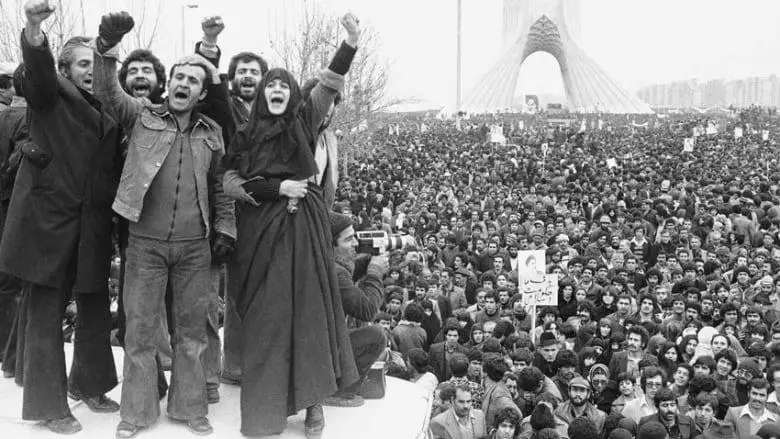
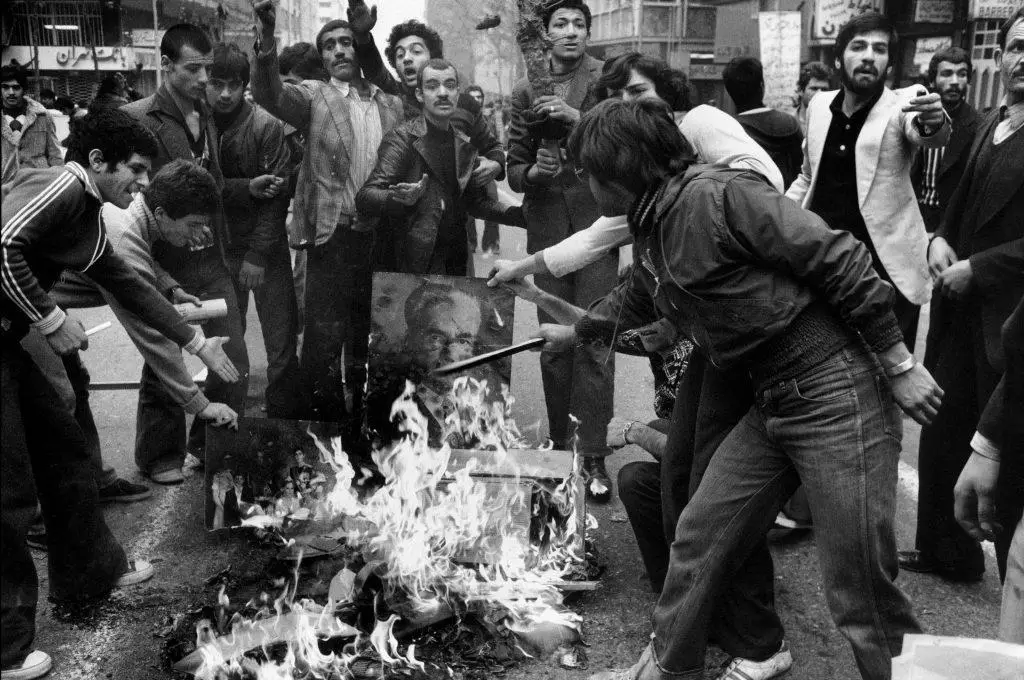
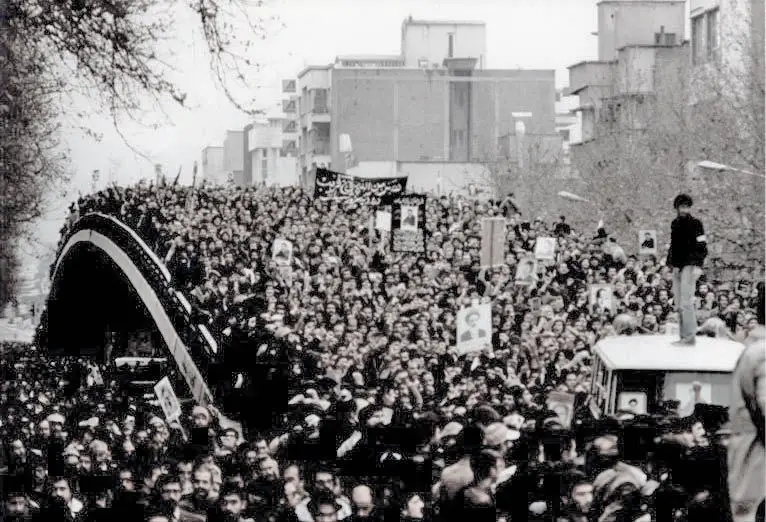
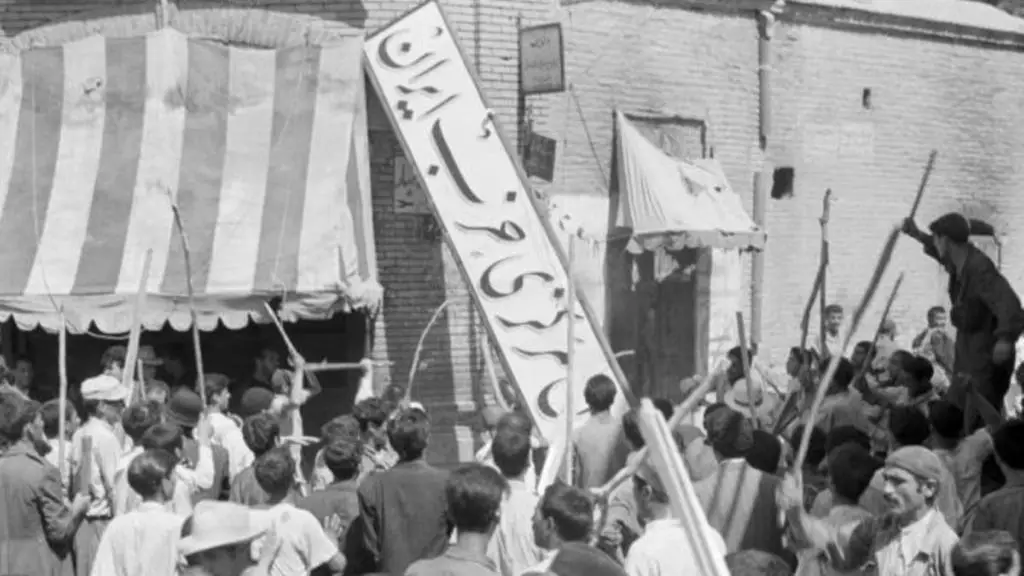
A true farce also appears to be the highly sympathetic stance of official Tirana towards the events in Tehran that brought about the fall of the Pahlavi dynasty. The unforgettable unrest that lasted a full year – from January 7, 1978, to February 11, 1979 – began with protests, continued with strikes and civil disobedience, and culminated in armed clashes on the streets. However, these efforts ultimately culminated in the overthrow of the government of Shah Mohammad Reza Pahlavi, whose rule paradoxically combined the deep modernization of Iranian life, a pro-Western stance, but also authoritarian governance.
The Revolution That Darkened a People
Known worldwide as a revolution (in Farsi: Enqelâb-e Irân), February 1979 brought the downfall of the Imperial State of Iran and its replacement with the so-called Islamic Republic of Iran. At the head of the theocratic regime was placed the cleric Ruhollah Khomeini, who had led one of the rebel factions. Since 1964, he had lived in exile, sometimes in Turkey, sometimes in Iraq, and most recently in France. After a referendum held in March of that same year, the new Islamic government drafted a new constitution.
Despite some superficially liberal elements, the constitution was built upon the principles and values of “an ideal Islamic society.” Ayatollah Khomeini, who had established himself as the “supreme leader,” entrenched the concept of Velayat-e Faqih, which signifies religious rule based on Shia Islamic law.
The Aging Dictator, Enver Hoxha, Whiled Away His Days with Events in Iran!
Remarkably, the events in Iran were followed with considerable interest by the Albanian communist leader, Enver Hoxha. In his diary with notes on the Middle East, he devoted entire pages to the protests in Tehran and other Iranian cities. In a note dated January 14, 1979, significantly titled; “Glory to the Iranian People”! – He began with carefully chosen words his assessment of the people of Persia and their “ancient progressive traditions, great culture, and broad idealistic philosophy.”
In Hoxha’s eyes, Persian writers, poets, philosophers, and scientists had amazed the world. “The history of the Persian people and their distinguished representatives is one of the most glorious parts of world history,” wrote Hoxha, at 71 years old. However, his enthusiasm for Persia waned as soon as he recalled the fact that “in modern times, Iran has become prey to imperialism.”
According to him, Shah Pahlavi had become a lackey of the United States of America. “The Americans were the ruling masters, appropriated most of the oil, and made the law in Iran.”
Enver “Forgot” the Sigurimi, Preoccupied Himself with SAVAK!
Despite the fact that the State Security (Sigurimi) had been wreaking havoc in Albania for decades, where prisons and internment camps had become commonplace, Hoxha took the liberty of concerning himself with Pahlavi’s intelligence and security service (SAVAK). “Inside the country, he (the Shah – ed.) created SAVAK, a merciless weapon that maimed and killed anyone who dared to oppose or even whisper a single word against the bloodthirsty Shah,” wrote Hoxha, who was presumably in one of his villas.
Further on, in his diary, he digressed from current events and also offered assessments of the new leaders emerging in the Iranian protests. “It is a fact and must be recognized that this person (Ayatollah Khomeini – ed.) and his Shia sect are playing a role as subjective factors in the revolt of the Iranian people, but he and his sect are by no means the only decisive force,” he wrote.
“The progressive Iranian bourgeoisie, in fact the secular bourgeoisie, as well as the communists and pure patriots, are at the head of this revolution with bourgeois-democratic features, which we can call an anti-imperialist revolution, whose slogan is ‘Death to the Shah!’.” Rejoicing at the overthrow of the monarchical regime, Hoxha exclaimed mashallah that “this is what the colossal force of the people means.”
Advice for the Marxist-Leninists of Tehran
However, there were some aspects of these events that did not entirely satisfy the Albanian dictator’s revolutionary taste. With a grimace of regret, he wrote that the Marxist-Leninist Communist Party was not the only one in the events in Iran, as there were also other progressive, democratic, bourgeois, and anti-imperialist forces. For this reason, Hoxha deemed it appropriate to fill his communist brethren in Iran with advice.
“The Marxist-Leninist Communist Party of Iran must learn lessons from this and go deep among the people, be at the forefront of the situation, create ties with the people, with the proletariat, show them the great victories achieved, and be able to make alliances with these elements, with these democratic layers that actively participated in the uprising, and progress together with them from phase to phase.”
Communist Europe and the Flirtation with Iranian Islamists
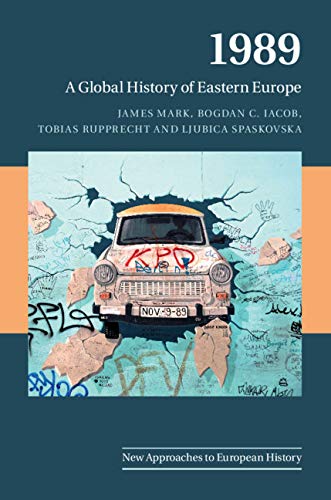
What seems truly strange is the highly paradoxical approach of a communist regime towards events that were then and later characterized as an “Islamic movement” that transformed Iran from a pro-Western country into a theocratic regime. With the pen of a group of authors, the book ‘1989: A Global History of Eastern Europe’ precisely unveils the paradox of how several Eastern European states tried to reconcile Arab-Islamic socialism with European socialist culture.
“Many regimes in the communist states of Eastern Europe emphasized the anti-imperialist nature of the changes in Iran after 1979, while justifying closer economic ties: in the first five years after the Islamic Revolution, the German Democratic Republic increased its trade with Iran tenfold, while Hungary increased it fourfold.
In Czechoslovakia, one propagandist insisted that although Khomeini had said the Quran would be the highest law, there would be no ‘return to the Middle Ages,’ as the Western press implied: there was a modern interpretation of the Quran, and the Islamic Revolution would be ‘unique’ in the Muslim world,” write the authors of the book in question, elaborating on the stances of communist regimes in Europe.
“The Albanian leader Enver Hoxha initially had high hopes for the long-term anti-imperialist and Marxist potential of the Iranian Revolution”!
Iranian Irony: ‘Peykâr’ Had Enver Hoxha as a Mentor
Ironically, the mixture of Islamic and Marxist influences within the Iranian opposition created extremely complicated situations in Iranian society. Abdyl Javadzadeh explains this quite well in his book, titled “Iranian Irony: Marxists Becoming Muslims.” He writes that within the People’s Organization of the Mojahedin of Iran, there existed a Marxist faction, which later broke away from the movement.
“Ironically, many of those who joined the Marxist faction were quite religious and came from devout families. Therefore, the split between Marxists and Muslims within the mojahedin also caused enmity within families. Husbands and wives, brothers and sisters, and fathers and sons took sides against each other, either for Marxism or for Islamism”!
According to this researcher, this was best observed among the Marxist mojahedin, who were part of the Peykâr organization (Organization of Struggle for the Emancipation of the Working Class). Peykâr, which had its own particular brand of Marxism, vacillated between Marxism and Islam. “Its main ideological mentor was Enver Hoxha, leader of the Communist Party of Albania. This group rejected both the Soviet type and the Chinese variety of Marxism,” writes Javadzadeh.
The Fedayeen and the Albanian Faction within Them
The extremist version of Marxism from Enverist Albania was also winning over a part of the fedayeen (from the Farsi word fedāyān, “devotee”). In the last six months, the fedayeen swelled their ranks with thousands of followers. Kevan Harris unveils the experience of the leader of one of these groups, who with some embarrassment admitted that at the time he “belonged to the Albanian faction of the Fedāyān”!
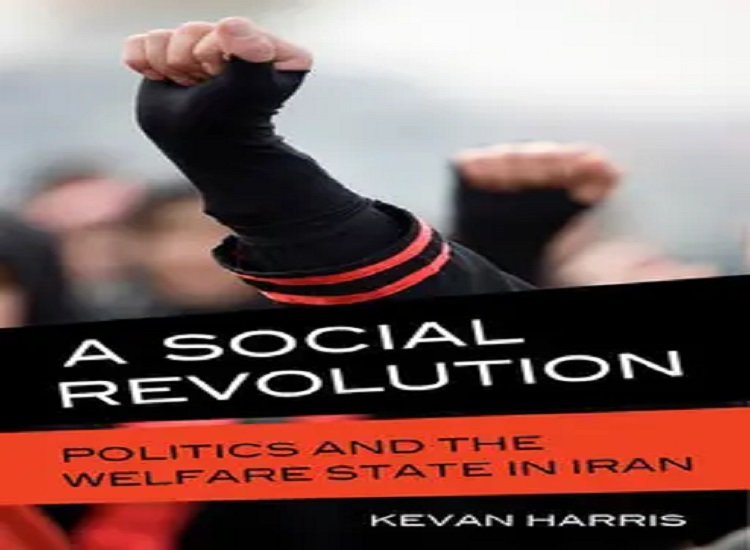
But why would an Iranian student choose to align with Albania, which was associated with Enver Hoxha’s Stalinism? “It had little or nothing to do with Albania and more to do with the rivalry among radical groups to have the most radical followers: ‘Because we broke away from the Maoist faction, which someone told us was reactionary,'” writes Harris in his book, ‘A Social Revolution: Politics and the Welfare State in Iran.’
According to the same author, in the final days of the Shah’s regime in Iran, there was a large but disorganized left, a small cluster of religious nationalists, as well as Islamist groups either drawn to or placed under the umbrella of Khomeini’s leadership. / Memorie.al