Part One
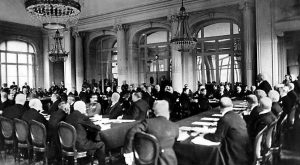
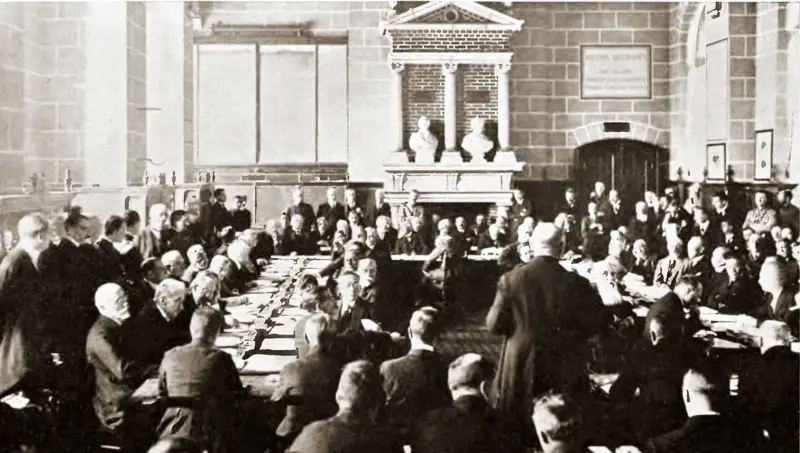
Memorie.al / In January 1920, Sotir Kolea requested Parashqevi Qiriazi to influence the American President for the protection of the national cause: “Our matter has remained in the hands of America, exactly like the issue of Fiume.” When the Albanian cause at the Paris Conference in the early 20th century was endangered by the chauvinist interests of neighbors, the efforts of a group of patriots – who were not part of the official Albanian delegation – were immense. They sought to find strong supporters for the national cause in the major chancelleries, while the journalism of Albanian pens in newspapers and magazines published by patriots in exile struck hard. Yet, to the nation’s misfortune, these efforts are marked by a curse: the fact that even a century ago, Albanian political factions often worked “under the rug” (clandestinely) against the national cause.
In the Sotir Kolea fund, through correspondence with Parashqevi Qiriazi in the 1920s, one understands what was happening beneath and above the rugs of those whom we have long considered great national patriots. Unstudied archives urgently demand the unmasking of historical truths without gloves.
From Lausanne, on January 9, 1920, Kolea, along with his collaborator from the magazine ‘L’Albanie’, Hilmi Këlcyra, wrote a letter to Parashqevi Qiriazi – who at the time lived in Boston, USA – requesting efforts to knock on every chancellery for the Albanian cause. This issue required people loyal to the national cause. One of them was Parashqevi Qiriazi: “Honorable Lady and valued patriot.”
The Letter: “Honorable Lady and valued patriot,”
“The knife has reached the bone for the Albanians; now is the final struggle – we either die or live. It will be decided shortly; therefore, all those whose hearts are scorched by longing for Albania, all those who have had no other dream in their lives but the freedom and prosperity of the Fatherland, must now more than ever exert their strength to repel despair. For despair is death; the Albanians have not yet died, and Albania shall not die.
You, Lady, who have taken such a great part in this holy struggle, who have exerted your strength across the world to withstand external danger and shake off internal misfortune, you again have a great duty to strive as much as possible now, as the fate of Albania is being decided. Our matter has remained in the hands of America, exactly like the issue of Fiume.
Although America seems to have indicated it will not interfere in European affairs, the greats of this side still do not dare to conclude anything without its will and consent. The need they have for her, and the fear they have of one another, forces them to walk this path. Our hopes from across the Atlantic are quite cold.
France has not changed its mind since 1912; mesmerized by the Greeks of Mr. Venizelos and following the Serbs of Mr. Pašić, she has no eyes to see other nations, nor ears to hear the cries of those in mortal danger. You saw this best yourself during your stay in Paris.
Italy, being its usual self, its diplomats has forgotten what it is to blush before a lie; now, amidst this struggle and after it, they have reached the pinnacle of shame. Mr. Clemenceau was forced to say officially before the world that Italy’s diplomats broke the word they had given to the French and the English. Having finished their dealings with Greece at the expense of Albania -with Korça, Gjirokastra, and Himara, Greece will be paid; with Shkodra and the highlands of its plain, the Yugoslavs will be paid.
These are the workings of the ‘friend’ of the Libohovas, of Turhan, and their entourage. Now, finally, they have declared their intentions plainly; after words, it is the turn for deeds. The bloodshed in Vlora on the 28th of November, the blood and fire of Hormova, and so many other bloods and fires, are sufficient proof for the life that awaits us under the claws of Sonnino and Tittoni.
As for our side, this is how we have treated them from the beginning, ever since we saw the Government of Rome supporting every vagabond among the infamous Albanians. The work of the Consulate here with Turhan Përmeti, Tahsin Mesarea (those of Thessaloniki), Viska Dodani (he of the ‘Testament of Tërpo’), and other curs like them, was sufficient; therefore, from the very beginning, we did not cease protesting and raising our voice against Italy’s workings at the expense of Albania.
A large portion of the telegrams we have sent, we have printed and are publishing in our paper here when possible. But there are so many telegrams, petitions, and other documents that we cannot find space for them in our paper, either because they are too numerous or because it does not suit us to bring them into the grand open. The latest are our protests regarding the killings in Vlora, which you will find enclosed.
We have no doubt that upon hearing of these unexpected atrocities, along with your good comrades, you have raised your voice and lamented the grievance to the American Government. But today this is not enough; besides the deed, one must observe how others act just as much.
In America, there are a multitude of societies and brotherhoods whose addresses we do not know, as no newspaper thought to compile a detailed list or any address regarding their purpose and work. These groups are a great power for us, and today such a power must not be left unused. This duty weighs upon all true and clear-headed patriots living in America.
Once before, regarding Vlora, a certain Bahri Omari – who by ill-fate had sprouted as the editor of ‘Dielli’ – did everything possible to stay the hands of those who wanted to send protests and petitions. Perhaps that suited Mr. Omari, but now this gentleman has vanished from ‘Dielli’. I do not believe any other mushroom like him will sprout again. But regardless, it is your burden to ensure that the first mistake is not repeated.
We have written to some regions and will write even more on this matter, but their action among the patriots there cannot have the weight of yours, as you know the place and the people, both our own and the foreigners. Therefore, Lady, we beg you not to spare yourself. With wisdom and gentleness, convince even those who might not show much warmth in their hearts.
Our work is not so hopeless. Italy may sign dozens of agreements, but these mean nothing as long as America does not approach them; as for those on this side, it goes without saying that they approached them long ago. Therefore, America’s door must be knocked upon as quickly and as loudly as possible. For this task, our brothers of the New World are positioned well than anyone else to act with benefit and profit for the fatherland.
Besides the matters mentioned above – namely the telegrams to His Majesty, the King of Italy, and to the Parliament, and the Leadership of the Paris Conference – we enclose here the following:
- The petition we sent to the U.S. Senate Commission on Dec 16, 1919;
- The telegram sent to the American and English ambassadors in Paris on the 13th of last month;
- The telegram sent on Dec 13 to Mr. Clemenceau;
- The letter written to the leadership of our Delegation on Dec 31, 1919;
- The letters written to ‘Vatra’ on the 2nd and 19th of December and the 3rd of this month.
We want you to see what we are doing regarding the work of the gentlemen of ‘Vatra’ and ‘Dielli’, who it seems to us have not cared for the matters they should have, despite having all that material and moral power given to them by the Albanians of America.
Let us hope that these flaws will be corrected from now on before it is too late. Waiting for good news from your side, we greet you, honorable lady and patriot. For the Editorial Office of ‘De L’Albanie’, signed Sotir Kolea and Hilmi Këlcyra. (A.Q.SH., F. 47, D. 14, fl. 8)”
What was happening in Paris: The Betrayal of the Albanian Delegates
For a century in our nation’s history – from the struggle for independence to democracy – the primary responsibility lies with the politicians. To call it a “misfortune” is the mildest word one could choose, for the sins are not small, given the consequences they left behind for the nation. Regarding what happened a century ago by those involved in politics, nothing remains hidden. Although the historiography of the communist era, as everywhere, performed significant selections in the archives according to political preferences, today they are no longer concealed, for the archives speak the truths.
During the proceedings of the Paris Conference, there were Albanian delegates who had sold themselves to our enemies, such as Italy, Greece, and Serbia, for their own petty personal interests – acts that today are fearlessly called “treachery.” Many of these individuals remained unknown because they were frequently covered up.
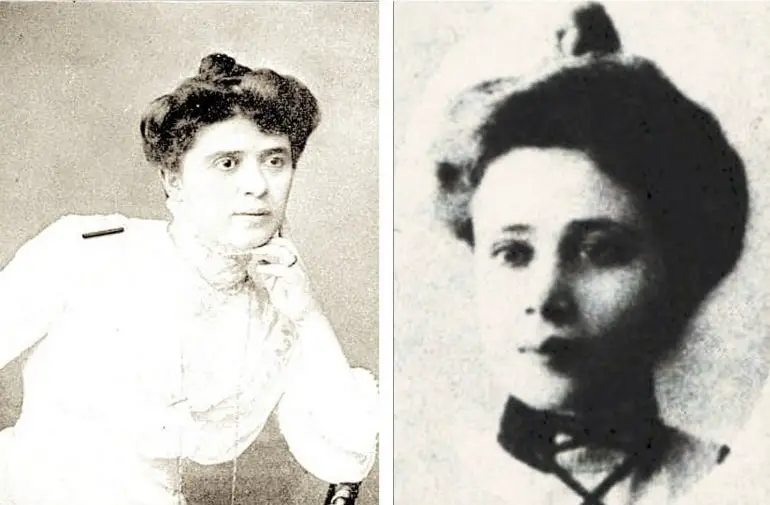
Parashqevi Qiriazi had spent several months near the Albanian Delegation, sent by her Party from the USA to the Paris Conference in 1919. She had seen and heard what and how the members of the official Albanian Delegation were working there, and she was horrified. / Memorie.al
To be continued in the next issue