SURPASSING ALL THE DEATHS THEY GAVE YOU…!
— The Writer Mitrush Kuteli: At the Foundation and at the Peak —
Memorie.al / According to the Latins, there are two deaths for a writer: one is natural, and the other occurs later, when their work dies. But for the Albanian writer, there were other earlier, sinister deaths – dying while still alive. This happened under the reign of “Socialist Realism,” when works and authors were banned together, books were buried, and writers were imprisoned, executed, and even their memories were murdered.
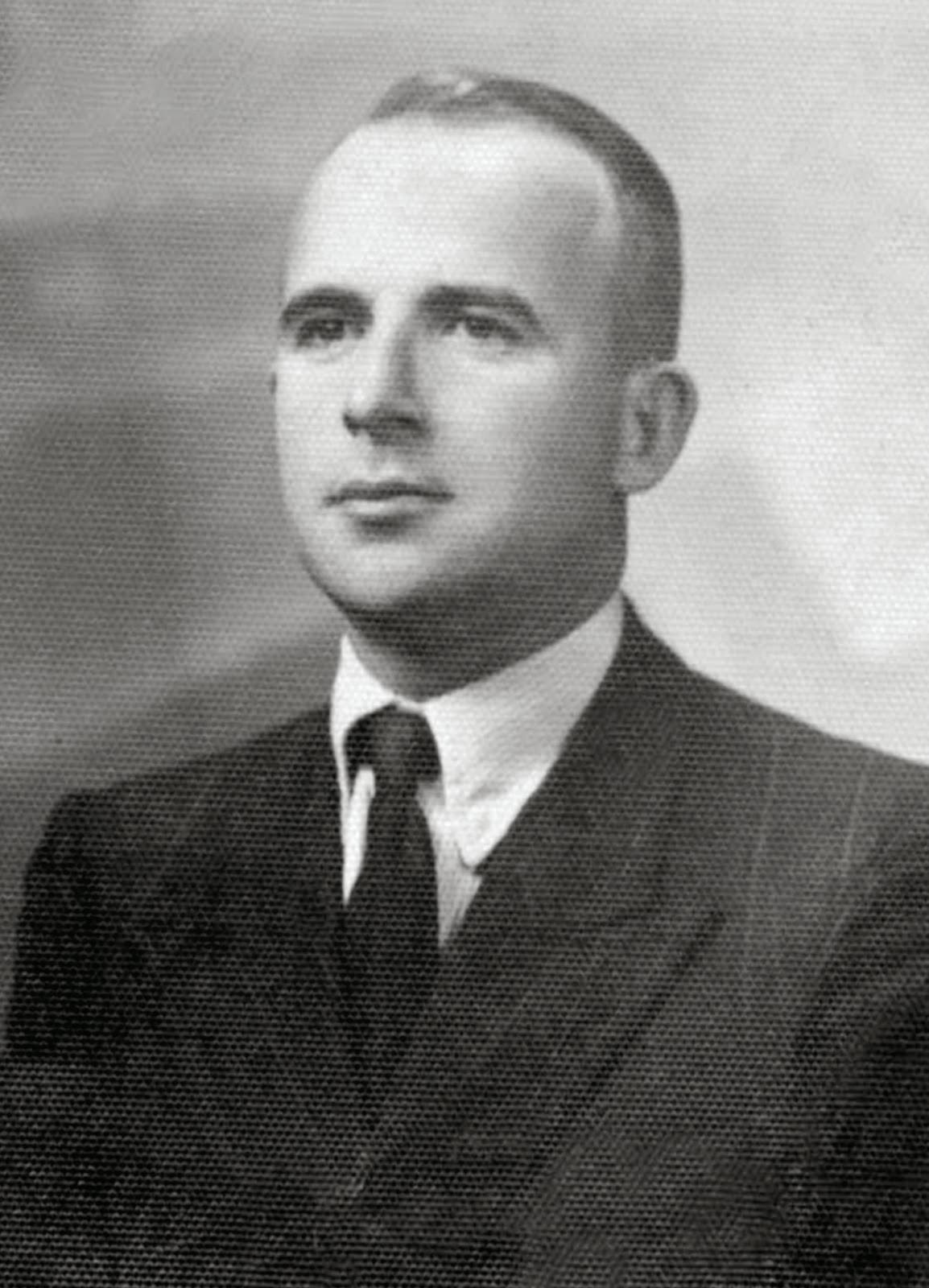
Today, we commemorate the writer Mitrush Kuteli on the day of his passing, May 4, 1967, at the age of 60. He surpassed all the deaths they gave him: his own and the others – the prison, the banning of his work, and the forced oblivion. Most incredibly and terribly, he even survived being buried alive. By God’s will, he escaped that, as well as the murderous silence after his natural death. As Kuteli himself wrote in a novella, no one is condemned to be immortal in body, though dictators would wish to be the last to die, filling their lives with the black spectacles of the deaths of others, of civilization, and of dreams.
Meanwhile, our Kuteli experienced the resurrection of his work. It shook off the dust of intentional and unintentional oblivion, proving itself fundamental to modern Albanian letters – a peak covered in the eternal snow of the highest mountains.
The Magician of the Albanian Tale
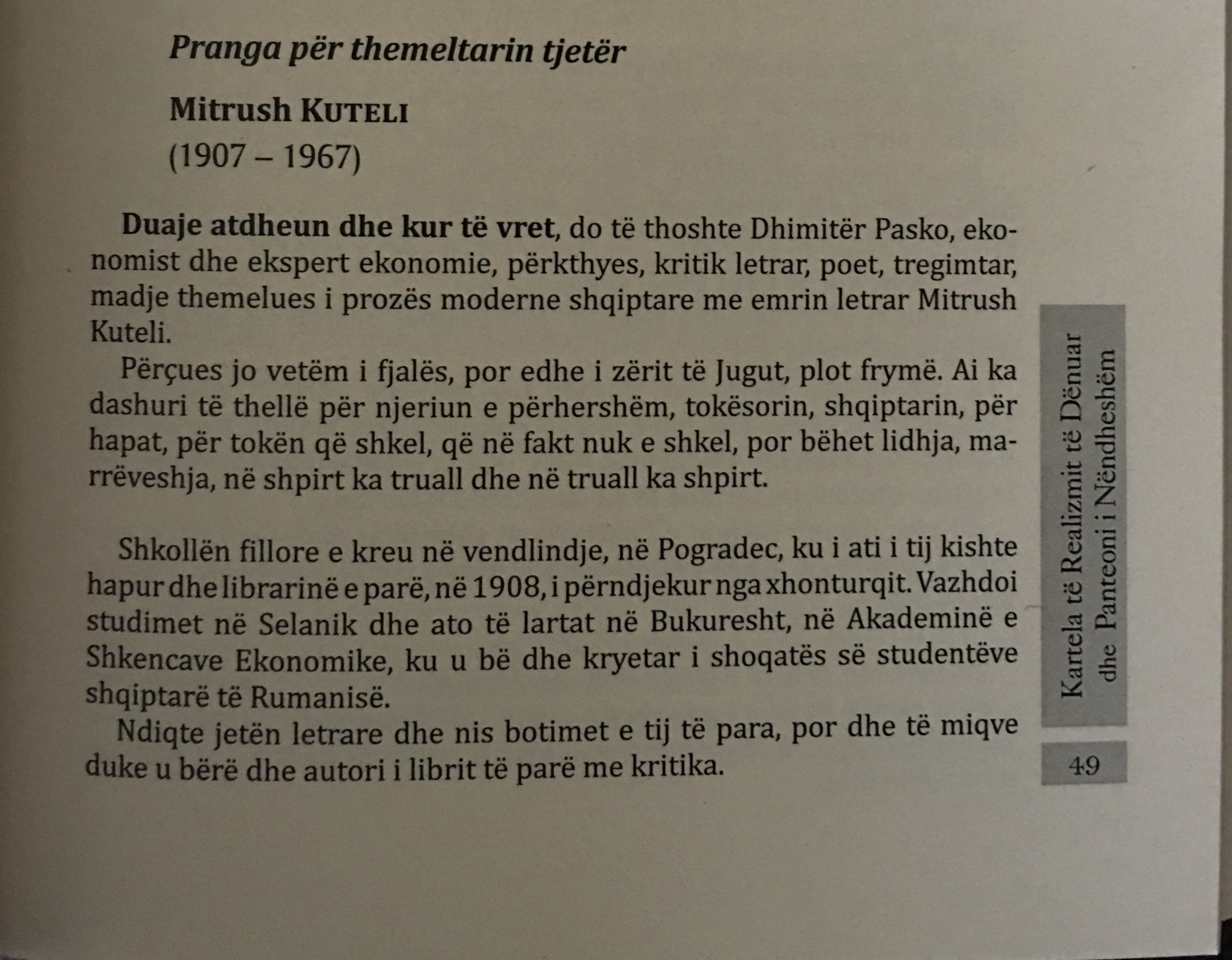
Mitrush Kuteli is the magician of the Albanian short story. Alongside Ernest Koliqi (with his shimmering Gheg dialect) and Anton Pashku in Kosovo, he forms a trinity of Albanian literature. Kuteli wished to write novels; it is said he finished one in prison, but it was lost. Afterward, they did not let him; they denied him the time for his novel on Illyria. That time belonged to others – those to whom “creative leave” was granted even if they barely knew how to write, appointed as “writers” by the Party to spend their time on denunciations. While the Albanian novel would later gain world recognition through Kadare, we must speak of the precursor, Kuteli.
He was also a poet – his “Kosovar Poem” is recited today with pain and national pride. He was a literary critic who published the first book of criticism in Albanian letters. He encouraged the publication of the stellar poetry of his friend, the brilliant Lasgush Poradeci, and prepared Fan Noli’s “Album”. He did not want to arrive alone.
But others came and left him alone. Socialist Realism arrived…! He did not join it consciously and instead turned to translating great literature. And then, he felt it was time to leave.
The Writer Buried Before He Died
I have said that Kuteli was buried alive once before, and this is not a metaphor but a real event. I wrote about it in my book “The Cracked Hell”. Here it is:
– “Do you know they buried Kuteli alive once?” A.S. told me while we drank coffee. My eyes widened; I thought it was a metaphor.
– “How?!” I cried.
– “They truly buried him. He was a prisoner in the swamp of…!”
– “The swamp of Vloçisht? The hellish one?”
-“Yes. It must have been the year 1948-49…!”
I knew of it. I had relatives there. Even Makesen Bungo recounts a story of a prisoner writer called by a guard: “What was your job before, eh?” – “I wrote books,” the prisoner replied. “Really?” the guard screamed. “What are you Lenin? Only he wrote books,” and he struck him in the head. Mitrush Kuteli did not move. He did not flinch. Blood burst out…!
-“Listen, it is terrible,” A.S. continued. “Hamza Tusha from Elbasan witnessed it; he is alive. He saw it with his own eyes. He had been a partisan but was imprisoned. A guard, by the commander’s order – or perhaps on a whim, for a guard’s whim was equal to the states – called for the writer. The prisoners were working like slaves to drain that hellish swamp. ‘Quick, dig a hole there in the sludge, I want it deep!’ the guard shouted. ‘Are you done? Now, this one, this writer, throw him in, naked!'”
They lunged at Mitrush Kuteli – guards or prisoners in service of the command – tore off his clothes, and he stood there, dazed, upright like a Christ.
– “‘Throw him in the hole! Cover the writerrrr!'” the guard’s shout rang out like a shot. Shovels threw mud over him, the swamp… How many had they covered like that after work, in the muck…
– “This is macabre, unbearable even to hear.”
– “Yes. Listen to the rest. Tahir Çiftja, a fellow prisoner, pleaded with the commander to let them dig him up – what kind of grave was that? A crime… ‘Please, it’s a sin; let us see if he is dead or not. How much can a man endure?'”
The commander snorted, “Fine, opens the hole.” And they did. They uncovered him. They pulled out that heap of mud that moments ago had been flesh and bone, a living thing, a human being. Mitrush Kuteli… he was still gasping… Perhaps the sludge, the water, his skin was taking in air… naked… it was April… God… the last gasps of the mud. The prison doctor, Dr. Isuf Hysenbegasi, whom the prisoners saw as a guardian angel, cared for him and brought him back to life. He resurrected him!
I was speechless.
– “Do you know what they did with the hole?” A.S. wanted to horrify me again.
-“They filled it!” I shouted. “What else?!”
– “Yes, but first, they ordered: ‘Throw these two old men in.’ they didn’t want the hole to go to waste. The guards threw two men from Peqin in alive.”
Beyond Belief
Truly, it is beyond belief. I wouldn’t want to mention it – it hurts – but I must, in the name of truth and human suffering. The shock is great. I once asked the writer Dhimitër Xhuvani, Kuteli’s cousin:
– “Did you know they buried him alive?”
– “Yes,” he said.
– “And you haven’t written it?” I almost accused him.
– “Out of pain, we didn’t want to…!”
One of Kuteli’s daughters told me beautifully at a book fair: “We don’t want to remember what others did to Kuteli, but what Kuteli did…!” She is right. But what happened to him is now a metaphor, not just for the writer, but for the era itself. It is our duty to tell it! With names. The killers are not metaphors; they are real, and they have supporters. The swamp they wanted to drain with slaves—where human sweat and blood replaced the water – is the new reality the cruel victors brought. Their paranoiac whim was to bury everything that had been achieved: culture, tradition, art, and literature, so that everything would begin with them.
Resurrection is in our hands… for the present to remember, for the future to know the martyrdom of Albanian letters, to believe in resurrection and continue to work for it. In the name of human suffering? No, in the name of the happiness of the future…! Memorie.al