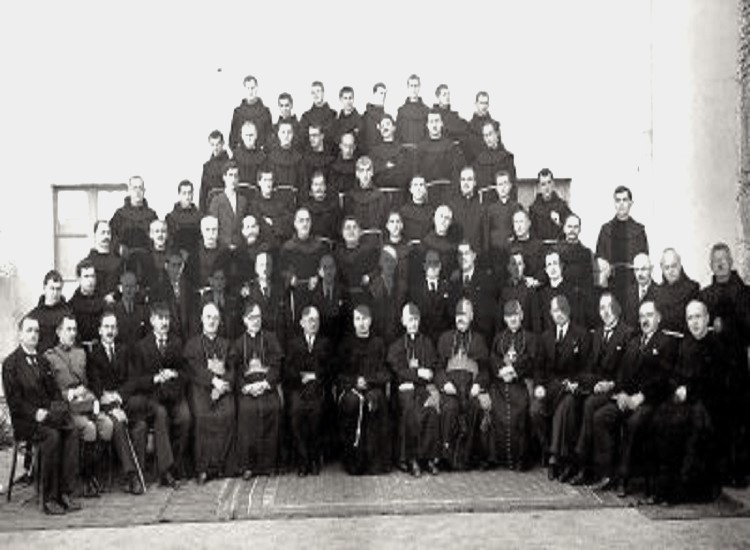
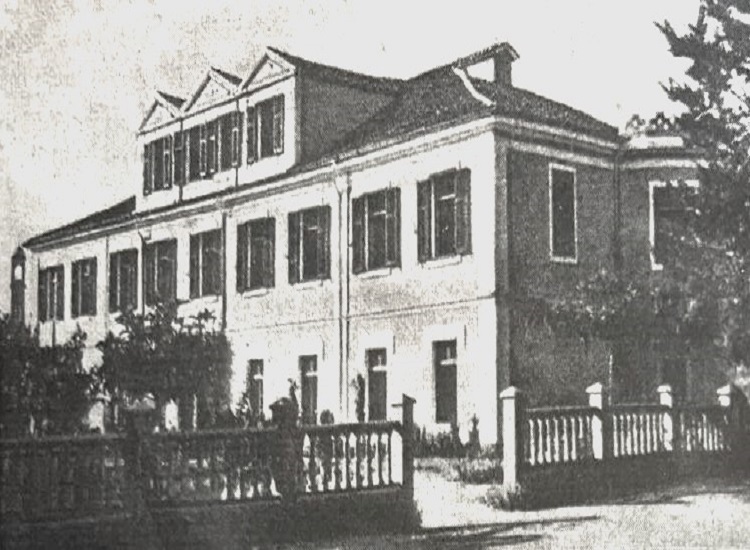
Memorie.al / What happened with Albanian classical music seems like part of a divine project. Several great composers and singers were born in the mid-1920s in Shkodër, where, by the time they reached the age for schooling, music schools and choirs had already been established in the Catholic convents. For this to happen, the teachers who laid the foundations of these structures had to exist first, such as Martin Gjoka – the first composer of classical music in Albania, a Franciscan friar, a teacher at the “Illyricum” high school, who founded the band, the choir of the Friars’ Church, and the music school.
He gave Albanian music not only the first classical compositions but also the musicians who were prepared in these schools and became teachers for the new generation, such as Prenk Jakova or Filip Mazreku. Everyone rightly knows the composer of the first Albanian opera, but the same cannot be said for Filip Mazreku. Nevertheless, if we were to discuss the history of music in Albania, this name could certainly not be left unmentioned.
Filipi, initially a student of Martin Gjoka, later continued his work in preparing new generations of musicians, those born in the mid-1920s, such as Tish Daija – the composer of the first Albanian ballet; the composers Tonin Harapi, Çesk Zadeja; the great lyric singer, Lukë Kaçaj, etc.
Mazreku had dedicated himself to music since he started lessons at the Seraphic College of Troshan. He cultivated this passion under the direction of Justin Rrota and Martin Gjoka, practicing on the harmoniums of the Franciscan Church that were accustomed to sounding under the fingers of these great masters. He then continued his theological studies in Italy, where he also attended music lessons. As Daniel Gjeçaj writes in a biography dedicated to his friend, Filip Mazreku, in Italy, his teacher was the famous master, Tomasini, the organist of the main convent of Florence.
He returned to Albania in 1937, and from that year on, he began his service as a priest and his work as an Italian and music teacher at “Illyricum.” He also started directing the choral groups of 6-7 year old children. By then, his teacher, Martin Gjoka, had left Shkodër for Pukë, also seeking a better climate for his failing health – as explained by Anton Lleshi, the son of Filip Mazreku’s sister, who has provided for this article all the memories, photos, and data collected over the years about his uncle.
Thus, Filip Mazreku also took over the direction of the Franciscan “Scuola Canturum” founded by Martin Gjoka. It was precisely in these groups, just like Prenk Jakova before, that Tish Daija, Çesk Zadeja, Tonin Harapi, Simon Gjoni, and other authors of famous works would begin their musical preparation. They would fill the classical music stages with sounds and enter, through songs, the homes and hearts of Albanians, as a mission of that musical project which, whether intentional or not, seem divine.
However, the communist regime established in Albania after the War had a fundamental problem with the divine and all its forms of expression on earth. Intellectuals, artists, and scientists were struck, but above all, the clerics. Several buildings that were once churches, convents, and dormitories were raided and turned into prisons and places of torture which, especially in the city of Shkodër, would reach a record number, along with the arrested people inside them. The Franciscan convent was dissolved.
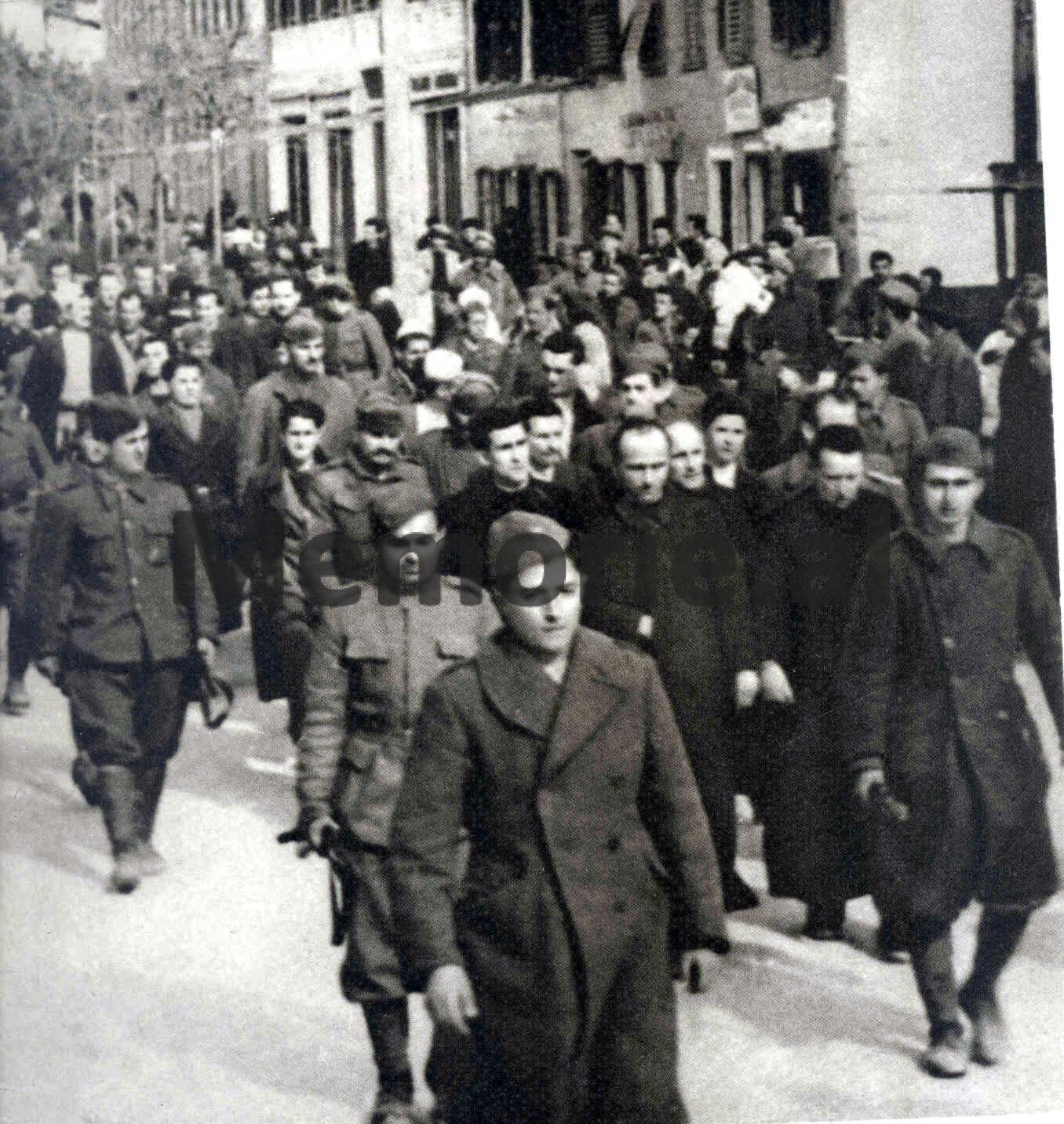
Some of the friars remained in Shkodër, others went to their families, and others to the parishes in deep areas. But nevertheless, whether engaged in religious service work or not, everyone was waiting, waiting for the punishment that would arrive sooner or later. And, for Padër Filip Mazreku, it arrived on September 28, 1946. He was arrested in Rrapshë i Hotit, where he was serving at the time – located at the beginning of the mountain road to Vermosh.
“One dark night, the Sigurimi forces, armed to the teeth, surrounded the Rrapshë cell, where the musician Friar was sleeping the sleep of the innocent, amidst his instruments and his elderly mother, Shaqja, who was serving him… They knocked on the door with the butt of a machine gun. They arrested him and dragged him away, laden with handcuffs, without letting him even put on his clothes. They took him just as he had jumped out of bed, naked and barefoot.
During the journey, he was subjected to torture: they spat on him, beat him, and knocked him down to the ground several times. When he arrived in Koplik, he was covered in blood. Since that time, his biggest oath was: ‘Pasha vuajtjet që kam hjekë në Koplik’ (By the suffering I endured in Koplik),” writes the Franciscan Daniel Gjeçaj, who fled Albania in 1948 and was one of the main figures of the Albanian program of Radio Vatican, after 1955.
These were the days of hurried arrests following the Postribë Uprising. A few days earlier, they had arrested Dom Pjetër Gruda and Padër Çiril Cani. Later, they would also arrest Padër Mark Harapi, Padër Frano Kiri, and Padër Agostin Ashiku. The arrest warrants for the clerics were signed by the prosecutor of Shkodër, Hys Zaja, who would later have a career as a military prosecutor in Elbasan as well.
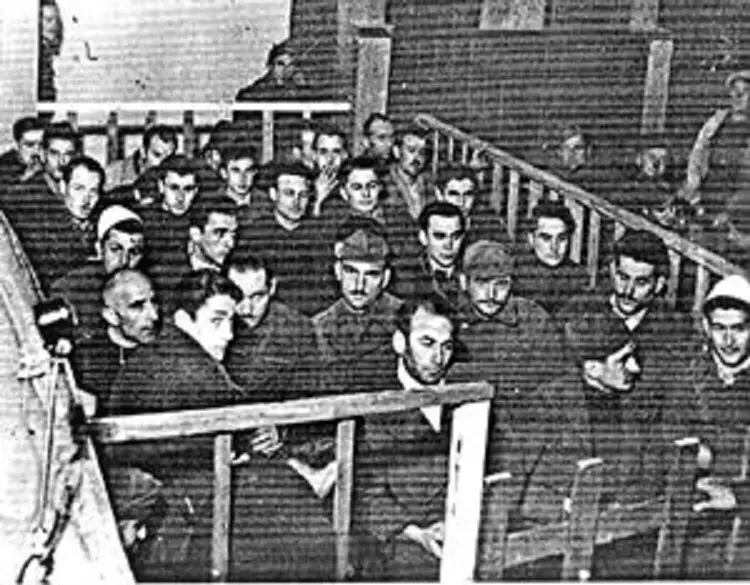
All six clerics, as Veli Haklaj points out in a study, were accused of “weakening national defense,” provided for by Article 7, Paragraph II, of Law No. 368, dated December 5, 1946, which would be published in the Official Gazette on December 19, 1946, a date when some of the arrests had already taken place and the clerics had been imprisoned.
In his study, Haklaj has published excerpts from the interrogation reports of these clerics in the offices of the State Security Section in Shkodër, about which he himself says that; “one must consider the fact that those who had the tragic fate of passing through the State Security’s investigative sessions had to endure an unimaginable ordeal of the most inhumane suffering and torture.”
Meanwhile, the nephew of Padër Filip Mazreku also expresses reservations about the authenticity of these statements, which “look identical, only the name changes.” However, the stance against atheistic communism, expressed in these statements, is undeniable. Filip Mazreku had some stronger reasons to be against communism. “I was arrested on September 28, 1946, by the organs of People’s Defense, accused of having shown reactionary activity. This is somewhat close to the truth, as I was dissatisfied with the government, not only because a brother of mine was executed by the partisans, but also because all Catholic priests held a hostile attitude towards this government,” – is written in his statements.
In their family, originally from Kosovo, there were six brothers and one sister. Their father, Pjetri, after working on railways in different places, including Thessaloniki where Filipi was born in 1913, settled in Shkodër and opened two Albanian schools in the surrounding areas. Four of the brothers were military men: two captains in the army and two police officers (kuesture officers). Not much time had passed since the communists took power, and from this patriotic family, one was executed without trial during the October-November 1944 reprisal in Tirana against military personnel; two were in prison, sentenced to 20 years each, and another was sentenced in Yugoslavia, after fleeing. Now it was Filipi’s turn.
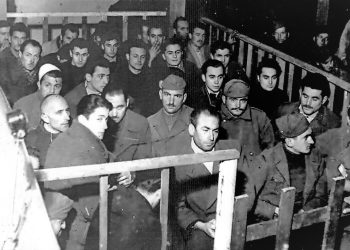
The investigation lasted for months. Filip Mazreku was questioned by the investigator Nesti Kopali. As shown by the blood-stained clothes that Filipi’s sister constantly took to wash, he, along with the other priests, was tortured mercilessly. Even the hours spent in the cell, when they were not being tortured by the interrogators, were exhausting, because the arrested people were kept day and night handcuffed to another condemned person, creating a chain that transmitted tremors, suffering, gasps, groans, and anxieties between them, which, even when leaving one, started for the other and almost never calmed down.
Filip Mazreku, as his nephew recounts, was handcuffed to the Mullah (Mullisi) of Drisht; the Catholic friar had to sit with the Muslim Ali every time he prayed. This very close relationship later united their families in a permanent friendship. According to Anton Lleshi, to whom his mother (Filip’s sister) recounted these sufferings, as his uncle himself told nothing, Filip Mazreku, during the investigation period, experienced some of the most macabre tortures applied by communist interrogators in those years: boiled eggs in the armpit, being tied in a sack with a cat, pine splinters under the nails, hooks in the back, etc.
Initially, he was sentenced to death by firing squad, but later the sentence was reduced to 10 years in prison. He was sent to Beden where an entire brigade was made up of Catholic priests – 28 of them, ranging from 26 to 75 years old, working in exterminating conditions to dig canals. Of course, the younger ones, such as Filip Mazreku (35 years old at the time), had to bear the greatest burden, even though his hands were made for playing the organ. He was released after three years, in one of those self-reviews the dictatorship made.
Religion was still permissible in Albania, and Filip Mazreku returned to religious activity, initially in Tirana as rector of the Franciscan Church, then in Laç, and finally in Troshan. He returned to the parish of that place where he had begun his priestly path and where he would also conclude it, along with his life.
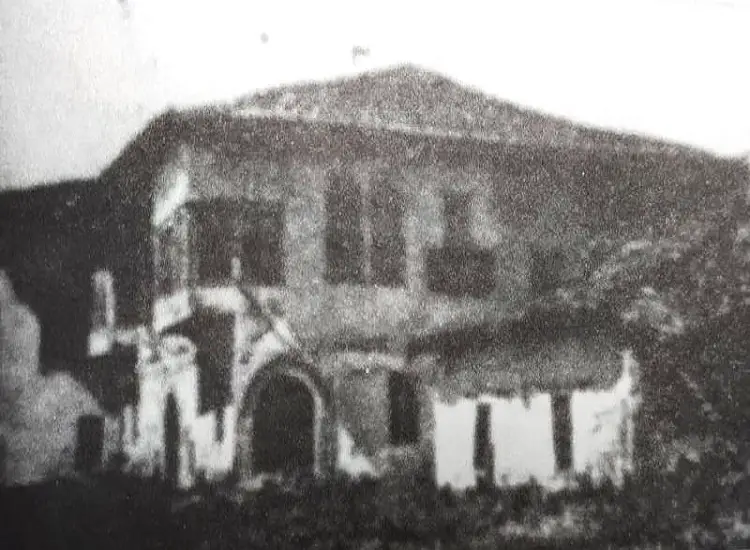
He served publicly as a priest until 1967, when religion was declared illegal. After that, he had to give his body and life a secular appearance. He barely obtained a residence permit for a hut that had been a bakery, near the Troshan Church, and with the help of relatives, he made it habitable. He wore the clothes of a farmer. He started working in the village’s agricultural cooperative. His pianist’s fingers were once again forced to grasp heavy work tools. This time forever.
Nevertheless, within this new attire, the same priestly soul remained. Troshan no longer had a building for religious services, but it had a man who could keep the faith and hope in God alive among those poor people, weary from hard work, who happened to be among the most loyal people in the Albania disfigured by the dictatorship, protecting the priest with their silence and love, thus saving him from a second arrest.
The residents of Troshan became his family and friends, but he did not lack the care of his family and a few old friends either. Anton Lleshi specifically mentions his sister’s husband, Filip Mazreku’s niece’s husband, Ndoc Mjeda, “an educator in Bushat, who constantly went and sent him food, winter and summer.” But he was also visited by his former student, Lukë Kaçaj, a brilliant and hot-headed artist, who was not easily scared, as happens with all people – few as they are – who rely on truth and justice.
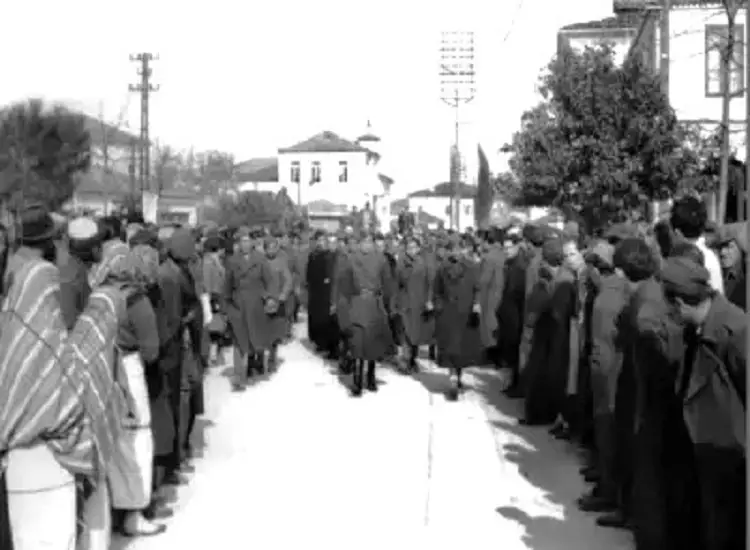
It was this kind of human love, besides the divine love that would find him in every prison and hut, the only gift that life gave this musician friar, and it was a lot in those times when it was difficult to show yourself as a friend or a human being. That love accompanied him with an almost unique manifestation even after he closed his eyes on November 1, 1984, and when he was escorted from this world the next day.
“I want to remember the people of Troshan who loved and respected my uncle Padër Filipi so much that they kept him within their bosom, a rare case compared to other priests, and when he died, they also participated in a great ceremony, as we as relatives had a duty to. This was not enough, but they also built his grave, for which I thank them immensely,” – says Antoni. Filip Mazreku was placed in the cemetery behind the Troshan Convent, where he rests today.
Filip Mazreku kept the faith in God alive among the residents of Troshan even though religion was forbidden in Albania. Those residents loved the friar-musician, even though standing close to a once-convicted priest was risky work. They openly showed this reverence when the teacher was escorted from this world on November 2, 1984, with the massive participation of Troshan and Fishta. Meanwhile, the dictatorship not only erased the name of the teacher of Tish Daija, Çesk Zadeja, Tonin Harapi, Lukë Kaçaj, etc., but also arrested him, tortured him, sent him to the Beden camp, and finally forced him to work as a farmer.
The dictatorship did not remember him on any important date; it tried to erase Filip Mazreku’s name from the history of music and never mentioned his contribution, despite the fact that the poor life of the people during those years was made more beautiful by the music created by the students of that man, who rested in Troshan, where he had worked as a farmer far from music and public attention… reminding one of a saying by George Eliot: “… that things are not so ill with you and me as they might have been, is owing to the number of those who lived faithfully a hidden life, and rest in unvisited tombs.” / Memorie.al