
By URIM ELEZI
Part four
Foreword
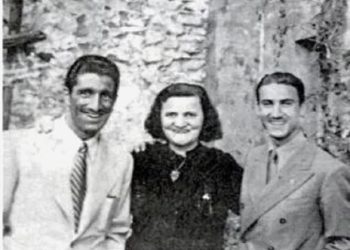
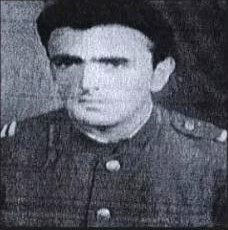
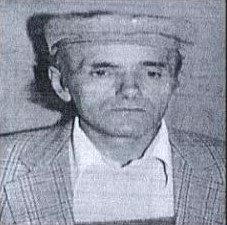
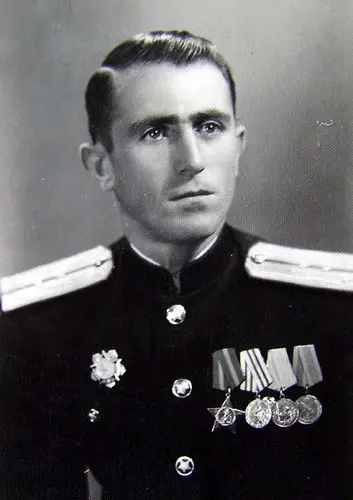
Memorie.al / Urim Elezi, born on October 18, 1941, in Floq, Korça, is among those sentenced twice by the communist regime, enduring many years of suffering. He was imprisoned on October 26, 1963, and released on February 10, 1989. He entered at the age of 22 and left at 48, moreover, blinded. At the age of 18, he completed the Instruction School in Gjirokastra, where he was promoted to non-commissioned officer. During his first sentence, he was a soldier in Unit No. 9357 in Gjirokastra. The first time, he was accused under Article 64, in combination with Articles 10 and 14 of the Penal Code. He was on military service together with his friend, Hekuran Shyti, in Gjirokastra. According to the court, he had proposed to Hekuran that they escape because life was good in capitalist countries, especially in the USA. Hekuran was discharged from the army earlier and during this time found other individuals with whom they would carry out the escape. Hekuran sent a telegram to Urim in Gjirokastra, requesting that he come because his mother was ill.
Thus, Urim joined his friends, Hekuran Shyti, Durim Shyti, and Robert Morava. Poorly oriented and betrayed by a local resident, they were captured by border forces at the Nikolica border post in the Korça district. The Tirana Military Court, by decision No. 21, dated February 27, 1964, declared him guilty and sentenced him to 18 years of imprisonment, confiscation of property, loss of electoral rights for 4 years, and stripping of his rank as a sergeant. This was upheld by decision No. 23, dated March 31, 1964, of the Military College of the Supreme Court. He was arrested for the second time on February 19, 1980. He was accused under Article 55/1 of the Penal Code with very severe articulations. The Fier Internal Affairs Department, by letter No. 112, dated January 15, 1980, requested the Prosecution Directorate to approve the arrests of three citizens, including the aforementioned Urim Elezi. He had been placed under active surveillance on May 17, 1979, for conducting propaganda among the convicts.
Informants “The Penitent” (I penduari) and “The Technician” (Tekniku) reported on him. It was said that he had expressed: “The Sigurimi has stained its hands with the blood of this people. They have committed the most hideous crimes in history; the Sigurimi has treated the people and individuals worse than the fascists and Nazis treated them…! There are none viler than the communists. I call communists all those who have a star on their forehead like a tomato, regardless of whether they believe in Marx’s beard or Stalin’s mustache…! The most monstrous crimes in Albania were committed when the communists came to power… Life here is a prison.”
The Fier District Court, presided over by Sokrat Dautaj, with the participation of prosecutor Kiço Koçi, by decision No. 94, dated April 18, 1980, declared him guilty and sentenced him to 10 years of imprisonment, as well as the loss of electoral rights for 5 years. Convinced of the futility of communist decisions, Urim Elezi did not appeal the decision. After sending a letter to Enver Hoxha, in which he described him as a “colorless monster, sick with a persecution mania,” on December 6, 1981, he was beaten by the police of Burrel Prison until he was blinded. He was released on February 10, 1989, from Unit No. 305 Përparim in the Saranda district.
Continued from the previous issue
During the sentence served in Unit 309, Laç, in the years 1964 – ‘67
In Laç, they killed Mark Cufi from Shkodër because he attempted to escape but was caught. Bound hand and foot, they left him naked in the middle of the camp for two days and two nights. Colonel Hazbi Lamçe, with his own hand, according to reports, had shot him directly in the heart, so deep that the left nipple was pushed inward by the bullet. He died in the 1980s in Burrel prison. In Laç, they also mysteriously killed the assistant-medic, Eqerem, in front of the outer gate where the trash was dumped.
In Laç, Qerim Çaushaj committed suicide; he was a sturdy young man from Dibra, about 25 years old at the time. He was provoked by the deputy commander of the labor camp, Tomori, who told him: “What can I do, other than twist your head off?” Qerim was in a cell with Qemal Mero from Vlora. Qerim said to Qemal and me: “Comrades, forgive me, for they will torture you. You know that if I kill one of them, they will kill 50 of us; but I still cannot endure it, for he insulted my family.”
Hurriedly, he left the cell, climbed onto the roof of the cell block, from there to the dormitory floor, and then to the third floor of the dormitory, from where he threw himself headfirst onto the concrete basin of the water tap, where the tanker came to provide us with drinking water. Curiously, one floor below where he jumped, there were pigeons belonging to the command. Thus, Qerim passed through a flock of pigeons. When his head struck the basin, his skull split open so wide that his brains spilled out…!
A month later when we were released, there were still bloodstains on the water basin! The worst policeman in Laç was Xhako Ramadan Mihaj from Përmet, who would tie up the prisoners and beat them nearly to death with wooden clubs. Furthermore, he would throw them down from the third floor. The floors were separated by wooden planks, and the distance between them was no more than 110 cm. Some broke their arms, others their legs.
In Unit no. 303, Elbasan and no. 323, Fushë Krujë, in 1967
From Laç to Elbasan, from ’65 until June ’67. Here, the worst policeman – who provoked the prisoners constantly, tied them up, beat them in cells, and participated in the execution of prisoners – was Dushani from Tepelena. I also remember another criminal, Captain Shasho from Devoll. Another was the head of the Branch, General Nevzat Haznedari – unscrupulous and beyond comparison. He orchestrated many setups to turn the camp into a slaughterhouse. He attempted this several times but failed.
From Elbasan to Fushë-Krujë
There, I experienced not only the isolation cell, irons, chains, rubber hoses, or pickaxe handles, but also a billiard cue, which Commissar Besnik Çomo broke over my head. At that moment, I was with Agron Kalaja. Both of us were hung by our shoulders near the perimeter wire, under the guard of a soldier. After leaving us hanging all night, they put us in the isolation cell the following day. Hyqmet Çami and Ibrahim Buzi from Mallakastra were also thrown into cells after being severely beaten.
From Fushë-Kruja to Elbasan
Here, Mit’hat Alushi from Vlora, a very young man, was killed. Not only did they kill him – I remember it was 9:00 AM – but even as he lay dead, they kicked him in the head. Before we were sent to Burrel, they brought us one by one into the command office. There, Nevzat Haznedari would punch and kick those of us being transferred to Burrel and then throw us into the garden in front of the office.
- Enver Shaqiri – Vlorë
- Elez Allçi – Tropojë
- Dom Simon Jubani – Shkodër
- Abdullah Sollaku – Tiranë
- Mehmet Hamza – Vlorë
- .. – Sarandë
- Ruzhdi Kraja – Shkodër
- Petrit Kruja – Shkodër
- Dhori Gërnjoti – Korçë
- Pjetër Arbnori – Shkodër
- Kujtim Luzi – Vlorë
In Unit no. 321, Burrel, in the years 1967 – ‘69
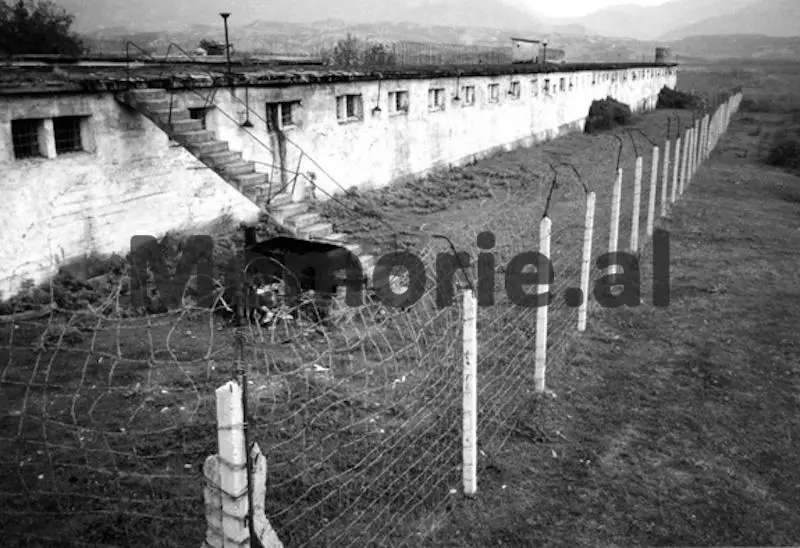
As far as I remember, on June 7, 1967, they sent us to Burrel. The first introduction: “Burrel: you enter but never leave!” This was the slogan written in red paint. The search began. We prisoners had to stand 5–6 meters apart. A brute would come and ask: why are you here, who are you, etc. At the same time, he would ask, but you didn’t dare answer, for he would say in the Mat dialect: “Mshile (Shut it)!” And with a finger, he would point to where we had to throw the clothes we were stripping off.
Indeed, I remember quite well that the police even searched the seams of our clothes. Although everyone felt ashamed to remove their underwear, we were forced not only to take them off but with their “hajde ka” (come this way), they urged us to step out just as we were before them. “Akove ka (turn around like this)…”! We would squat with our backs to them and lift our legs! They conducted this because, according to them, we might be hiding something in our front or rear parts…!
Horror! I apologize for recounting this situation, but please understand how I felt, having lived through it…! There was a policeman, “the dog-policeman” Ismail Shaja (I don’t recall his last name well, but they called him ‘Ismail of the dog’ because he was always with the command’s dog), who, unlike the others, wore overalls instead of a military uniform. He didn’t ask us to remove our underwear. But what did he do? He would insert his finger into our rears…! (I apologize again, honored readers).
However, many prisoners would not allow it. Those who did not obey suffered even worse… “the black of the olives” (a living hell) in the isolation cell. They were left there for a full 30 days. Often, I must say, there were fatalities. In one encounter with this wicked man, I suffered myself. There were two pieces of oak wood, about 50–60 cm long. Thinner on one end for a grip and thicker on the other. They would strike with these, causing deaths…! This was the case when Baki Hametllari from Berat was injured in his spine and crippled for life! When I regained consciousness, I saw this brute standing over me.
“You’ve stained my overalls, you enemy of…” – Ismail of the dog told me. – “Oh, enemy blood. You’ve filthied my clothes!” I don’t remember my reaction, but while I was lying there, I saw… as if I had mounted a white horse, and on its unusual saddle, there were pieces of wood shaped like a pack-saddle, and I was riding upon them. The horse ran with unseen speed, almost as if flying through a forest filled with trees. The branches were so thick it felt as if they were breaking me in half, here and there. Whether I was screaming or calling for help, I don’t know. A large branch further ahead caught me in the stomach and pressed me against the planks of the saddle. At that moment, I grabbed the branch. I recognized it then as a walnut tree. In truth, in one hand I held the horse’s halter, and with the other, I gripped the branch tightly. The ground opened, split apart, and the horse fell inside. The horse neighed loudly and descended until it vanished…!
I lost consciousness again. I heard voices when I woke up and saw two uniformed policemen holding the brute back, Ramadan Kurti and Nezir Leka. They pulled him away from me and threw me into a cell. The cell door slammed shut. I don’t remember the number of the first cell! From the north side, snow would fall on your body in every cell. In cell no. 7, also on the north side, if you opened the small door hatch, which was opposite the middle bathroom windows, when the bathroom door was open, no matter how mild it was outside, inside the snow turned to sugar; it would melt on your body and the wind whistled like a gale.
The spoon would stick to your hand, and there were moments when, from the cold, you forgot this detail and started searching for the spoon. And this happened only if the body managed to peel itself away from the concrete, after the night you spent stuck to it. I cannot help but mention another detail: every time the body barely managed to detach from the cement, it would crack loudly! In the cell, we didn’t wear our own clothes but those they left for us: socks, trousers, and a canvas jacket, either striped or the color of sh**. For underwear, we had only short trunks and a type of V-shaped canvas shirt. I would say aloud: “Oh God! Take my soul.” At that moment, policeman Ali Avaleja – there was no second criminal like him – open the hatch and say to me:
“Sit down, for I’ve called on the phone. I’ll do your God. Hey, where is your God so I can do his mother, and put the irons on him.”
“Oh God, please act, or you are as wicked as these men, or you don’t exist at all,” I shouted at the top of my lungs. I was struggling with myself, seeking the power of God, his justice! I remembered Ruzhdi Kraja (Shkodër) and Adem Allçi (Tropojë), who about a year ago had been put in the north-side cells, beaten severely, and when they regained consciousness, were bound hand and foot. It was freezing for a full twenty days, so much so that all the prisoners during those days kept their ears toward the other cells, to hear if the others were still alive. They brought Ruzhdi to the room where I was; about thirty of us slept there in an area of about 48 m2.
Ruzhdi was so swollen that we all looked at each other after they dumped him there. We all stood up and went near him to meet him. He spoke only through his teeth and groaned loudly. When I remembered these men, I don’t know how strength came to me (surely from God), and a voice seemed to prepare me: “Get your mind together, for in this cell you are in, those tortures are nothing at all”…! Regarding food like stew and bread, airings, etc., many other fellow-sufferers have written plenty, so I will not dwell on it further.
Tortures in the isolation cell:
The late Pjetër Arbnori, along with another man from Dibra whose name I cannot recall, Enver Shaqiri from Vlora, Adem Allçi from Tropoja, and Ruzhdi Kraja from Shkodra, had been put in the cells a few days before me and Lek Beja from Vlora. There was a lot of noise, doors opening, and the sound of bolts moving until these noises stopped when my cell door opened. I saw 3 (three) policemen; one with irons in his hands ordered me to turn around so he could bind my hands.
After binding my hands, they took me to the office of the “pharaoh,” the duty policeman, who – every day we went out for air (except for when in isolation cells) in the afternoon and morning, for 40 minutes to an hour – monitored what we did and with whom we spoke. (I recall that on the day the news of Mehmet Shehu’s killing was given; they didn’t let us out for air for nearly three months). In the pharaoh’s office, I saw two other people, civilians. One of them asked me where I was from.
“From Korça” – I told him.
“The city or the villages?” – he asked again.
“From the village of Floq” – I replied.
As soon as he heard the word Floq, he turned to the other man. I didn’t notice the signals between them well, because from the terrible winter of my cell, I was now in the small office with the hot radiator. There, my body began to burn in such a way that it felt like I was being pricked with needles all over my body. “Where do you know Pjetër Arbnori from?” – the other one asked me. “Here, in Burrel?” – “No,” I said. “I first met him in Laç.” – “In what year?” – “In ’65” – I said. – “Do you know whose son he is?” – he asked. – “No, what do I care whose son he is.” – “Bellovoda—is that a neighbor to your village?” – “Yes,” I said.
“Do you know the Nazi German bunker?” – “Yes, I know it.” – “Have you ever passed by there?” – “Not once, but many times,” I said. – “Why do you say many times? Who are you telling ‘many times’?!” – “Because you are asking me and I am answering you…”! (We both raised our voices) – “What connects you to that area, or were you a partisan?” – he said with irony. “We have meadows there in the hills, and both springs are there in my father’s meadow. We have 6 dynyms and 700 meters there.” – “Above the bunker on the plateau, do you remember? There, the fascist, the father of that scoundrel Pjetër – with this hand (he made a motion as if moving a pistol)—I blew his jaw into the air. While he was talking to Comrade X, I counted them out and threw his jaw to the ground.” – “Why are you telling me this?” – I said.
“I am not interested in this.” (We stared eye to eye). – “What about Kujtim Luzi?” – “He is my friend, I eat and drink with him, and we cook together.” – “Ha, so it’s true then…”! – “What’s true?” – “What connects you to him?” – he said. – “Do you know whose son he is?” – “What do I care whose son he is…!” (He began insulting Kujtim at that moment). – “His father has written a book…” – he said with anger. – “I am not friends with his father. My friend is Kujtim, and in fact, he’s not just a friend, but a brother.” (Silence for a few minutes) – “And do you know Ëngjëll Çobaj?” – “No, age doesn’t connect us, but I have respected…”! – “You have respect, eh? Age doesn’t connect you; region and customs don’t connect you. What connects you to him? He attended the fascist school.”
“I don’t know that, but I know he is a man of culture, quiet and correct,” I said. – “Hooo, you don’t know his ‘quietness.’ Stay quiet, because we are setting a trap for him and you will fall into it with your other friends. But listen here; give up on these people, because if you don’t, know that the drop that drips point-by-point on a stone will one day pierce the stone…”! – “I don’t understand you,” I said. – “You understand, you understand. (He hit me on the head with a knuckle) – This head will one day change its mind, for this head is not stronger than stone, no…!” – “Why should I change my mind today?!” – “Why, how do you think you know it here? What rank did you have in the army?” – “Non-commissioned officer,” I said. (He started talking about the Party and the cursed one at its head).
“We took bullets for you, so give me your word here that you will give up, otherwise, know that what you have suffered until now is nothing at all compared to what you will suffer. Tell us now, that you will no longer stay with them.” (At this time, the voice of the loudspeaker was heard in the corridor where the office was, broadcasting “THE HEROISM OF OUR PEOPLE THROUGH THE CENTURIES” [broadcast every day around 1:00 PM]. For better or worse, I was listening; I was listening to how the fascists were torturing Hamit Shijaku. At the end, it concluded with the words that Hamit Shijaku remained strong and did not break).
I said to him: “So the drops didn’t fall on his head? If he has changed his mind, then I will change mine too.” (He stood up enraged, struck me with a fist; I slammed into the wall and fell to the ground. From the noise created, the policemen standing outside the office door intervened. I found myself lying outside the office and saw the three policemen and the two civilian policemen who were inside). One of them, with a hand over his chest to hold him back, said: “Comrade Nevzat, leave it, don’t hit him anymore, for he is a burnt card.” From there they took me and brought me to the isolation cell. I stayed there for a full thirty days. During the days in the cell, I couldn’t get the name of Nevzat Haznedari out of my mind!
He was the brute who in ’67 in Elbasan took a group of us prisoners, beat us, and threw us into the garden in front of the office (I mentioned this before). After I finished my punishment in the cell, I met with comrades who assured me that it was indeed Nevzat Haznedari, while he claimed he was General Zija Kambo, from Bitinckë – Devoll. Each of my prison mates began telling what their souls had suffered from Nevzat and at the same time expressed surprise as to what Zija Kambo would be doing there, as he was in the army…?!
The severest tortures of my fellow-sufferers that I lived through.
Ruzhdi Kraja – Shkodër and Adem Allçi – Tropojë
Of the living prisoners, in every torture where I found myself in a tight spot, the tortures of Ruzhdi Kraja and Adem Allçi are ingrained in my memory. Indeed, not only I, but all the other prisoners at that time asked: “Are they alive?!” Before they were thrown into the cells, the Party sent a provocateur among them. I don’t remember his name. The provocateurs were prisoners who, due to circumstances – all their family members and kin being persecuted and interned wherever the lot fell (the infamous class war) – the tortures they endured and their weak character, they broke. (I know of no case where a political prisoner did it willingly; indeed, no logic accepts this).
I say they broke because these men were guided in their actions and thoughts towards other prisoners by the operative. In the case I am recounting, it was the operative Esat Lata. Every day, the provocateur tried with his provocations to lead Adem and Ruzhdi into the Party’s depraved trap. One day, after enduring him many times, they lost their patience and told him: “Oh spy, give up on these vile acts! Do not bring shame upon your family!” / Memorie.al